
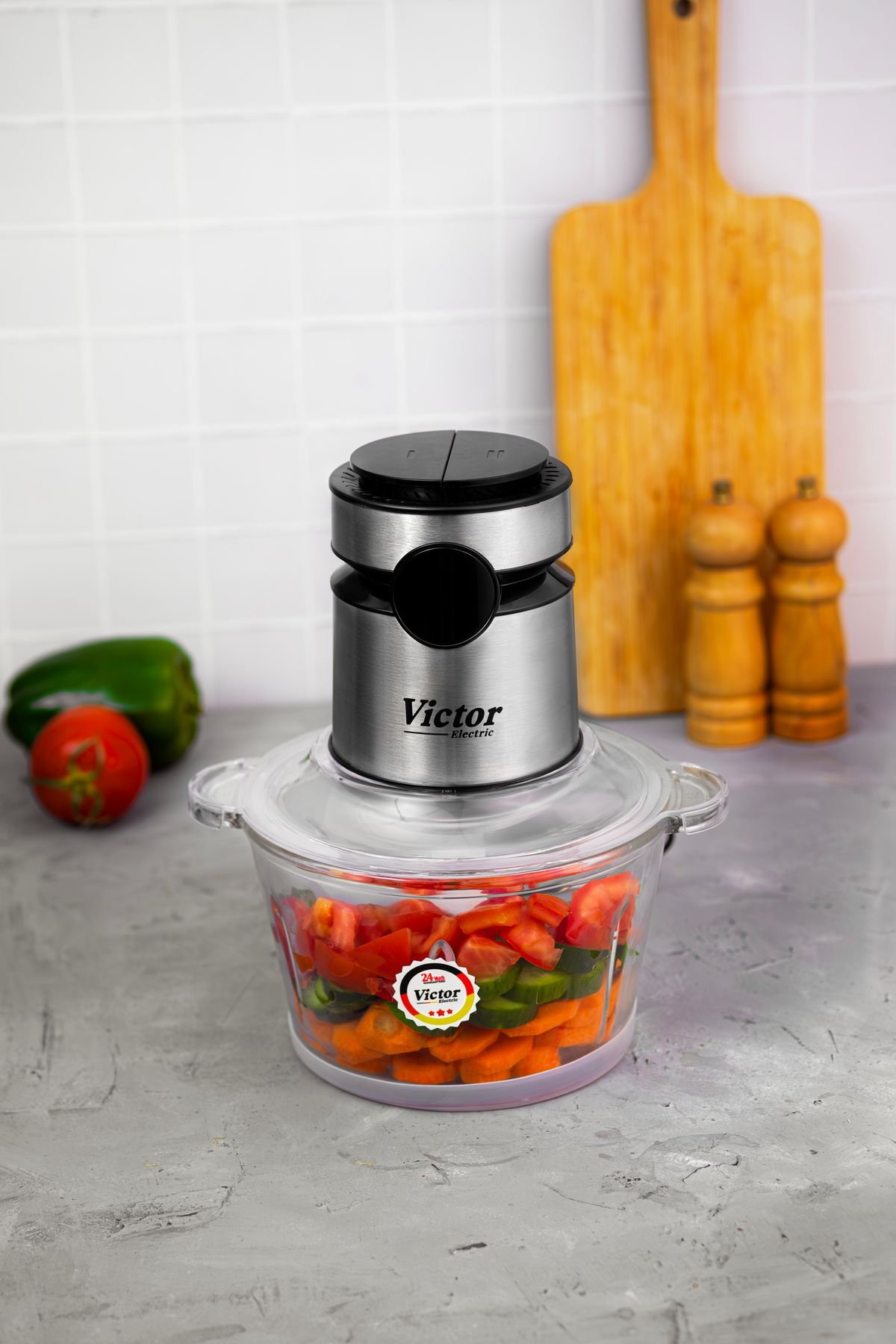
If you cook in a small kitchen, you already know the math. A big food processor is wonderful — right up until you have to store it, haul it out, and wash ten pieces just to chop one onion. Ours spent more time in its box than on the counter. The mini food processor is the fix: a 2-to-4-cup bowl, one blade, thirty seconds of work, and everything goes in the dishwasher.
But “mini” covers everything from a tiny 1.5-cup garlic chopper to a 3.5-cup small food processor that can handle a whole batch of hummus. So which one actually deserves your counter space? We compared the five small food processors that come up again and again for small kitchens — by capacity, motor, the little features that matter day to day, and price (US prices checked October 2026; they move around, so confirm before you buy).
What a mini food processor can (and can’t) do
A good mini food processor is brilliant at the small, annoying jobs: chopping onions without tears, mincing garlic and herbs in seconds, blitzing nuts, making breadcrumbs, and small batches of pesto, salsa, hummus, salad dressing and baby food. It is faster to wash and easier to store than a full-size machine, which is honestly why it gets used every day.
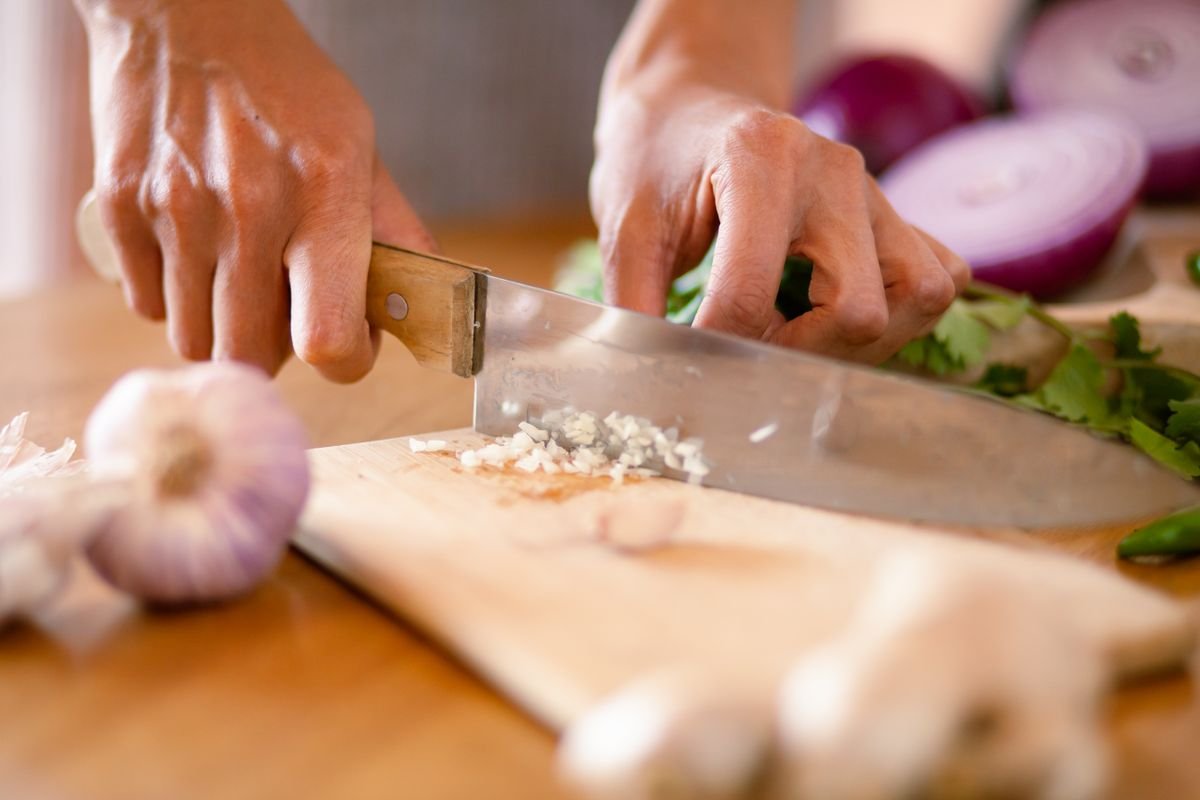
What it can’t do: knead bread or pizza dough, slice or shred (there are no discs or feed tubes on these), or feed a crowd in one go. And most struggle with ice or hard frozen ingredients. Know that going in, and a mini will never disappoint you.
Our picks at a glance
- Best overall: Cuisinart Mini-Prep Plus (DLC-2A) — 3 cups, chops and grinds
- Best for dressings & sauces: KitchenAid 3.5 Cup Food Chopper — drizzle basin for emulsions
- Best value: Hamilton Beach Stack & Press 3-Cup Chopper — strongest motor, lowest effort
- Best for tiny batches: Ninja Express Chop — stacked blades, super-even results
- Best for one person: Proctor Silex 1.5 Cup Chopper — drawer-sized and budget friendly
1. Cuisinart Mini-Prep Plus (DLC-2A) — best overall
This is the mini food processor we point people to first, and the one that has been the default recommendation in this category for years. The 3-cup (24 oz) bowl is the sweet spot for most small kitchens — big enough for a batch of pesto or a couple of onions, small enough to live in a cupboard.
The clever part is the auto-reversing blade: the sharp edge chops soft foods, and the blunt edge grinds hard ones like Parmesan, spices and nuts. Two simple touchpad buttons — Chop and Grind — and that’s it. The lid has a small drizzle spout for adding oil to sauces, the bowl and lid are dishwasher safe, and it comes with a little spatula that actually fits the bowl.
- Capacity: 3 cups (24 oz)
- Motor: 250 watts
- Price: around $30–$40
- Best for: almost everything — sauces, pesto, grinding hard cheese and spices
2. KitchenAid 3.5 Cup Food Chopper (KFC3516) — best for dressings and sauces
Slightly bigger than the Cuisinart at 3.5 cups (28 oz), and the pick if you make a lot of dressings, marinades or homemade mayo. The lid has a drizzle basin: you pour oil in while it runs and it drips in slowly, which is exactly how you get a vinaigrette or mayonnaise to emulsify instead of splitting.
You also get the most control here — two speeds plus Pulse, so you can stop at a coarse chop instead of accidentally making soup. The stainless blade locks in place (so it doesn’t fall out when you pour), everything stores inside the bowl, the cord wraps underneath, and it comes in the full range of KitchenAid colors if matching your mixer makes you happy. It should.
- Capacity: 3.5 cups (28 oz)
- Price: around $70
- Best for: dressings, sauces and emulsions — and cooks who like texture control
3. Hamilton Beach Stack & Press 3-Cup Chopper (72850) — best value
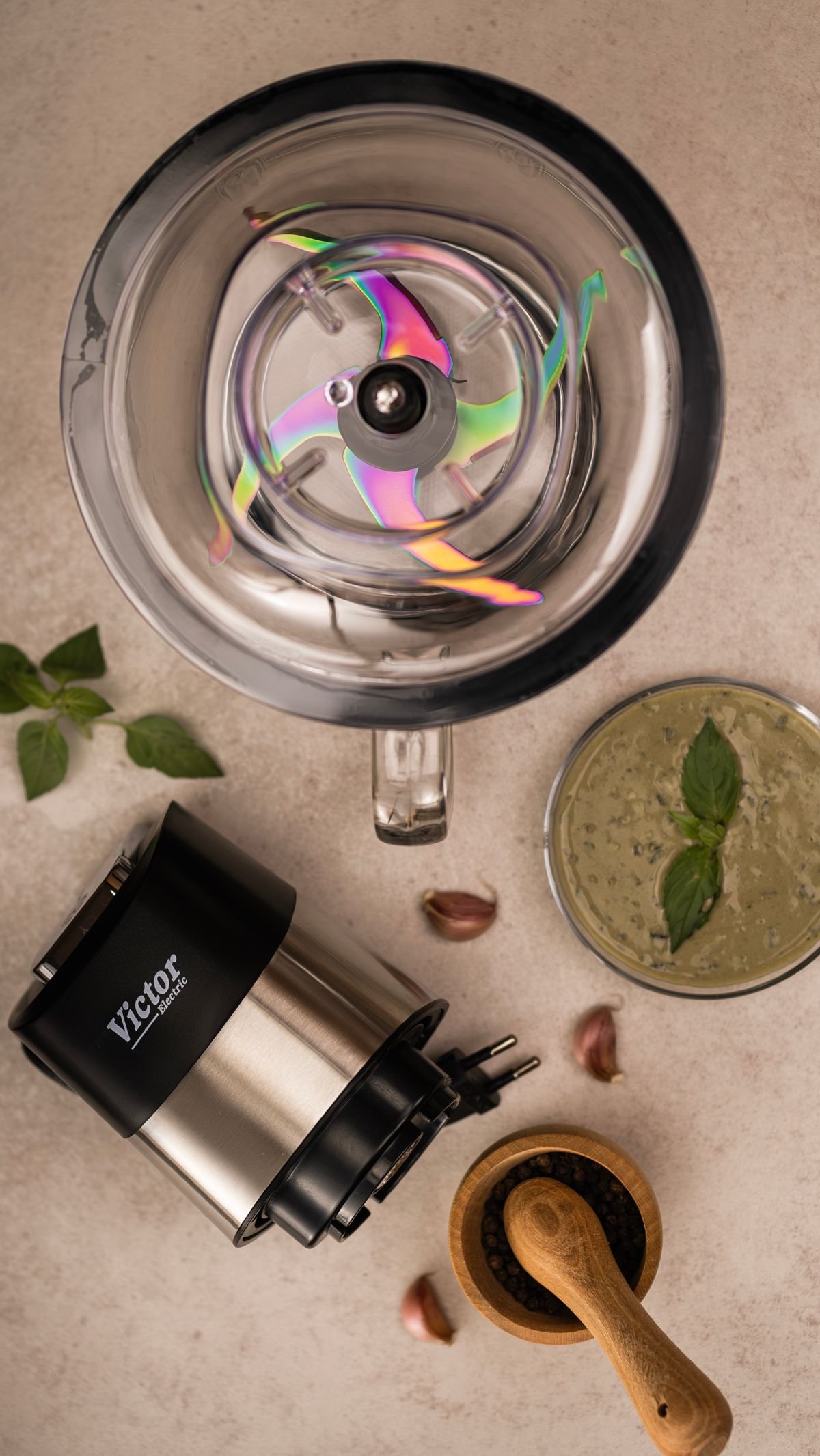
No twisting, no locking, no reading the manual. You stack the bowl on the base, put the lid on, and press down to chop. Release and it stops. That’s the whole learning curve, and it’s genuinely lovely on a tired weeknight.
At 350 watts it also has the strongest motor on this list, which shows with nuts and harder vegetables. There’s a small oil dispenser in the lid for dressings, the cord hides away under the base, and the bowl, lid and blade are all dishwasher safe. For around $25, it’s the easiest recommendation here if you mainly chop onions, nuts and herbs.
- Capacity: 3 cups (24 oz)
- Motor: 350 watts
- Price: around $22–$25
- Best for: everyday chopping with zero fuss — the budget pick that doesn’t feel cheap
4. Ninja Express Chop (NJ110GR) — best for tiny, even batches
Ninja does things differently: the motor is a pod that sits on top, and inside there are four stacked blades running the full height of the 2-cup (16 oz) bowl. Because the blades reach everything at once, you get a remarkably even chop — no big chunks hiding at the top while the bottom turns to paste.
It’s a one-touch pulse machine, so it’s fast rather than fancy, and it comes with a splash guard and a storage lid, meaning the salsa you just made can go straight into the fridge in the same bowl. Small footprint, dishwasher-safe parts, done. (One heads-up: don’t confuse the NJ110GR with the similar-looking NJ100GR — they’re different models.)
- Capacity: 2 cups (16 oz)
- Motor: 200 watts
- Price: around $28–$30
- Best for: garlic, nuts and herbs in small batches, chopped evenly every time
5. Proctor Silex 1.5 Cup Chopper (72500) — best for one person
The smallest and simplest one here, and sometimes that’s the whole point. At 1.5 cups (12 oz) with a footprint of about 7 by 5 inches, it fits in a drawer — a real consideration if your “kitchen storage” is one cupboard and a hopeful shelf.
It’s a basic pulse-control chopper with a stainless blade, and the bowl, lid and blade all go in the dishwasher. It won’t thank you for big jobs, but for one clove-heavy garlic session, a small salsa for one, or a single batch of baby food, it’s exactly enough machine. It’s also the cheapest way to find out whether a mini processor fits your cooking life before spending more.
- Capacity: 1.5 cups (12 oz)
- Motor: 70 watts
- Price: around $23–$27
- Best for: singles and tiny kitchens — small jobs, small price, small footprint
How to choose the right size
- 1.5–2 cups: you cook for one or two, and mostly chop garlic, herbs, nuts and small sauces.
- 3–3.5 cups: the sweet spot for most small kitchens — family-size salsa, hummus, pesto and meal-prep onions without batching everything twice.
- Bigger than that? Be honest: if you regularly cook for five or knead dough, you don’t need a bigger mini — you need a full-size processor. Buying the wrong tool twice costs more than buying the right one once.
Whichever size you pick, prioritize three things: parts that go in the dishwasher (you’ll use it more), a pulse option (that’s how you control texture), and a bowl with a handle if you pour sauces often.
Three little tips that make any mini work better
- Cut food into roughly 1-inch pieces first. Even pieces move around the bowl evenly, so nothing hides from the blade.
- Pulse, don’t hold. Short bursts give you a nice coarse chop. Hold the button down and onions turn watery in seconds — learned that one the hard way.
- Respect the liquid line. A mini’s usable capacity is less than its bowl size, especially with liquids. Fill less than you think, and dressings won’t redecorate your counter.
Mini Food Processor FAQs
What’s the best mini food processor?
For most small kitchens, it’s the Cuisinart Mini-Prep Plus (DLC-2A). The 3-cup bowl is big enough for a batch of pesto, salsa or a couple of onions, the 250-watt motor chops and grinds (most minis only chop), and it usually costs around $30–40. If you mainly chop onions, nuts and herbs, the Hamilton Beach Stack & Press (72850) is the budget star — 350 watts for around $22–25.
What size mini food processor do I need?
Go 1.5–2 cups if you cook for one or two and mostly handle garlic, herbs, nuts and small sauces. The 3–3.5 cup size is the sweet spot for most small kitchens — family-size salsa, hummus and meal-prep onions without batching everything twice. And if you regularly cook for five or knead dough, skip the mini: you need a full-size processor.
Can a mini food processor chop onions without making them watery?
Yes — the trick is to pulse. Cut the onion into roughly 1-inch pieces first, then use short bursts instead of holding the button down. Holding it down is exactly what turns onions watery.
Can a mini food processor grind nuts?
Yes. The Cuisinart Mini-Prep Plus has a dedicated grind function, and the 350-watt Hamilton Beach handles nuts well too. Hard whole spices are tougher for any mini — for those, a small spice or coffee grinder still does the better job.
Are mini food processors easy to clean?
On most models here, yes: the bowl, lid and blade come apart and go in the dishwasher. That matters more than it sounds — a processor that’s annoying to wash is a processor that stays in the cupboard.
Is a mini food processor worth it for a small kitchen?
If you cook most nights, we’d say yes: it’s faster than a knife for onions, herbs, nuts and sauces, it stores in a cupboard instead of eating counter space, and it costs a fraction of a full-size machine. If you cook for a crowd or knead dough regularly, put the money toward a full-size processor instead.
So, which one lives in our kitchen? The honest answer: the 3-cup size gets used almost daily in a small kitchen like ours, and between the Cuisinart’s grind function and the Hamilton Beach’s press-and-go simplicity, you can’t really go wrong. Pick the size that matches how you actually cook — not how you cook on your most ambitious Sunday.
Do you use a mini food processor, or are you still team knife-and-cutting-board? Tell us in the comments — the onion debate in our house is still not settled.
More small-kitchen favorites: 10 Small Kitchen Organization Ideas That Actually Work and 7 Best Wireless Under-Cabinet Lights for Small Kitchens (2026).