
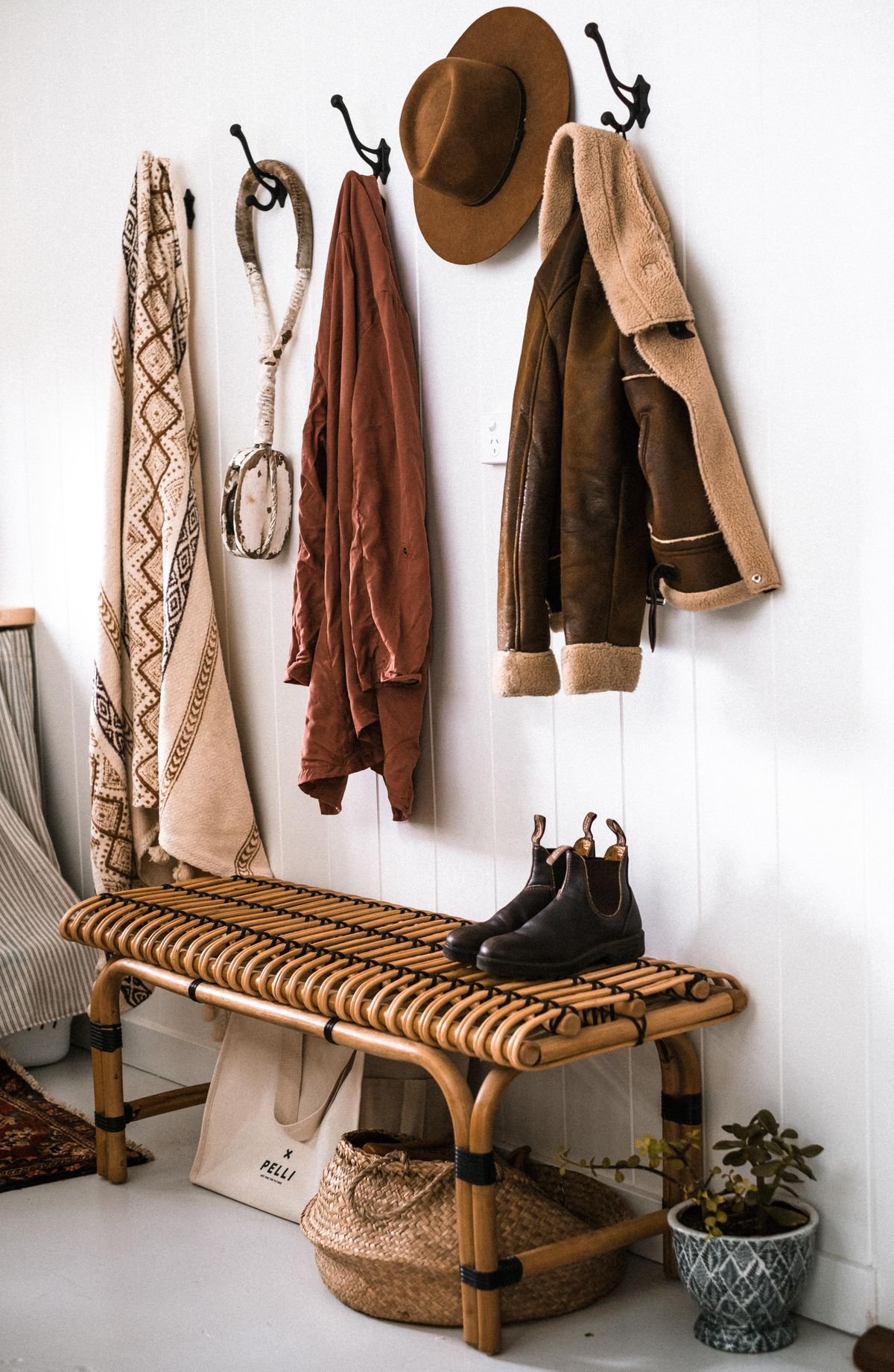
Every home has one spot where chaos lands first: the front door. Coats get draped over whatever is closest, shoes multiply by the mat, and within a week the entryway looks like a lost-and-found bin. And if you don’t have a coat closet — which most small homes and rentals don’t — it can feel like there is simply nowhere for it all to go.
There is. A small entryway doesn’t need a closet; it needs a system. Once every coat has a hook and every shoe has a home, even the tiniest hall stays clear — and coming home starts feeling calm instead of cluttered.
Here are 12 small entryway ideas for coats and shoes that work with no closet at all.
The 3-zone rule (the whole system in one line)
Every working entryway has three zones: hang (coats at grab height), park (shoes in a defined spot, off the walking path), and drop (keys, bag, mail in one place). If your entry feels chaotic, one of these zones is missing. Keep the three zones in mind and the ideas below become a system instead of a shopping list.
Coats — get them on the wall, off the furniture
- A row of wall hooks beats any coat rack. A freestanding coat rack eats a full square foot of floor you don’t have. Five or six sturdy wall hooks hold the same number of coats and use zero floor space. Mount them at two heights if you have kids — low hooks they can actually reach mean coats stop landing on the floor.
- One hook per person — that’s the rule. The reason hooks fail is overflow: four hooks, nine coats. Give every person in the house exactly one hook, and the extras live elsewhere (bedroom closet, a storage bin). One hook per person is the difference between a system and a pile.
- Renters: over-the-door hooks are your best friend. No drilling, no damage, and the back of the front door or a bedroom door holds three or four coats easily. When you move, they move with you.
- Add a peg rail with a shelf on top. A simple wooden peg rail gives you hooks below and a slim shelf above — hats, sunglasses and sunscreen live up top, coats hang below. One board, two jobs, six inches of wall.
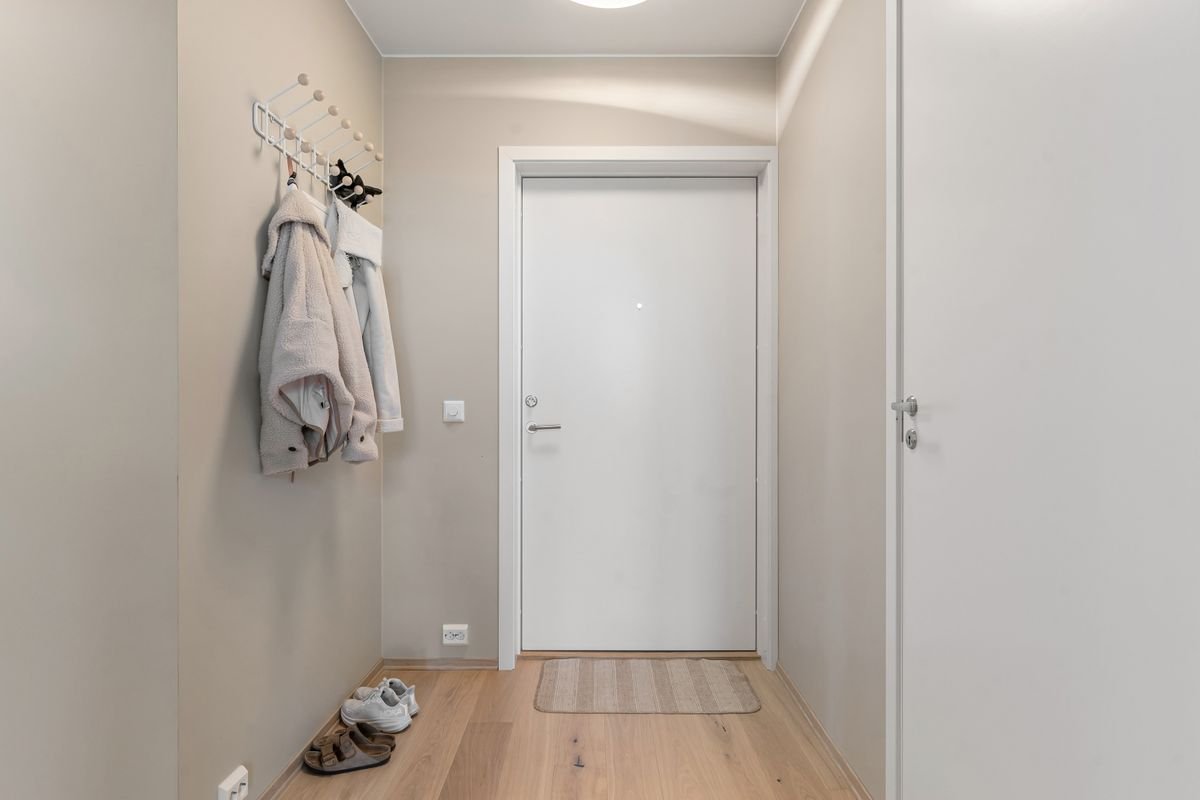
Shoes — contain them or they will conquer
- A bench with shoe cubbies does double duty. The single best piece of furniture for a small entry is a low bench you can sit on to pull boots off — with open cubbies or baskets underneath for shoes. Sitting + storage in one footprint. Measure first: you need the door to swing past it.
- The one-pair rule. Each person keeps ONE pair of everyday shoes out. Everything else lives in the bedroom or a closet. This one rule does more for entryway tidiness than any organizer ever will — because the problem was never storage, it was volume.
- Go vertical in narrow halls. A slim tilted shoe rack or a wall-mounted shoe organizer holds eight to ten pairs in the footprint of one. In a hallway barely wider than your shoulders, vertical is the only direction that works.
- Winter needs a boot tray. Wet boots melt into puddles that ruin floors and rugs. A simple tray by the door catches the mess for the whole season — line it with a washable mat and empty it once a week. Your floors will thank you.
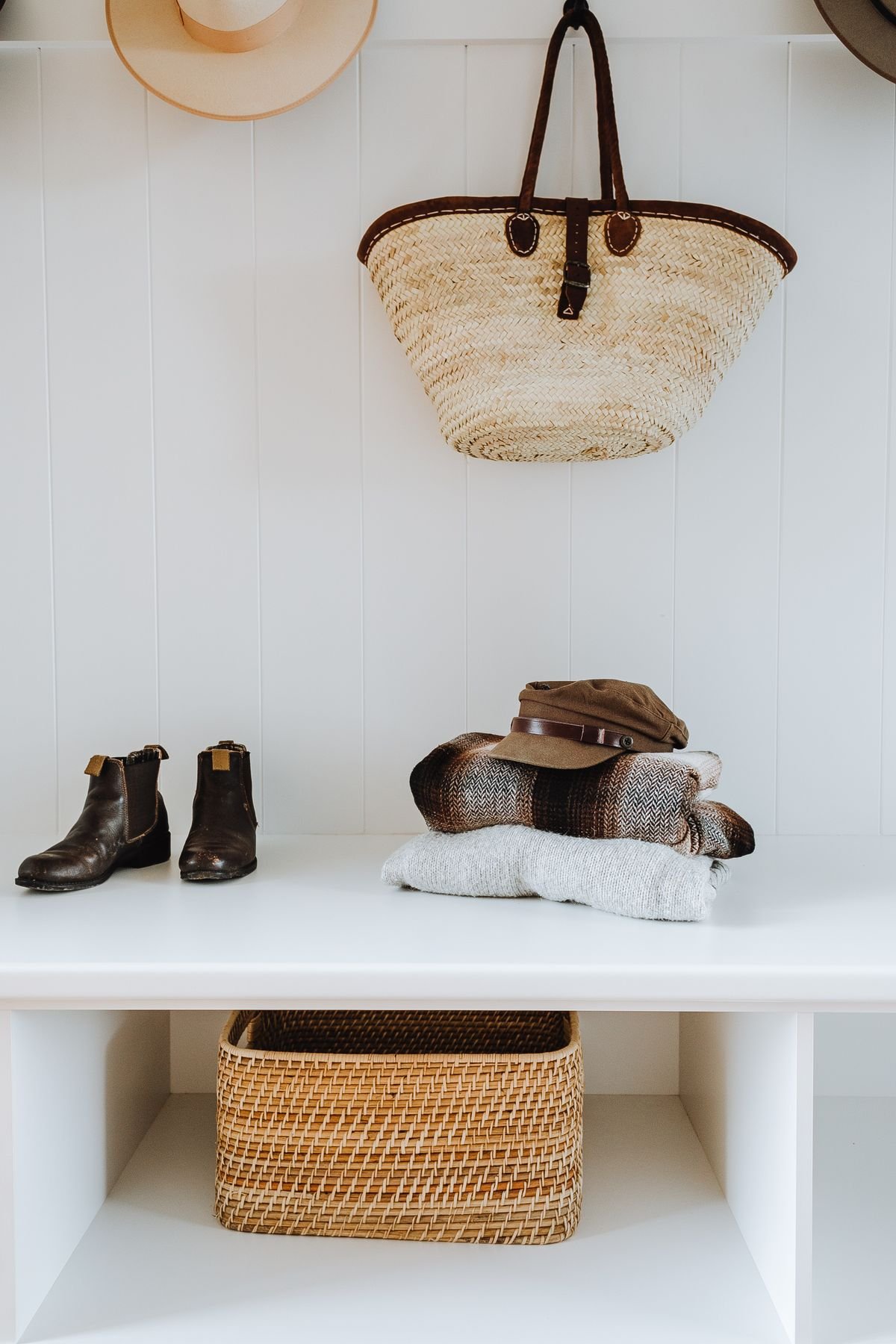
Small-space tricks — make the tiny hall work harder
- Hang a mirror opposite the door. It bounces light into the darkest corner of the house and visually doubles the space. A round mirror above the bench or hooks also gives you the last-second check on your way out.
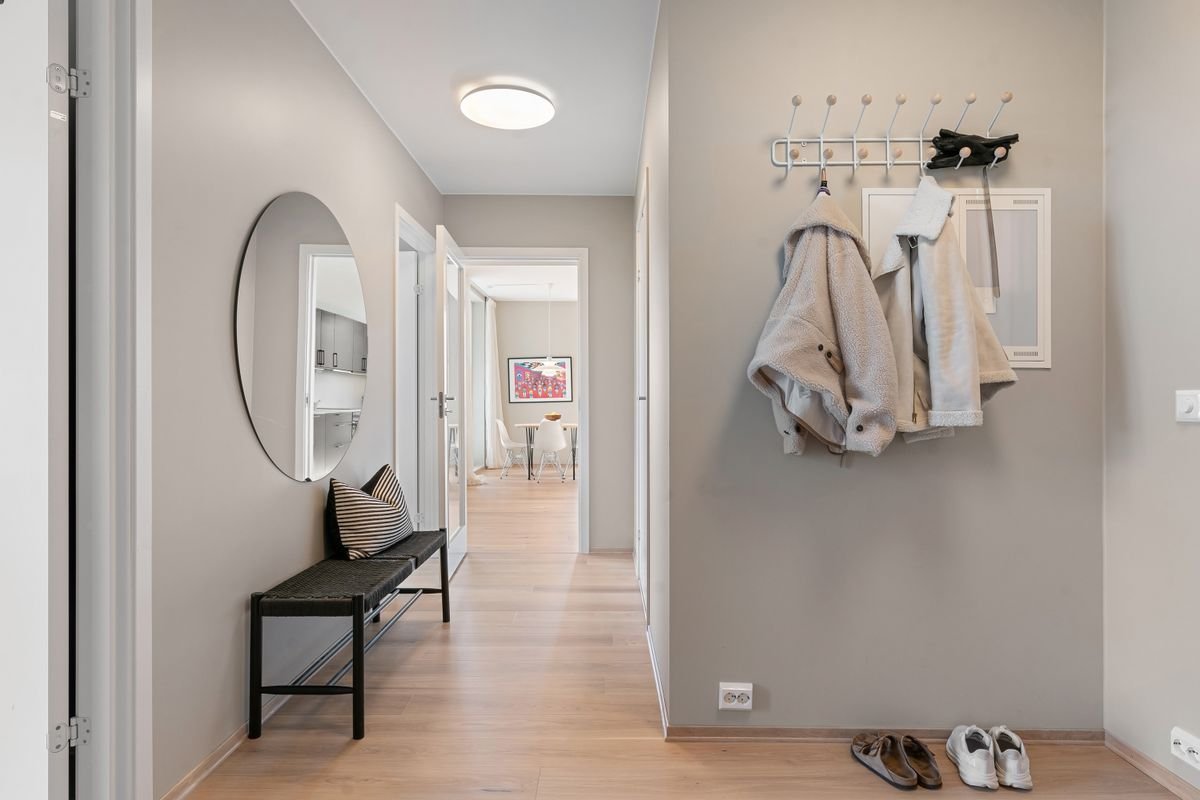
- Define the zone with a runner. A washable runner does three jobs: it marks where the entryway “is” (so shoes stop migrating into the living room), it catches dirt, and it makes a plain hall look intentional. Low-pile and washable — this rug works for a living.
- Baskets beat piles, every time. One lidded basket per person, or one basket per category (hats/gloves, dog leash, reusable bags). Open piles look messy; the same stuff inside a basket looks organized. It’s the cheapest visual upgrade in the house.
- Store the season you’re not in. The entryway only needs to hold THIS week’s coats and shoes. Heavy winter parkas in summer, sandals in January — box them up and move them to a closet or under a bed. A small entry can’t store four seasons; it was never supposed to.
Start where you are (the budget ladder)
- $0: Apply the one-pair shoe rule and the one-hook-per-person rule today. Move off-season coats out. Rearrange what you own. This alone fixes most entryways.
- ~$25: A set of wall hooks (or over-the-door hooks for renters) plus a boot tray for winter. The two purchases with the biggest payoff.
- ~$100: Add the bench with shoe cubbies and a washable runner. At this point the entryway is genuinely finished — three zones, everything with a home.
A small entryway was never the problem. It just needed every coat to have a hook and every shoe to have a home. Pick the three zones, start with the $0 fixes tonight, and by the weekend the first thing you see coming home will be calm — not chaos.
If you want the entry to feel as good as it functions, our Cozy Home Decor Ideas guide has the warmth side covered — lighting, texture and the small touches that make a tiny hall feel welcoming.