
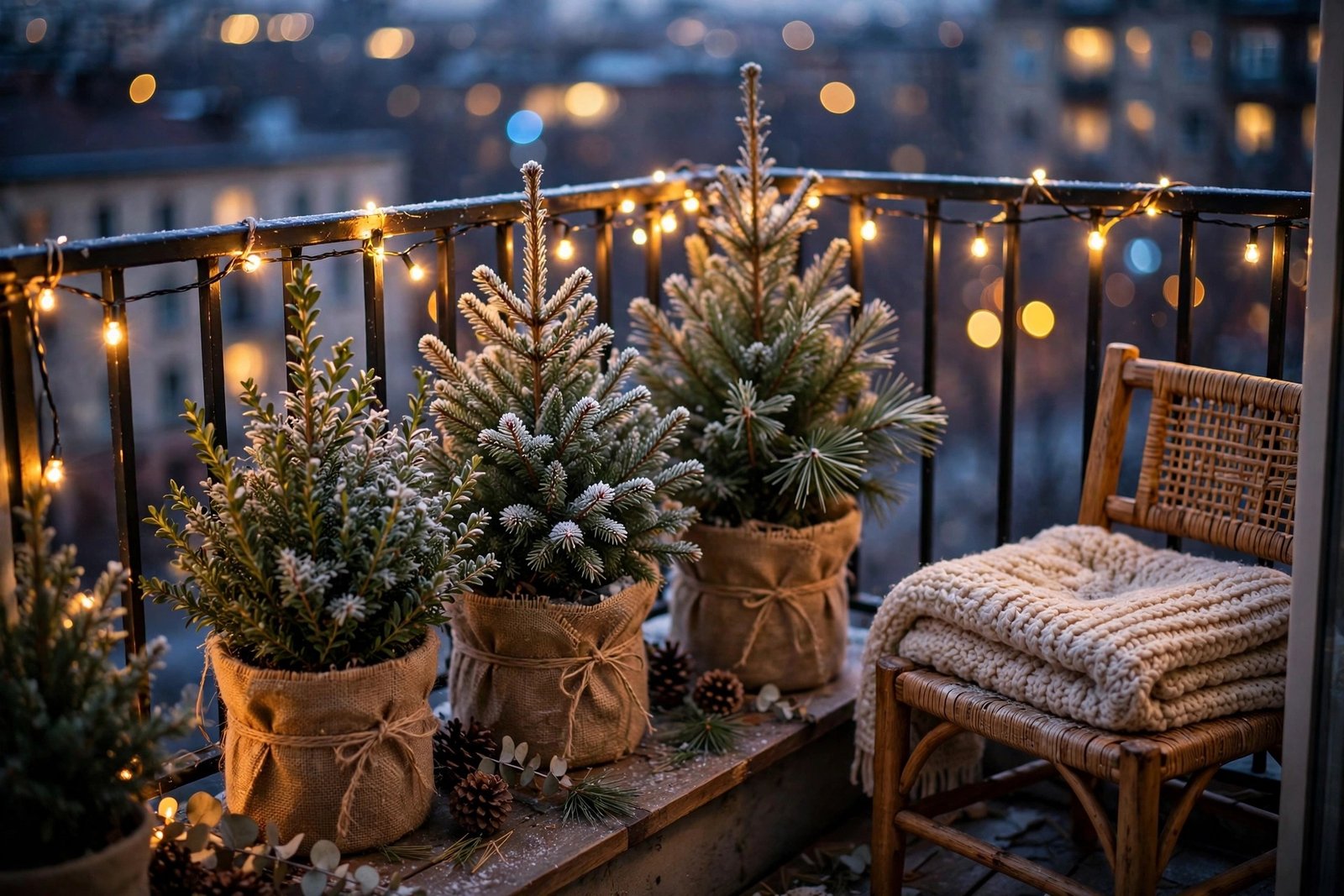
Most people treat their balcony like a summer fling — fun while it lasted, abandoned by November. I did that for years: dragged the dead tomato pots inside, stacked the chairs in a sad corner, and didn’t look at the balcony again until spring.
Then one January evening I saw my neighbor’s balcony glowing across the courtyard — little string lights, green plants dusted with frost, a chair with a blanket on it like someone actually lived out there. It looked like a snow globe you could sit in. I was jealous in the best possible way.
Here’s what I’ve learned since: a winter balcony garden isn’t harder than a summer one. It’s just a different game — less about flowers, more about texture, light, and keeping roots alive. These nine ideas are exactly how I do it now, on a small balcony, on a budget.
1. Learn your zone — then cheat it by one
Everything in winter gardening starts with your USDA hardiness zone (just search “my hardiness zone” + your zip code — takes 30 seconds). Here’s the balcony catch: plants in pots experience winter about one zone colder than plants in the ground, because cold attacks roots from every side.
The cheat: your balcony has a microclimate. The wall of your building radiates stored heat, blocks wind, and stays a few degrees warmer than the railing edge. So push every pot as close to the building wall as you can — that alone buys you back roughly one zone. This one move matters more than any product on this list.
2. Swap summer annuals for plants that love the cold
This is the mindset shift: stop mourning the petunias and plant things that want to be out there in January. My winter lineup, all in pots:
- Dwarf evergreens — boxwood, dwarf juniper, or a tiny spruce. They hold their shape and color all winter and make the whole balcony look intentional.
- Heather (winter heather) — blooms in pink and white from fall through early spring. Absolute workhorse.
- Winter pansies and violas — they genuinely flower in cold weather and bounce back after frost.
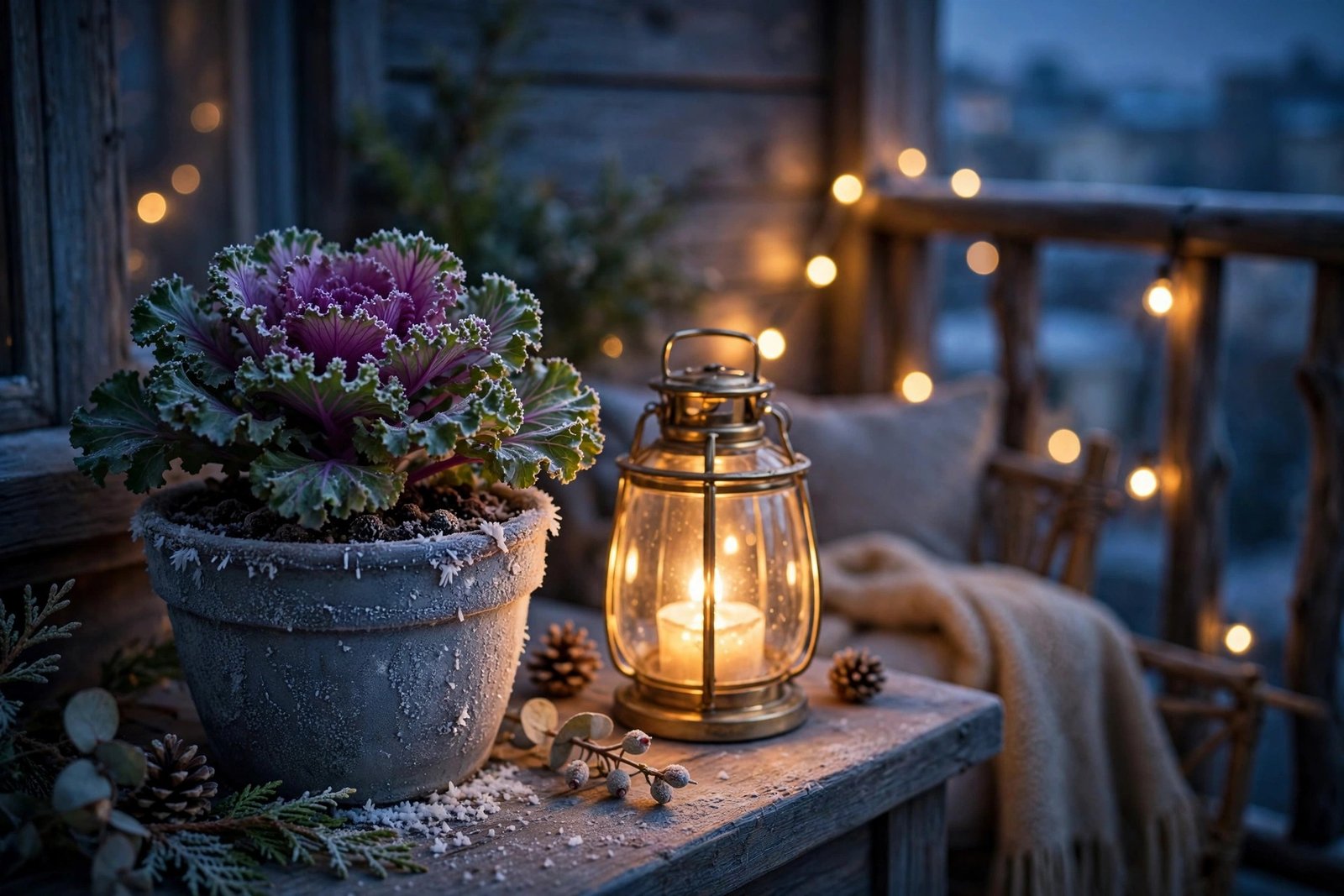
- Ornamental kale and cabbage — those ruffled purple-and-green rosettes look expensive and laugh at frost.
One design rule that changed everything for me: plant in odd numbers and repeat the same plant in two or three pots. Three matching boxwood balls down the railing looks designed; seven random different plants looks like a plant orphanage.
3. Insulate the pots — roots freeze before leaves do
Here’s the thing most beginners miss: your plants don’t die in winter because the air is cold. They die because the roots freeze solid in the pot. In the ground, soil insulates roots. In a pot on a windy balcony, roots are sitting ducks.
Three cheap fixes that actually work:
- Cluster your pots together against the building wall (see idea #1). Pots insulate each other.
- Wrap the pots in burlap, bubble wrap, or old blankets — the pot, not the plant. It looks rustic and it works.
- Get pots off the cold floor. Even a couple of inches on pot feet, a wooden pallet, or a folded old rug stops cold from wicking up from the concrete.
Terracotta is beautiful but it’s the worst winter pot — it cracks in freeze-thaw cycles. If you love the look, keep the terracotta as an outer decorative shell and put a plastic nursery pot inside it.
4. Light it up — winter days are cruelly short
This is the idea that turns a winter balcony from “plant storage” into “the coziest spot in the apartment.” When it gets dark at 4:30pm, light is everything.
Drape warm-white string lights (2700K — that golden candlelight color, not blue-white) along the railing and through your evergreens. Add a solar lantern or two on the floor, and an LED candle inside a glass hurricane for windy nights. Total cost: very little. Total effect: your balcony becomes the thing guests photograph.
Bonus: lights on a timer mean you come home to a glowing balcony every single evening. It genuinely changes how winter feels. I wrote about this same warm-light rule for interiors in my cozy bedroom guide — outdoors, it matters even more.
5. Design for texture, not flowers
Summer gardens are about color. Winter gardens are about texture and form — and once you see it, you can’t unsee it.
Ornamental grasses (dwarf fountain grass, blue fescue) catch frost on their blades and look like they’re made of glass in the morning. Dried hydrangea heads left on the plant turn papery and sculptural. Birch branches stuck in a tall pot, pinecones in a bowl, interesting bark — winter is when structure shines because there’s nothing hiding it.
My rule: every winter pot needs at least two textures. Smooth boxwood + feathery grass. Glossy holly + rough bark. It reads as “designed” even with zero flowers.
6. Grow winter edibles — yes, really
If you only do one productive thing this winter, make it this: kale, spinach, and scallions grow happily in pots through cold weather, and hardy herbs — rosemary, thyme, sage — are perennial in most zones and shrug off light frost.
In mild-winter areas you can harvest all season. In colder zones, a simple frost cloth draped over the pots on the coldest nights (idea #3’s wrapping, plus a cover on top) keeps greens going weeks longer. Snipping fresh thyme for dinner in January, from your own balcony, feels like a small superpower.
Watering rule for winter: water less often than summer (plants are barely drinking), always in the morning, and never let pots sit in saucers of water — wet roots + freeze = dead plant.
7. Block the wind — it’s the real killer
Cold air is survivable. Wind plus cold is what destroys plants — it strips moisture from leaves faster than roots can replace it, especially in pots.
A simple reed or bamboo roll-up screen zip-tied to the windward railing changes everything: it breaks the wind without blocking all the light (full solid barriers can create a wind tunnel over the top — semi-open is better). Move your most exposed pots to the sheltered side, and cluster the tall plants where they shield the short ones. Think of it as your plants huddling together for warmth — because that’s literally what they’re doing.
8. Keep one seat usable all winter
A balcony with no seating is just outdoor storage with plants. Keep one chair out there — the good one — with a weatherproof cushion in a deck box or storage bench, and a throw blanket you actually use.
Add an outdoor rug (they’re made to survive weather — just shake off the snow), and suddenly your balcony is a winter retreat: morning coffee watching frost melt off the grasses, evening tea under the string lights. This is the same philosophy as my original small balcony garden guide — the balcony is a room, not a shelf. Winter doesn’t change that; it just changes the guest list.
9. Add winter life — birds, pinecones, and small magic
The final layer is the one that makes it feel alive: a small bird feeder suction-cupped to the window or hung from the railing. Chickadees and finches will visit within days, and watching them from inside with hot coffee is peak winter joy.
Scatter the styling: pinecones in a bowl, a small wreath on the railing or door, dried orange slices on the evergreens if you’re feeling crafty (my fall decor post has the dried-orange trick — it carries straight into winter). None of this costs anything. All of it makes the balcony feel tended instead of abandoned.
The honest truth about winter balconies
Your winter balcony won’t look like your summer balcony, and that’s the point. Summer is abundance; winter is atmosphere. A few evergreens holding their green, grasses catching the frost, warm lights glowing at 5pm, birds at the feeder — it’s quieter, moodier, and honestly? Some evenings I like it better.
Start with ideas #1 through #4 this weekend — zone check, hardy plants, pot insulation, lights — and you’ll have 80% of the transformation done before November.
Shop this look
As an Amazon Associate I earn from qualifying purchases.
The few things worth buying for a winter balcony (everything else is rearranging what you have):
- Warm-white LED string lights (outdoor-rated) — the single biggest atmosphere upgrade. Brightech Ambience Pro Solar Outdoor String Lights (27 ft, warm 3000K soft white, outdoor-rated)
- Frost protection plant covers — drape over pots on the coldest nights; reusable for years. Gardzen 5-Pack Drawstring Plant Covers for Winter Freeze Protection (31" x 40")
- Burlap planter wraps — insulate pots and look effortlessly rustic doing it. UBCGOTT Natural Gardening Burlap Roll (20 inch x 5 feet)
FAQ
Can I leave potted plants on my balcony all winter?
Yes — if you choose cold-hardy plants rated for your zone (remember pots run about one zone colder) and protect the roots. Cluster pots against the building wall, insulate them, and lift them off the cold floor.
What plants survive winter in pots on a balcony?
Dwarf evergreens (boxwood, juniper), winter heather, winter pansies, ornamental kale and cabbage, ornamental grasses, and hardy herbs like rosemary, thyme, and sage. All handle frost in containers with basic protection.
How do I protect balcony plants from frost?
Insulate the pots (burlap or bubble wrap around the pot, not the plant), cluster pots together against the warmest wall, raise them off the ground, and drape frost cloth over plants on the coldest nights. Water in the morning, never at night.
How often should I water balcony plants in winter?
Much less than summer — check the soil and water only when the top inch is dry, always in the morning with lukewarm water. Never let pots sit in water-filled saucers; wet frozen roots rot fast.