
Short answer: A winter entryway works when it is set up for wet weather first and decorated second: a drying zone with a boot tray by the door, hooks at two heights, one basket per person for hats and gloves, a washable runner, and one warm light on a timer. Take the Christmas wreath down, leave plain evergreen in its place, and the entry stays welcoming without a single festive thing in it.
The day the wreath comes down is the day most entryways give up. For six weeks the door has been dressed; now there is a nail, a pale circle on the paint, and a pile of wet boots underneath it. This article is the fix for that exact week — and it is deliberately not a decorating article in the usual sense. Our Christmas entryway decor ideas are about the festive version: garlands, ribbon, the full welcome. Our small entryway ideas solve the year-round problem of coats and shoes in a tight space. This one is narrower and more practical: the working winter entry, from January to March, where the real enemies are meltwater, lost gloves and coming home in the dark.

The Working Winter Entry, Zone by Zone
Think of the entry as four small zones that each do one job. When every job has a place, the hallway stays calm even on the worst weather day of the year.
| Zone | What goes there | Why it earns its space |
|---|---|---|
| Drying zone | Boot tray with a raised edge, a mat that can get soaked, one old towel | Meltwater stays in one square metre instead of tracking through the house |
| Hanging zone | Hooks at two heights — adult and child (or bag) height | Wet coats drip and dry in the open instead of steaming in a closed closet |
| Basket zone | One basket per person, on or under the bench | Hats, gloves and scarves land in one known place — no more single-glove season |
| Welcome zone | Washable runner, plain evergreen, one warm light on a timer | The entry still feels like a welcome, not a utility room |
1. Build the Drying Zone First
Everything else in a winter entry is negotiable; the drying zone is not. Snow and slush come in on every pair of boots, and they melt exactly where the boots stop. A boot tray — the largest one that fits your floor, with a raised lip — catches all of it. Put the tray directly beside the door, not across the room, because nobody crosses a hallway in wet boots to reach a tidy system. Beside the tray, a mat that is allowed to get filthy, and a folded old towel for the worst days: boots on the towel for ten minutes, then onto the tray to finish drying.
If your entry is a narrow hallway rather than a mudroom, the same zone shrinks to a tray and a mat — the principle survives at any size. What matters is that wet things stop at the door.
2. Hooks at Two Heights
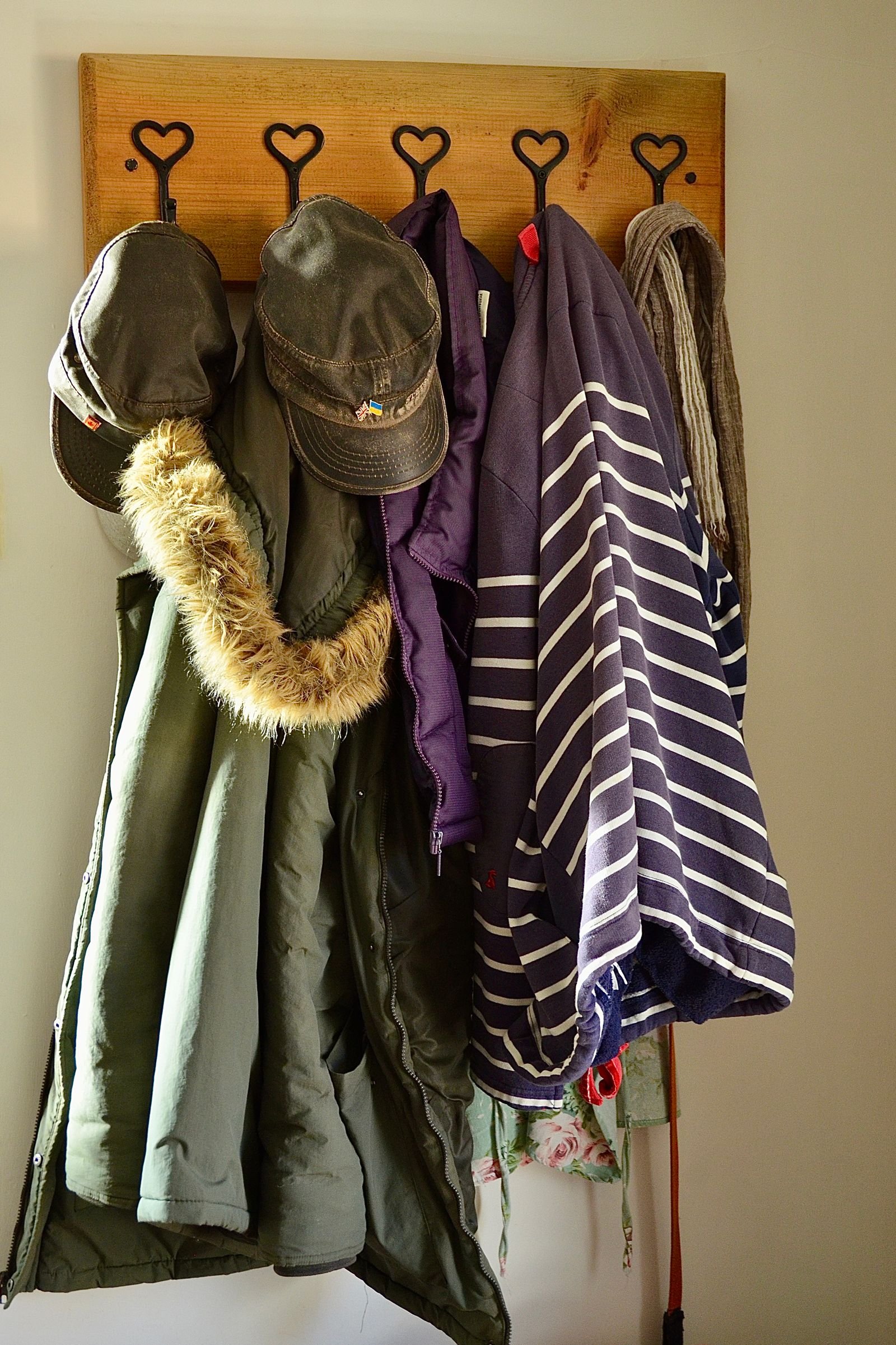
A winter coat is heavy, wet and needed again in eight hours — it belongs on a hook in the open air, not folded over a chair or steaming inside a closed closet. Hooks are the hardest-working hardware in the house, and the winter improvement is simply to mount them at two heights: a high row for adults’ coats, and a lower row for children, for bags, and for the dog lead. The lower row is the one that changes daily life, because everything that used to land on the floor now has a home at the height of the person carrying it.
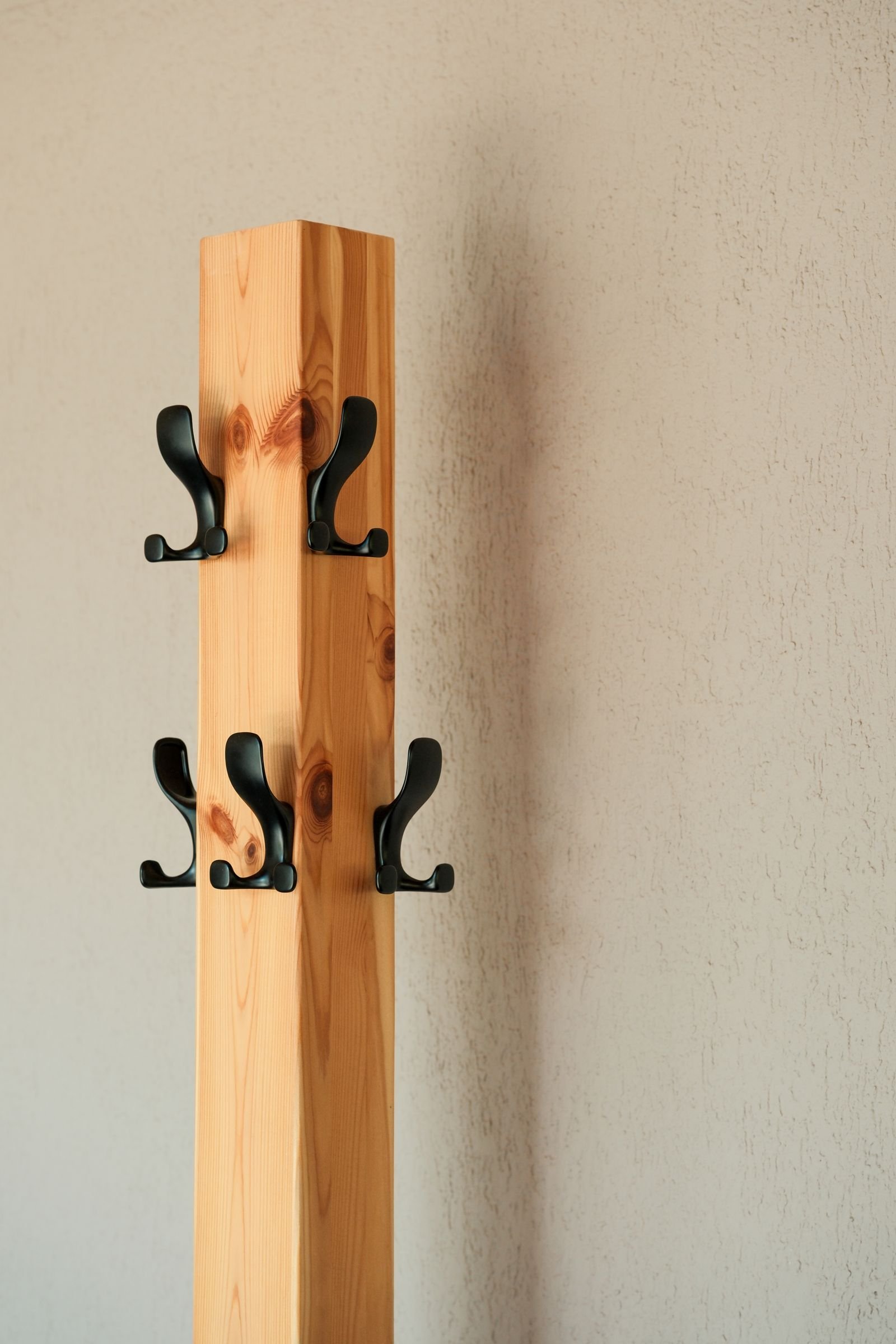
Strong hooks, into studs or proper anchors, spaced wide enough that a parka does not smother its neighbour. The wooden post below shows the two-height idea in its simplest form — the same black hooks, repeated lower down, on a single post that fits where no wall run exists.
3. One Basket per Person
Gloves are lost one at a time, in the dark, at the door. The fix is embarrassingly simple: one basket per person, kept on or under the bench, and a house rule that hats, gloves and scarves go in the basket and nowhere else. Not on the stairs, not on the kitchen counter — in the basket. A family of four needs four baskets, and they do not need to match; they need to be findable with cold hands and no patience.
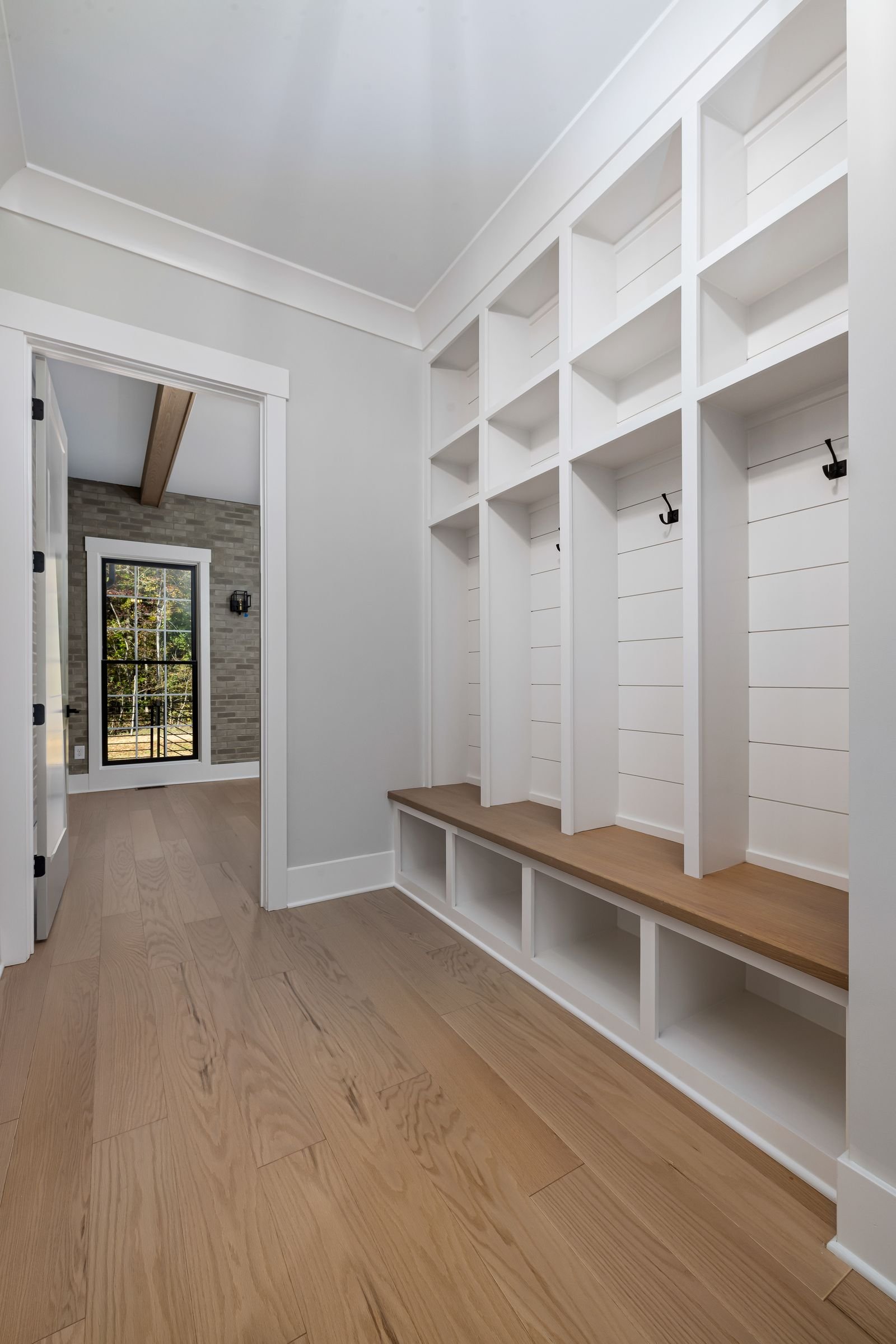
The white bench below shows the arrangement working: boots in their place, blankets folded, and the woven basket underneath doing the quiet, unglamorous work of keeping small warm things findable.

4. A Seat, However Small
Pulling off winter boots is a two-handed, one-footed job, and doing it standing in a hallway is how people end up sitting on the stairs. A bench solves it — and doubles as the surface where bags land and the shelf under which the baskets live. Built-in cubbies are the grand version, with a bench over shoe storage and a hook for every member of the household, and they are worth studying even if you only copy the layout in miniature: seat, hooks above, storage below, tray beside.
5. The Washable Runner
A winter hallway floor takes salt, grit and meltwater daily, and the rug that protects it has to survive the washing machine. Choose a runner you can wash — flat-weave, low pile, dark enough or patterned enough to hide a January’s worth of evidence between washes. It should run from the door toward the house, because that is the path wet feet actually take, and it earns a second mention in our guide to winter decor ideas after Christmas, where the runner is part of the wider post-holiday reset. In the entryway it is not decor. It is equipment that happens to look good.
The hallway below runs the whole system in a small footprint: pegs with coats and gloves by the door, a bench to sit on, shoes in a line beneath, and a mirror for the last look before leaving.

6. Plain Evergreen, After the Wreath
When the wreath comes down, replace it — do not just remove it. A plain evergreen wreath with no ribbon, no baubles and no berries reads as winter rather than Christmas, and it can stay on the door until spring without anyone asking questions. Indoors, a jug of plain branches, a bowl of pinecones or a single potted plant does the same work: green, alive-looking, and entirely season-neutral. This is the difference between an entry that looks finished-with and one that looks settled. If the door itself looks bare even with a plain wreath, a lantern beside it — unlit in the day, warm in the evening — fills the gap without a hint of tinsel.
7. One Warm Light on a Timer
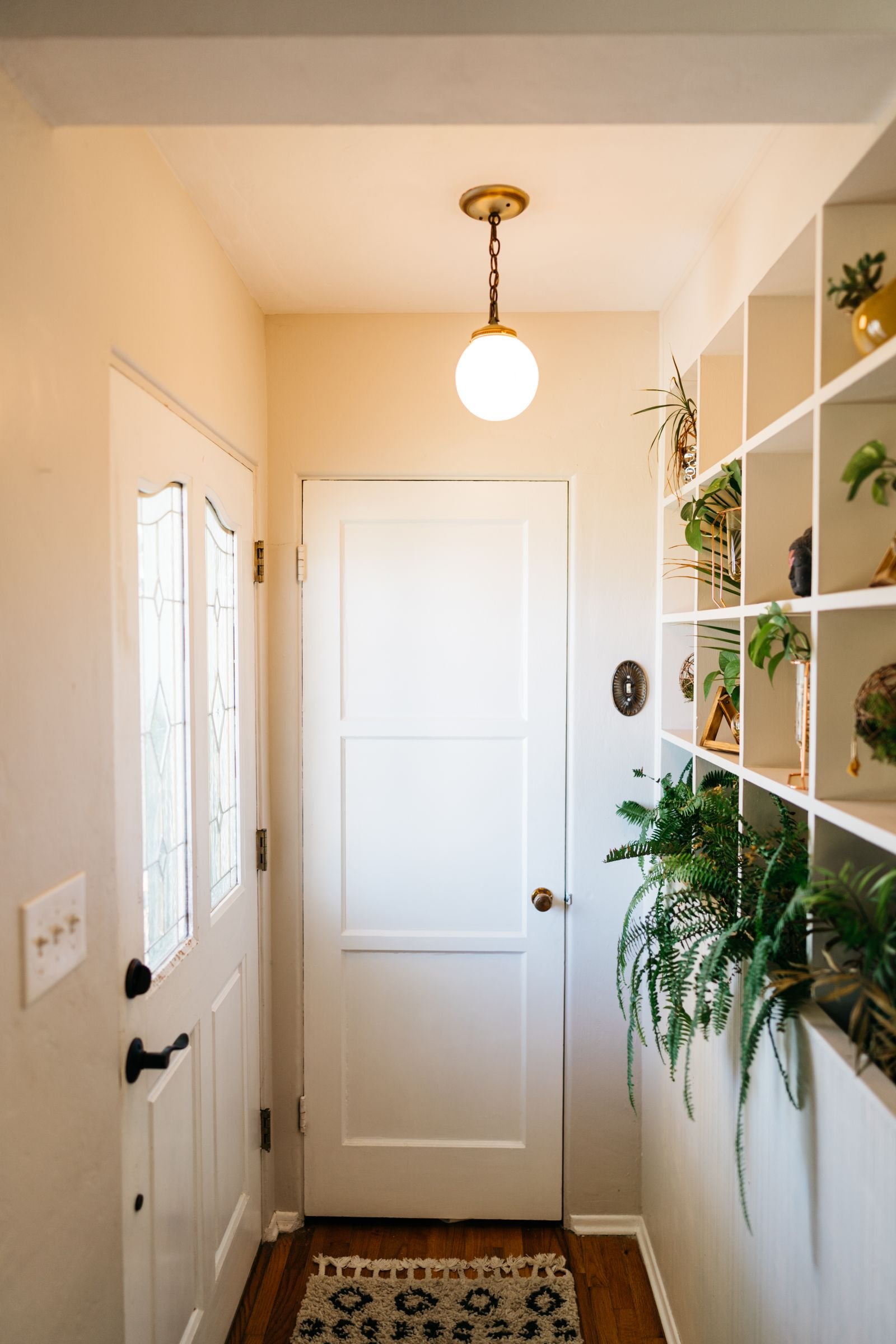
More winter homecomings happen in the dark than in the light, and a cold white bulb over the door makes every one of them bleaker. One warm light — around 2700K, the colour of lamplight — on a timer set for the hour before people come home changes the whole feeling of the house for the price of a bulb. A lamp on a side table, a pendant over the entry, or candles on a shelf for the evenings you are in: pick one source and make it warm. The foyer below has it right — a single glowing globe, a small runner, and green plants taking the edge off the season.
8. The Last-Look Mirror and the Peg Rail
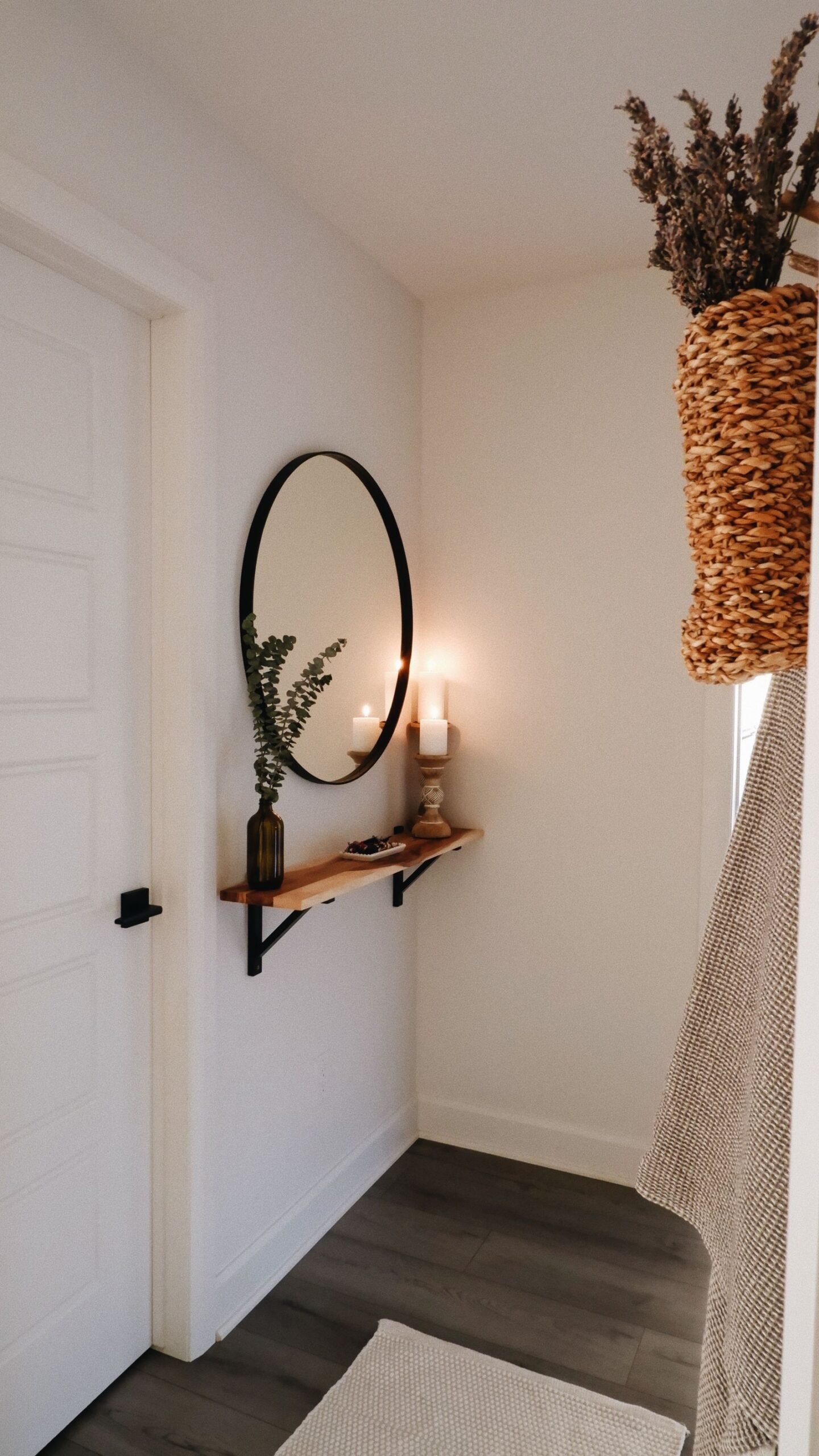
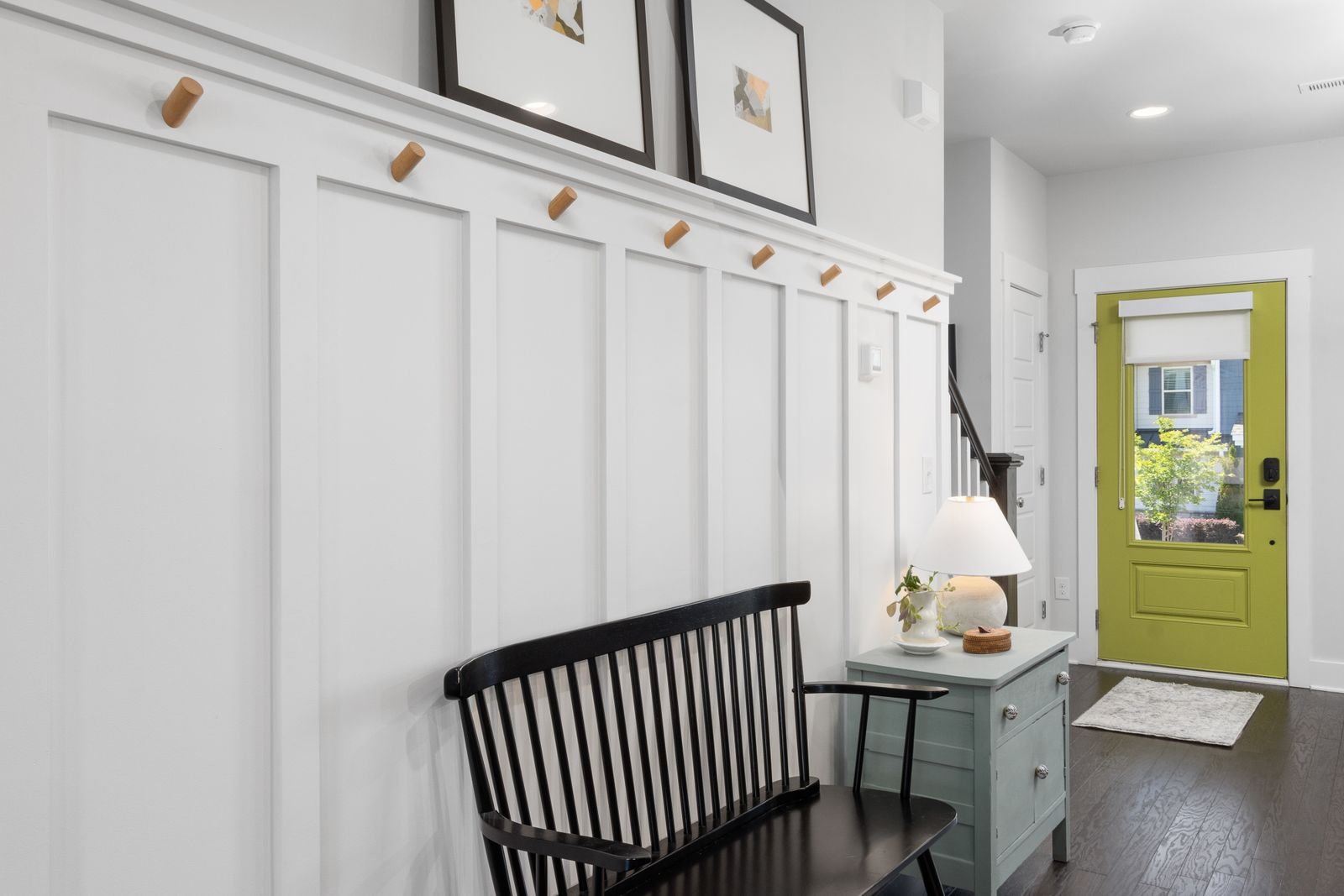
Two small things finish the working entry. A mirror by the door is not vanity; it is the final check — hat straight, scarf tucked — and it throws the warm light around a dark hallway better than any second lamp. And if wall hooks are not possible, a peg rail does the same job with a friendlier face: a row of wooden pegs above a bench, coats and hats in a line, the lamp beside it doing the welcoming. It is the oldest entryway arrangement there is, and winter is exactly what it was designed for.
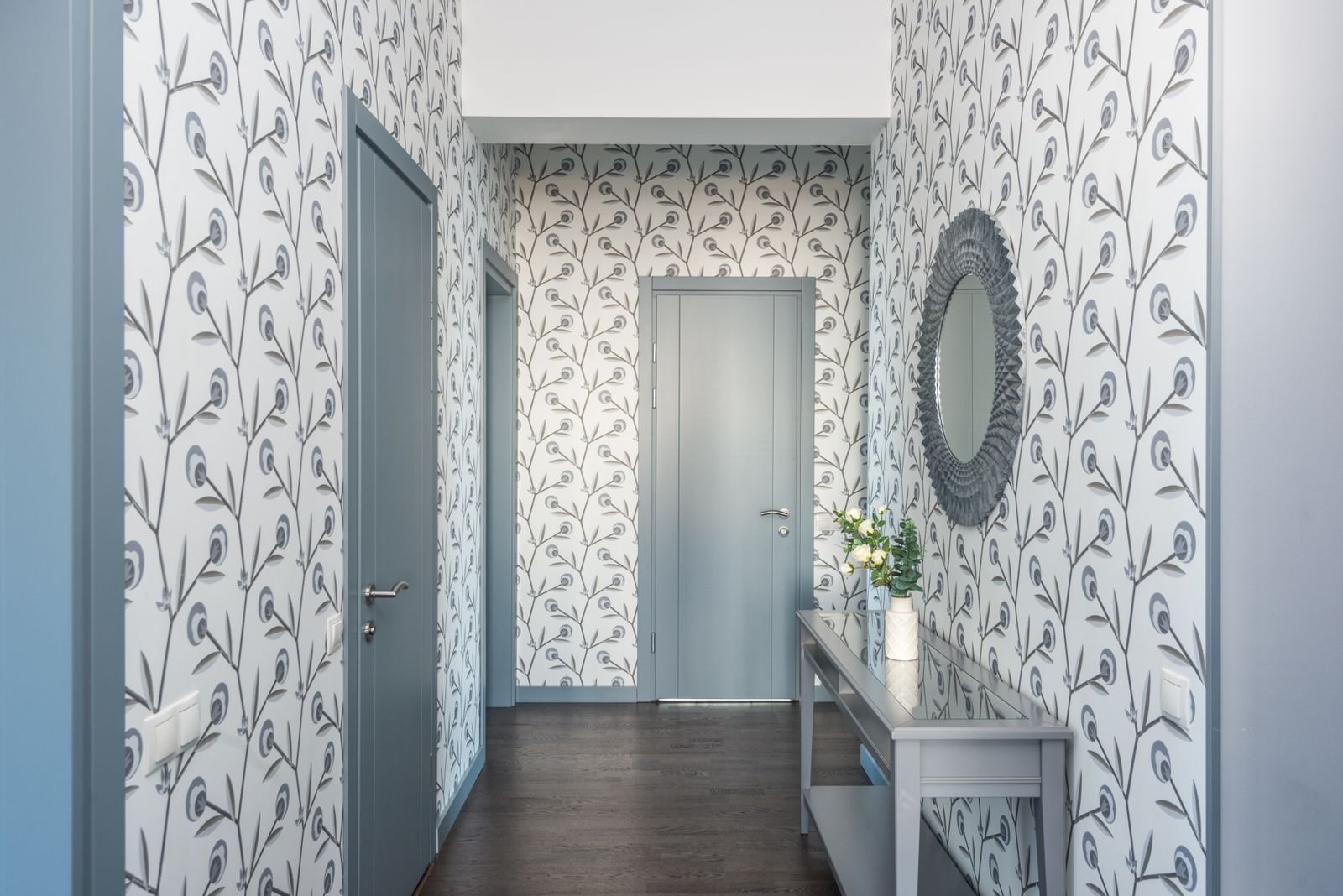
A console table, where a wider hallway allows one, holds the last small systems: a tray for keys, a bowl for loose change, and the mirror above it. Keep its surface two-thirds empty or it becomes the place winter clutter goes to hide.
Where to Start (by Budget)
- $0: Rearrange what you own into the four zones — tray or old baking sheet by the door, hooks you already have re-hung at two heights, any four baskets or boxes, one per person.
- Around $25: A proper boot tray with a raised edge — the single highest-value purchase in this article.
- Around $75: A washable runner, or a timer plug and a warm 2700K bulb for the entry light.
- One zone at a time: Start with the drying zone. It is the one that protects the rest of the house.
Three Winter Entryway Mistakes to Avoid
- Decorating before drying. A beautiful entry with no boot tray is a beautiful entry with water damage. Zones first, styling second.
- One hook height for everyone. If children (or bags, or leads) cannot reach a hook, their things live on the floor. The lower row is the system.
- Taking the wreath down and leaving nothing. A bare nail and a pale circle of paint announce that the season ended. Plain evergreen says winter is simply continuing, comfortably.
Winter Entryway Questions
What do I put on the door after the Christmas wreath comes down?
A plain evergreen wreath — no ribbon, baubles or berries. It reads as winter, not Christmas, and can stay until spring.
How do I stop wet boots ruining the hallway floor?
A drying zone at the door: the largest boot tray that fits, with a raised lip, a mat that can get soaked, and a towel for the worst days.
What is the best light for a winter entryway?
One warm light around 2700K on a timer set for the hour before you come home. Warm lamplight, not cold white ceiling light.
How do I keep hats and gloves from disappearing?
One basket per person, on or under the bench, and a house rule that winter small things go in the basket and nowhere else.
Can a small hallway work as a winter entry?
Yes — the zones shrink but survive: a tray and mat, a few hooks at two heights, one basket each, and a washable runner down the traffic path.
The winter entry is the hardest-working two square metres in the house. Set it up for the weather first, and it will welcome you home properly until spring.