
Short answer: Yes — you can have real flowers blooming indoors in the middle of winter, without a greenhouse and without months of planning. Paperwhites bloom about 3–6 weeks after potting and need no chilling at all; amaryllis follows in about 6–10 weeks, also with no chilling. Pot them on the dates in the calendar below and they open as living winter decor — on the table, the mantel and the windowsill — right through to Valentine’s Day.
There is a particular kind of January tiredness that has nothing to do with sleep. The tree is down, the wreath is in its box, and the house has gone back to grey light and bare surfaces. Our guide to winter decor ideas after Christmas covers the candles, throws and evergreen that carry a home through that stretch — but this article is about the one decoration that is actually alive. A pot of paperwhites on the kitchen table does something no cushion can: it changes every day. One morning there are green spears, a week later buds, and then, in the darkest part of the year, white flowers with a scent that fills the room.
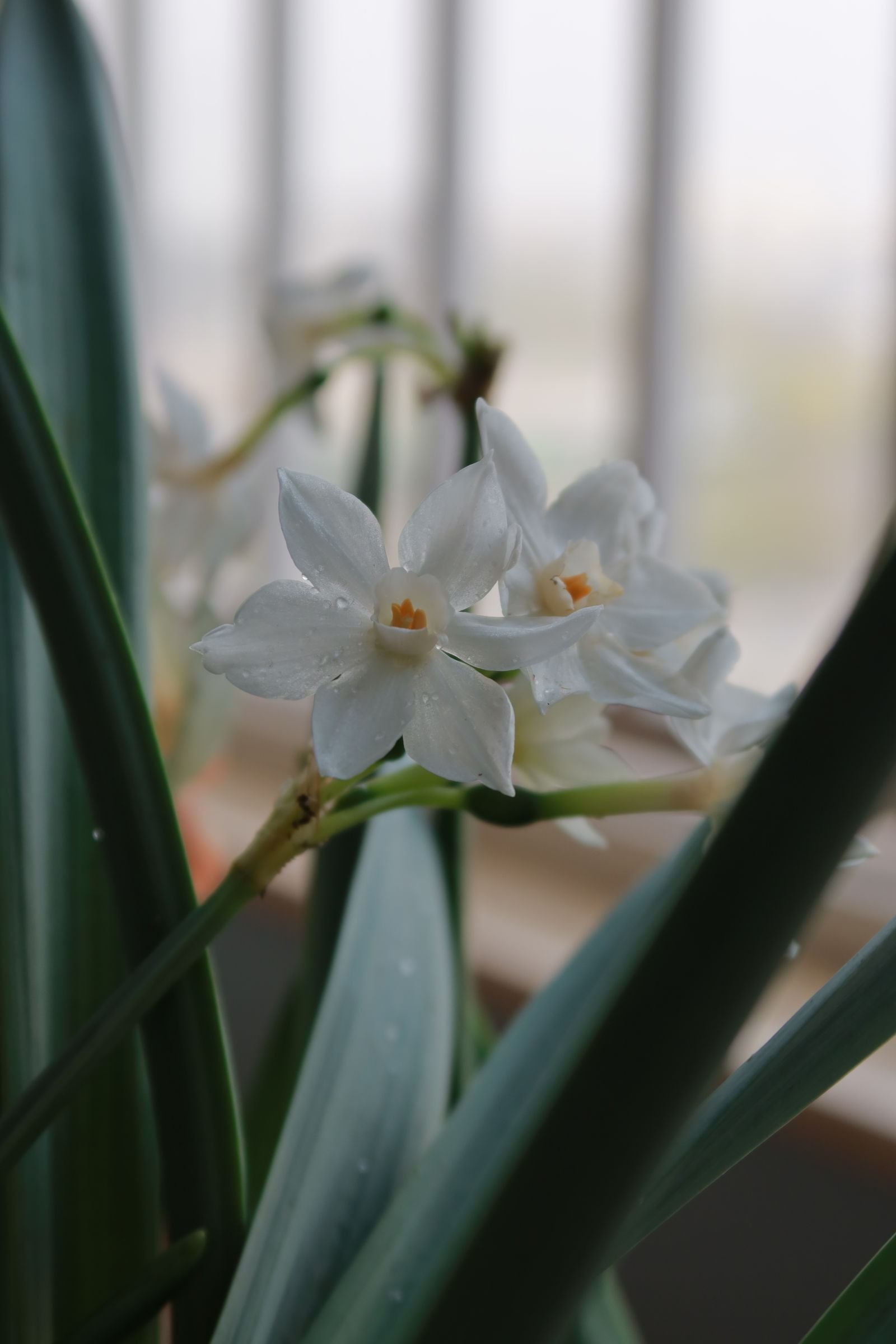
Why These Two Bulbs (and Not the Others)
Most spring bulbs refuse to flower indoors unless they have first been fooled into thinking they have lived through winter. Tulips, hyacinths and daffodils need roughly 12–15 weeks of cold — in a fridge, a cold garage or an unheated porch — before they will bloom in the house. That is a real project, and a good one, but it is not a January project. If you are starting now, you start with the two bulbs that skip the cold entirely.
Paperwhites are a tender narcissus that never needed winter in the first place. Pot them, water them, and they bloom in about 3–6 weeks, in pebbles and water if you like, with no soil at all. Amaryllis — the big waxed bulbs sold everywhere in December — are just as obliging: pot, water sparingly, and expect flowers in about 6–10 weeks. Both are grown the same way you would grow anything on the windowsill next to an indoor herb garden: bright light, a little patience, and a quarter-turn of the pot every few days so the stems grow straight instead of leaning to the glass.
The Blooms-by-Valentine’s Calendar
Forcing bulbs is mostly arithmetic. Count backwards from the day you want flowers, using each bulb’s honest timeline, and pot on the date the maths gives you. This is the calendar this whole article hangs on:
| Pot on | Bulb | Expect blooms | Best spot once flowering |
|---|---|---|---|
| Early December | Amaryllis | Late January to Valentine’s Day (6–10 weeks) | Table centrepiece or mantel end |
| Around New Year | Paperwhites (first pot) | Late January (3–6 weeks) | Windowsill or side table |
| Mid-January | Paperwhites (second pot) | Mid-February, for Valentine’s Day | Dining table |
| Mid-January | Amaryllis (second bulb) | March, as the late-winter rescue | Brightest window you have |
| October (next year) | Hyacinths, tulips, daffodils | February–March, after 12–15 weeks of cold | Anywhere cool and bright |
The paperwhite trick is succession: one pot is lovely, but two pots started a fortnight apart give you flowers for six weeks instead of three. Bulbs are cheap. Stagger them.
Paperwhites, Step by Step
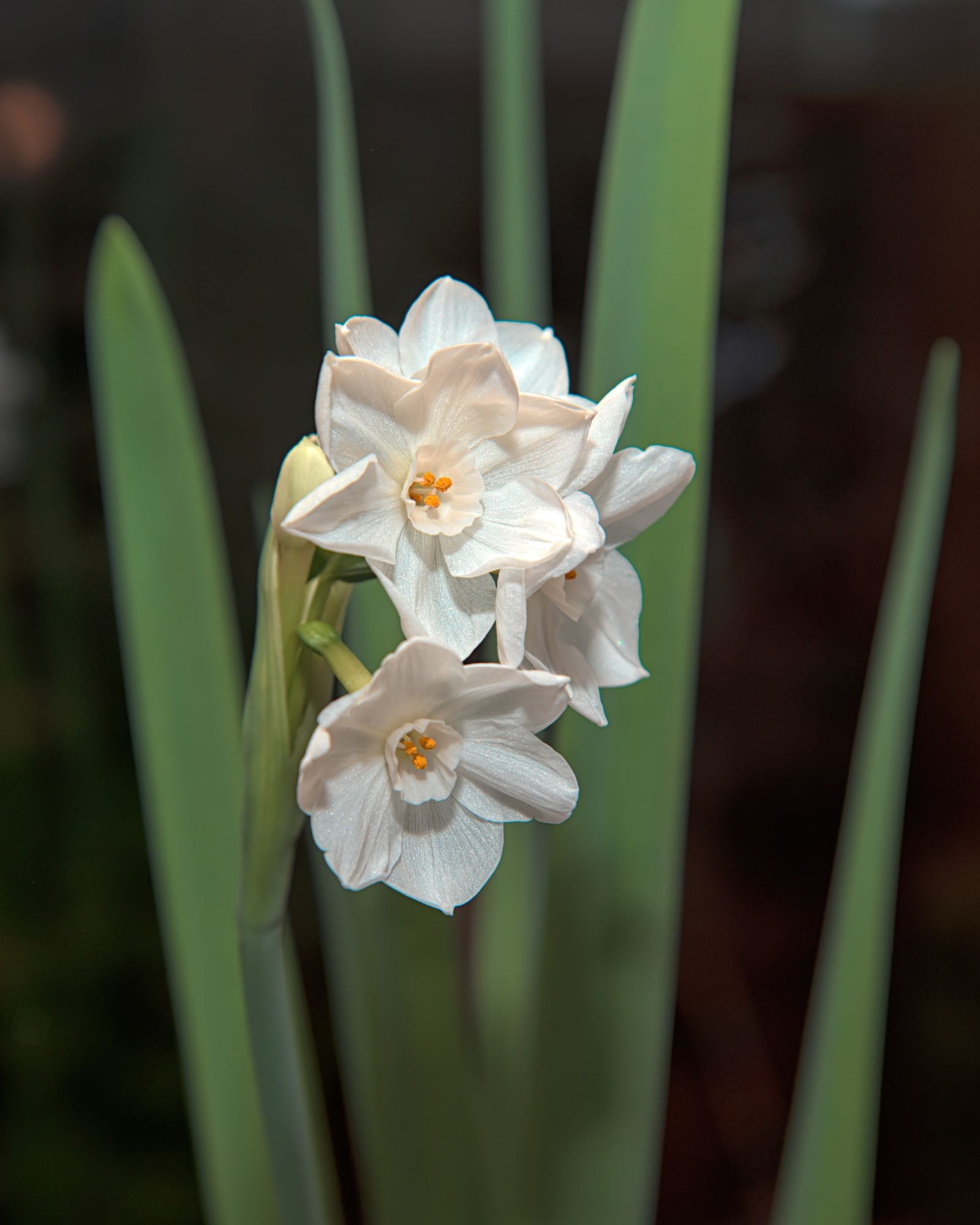
Paperwhites are the easiest flowers you will ever grow, and the method sounds too simple to work. Fill a bowl or a deep dish with pebbles, marbles or coarse gravel. Set the bulbs on top, pointed end up, close together but not touching. Add water until it just touches the base of the bulbs — that phrase matters. The base sits in water; the bulb itself must never sit submerged, or it rots instead of rooting. Within days you will see white roots threading down between the pebbles, which children find as interesting as the flowers.
Keep the bowl in bright light and top the water up to the same line as it drops. The one honest flaw of paperwhites is that they grow tall and can flop; growing them in pebbles in a bowl with some height to it, or tying the stems loosely to a small twig pushed into the bowl, solves most of it. The blue-and-white bowl below is the classic arrangement — bulbs crowded kindly together, leaves doing the green work, flowers held above.

Amaryllis, Step by Step
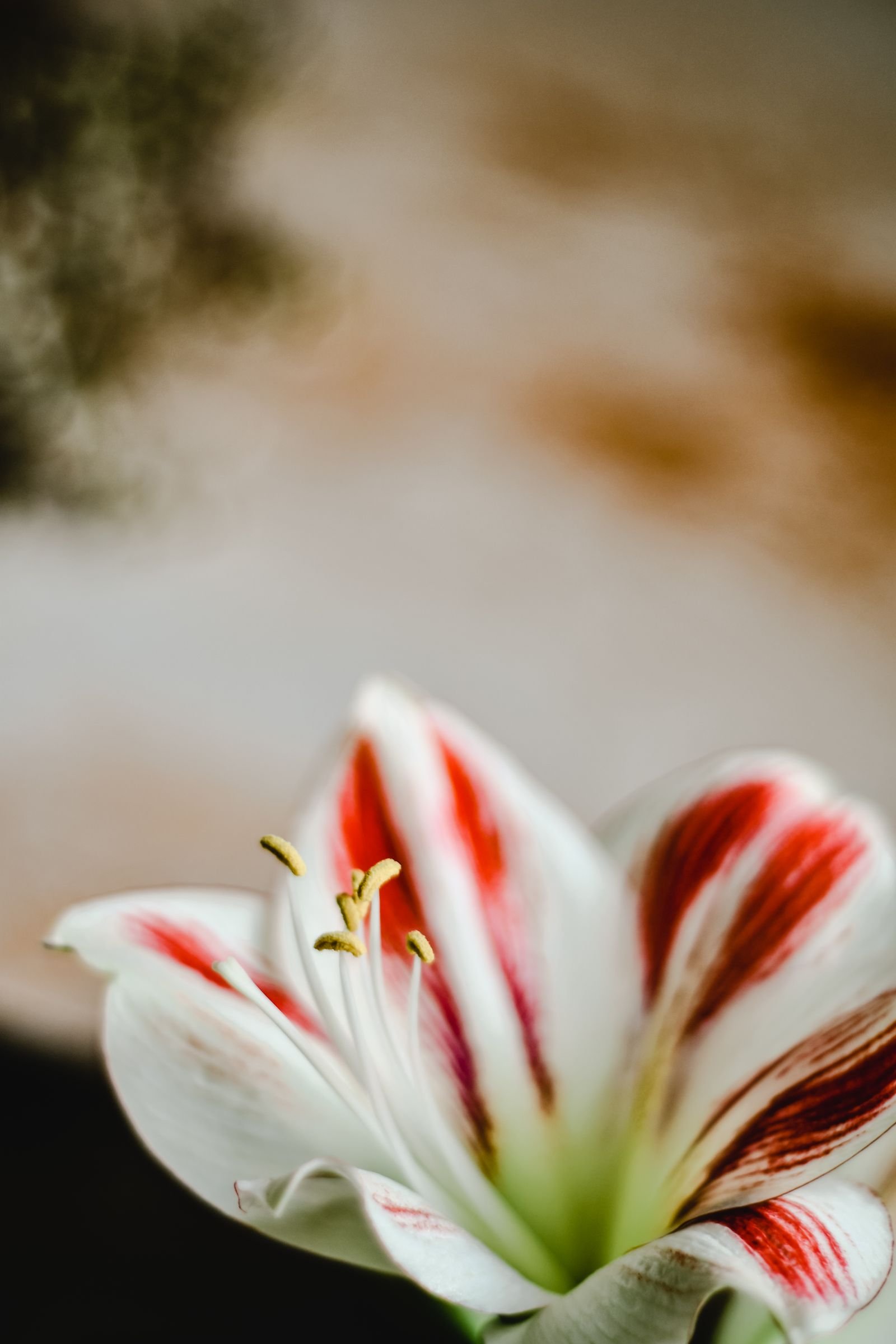
An amaryllis bulb looks like an onion that has made plans. Choose the biggest, firmest bulb you can find — size is stored flower power — and a pot only 1–2 inches wider than the bulb itself. Amaryllis like to be snug; a pot that looks too small is usually right. Set the bulb in ordinary potting mix with its top third — the shoulders and neck — above the soil line, water once, and then mostly leave it alone until the green tip shows. Overwatering a resting amaryllis is the one reliable way to kill it.
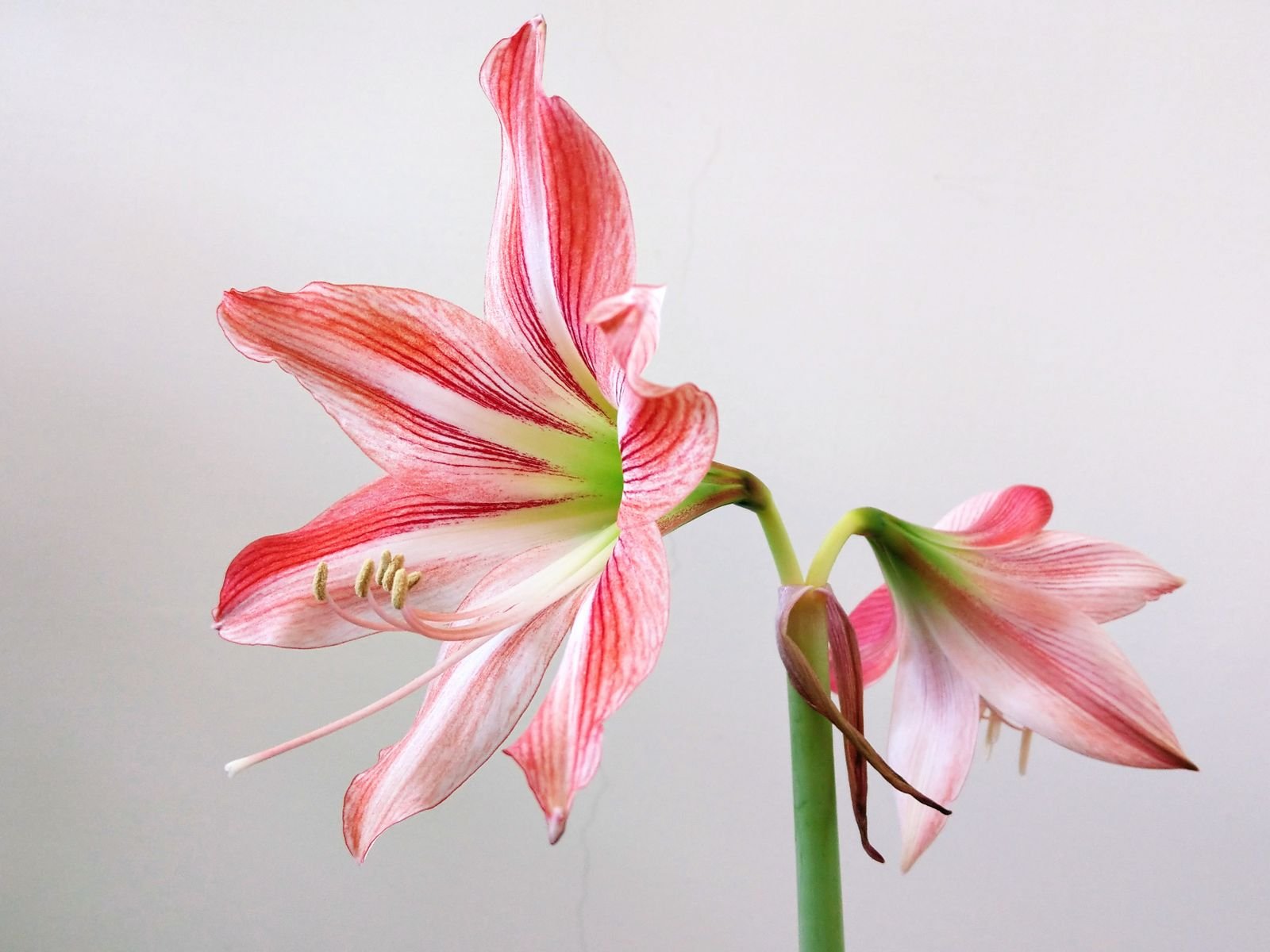
When the stalk rises, it rises fast, and it leans hard toward the light, so turn the pot a quarter every couple of days. The flowers, when they come, are enormous and faintly ridiculous — four trumpets on one stalk is normal — and a second stalk often follows the first, which is how one December bulb is still flowering in February. The pink-striped pair below shows the shape to expect: two blooms opening on a single tall stem.

The Honest Third Group: Bulbs That Need the Cold
Hyacinths, tulips and daffodils are wonderful indoors — the hyacinth’s scent alone is worth it — but they play by different rules, and pretending otherwise is why so many pots of tulips produce leaves and nothing else. These bulbs must have their 12–15 weeks of cold first, at roughly refrigerator temperature, before warmth will trigger flowers. Pot them in October, chill them, and bring them in after New Year. The sprouting hyacinths below are what success looks like at the start: tight green buds rising straight out of the bulb, on a windowsill, in winter.
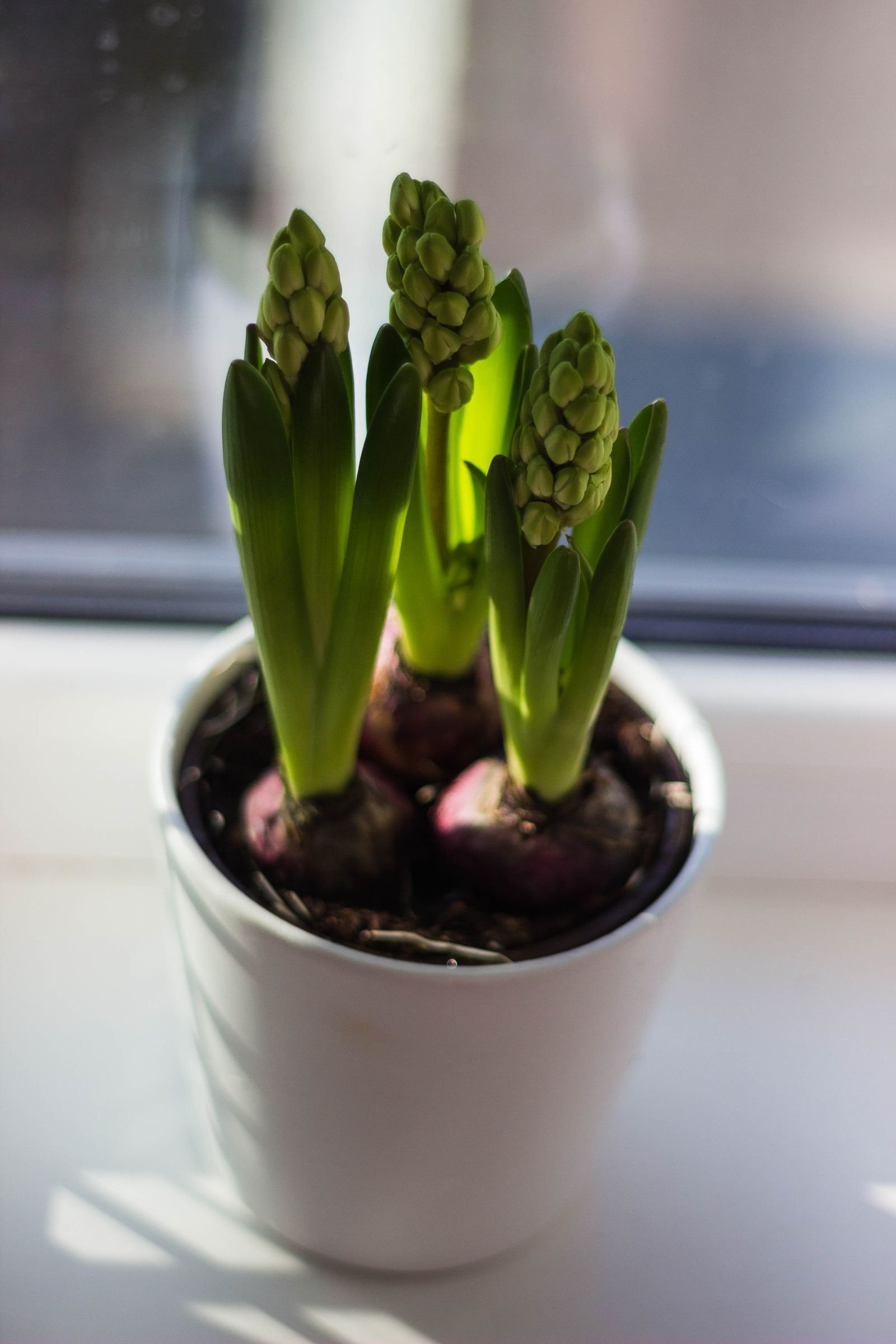
Smaller bulbs follow the same cold rule with shorter tempers — grape hyacinths among them (a reserve photograph of blue grape hyacinths in a pot sits in this article’s image folder if you want to see the scale). If October has passed, do not force the issue: grow paperwhites and amaryllis this winter, and put the hyacinths in the calendar for next autumn.
Styling the Pots as Living Winter Decor
A flowering bulb is decor that you grow instead of buy, and it styles like any other living thing: in odd numbers, at different heights, where people actually sit. Three honest placements do most of the work.
The table centrepiece. One bowl of paperwhites or a single amaryllis in the middle of the dining table, on a linen runner, with candles either side. It is the whole centrepiece — nothing else is required — and it is exactly the arrangement our Valentine’s table decor ideas build around in February, because a living flower beats a bought one on the one night it matters most.
The mantel end. One pot, not a row. A flowering bulb at one end of the mantel and something plain — a stack of books, a candle — at the other reads as design. Five pots in a line reads as a garden centre.
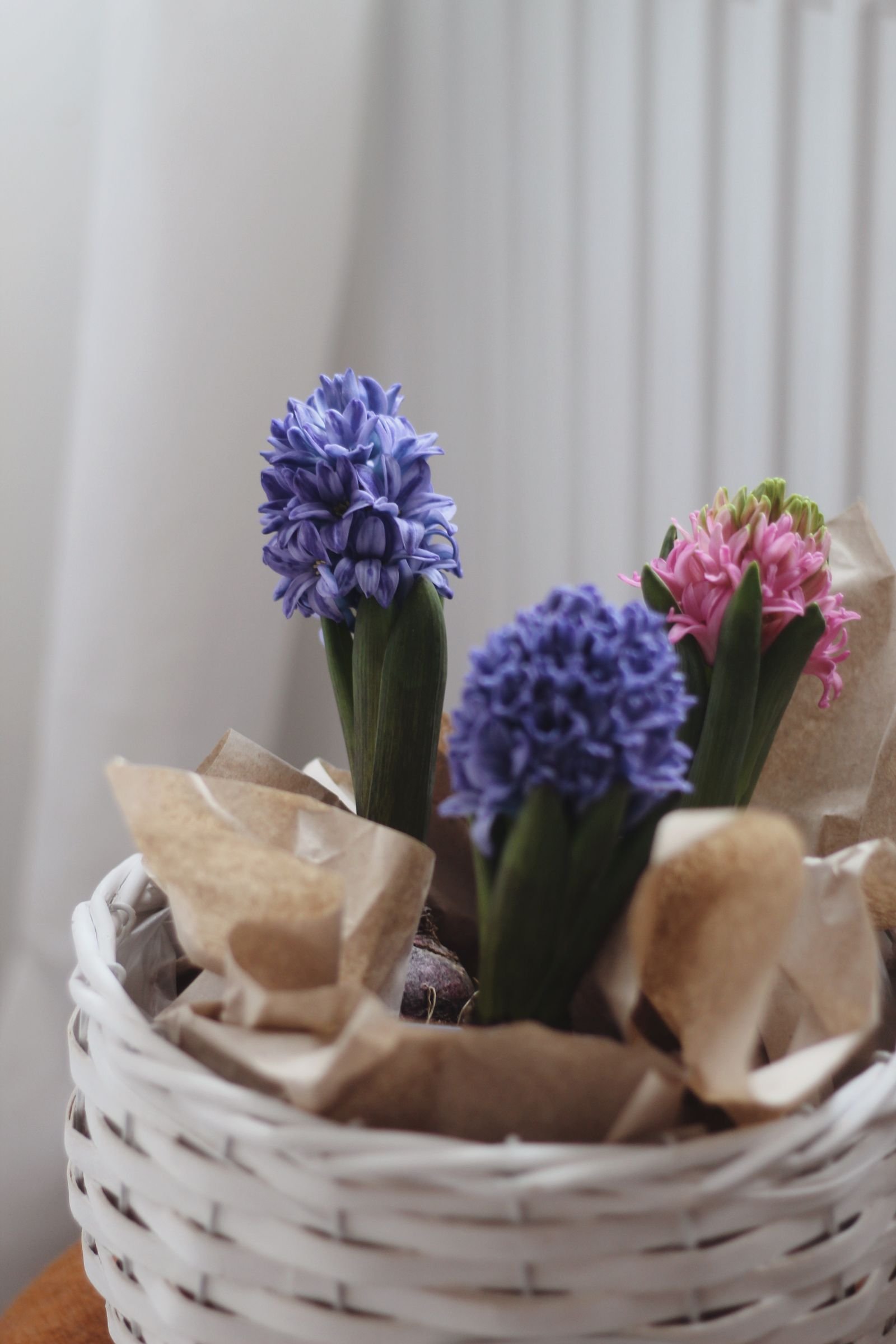
The windowsill and the side table. Bulbs want the brightest light you have while they grow, so the windowsill is both the practical and the prettiest home for them. The hyacinths in the white planter below live on a side table beside a book, which is the whole styling lesson in one photograph: one living plant, one beautiful object, nothing else competing.

Making the Blooms Last
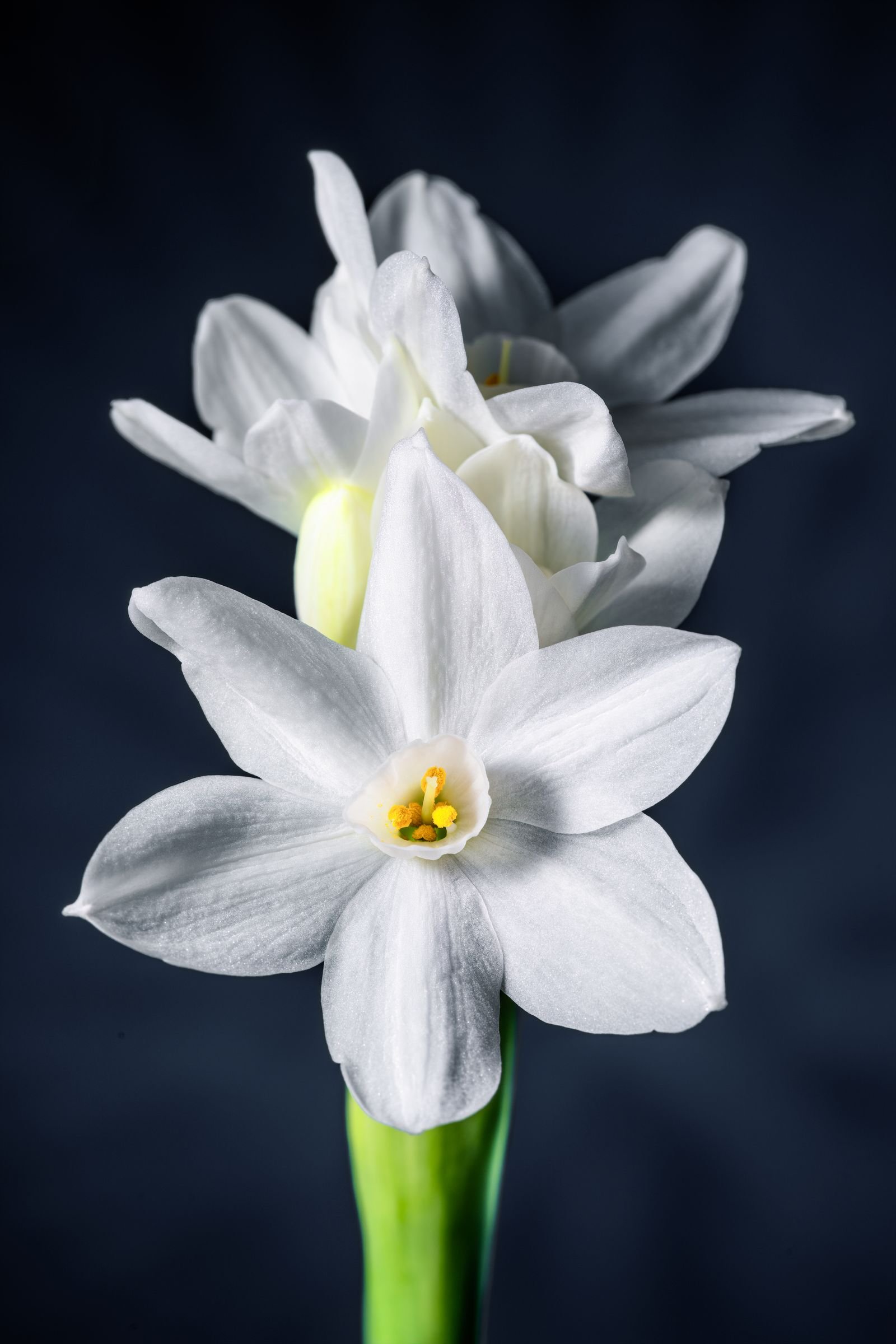
Flowers indoors fade fastest in hot, dry rooms. The single most useful fact in this article is that cooler rooms — around 60–65°F — make blooms last noticeably longer. Move a flowering pot away from radiators and heat vents, keep it in bright but indirect light once it opens, and if your house has a cool porch, hallway or spare room, a flowering bulb will hold there for days longer than in a warm living room. Water paperwhites to the same pebble line, never above it; water amaryllis lightly, only when the top of the soil is dry.
A Necessary Word About Pets
Both of these bulbs are toxic to cats and dogs — paperwhites and amaryllis alike, with the bulb itself the most dangerous part. This is not a reason to skip them, but it is a reason to place them honestly: on a high mantel, a table a cat does not walk on, or a room pets do not enter — and never where a dog can nose a bulb out of a low bowl of pebbles. If you have a cat that treats every surface as its own, grow your winter flowers in a closed room or choose the windowsill behind a door. Decor is never worth a vet bill.
Where to Start (by Budget)
- $0: You cannot grow bulbs you do not own for free — but if a December amaryllis kit is sitting unopened in a cupboard, pot it today. It is not too late; it is just a March flower now.
- Around $10: One bag of paperwhite bulbs (usually 5–10 bulbs) and a bowl of pebbles from the garden. That is two staggered pots and six weeks of flowers.
- Around $25: One large amaryllis bulb in a proper pot, plus paperwhites. The amaryllis is the showpiece; the paperwhites are the guarantee.
- One windowsill at a time: Start with paperwhites. They are the fastest, the cheapest, and the most forgiving — success in January is what makes you plant again in October.
Three Winter Bulb Mistakes to Avoid
- Submerging paperwhite bulbs. Water touches the base only. A bulb sitting in water rots; a bulb whose roots reach water thrives.
- Putting amaryllis in a big pot. A pot 1–2 inches wider than the bulb is correct. A generous pot means wet soil, a sulking bulb and no flowers.
- Expecting tulips without the cold. Hardy bulbs need their 12–15 weeks of chill. Skipping it does not speed anything up — it just gives you leaves.
Winter Bulb Questions
Do paperwhites indoors need chilling?
No. Paperwhites are the exception among narcissus — pot them and they bloom in about 3–6 weeks with no cold period at all.
How long does an amaryllis take to bloom after potting?
About 6–10 weeks, depending on the bulb’s size and the warmth of the room. Pot in early December for Valentine’s flowers.
Can paperwhites really grow in just pebbles and water?
Yes — pebbles for support, water just touching the bulb’s base. The roots grow down into the water; the bulb itself stays dry and must never sit submerged.
Why did my indoor tulips grow leaves but no flowers?
Almost certainly the cold was skipped or cut short. Tulips, hyacinths and daffodils need about 12–15 weeks of cold before indoor warmth will trigger a flower.
Are paperwhites and amaryllis safe around cats and dogs?
No — both are toxic to cats and dogs, the bulb most of all. Place pots where pets cannot reach them, or in a room pets do not use.
How do I make the flowers last longer?
Cool air is the trick: a room around 60–65°F, bright indirect light, and distance from radiators will hold blooms days longer than a hot room.
A bulb on the windowsill is a promise the house makes to itself in January: something is growing here. Pot the paperwhites this week, and by the middle of February the promise is on the table, in flower.