
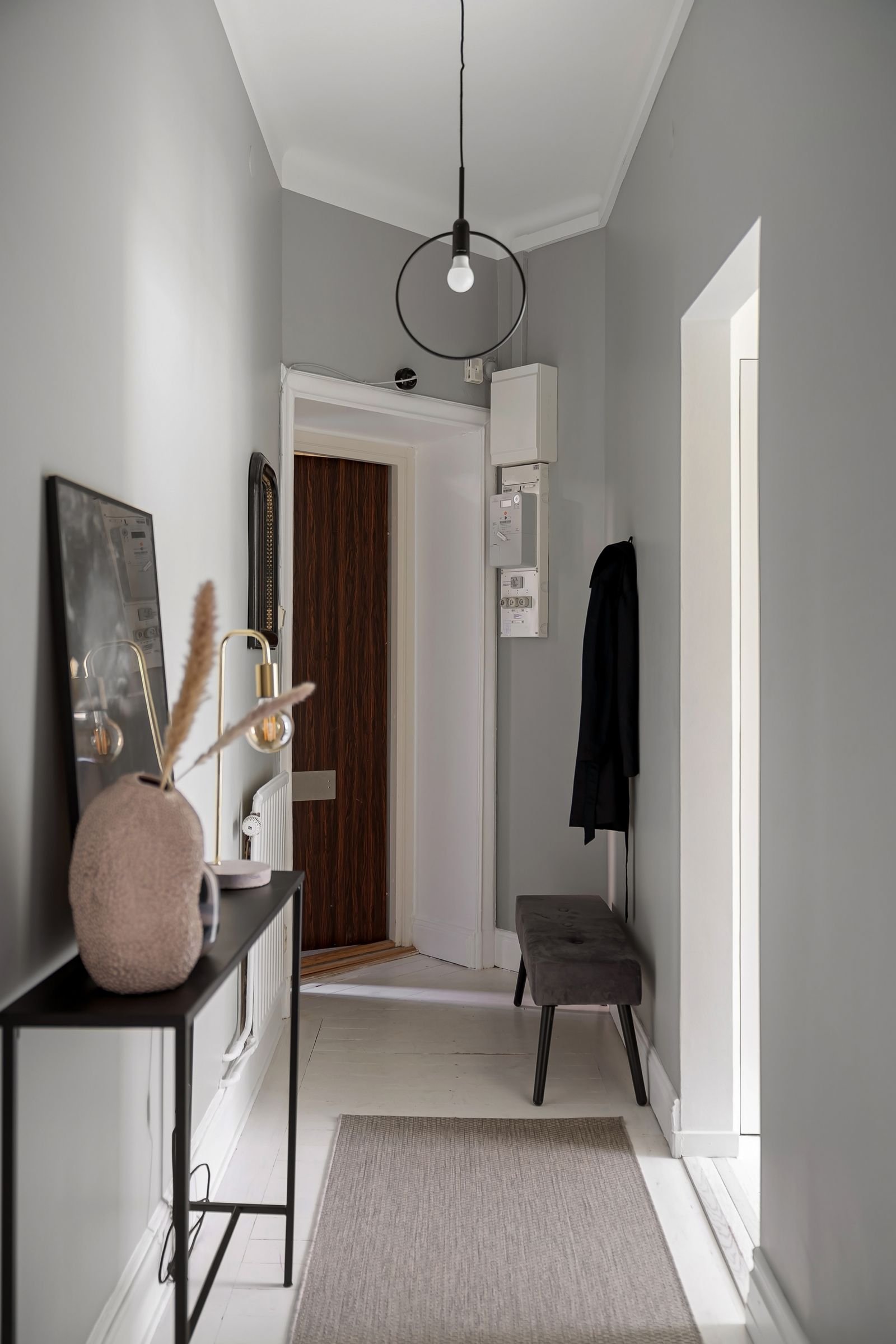
If your hallway is anything like mine, it is the hardest-working few feet in the house and the least loved. Ours is 38 inches wide — just enough for a laundry basket carried sideways and a muttered apology when two people try to pass at once. For years it was a plain white tunnel with one sad ceiling light, and I honestly didn’t think decor could do much for a space you only ever pass through.
Then I repainted it, hung one good mirror, and laid down a proper runner, and the whole feel of the house changed. Nothing got bigger, of course. But the hallway stopped feeling like a squeeze and started feeling like a room. That’s the secret with narrow hallway decor ideas: width is mostly a feeling, and that feeling is built from light, reflection, and clean sight lines. Here is everything that actually works, in the order I’d do it.
Start With Paint That Throws Light Around
In a narrow hall, paint is not just color — it’s your biggest light source. Walls this close together bounce light back and forth all day, so a shade with a high light reflectance value (look for an LRV of 70 or above on the swatch) genuinely brightens the run. My reliable shortlist for small hallway decor ideas that stay modern but warm: Benjamin Moore White Dove OC-17, Sherwin-Williams Alabaster SW 7008, and Benjamin Moore Pale Oak OC-20 if you want a hint of greige. All three read soft rather than stark, which matters in a space with no windows.
Finish matters as much as color. Flat paint swallows light; eggshell or satin on the walls gives a gentle sheen that keeps light moving, and it scrubs clean where bags and shoulders brush past. Keep the ceiling a clean flat white — it’s the one surface that should disappear upward — and use a slightly glossier satin or semi-gloss on trim and doors so the edges catch a little shine.
One warning from experience: painting both long walls a deep color is the fastest way to make a narrow hallway feel like a cave. If you love color, save it for the short end wall (more on that below) and keep the long walls light. Renters, most of this still applies — a removable approach to color is covered in my guide to renter-friendly apartment decor ideas, and even painting just the end wall is usually a one-afternoon, one-quart job.
Let One Good Mirror Do the Heavy Lifting
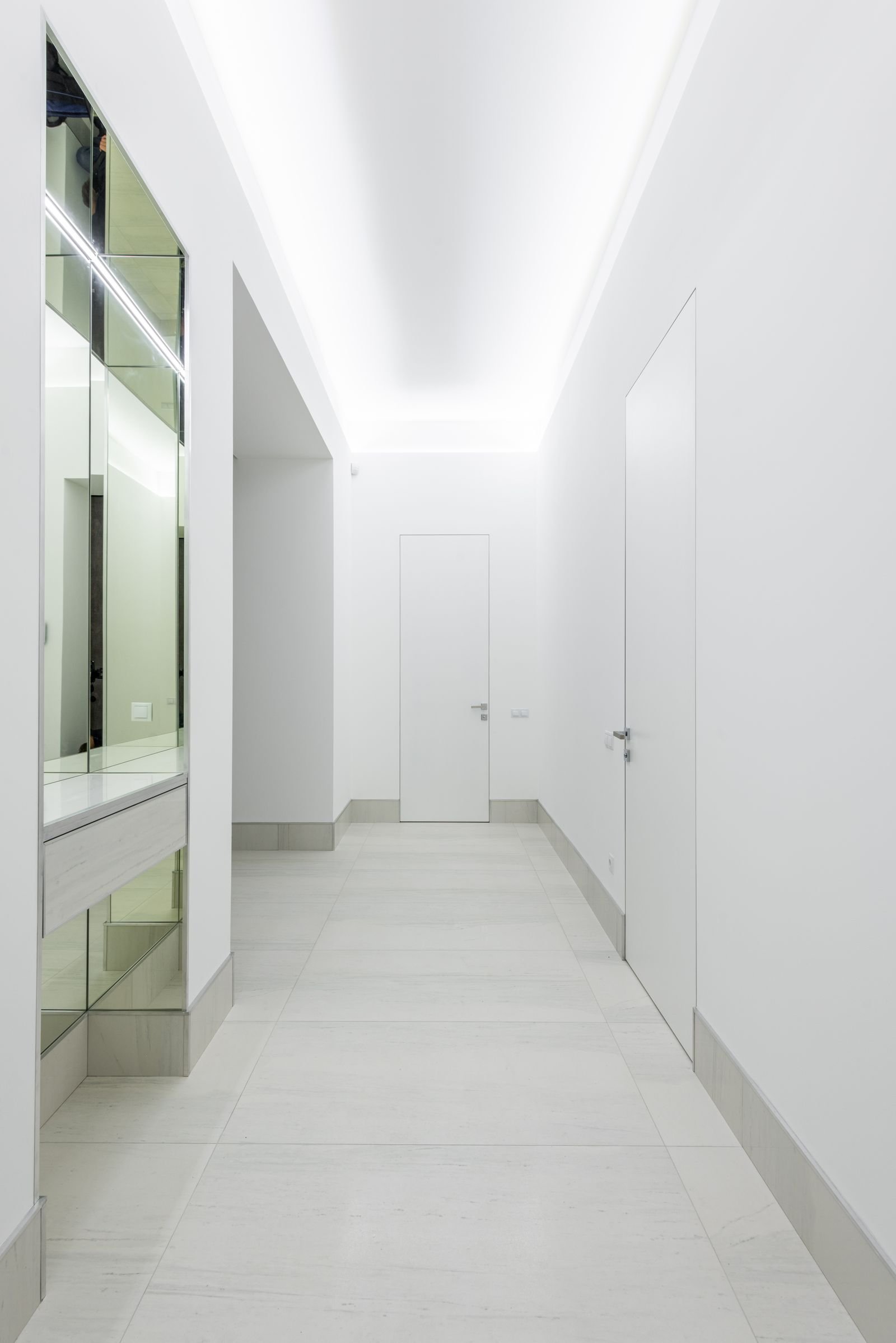
A mirror is the closest thing a narrow hallway has to a window. It borrows light from the rooms at either end and hands your eye a second, deeper view of the space, which the brain reads as width. The trick is to commit: one large mirror beats a cluster of small ones, which tend to chop the wall into busy fragments and make the hall feel more cluttered, not less.
Placement is everything. Hang the mirror where it catches light — on the wall opposite a doorway into a bright room, or angled toward the end of the hall where daylight lands. A long horizontal mirror along one wall stretches the room visually; a tall vertical one is better if your ceiling is low, because it pulls the eye up. Hang it at eye level, roughly 57 to 60 inches to the center, just as you would art.

A round mirror is my favorite softener in a tight hall — all those straight lines and door frames benefit from one curve. Above a slim console it creates a proper little moment instead of a pass-through. Two cautions: don’t hang a mirror where it reflects a cluttered closet or the back of a door, because it will double the mess instead of the light, and if the mirror faces the end of the hall, make sure what’s at the end is worth seeing twice.
Run a Runner That Pulls the Eye Forward
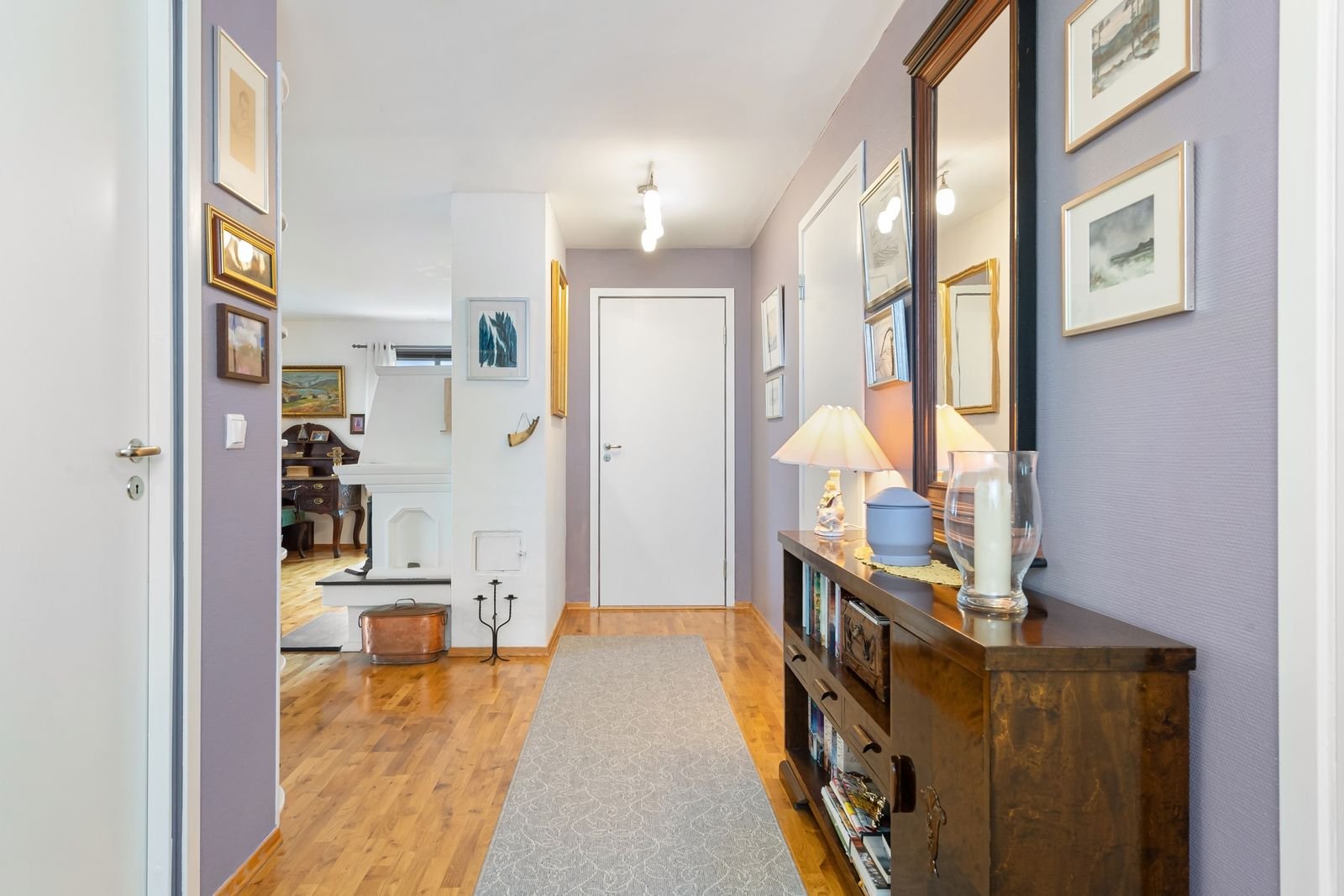
A bare floor in a narrow hallway shows every scuff and echoes every step. A runner fixes both, and it does something else: it draws a long line down the center of the hall that pulls your eye forward, and a hallway that reads as long somehow stops reading as narrow.
Sizing is where most people go wrong, so here are the numbers. For a standard 36-inch hallway, choose a runner 2 feet to 2 feet 3 inches wide, leaving a 4-to-6-inch border of floor showing on each side — that border is what keeps it looking tailored instead of wall-to-wall. For length, run it most of the hall but stop it short of door swings and thresholds; in a 12-foot hall, a 10-foot runner is about right. Standard 2.5-by-8 and 2-by-10 runners cover most homes.
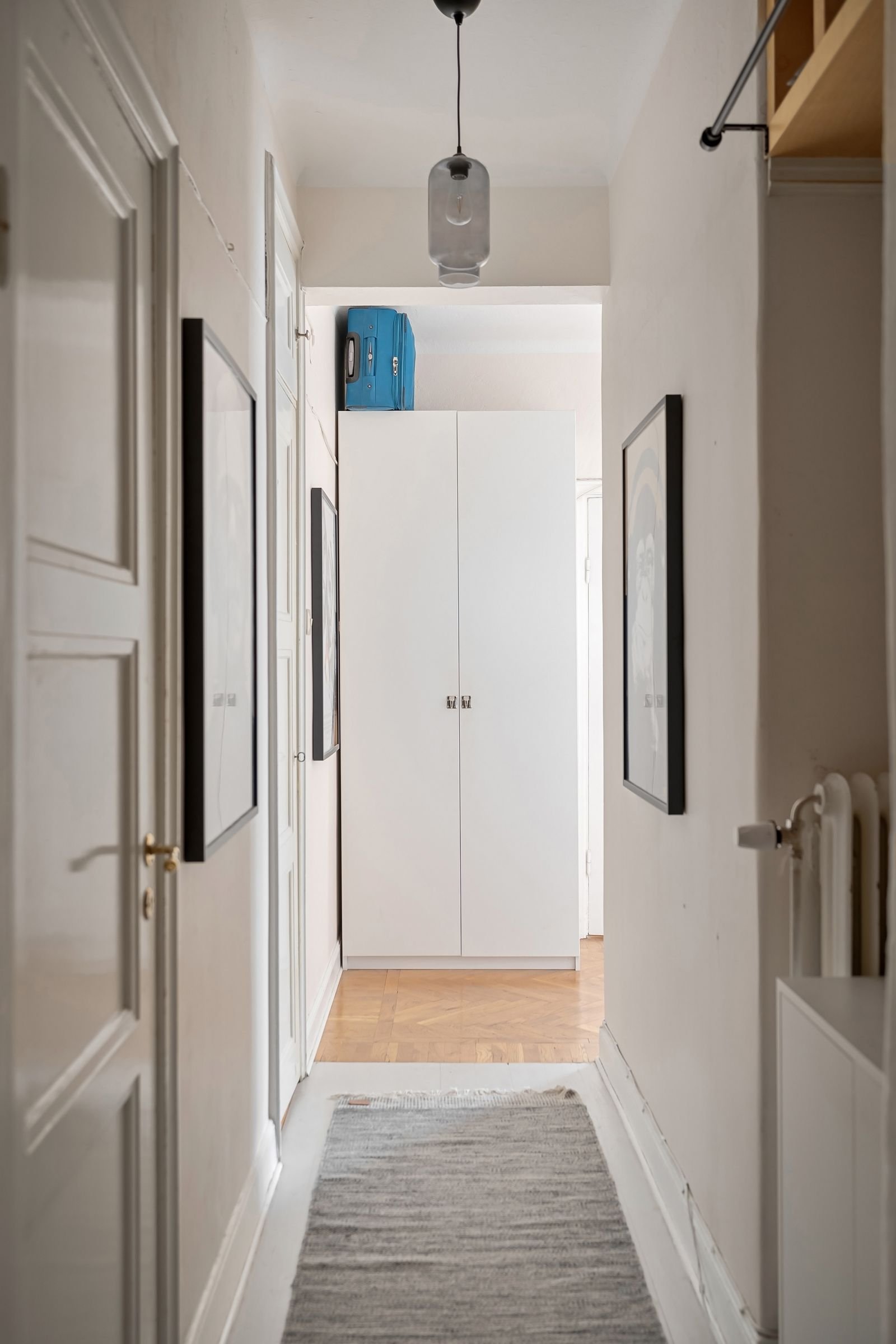
Choose a low-pile flatweave you can vacuum easily and, ideally, throw in a wash — hallway runners live hard lives with muddy shoes and pet traffic. Light-to-medium tones with a subtle lengthwise stripe or a small all-over pattern hide dirt while stretching the space; avoid wide horizontal bands across the runner, which visually chop the hall into segments. Always use a non-slip rug pad underneath. It stops the creep, adds a little cushion, and keeps the edges lying flat instead of curling into trip hazards.
Light It in Layers, Not With One Sad Ceiling Bulb
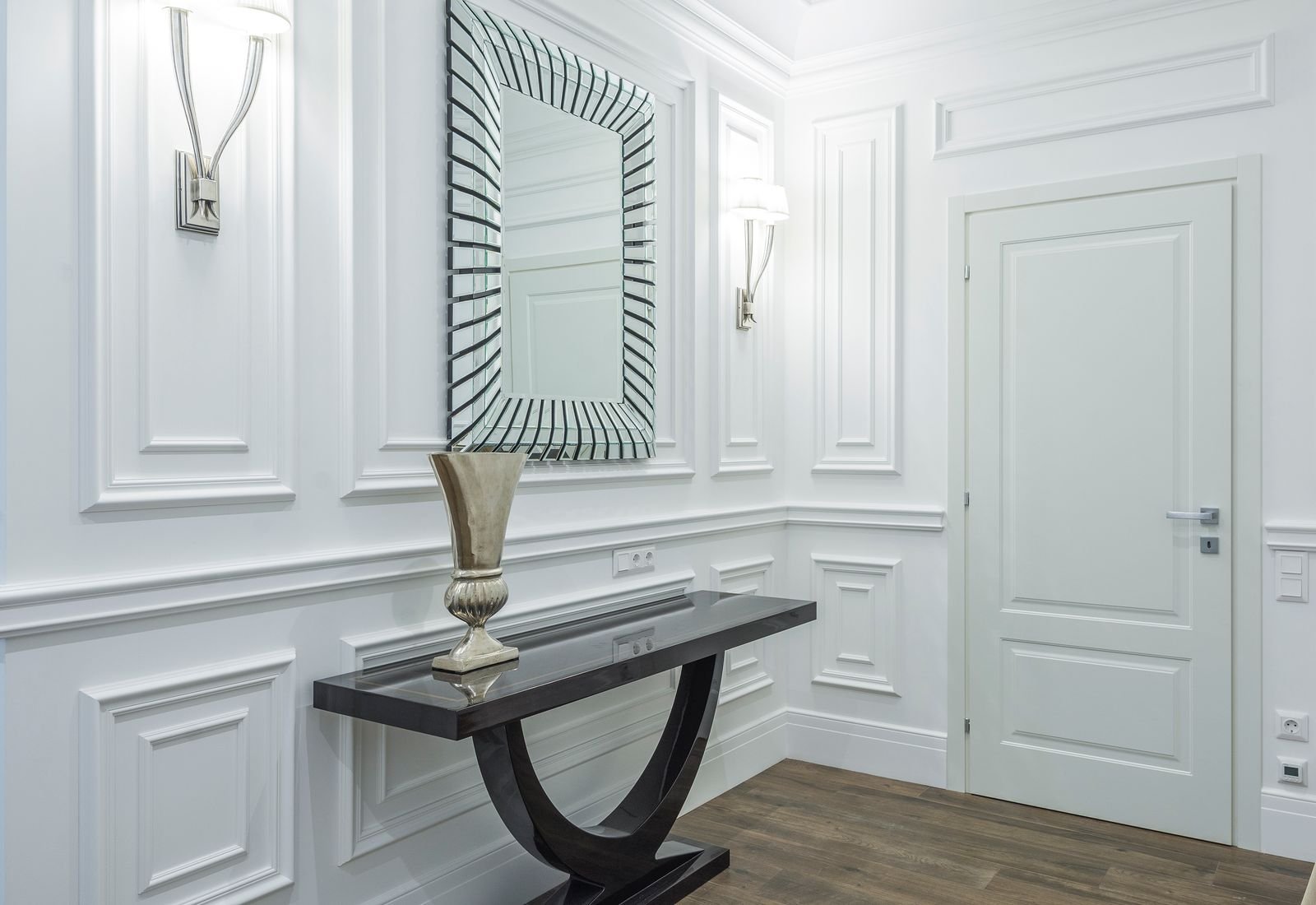
Most narrow hallways are lit by a single flush mount in the middle, which casts shadows into every corner and makes the walls lean in. Layered light does the opposite. Start with the ceiling: in a hall longer than about 10 feet, two smaller flush mounts spaced evenly will always beat one big one, and bulbs in the 2700K–3000K range keep the light warm rather than clinical.
Then add light at eye level. Slim wall sconces — look for profiles that project 4 inches or less — wash the walls with light and make them recede. Mount them around 60 to 66 inches from the floor. A pair flanking a mirror doubles the effect, because the mirror throws the glow right back into the room. Picture lights over a single piece of art work the same trick on a smaller scale.
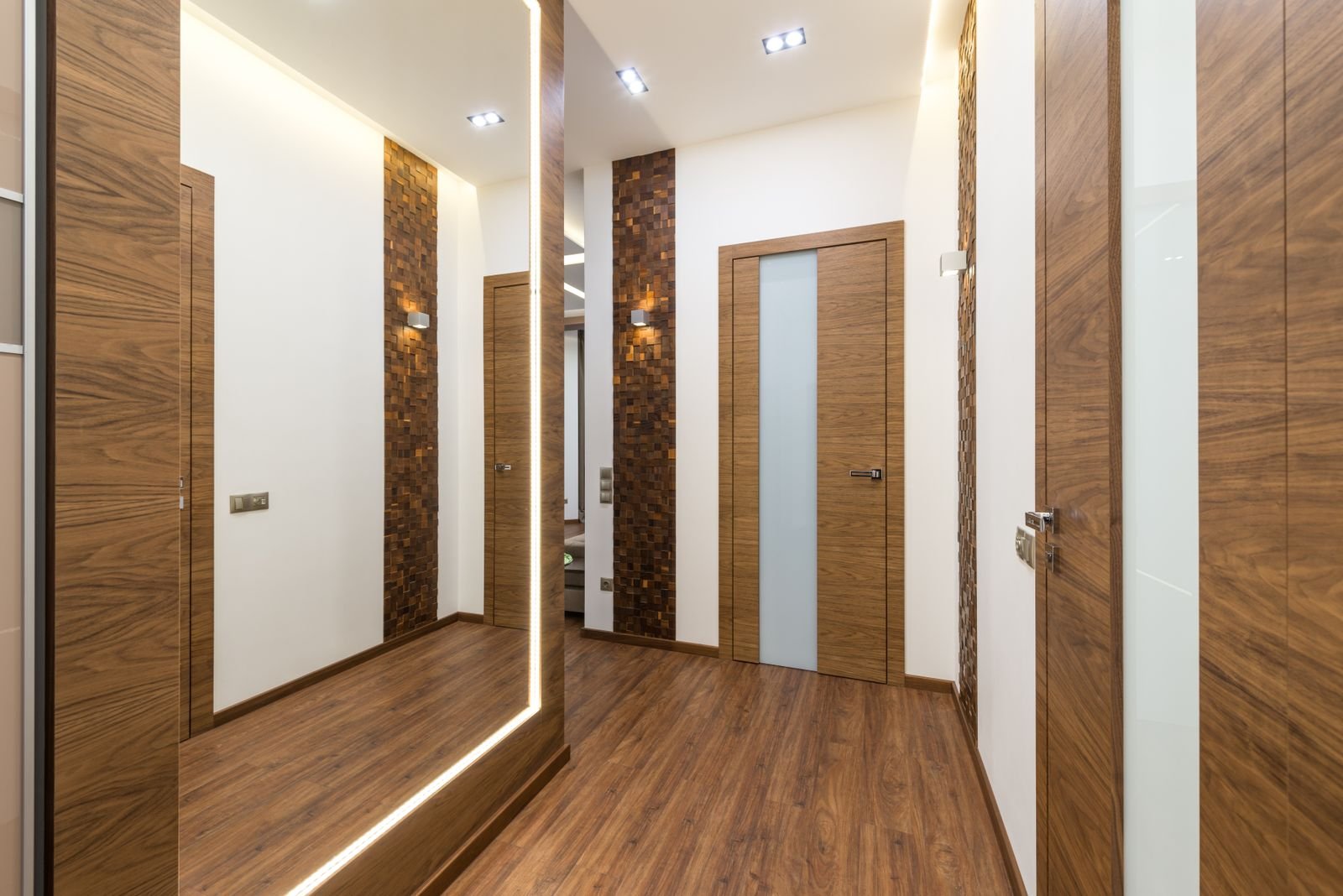
No wiring budget? Battery-operated and rechargeable sconces have gotten genuinely good, and plug-in versions with a cord cover are a renter’s best friend. Even a small lamp on a console at the end of the hall changes the whole mood at night — a pool of warm light gives the eye a destination instead of a dark tunnel. Several of these swaps appear in my small entryway ideas for coats and shoes as well, because entry halls and hallways share the same lighting problems.
Choose Furniture That Hugs the Wall
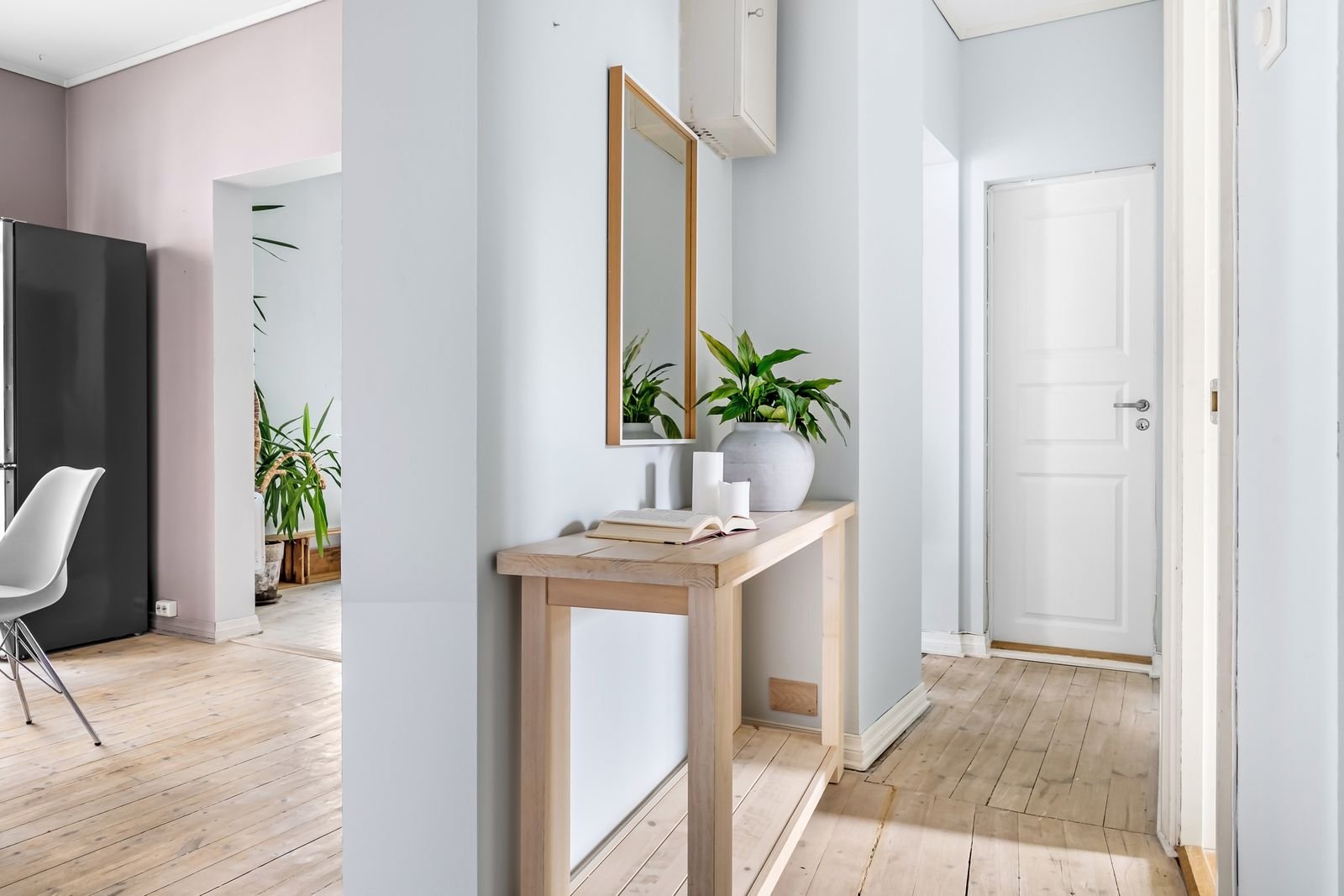
Yes, a narrow hallway can hold furniture — it just has to be the right depth. My rule: in a 36-inch hall, nothing on the floor should be deeper than 10 to 12 inches, so at least two feet of clear passing space remains. Consoles in the 8-to-12-inch depth range are made for exactly this, and leggy, open-base styles are better than solid ones because seeing the floor continue underneath keeps the space feeling open.
Floating pieces are even better. A wall-mounted shelf or floating console at about 34 inches high gives you a landing spot for keys and mail while the floor stays completely clear — and clear floor is the whole game in a narrow space. If you want display space, a shallow picture ledge (about 4 inches deep) lets you lean a rotating mix of frames without committing; I keep that to one short run of ledge so it doesn’t turn into a full gallery treatment, which I’ve covered separately in my gallery wall ideas.
A bench is the one piece to be careful with. In a hall under 42 inches wide, skip it — you’ll brush it a dozen times a day. Where you do have the width, a backless bench at the end of the hall, under the focal point, earns its place for shoe-tying and bag-dropping.
Paint the Doors and Trim to Disappear

Count the doors in your hallway. Four, five, six? Every one of them, framed in bright contrasting trim, is a visual interruption that chops the wall into pieces and reminds you how small the space is. The fix designers use in small hallway decor ideas is simple: paint the doors the same color as the walls, in the same satin finish family, so they recede into one calm surface. Slab and paneled doors both take to this — the panels still show as soft shadow lines, just without the shout.
Keep the trim simple and tonal too. If you want trim definition, use the same color in a glossier sheen rather than a brighter white; the light catches the edge and gives you the architecture without the contrast. Match your door hardware finishes along the run — a line of mismatched knobs reads as clutter at exactly eye level. And if your floor is being redone, lay planks lengthwise down the hall or in a herringbone, both of which lead the eye forward instead of across.
Give the End of the Hall a Destination

A narrow hallway feels like a tunnel when it ends in nothing — a blank door, a dark corner. Give the end wall a job and the whole space relaxes. This is the one wall where a deeper color works beautifully: a soft sage, clay, or inky blue on the short end wall actually makes it feel closer and cozier rather than farther and darker, and it frames everything in front of it.
If paint feels like a commitment, a single oversized piece of art, a bench with a cushion, or a tall plant in the corner by the end window all do the same work. The simplest version costs nothing: if the door at the end opens into a bright room, leave it open. Borrowed light and a glimpse of somewhere worth going turns a corridor into a connection.
A Few Things to Skip
A quick list of what reliably makes a narrow hallway feel narrower: dark paint on both long walls, a runner so wide it touches the baseboards, art hung on both walls facing each other (it closes the space like a zipper), bulky furniture with solid bases, and a single dim bulb doing all the work. If your hallway currently has two or three of these, fixing just those will change it more than any shopping trip.
The Takeaway
You can’t add inches to a narrow hallway, but you rarely need to. Light paint in the right finish, one generous mirror, a properly sized runner, layered lighting, furniture that hugs the wall, doors that disappear, and an end wall worth looking at — each one is a small, mostly inexpensive change, and together they turn the squeeze into a space that feels calm, bright, and twice its width. Start with the runner and the mirror this weekend; those two alone will convince you.