
There is a particular morning, usually sometime in late February, when the light in our living room changes. It comes in earlier, it lands differently on the fireplace, and the mantel — which has been carrying candles and heavy greenery for months — suddenly looks like it is dressed for the wrong season. That is the day I strip it bare and start again with spring.
A spring mantel is not a smaller version of a holiday mantel. It is lighter in every sense: fewer pieces, softer colors, and things that look like they are still growing. The ideas below are the ones I come back to every year, in the order I actually do them, with the real numbers — vase heights, garland lengths, and what things cost.
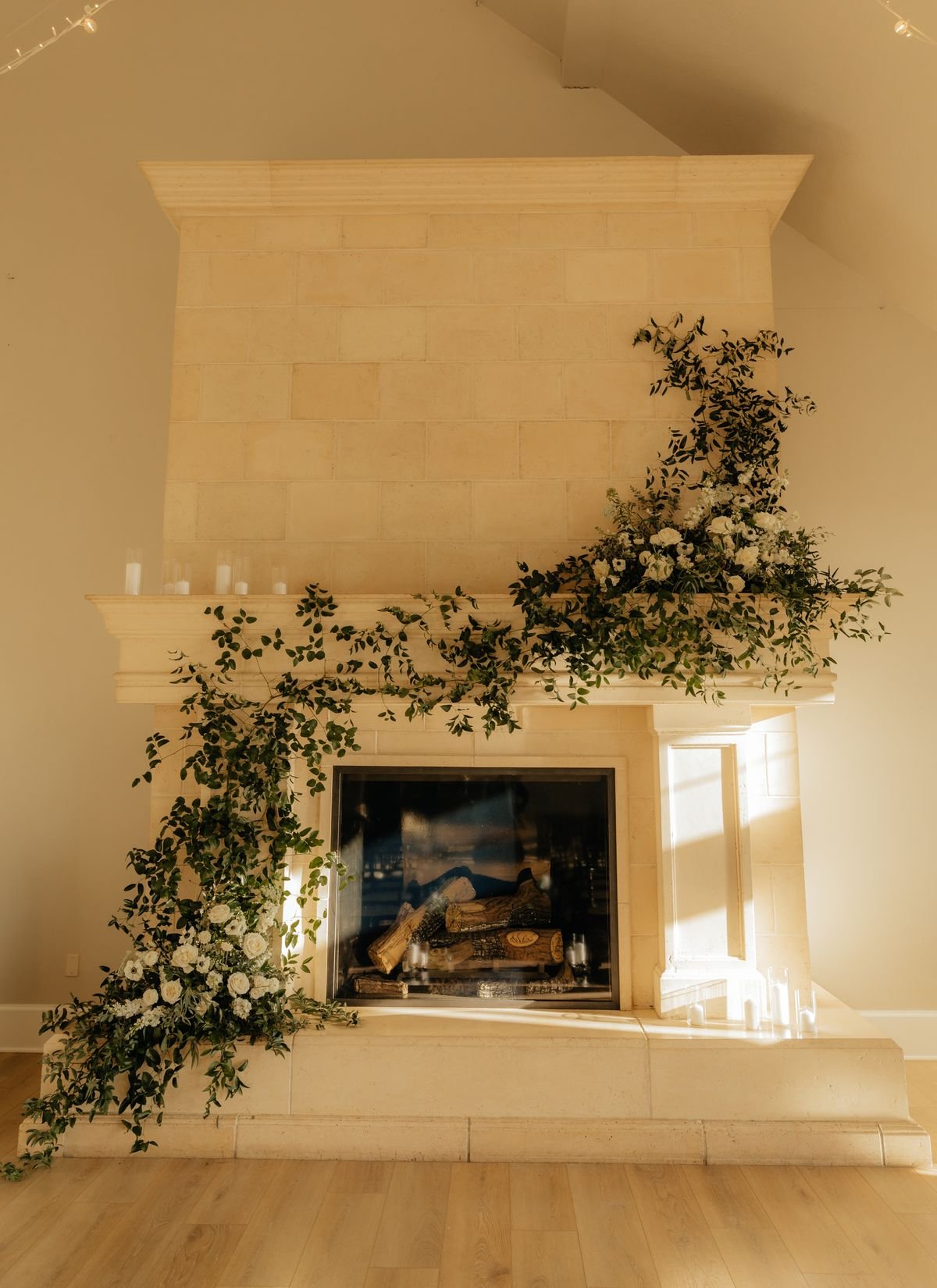
Start by taking the mantel back to bare wood
Before anything spring goes up, everything else comes down. I mean everything — the candles, the stack of books, the little objects that crept up there one at a time all winter. Dust the shelf, wipe the surround, and clean the glass if your fireplace has doors. Spring light is unforgiving; it shows every fingerprint.
Then live with the empty mantel for a day if you can. An empty shelf tells you what the room actually needs. Ours is a narrow stone surround, and every year I rediscover the same thing: it needs height at the back, softness at the front edge, and almost nothing in the middle. That one observation decides the whole arrangement.
Pick a spring palette before you buy anything
Spring palettes fail when they try to include every pastel at once. Pick one of these four combinations and hold yourself to it — pillows, throws, and anything else you add to the room should be able to pass the same test.
- Fresh green and white. The easiest and the most forgiving. Eucalyptus, olive branches, white tulips, cream candles. Works on white, wood, and stone alike.
- Blush and cream. Blossom branches, pale pink ranunculus, ivory ceramics. Lovely on a white mantel; on dark brick it can disappear, so add one deeper green for contrast.
- Butter yellow and sage. Daffodils, forsythia, soft green linen. The palette that makes a north-facing room feel sunnier than it is.
- Blue and white. Hydrangea tones, blue-and-white ginger jars, crisp white flowers. Classic with a brick fireplace — if you love this direction, our guide to a cozy sage green living room shows how far one disciplined color family can carry a whole room.

Lead with greenery: garlands that look like spring, not December
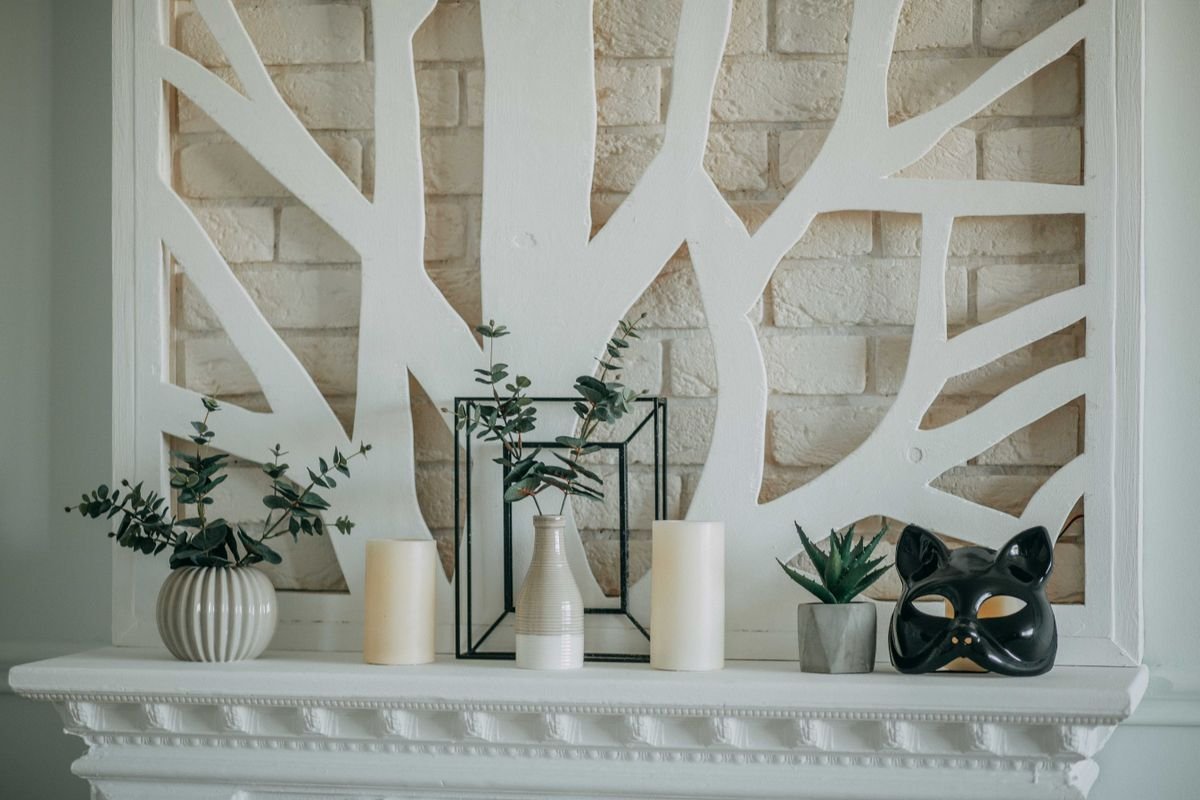
Greenery is the backbone of a spring mantel, but the garland has to change its character. A spring garland should be loose, airy, and a little uneven — nothing like the dense, wired rope of December. Think eucalyptus, olive branch, ivy, or faux lamb’s ear, laid in one gentle swag with one end trailing lower than the other.
Length matters more than fullness. For a standard 5-foot mantel, buy a 6- to 9-foot garland: enough to cross the shelf, dip once in the middle, and fall a few inches down one side. A garland cut exactly to the shelf’s width always looks installed rather than arranged.
Real or faux? Fresh eucalyptus from the grocery store (usually $5–$8 a bunch) smells wonderful and lasts about a week before it starts to dry — though it dries gracefully and can stay a second week. A good faux garland costs $25–$45 once and comes back every spring. My honest compromise: a faux garland as the base, with a few real stems tucked in at the front where the eye lands. Nobody has ever spotted the join.
However you hang it, keep every leaf clear of the firebox opening, use small removable hooks tucked behind the shelf edge rather than nails, and lift the trailing end up before lighting a fire on cool evenings.

Branches and blossom: the tallest thing on the mantel
If the garland is the backbone, branches are the exclamation point. One tall vase of blossom — cherry, quince, forsythia, or even a few bare sculptural branches before the buds open — gives a spring mantel the height that candles give a winter one, without any of the heaviness.
Heights, because this is where most people go wrong: for a mantel shelf about 12 inches deep, choose a vase 10 to 14 inches tall, and cut or buy branches that stand 24 to 36 inches above the shelf. The whole arrangement should be roughly one and a half times the height of whatever hangs above the mantel. Shorter than that and it reads as clutter; taller and it fights the mirror or art.
Real branches from the garden are free and unbeatable when they bloom, but they are unpredictable — quince forces well indoors in a vase of water, cherry is slower, and forsythia is the reliable one, usually opening within a week. Faux blossom stems have improved enormously; a $12–$18 wired stem looks convincing at mantel distance. I keep two faux quince stems for the years the garden is late, and feel no shame about it.
Set the vase off-center, about a third of the way along the shelf. Centered arrangements are for hotels; a third-of-the-way placement leaves room for the garland to trail and for smaller things to gather at the other end.

Fresh flowers, in small doses
A spring mantel does not need a florist arrangement. It needs two or three small hits of real flowers, placed where the greenery is thinnest. A bud vase with three tulips. A small jug of daffodils at the hearth. A low bowl of hyacinths whose scent reaches the sofa.
Grocery-store math: a $6 bunch of tulips splits into three bud vases, which means the whole mantel can carry fresh flowers for the price of one coffee. Daffodils are cheaper still in season, but give them their own vase for the first few hours — their sap shortens the life of other flowers sharing the water. Replace one small vase a week rather than the whole display at once, and the mantel looks freshly done for eight weeks on a very small budget.
Keep flower heights low and wide rather than tall and thin. Anything that competes with the branch vase will make both look accidental.
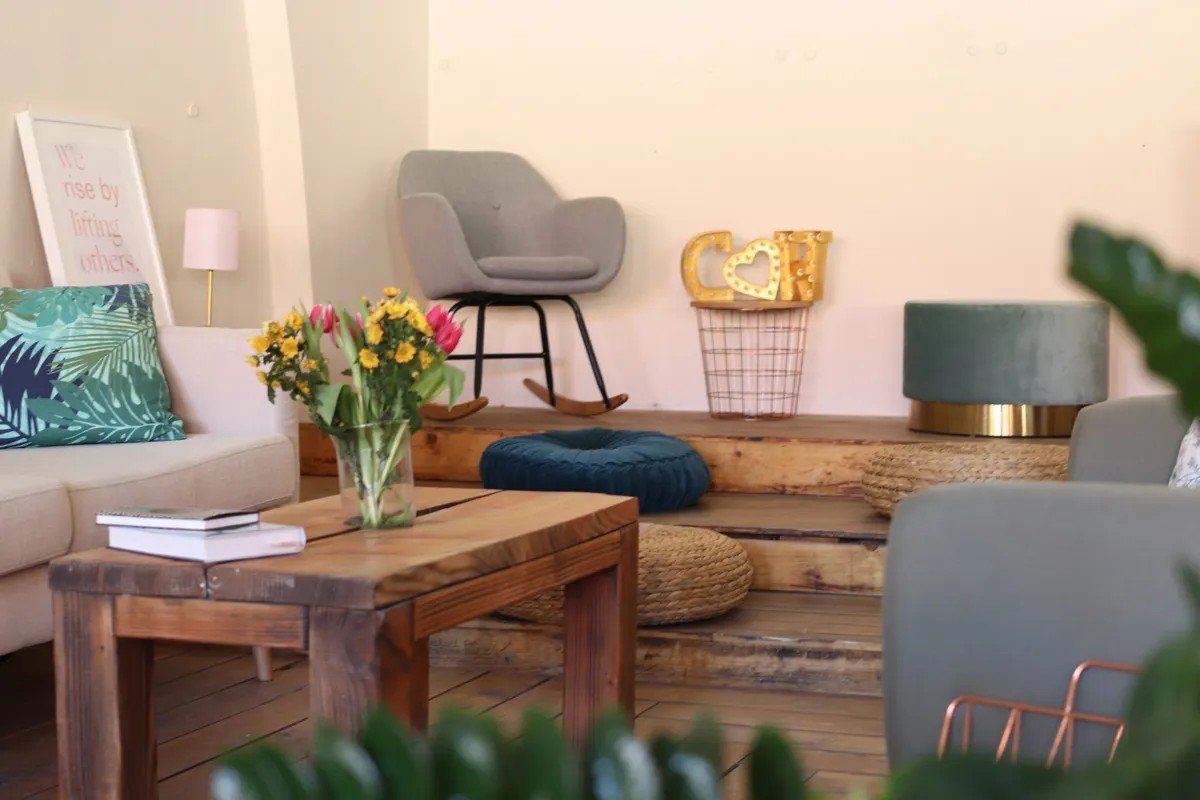
Hang a spring wreath over the mantel
A wreath is the quickest single change you can make, because it fills the tall, awkward wall above the mantel in one move. For spring, skip anything dense or symmetrical. Look for a loose greenery wreath — eucalyptus, olive, or mixed spring foliage — or a floral one with small scattered blooms rather than a solid ring of flowers.
Size is the whole game: the wreath should be about two-thirds the width of the mantel shelf. On a 5-foot mantel, that means a wreath 20 to 24 inches across. The 12-inch wreath that looked right on the front door will look lost up there — I know, because I have made exactly that mistake.
Hang it from a ribbon over the top of a mirror, or on a single removable hook if the wall above is bare. A wreath layered in front of a mirror is my favorite version — the glass doubles the greenery and bounces light back into the room. Let the bottom of the wreath sit 4 to 6 inches above the shelf so the garland below it still has room to breathe.
Layer frames and a mirror behind everything
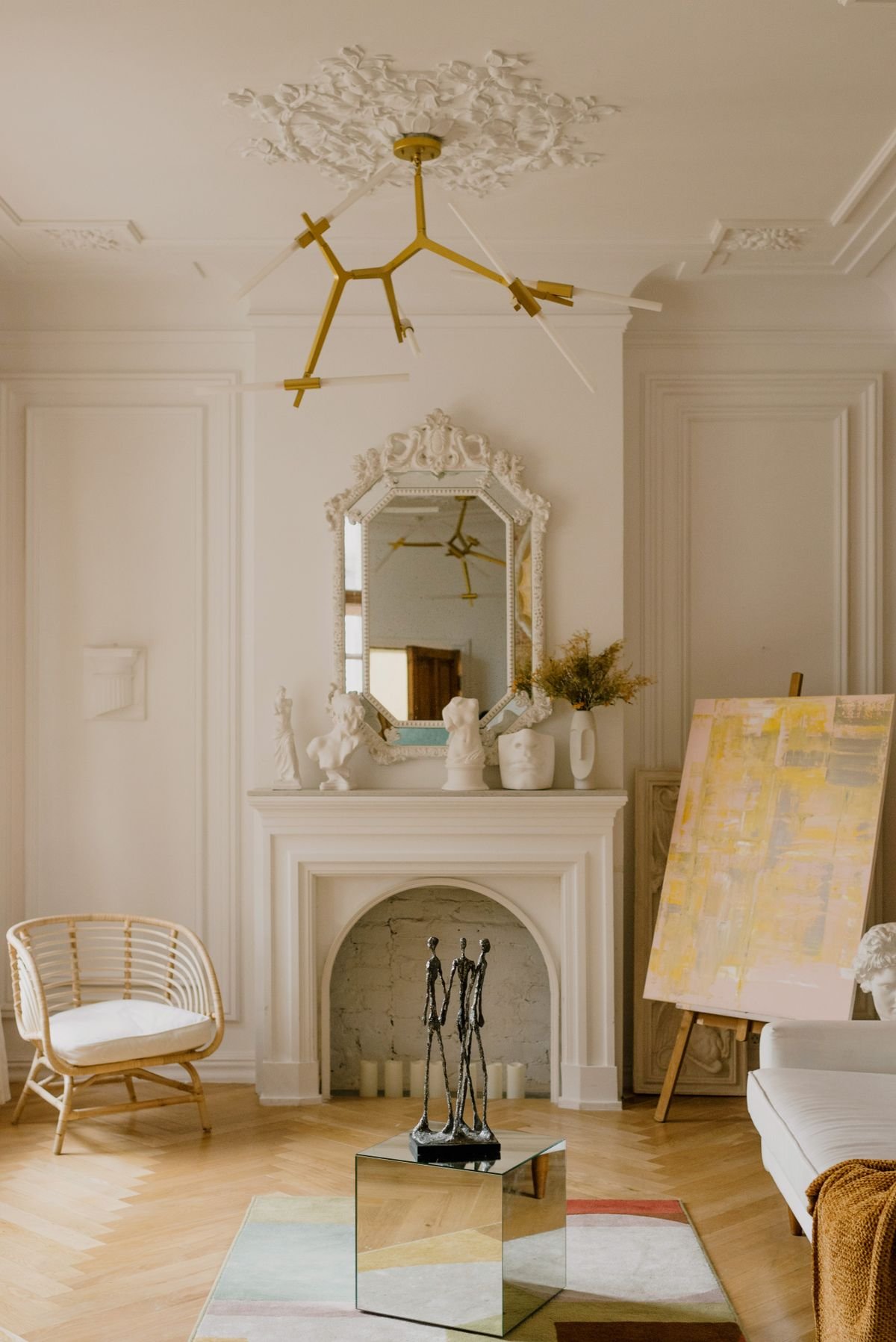
The back layer is what makes a mantel look finished instead of decorated. Lean, don’t hang: one large mirror or piece of art leaned against the wall, with two or three smaller frames leaned in front of it at one side. Leaning lets you change the arrangement in minutes, leaves no holes, and gives the display the depth that flat, hung pieces never do.
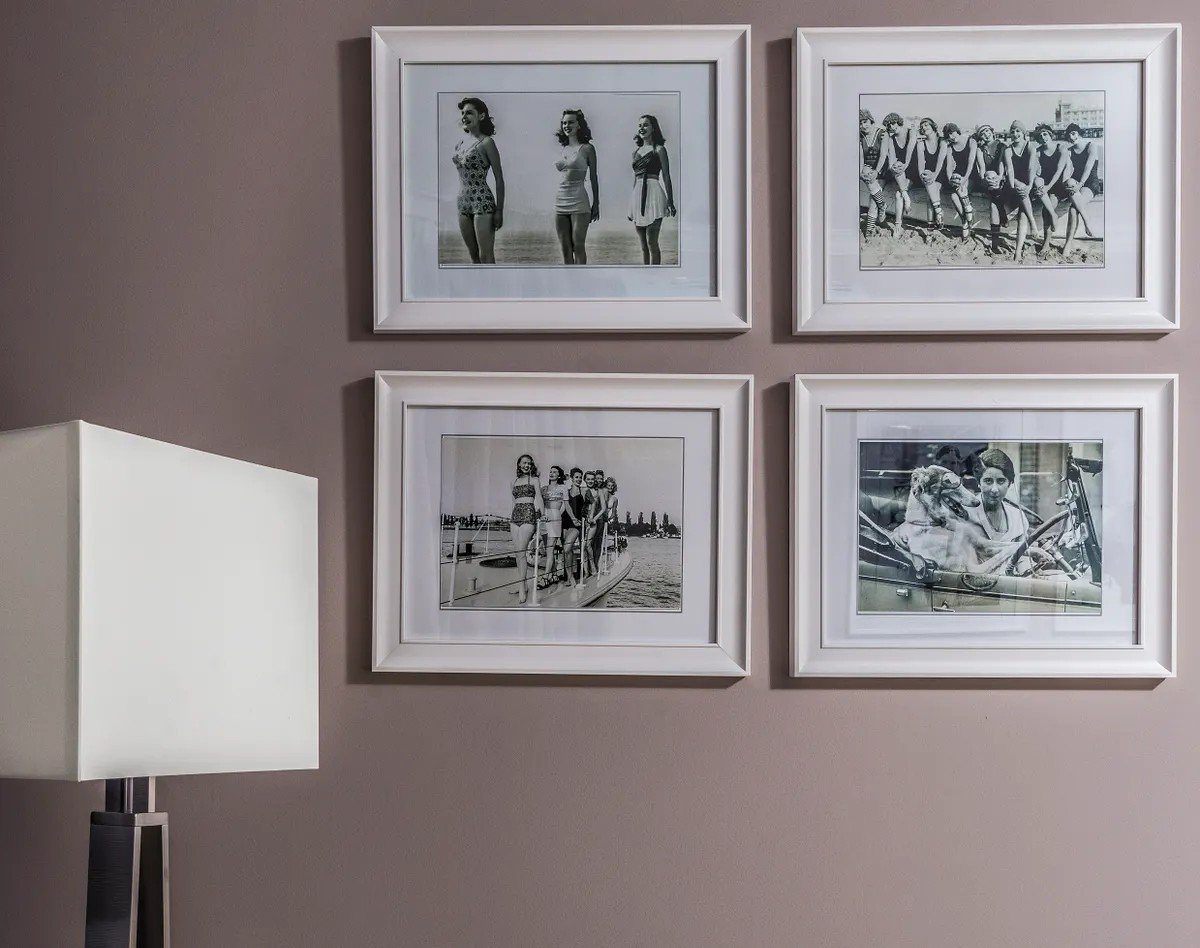
A few rules that keep it calm. Keep all the frames in one family — all wood, all white, or all thin metal. Mix sizes but not finishes. Put the tallest frame at the back corner, not the center. Botanical prints, a page from a seed catalog, or last spring’s garden photos all suit the season better than anything abstract.
If you want to take the layered look further across the wall, our gallery wall ideas walk through planning the arrangement on paper first so you only hang once.
Styling around a TV above the mantel
Many of us have a television over the fireplace, and spring styling has to work with it, not pretend it isn’t there. The trick is to keep everything on the shelf low and pushed to the sides, so nothing crosses the bottom edge of the screen.
A low, loose garland works beautifully here — it softens the straight line where the TV meets the wall without climbing into the picture. Keep branch vases at the far ends only, below the screen’s lower corners. Skip the wreath entirely; a wreath plus a TV is two shapes competing on one wall. Put the spring color into one small flower vase on the hearth instead. And think of the mantel as one surface in a one-weekend living room refresh — the TV wall looks best when the rest of the room carries some of the spring change too.

Small mantels, narrow shelves, and no fireplace at all
A narrow shelf — some are barely 6 inches deep — cannot hold a garland, a vase, and frames in a row. It can hold them in a stack: garland laid flat along the front edge, one bud vase, and frames leaned two deep. Choose the slim versions of everything and let the wall above do more of the work.
And if you have no fireplace, borrow the formula anyway. A console table, the top of a low bookcase, or a wide windowsill all take the same layers: greenery along the front, one tall branch vase off-center, frames leaned behind. The formula is the point, not the fireplace.
A simple budget plan
You do not need to buy a “spring mantel.” You need a few pieces that layer. Here is how I would spend at three levels:
- About $25: one grocery bunch of eucalyptus or a faux garland on sale, two bud vases from the thrift store, one bunch of tulips. Frames and candles come from other rooms.
- About $50: add a faux blossom stem or two and a loose greenery wreath in the right size. This is the level where the mantel starts to look intentional from the doorway.
- About $100: add the large mirror or one substantial piece of art for the back layer. This is the piece that stays up all year and earns its money in every season.
Shop your own house first. Every spring I “buy” my mantel a white jug from the kitchen and a stack of garden books, and they look new because the company they keep has changed.
Keep it fresh for the whole season
A spring mantel is a living display, and a little maintenance keeps it from quietly sliding into tired. Once a week: replace one small flower vase, shake the dust off the garland with a hairdryer on cool, and take one thing away. That last step is the real secret. Spring decorating fails by accumulation — the little nest, the eggs, the extra vase, the cute sign — until the shelf is busy instead of fresh. Birds, nests, and eggs are charming spring accents, but one small nest tucked into the garland says more than a whole shelf of them.
By the time the blossom branches finish, the garden will be offering the next thing. The mantel changes at the speed the season does, and none of it takes more than a Saturday morning.
Take everything off. Put back the green, the tall, and the light. That is a spring mantel.