
The short answer: A living room refresh is not a makeover and it is not shopping. It is one weekend spent using what you already own in a better order: pull the furniture into a layout that suits how you actually sit, swap pieces in from other rooms, restyle the textiles, clear and regroup the shelves and coffee table, and move the lamps until the light falls where people are. Spend money only where it shows — the table below says where.
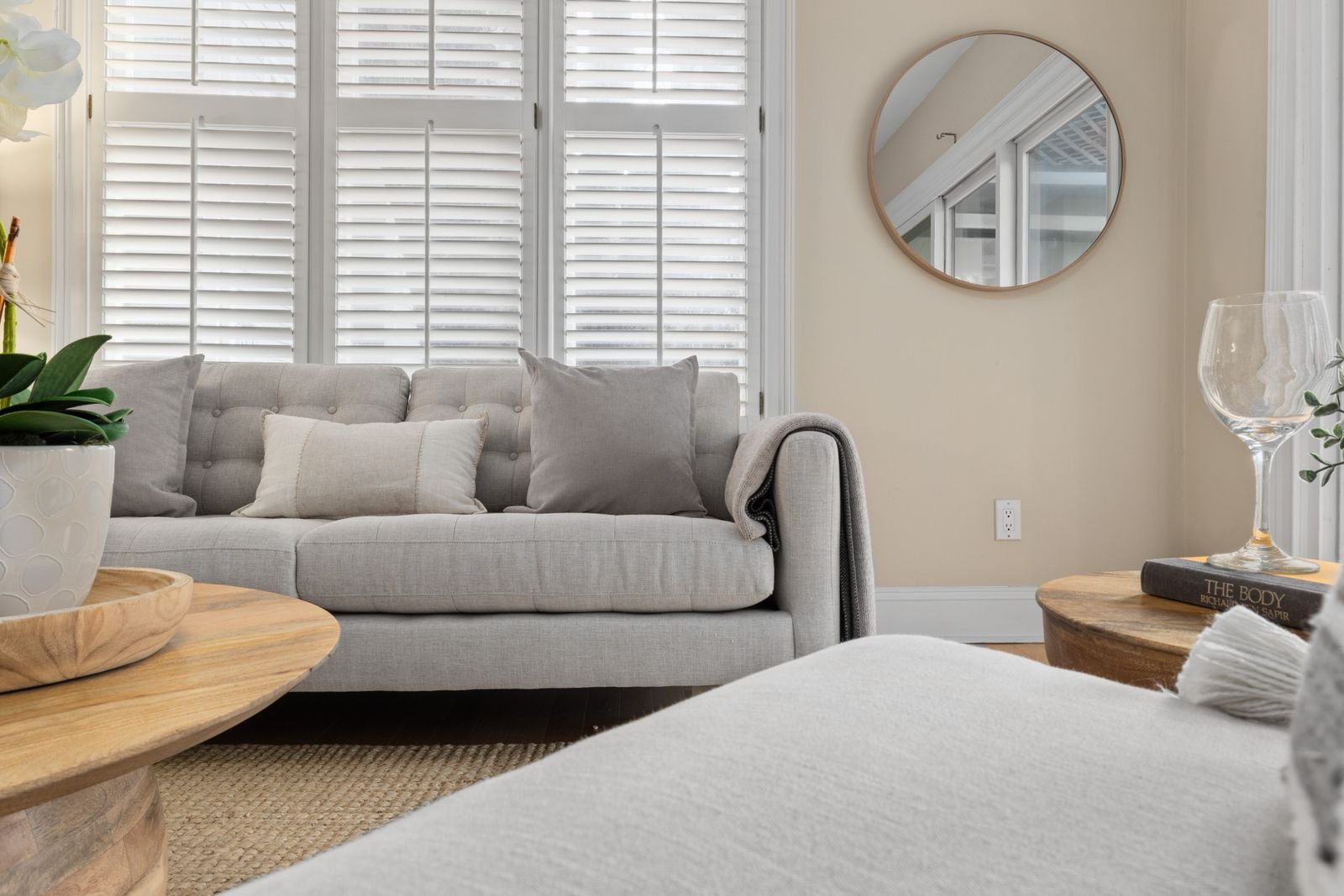
What a Refresh Is (and How This Differs From a Reset or a Cozy List)
A refresh works on one room, in one weekend, with the furniture staying in the house. That is what separates this guide from our January home reset, a whole-home ritual paced across the New Year. A reset asks what your home should let go of; a refresh asks a narrower, happier question: what could this one room do better with what is already in it?
It is also different from adding coziness. Our simple ways to make your living room feel cozy are about warmth layered on. A refresh comes first and is more structural: layout, balance, light, and surfaces edited rather than added to. Do the refresh first and the cozy touches land better afterwards. The order below is deliberate — each step makes the next one easier, and none needs a delivery van.
1. Rearrange the Layout Before You Touch Anything Else
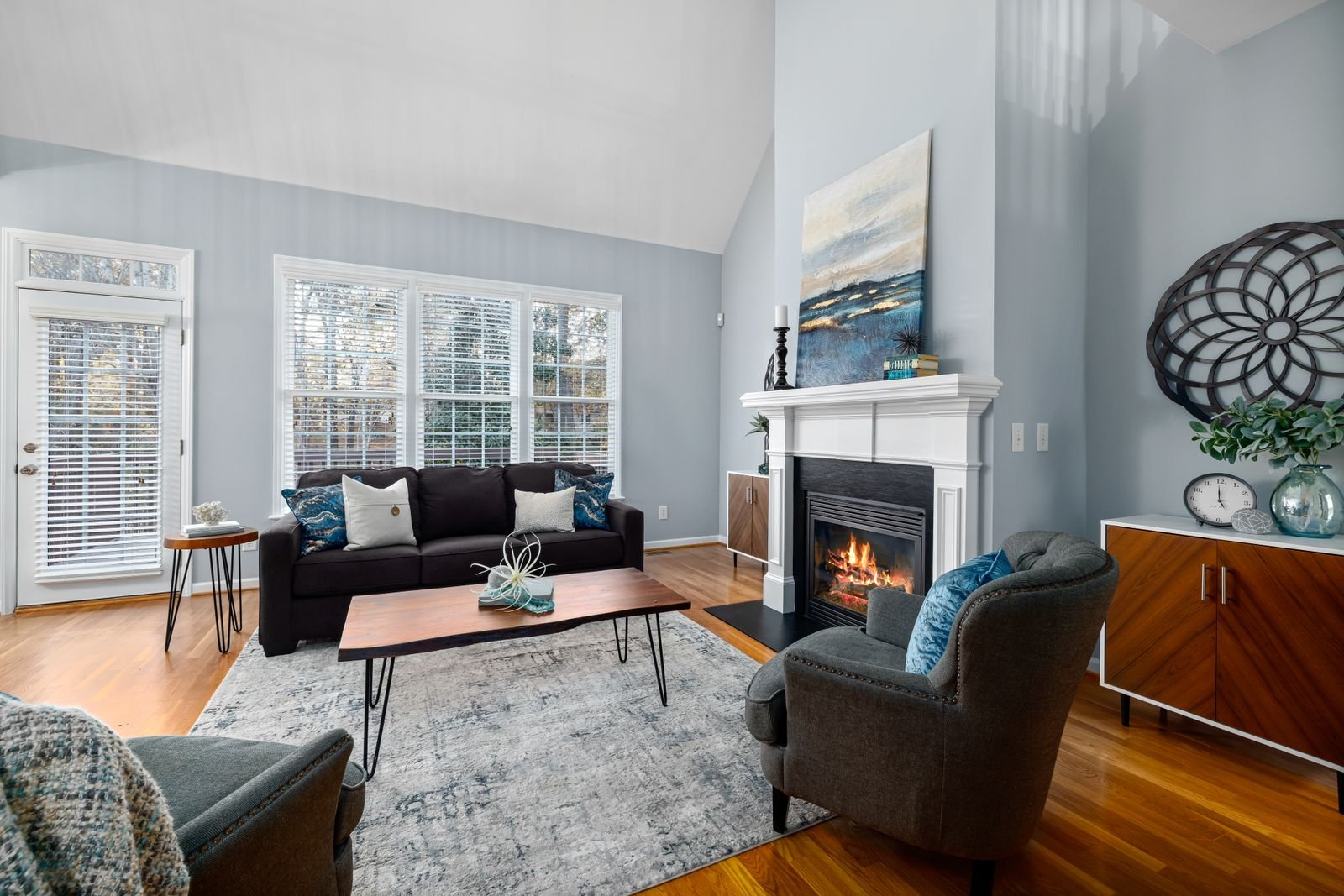
Most tired living rooms are not tired because of what is in them, but because everything has drifted against the walls, leaving a wide empty middle and seats too far apart to talk across. The refresh starts here, and it costs nothing: pull the sofa off the wall, even by a hand’s width, angle the chairs in toward it so the seats form a conversation, not a waiting room, and anchor the group on the rug — front legs on, back legs off. Leave a clear walking path behind or beside the group, never through its middle.
Then check the distances honestly. Can everyone reach a surface for a mug without standing up? Does the person in the corner chair get any light? Move one piece at a time and live with each move for an hour before judging it — layout changes feel wrong on the first evening simply because they are new; by the second, the room usually feels like it was always meant to be this way.
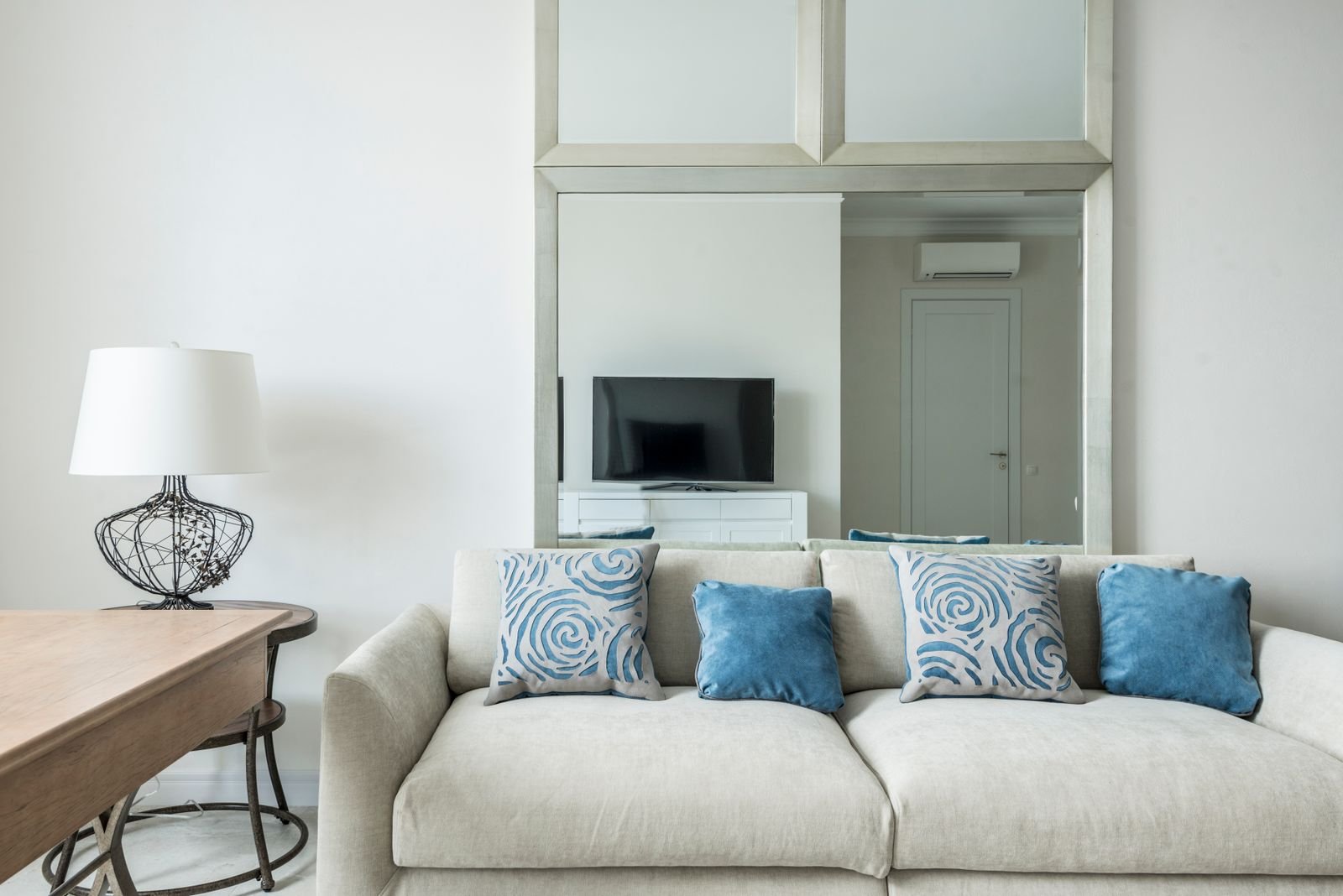
2. Shop Your Home Before You Shop Anywhere Else
Once the layout moves, the room develops gaps — an empty corner, a bare side table, a wall that suddenly shows. Fill them from the rest of your house, not from a shop. Walk every other room with fresh eyes and borrow: the armchair nobody sits in in the bedroom, the lamp exiled to the spare room, the plant crowding the kitchen windowsill, the print that has hung unnoticed in the hallway for years. Pieces feel new simply because the context is new.
Work in swaps, not raids: if the living room takes the good throw from the bedroom, the bedroom gets the living room’s spare in return, so no room is left stripped. Anything borrowed gets a week to prove itself, and anything that has not earned its place goes back. Our broader cozy home decor ideas use the same cupboards — the refresh simply insists the borrowing happens before any buying.
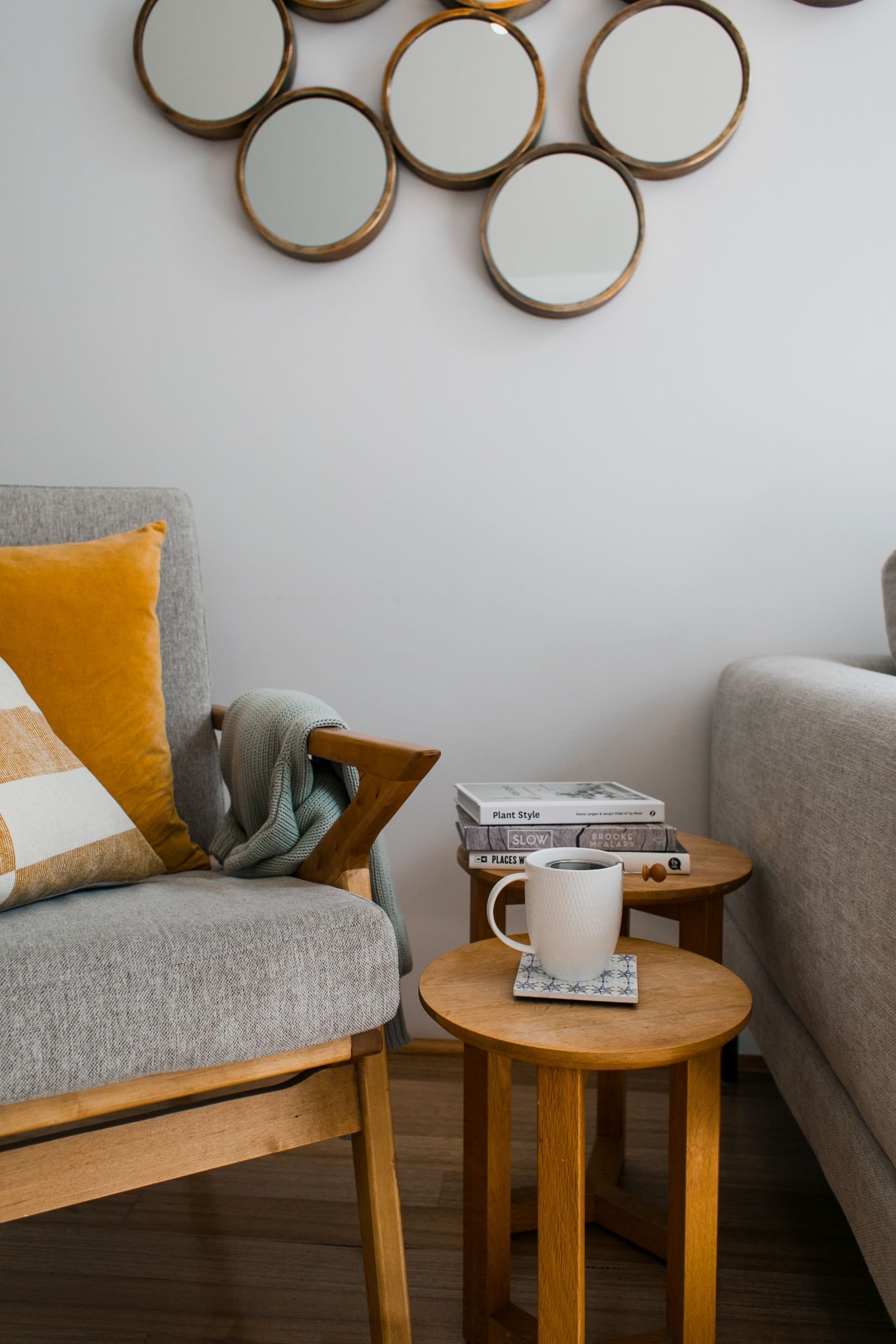
3. Restyle the Textiles You Already Own
Textiles are the fastest visible change in any living room, because they carry most of its colour and all of its softness. Gather every cushion, throw and blanket the room owns — plus the spares in cupboards and on beds — into one pile on the floor. Then rebuild deliberately: a base of the room’s main colour, one contrasting colour repeated at least twice so it looks chosen rather than accidental, and a mix of textures — something smooth, something woven, something with weight.
Fold throws instead of draping them the way they have sat for a year; a folded throw on the sofa arm reads as a deliberate block of colour. Swap cushion covers between rooms before replacing any: the bedroom’s plain linen pair often calms a busy sofa, and the sofa’s patterned pair wakes a plain bed. Wash or air what stays — a refresh you can smell registers more than most people expect.

4. Give the Sofa One Clear Colour Story
Stand back and look at the sofa as a stranger would. In most un-refreshed rooms it is a pile of unrelated cushions collected over years — a gift, a sale find, a survivor from the last sofa. The fix is editing, not buying. Choose one colour story and let it be obvious: two cushions in the lead colour, one or two in a supporting tone, one with pattern or print to stop it looking flat. Remove the rest; a sofa with four cushions that belong together looks better than a sofa with eight that do not.
Odd numbers arrange more easily than even ones, and one cushion with a strong print or unusual shape gives the eye somewhere to land. If everything you own is neutral, let the story be texture instead — linen against velvet against a woven stripe. What matters is that the choice looks made, not accumulated.

5. Clear the Shelves Completely, Then Put Back Less
Shelf restyling fails when people shuffle things in place. Do it properly: take everything off and clean the empty shelves. Then rebuild in groups rather than rows — books in short stacks and short runs, some standing, some lying flat with an object on top; objects in threes, at different heights. And — the part that does the work — empty space left deliberately empty, so the groups read as groups.
Keep what goes back to roughly two-thirds of what came off; the rest goes to another room, a cupboard, or the donation box, and the shelves instantly look curated instead of stored. Add one living thing if light allows — a small plant or a vase of cut stems — so the shelves feel like a room, not a display. Stand back and squint: you should see rhythm — full, empty, full — not a solid wall of spines.
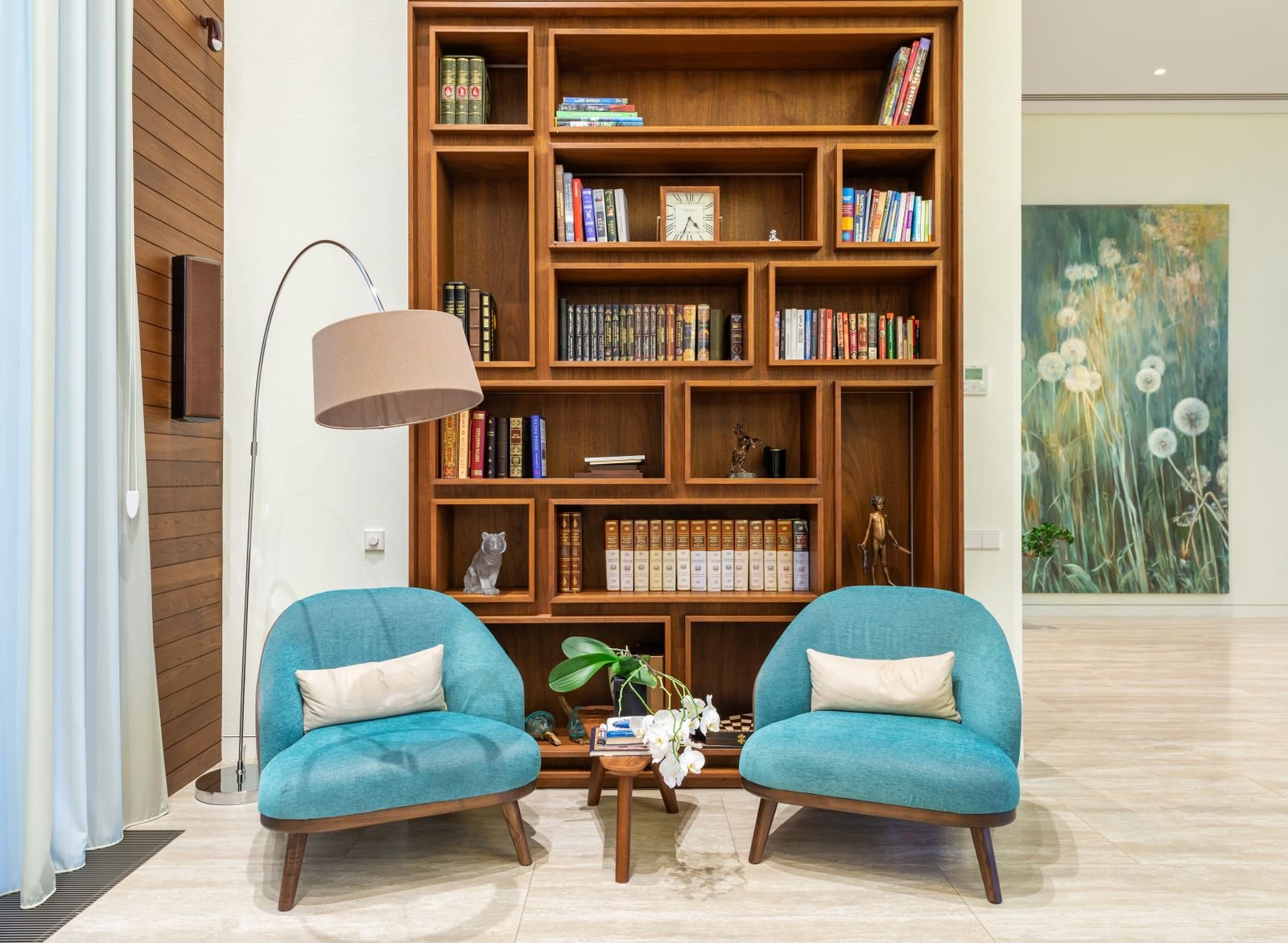
6. Restyle the Coffee Table Around One Tray
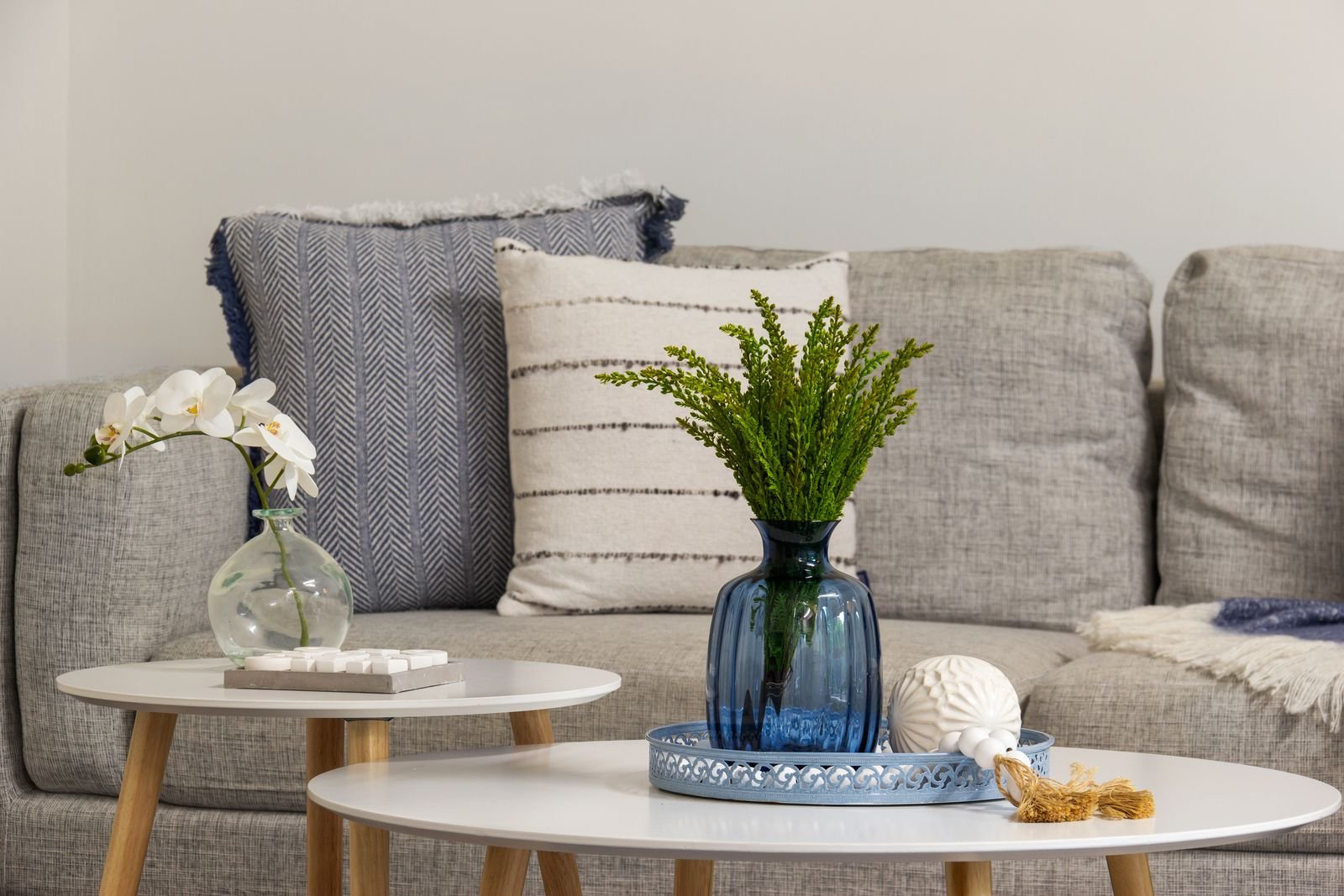
The coffee table is where refreshes go to die, because it is where daily life lands: post, remotes, chargers, a mug from Tuesday. Clear it completely, as with the shelves. Then give it a centre that can hold the styling against the clutter: one tray. On it, three things at most — something tall (a vase, a candle), something low and flat (a small stack of books), and something organic (a plant, a bowl of pinecones, a stem in water). Everything else must fit the tray or find another home.
The rule that keeps it working: the table may be used, but things return to the tray when the evening ends — one place for everything turns tidying from a decision into a habit. Leave the rest of the table empty on purpose. Empty table around a good tray looks styled; a full table never does, however nice the objects are.
7. Move the Lamps Until the Light Layers
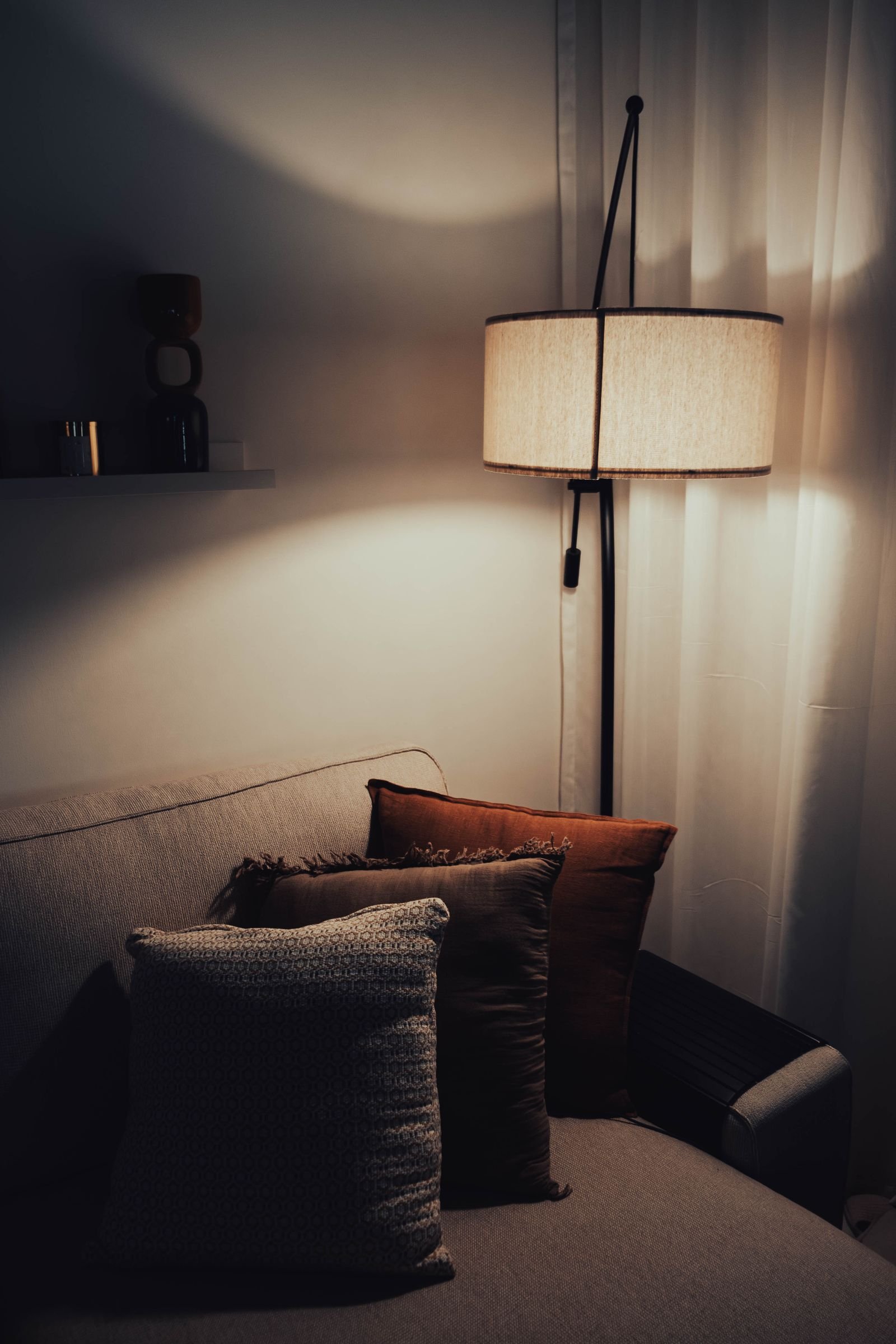
Most living rooms run on one ceiling light and one lamp that has lived in the same corner for years. A refresh redistributes the light you already own. Aim for three sources at three heights: a floor lamp near the main seat, a table lamp across the room so the light balances, and one low source — a lamp on a shelf, a candle on the table — for the evening layer. Light should fall where people sit, not in corners nobody uses.
Borrow lamps from other rooms as freely as you borrowed chairs in Step 2; bedrooms often hold a good lamp lighting a dressing table nobody sits at. Check the bulbs as you go — mismatched, cold-toned bulbs make a room feel institutional, and matching warm bulbs are one of the few purchases this guide endorses without argument. Then, at dusk, sit in every seat: any seat in darkness gets the next lamp moved toward it.
8. Finish With Plants, Walls and the Evening Test
The last pass is small moves with outsized effect. Group the plants where they will be seen — one large plant in the corner the layout left empty does more than four small ones on windowsills — and wash the leaves; dusty leaves read as neglect. Then the walls: rehang the main piece at eye level when seated, lower than most people hang it, or swap it with a piece from another room.
Finish the way the room will be used: evening, lamps on, ceiling light off, sit down and look around. Whatever still bothers you is the room’s honest shopping list — usually one or two things, which is what the table below is for.

Spend Only Where It Shows: The One-or-Two-Things Decision Table
| If the room still feels… | Buy this one thing | Skip this |
|---|---|---|
| Flat and colourless after the textile restyle | One pair of cushion covers in the lead colour you chose in Step 4 | A whole new cushion set in mixed colours |
| Dark in the seats, bright in the corners | One floor lamp for the main seat — or warm bulbs for every lamp first | A brighter ceiling fitting |
| Bare and echoey, however you arrange it | One rug large enough for the seating group’s front legs | Small rugs scattered to “fill” the floor |
| Styled by day, dull by night | One tray for the coffee table, if you do not own one anywhere | More decorative objects to put on the table |
| Finished but lifeless | One large, healthy plant for the empty corner | Several small plants to dot around |
| Tired at the walls | Nothing yet — rehang and swap art between rooms for a month first | New art bought to match the sofa |
Living Room Refresh Questions
How long does a living room refresh take?
One weekend: Saturday for the layout move, the shop-your-home swaps and the textile restyle; Sunday for shelves, coffee table and lamps, with the evening test to finish. Nothing here needs drying, curing or a tradesperson.
Can I refresh a living room without buying anything?
Yes — every step above is free: rearranging, borrowing from other rooms, editing cushions, clearing shelves and moving lamps. Most people find the room feels new before any money is spent; buy only what the evening test says is still missing.
What is the difference between a refresh and a makeover?
A makeover changes what you own — new furniture, paint, flooring. A refresh changes how what you own is arranged, grouped and lit. If the furniture is sound and the room is simply tired, a refresh is the right tool and the makeover money stays unspent.
Which step makes the biggest difference?
The layout move, almost always. Pulling the seating off the walls and into a group changes how the room is used, not just how it looks, and every later step falls into place more easily.
How often should I refresh my living room?
Whenever it starts to feel invisible to you — for most homes, a light refresh once or twice a year, often at a season change, keeps the room feeling deliberate. The full shelf and textile clear-out only needs doing when clutter has rebuilt.
A refreshed living room does not look decorated; it looks decided. Same sofa, same chairs, same shelves — arranged by someone who meant it. Give it one weekend, spend only where it shows, and let the room you own be new.