
For years, my Easter decorating came out of one plastic storage bin, and I dreaded opening it. Inside was the whole bargain-bin starter kit: neon plastic grass, a bunny with a bow tie and a grin I can only describe as alarming, and eggs in shades of pink that do not exist anywhere in nature. I’d arrange it all out of obligation, look at my living room, and think — this doesn’t look festive. It looks like a party store sneezed.
The turning point came at my sister’s house, where Easter looked completely different. No cartoon anything. Just a bowl of speckled eggs, blossom branches in a tall vase, linen napkins, and flowers — real ones, everywhere. The room felt like spring itself had been invited in. She’d just made three decisions I’d never made: one palette, real materials, and knowing when to stop.
That’s what these easter decor ideas are built on. Easter falls on March 28 in 2027, so the sweet spot for decorating is the two weeks before — early enough to enjoy it, late enough that the flowers still look alive on the day. Here’s the grown-up version, room by room, with honest notes on cost.
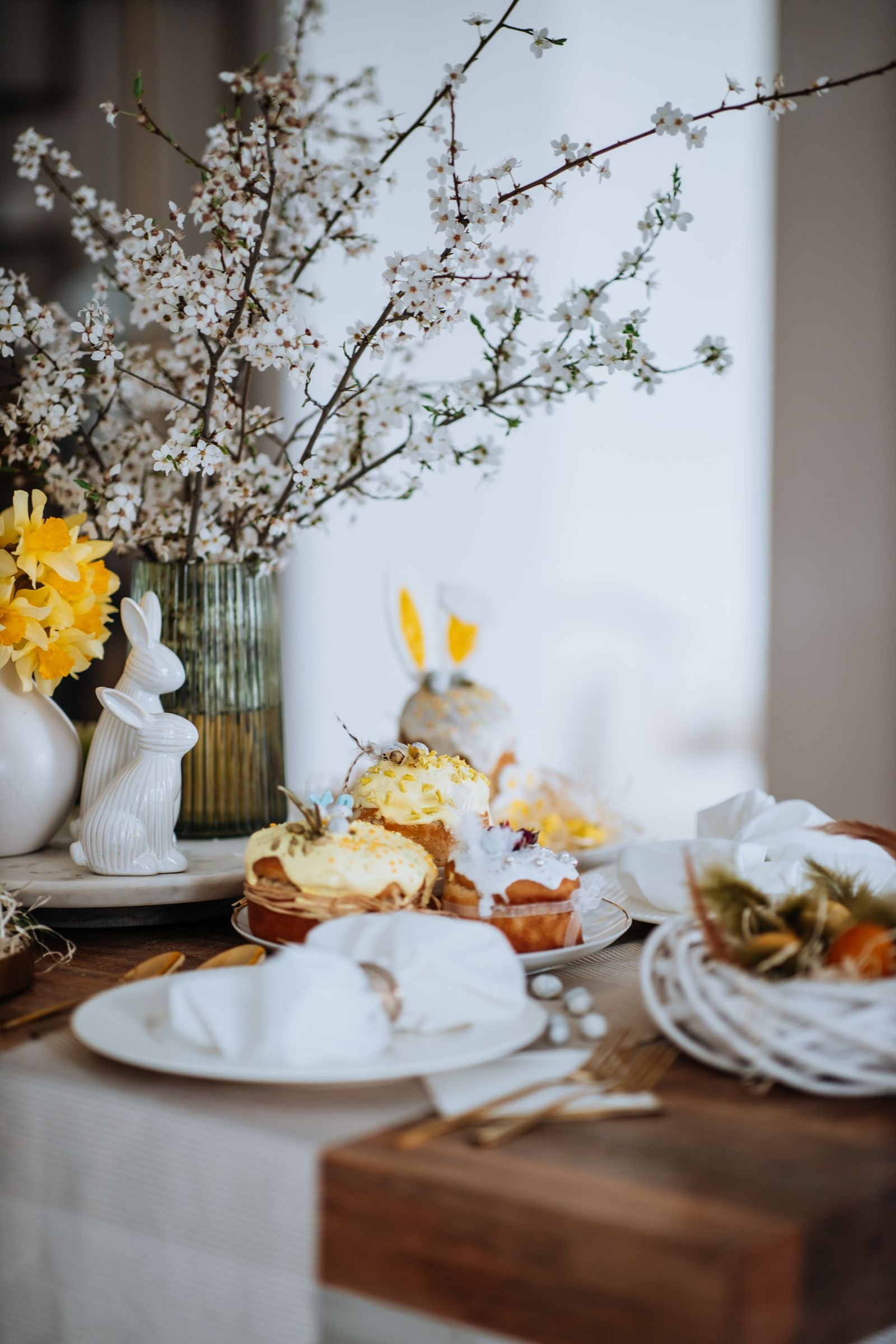
Start With One Palette — and Actually Keep It
Every Easter room that looks pulled-together has one thing in common: somebody chose a palette and then, crucially, stopped adding colors that weren’t in it. Every room that looks like a candy explosion skipped that step. So before you buy a single egg, pick your lane.
My lane, and the one I’d recommend if you’re starting from scratch, is what I call garden botanical:
- Moss green as the grounding color — in real moss, greenery, a linen runner, a ceramic vase.
- Ivory and warm white as the breathing room — tablecloths, candles, eggs left their natural color.
- Dusty rose as the soft accent — napkins, a ribbon, one bunch of tulips, never the whole room.
The other lane that works is powder pastel done rich instead of washed out: deeper, dustier versions of the classics — dusty blue, sage, mauve, butter — paired with wood, brass, or stone so they read as intentional. Pastel fails when everything is pale, shiny, and plastic. It succeeds next to natural textures and one deeper anchoring tone.
Whichever you choose, write it down. I keep mine in a note on my phone, because the garden center in March is full of adorable things in exactly the wrong colors. A five-dollar item that breaks the palette costs you the whole calm effect you were building.
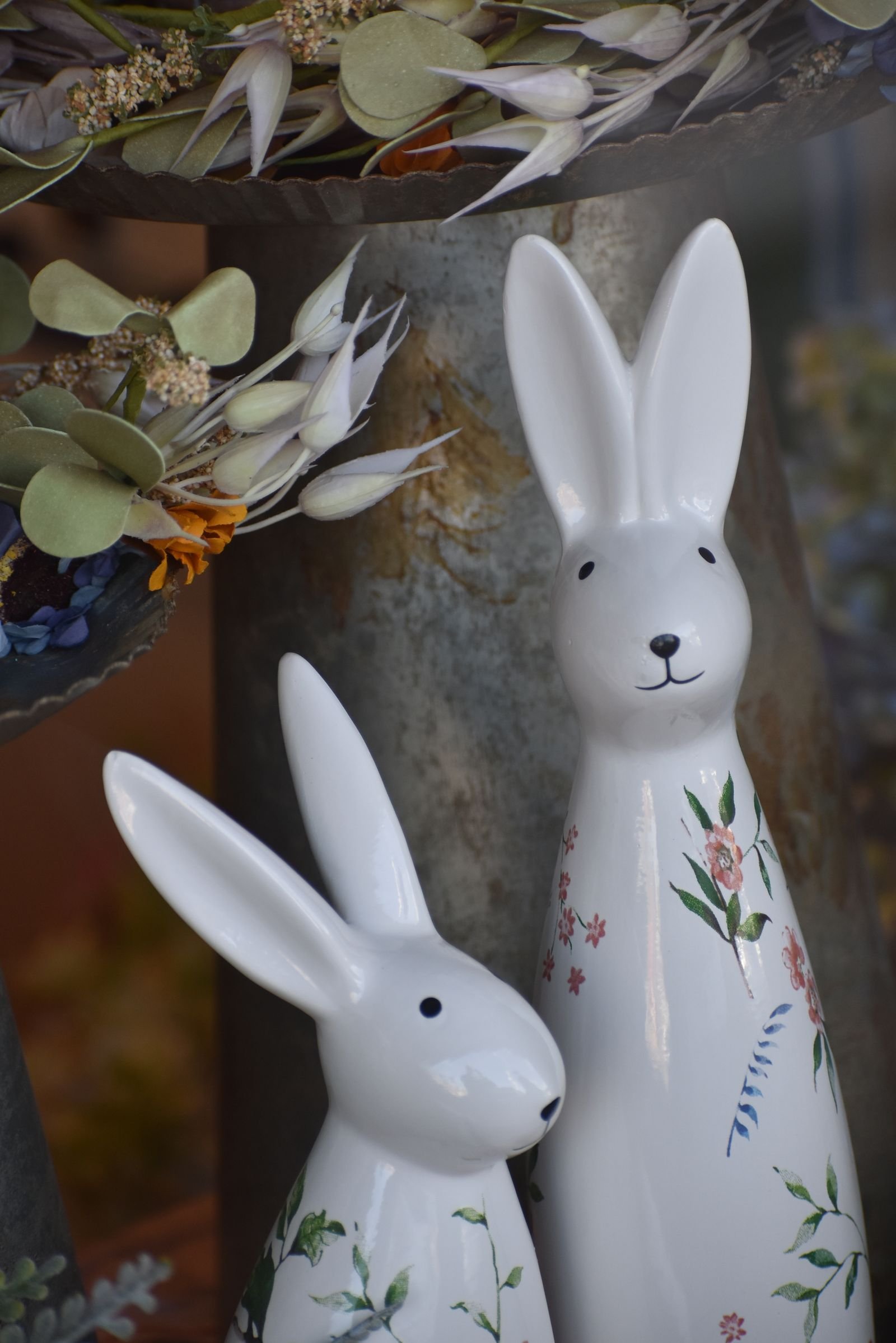
The Door and Entry: A Quiet Hello
The front door is where Easter starts, and it’s also where restraint pays off fastest, because a door only needs two things: a wreath and one supporting act.
For the wreath, think spring garden rather than egg hunt — moss, eucalyptus, dried or fresh-look florals, maybe a few speckled eggs tucked in rather than glued across the whole surface. If you’re choosing one this year, our spring wreath ideas walk through the styles that read fresh instead of crafty, from loose botanical rings to simple grapevine bases you can dress up in ten minutes.
The supporting act can be as small as a basket of branches by the door, a lantern, or a pot of hyacinths doing all the work with scent alone. My entry last year was a wreath and one terracotta pot of grape hyacinths — and two neighbors asked what I’d “done” to the porch. One or two good things look deliberate; six look like a display rack. If your porch has more room — steps, a bench, chairs — our spring front porch decor ideas cover stretching the same palette across a bigger space without clutter.
Inside, keep the entry to a single moment: a small bowl of eggs on the console, or a vase of branches. The tone we’re after is a quiet hello, not a shout.
The Mantel: Where Restraint Does the Heavy Lifting
If I could give one piece of Easter advice, it’s this: decorate the mantel like you’d dress for dinner — a few good pieces, nothing screaming. The mantel is eye-level, it anchors the room, and it’s where gimmicky goes to be stared at for three weeks.
The formula that has never failed me has three parts:
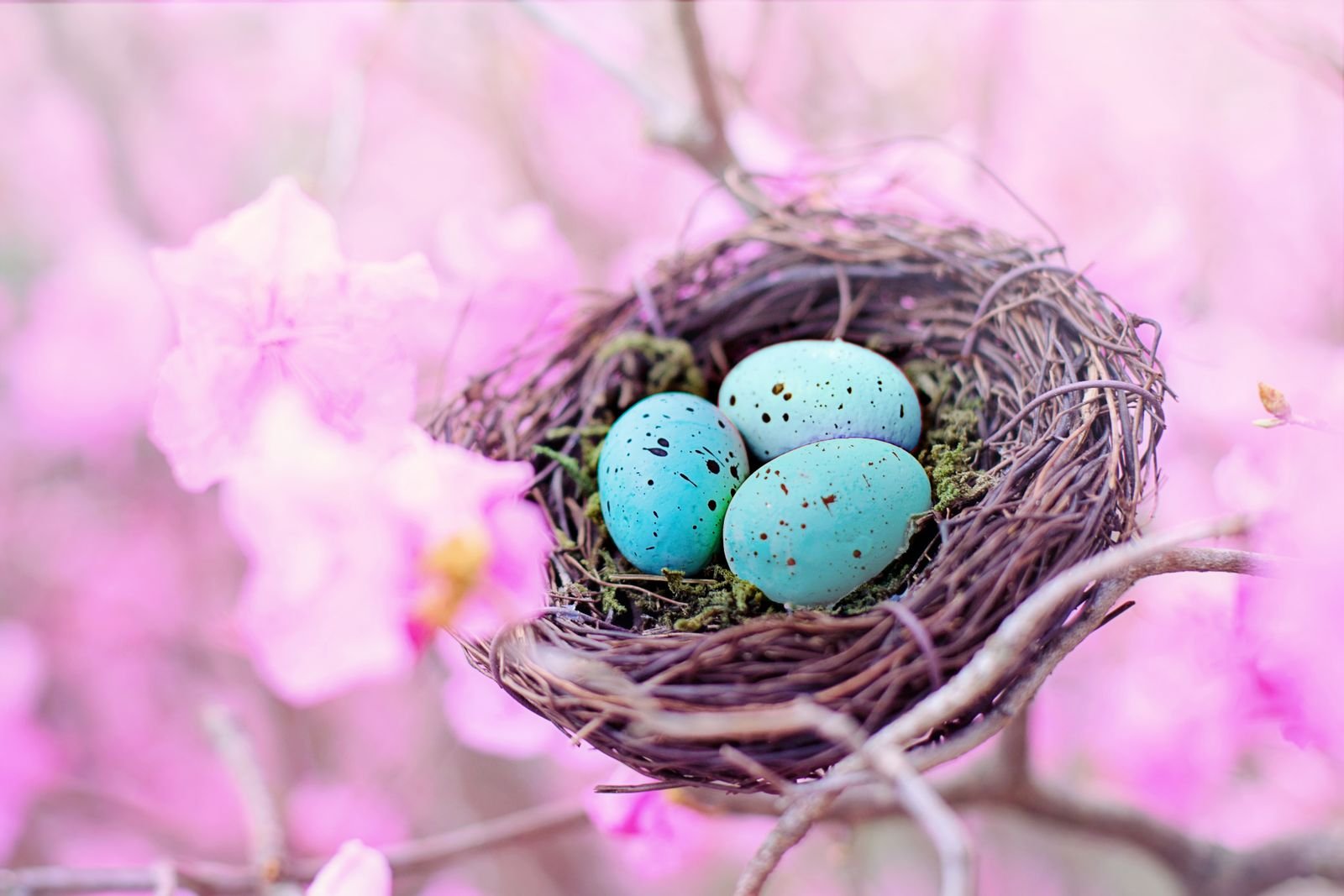
- A bowl of eggs. One bowl — ceramic, wood, brass, whatever suits your palette — filled generously with eggs in two or three tones from that palette. Speckled and natural eggs do most of the work here; they look like something found rather than something manufactured.
- Branches with height. A tall vase or pitcher of blossom branches, pussy willow, or even bare twisted branches adds the vertical line that makes a mantel feel designed. Cut branches from your own yard cost nothing and look better than most of what stores sell.
- One sculptural bunny. One. In ceramic, wood, stone, or brushed metal, with a simple silhouette and no outfit, no bow tie, no grin. A single well-shaped bunny reads as sculpture. A family of dressed bunnies reads as a gift shop.
Then add candlelight if you like — two candlesticks or a cluster of pillars — and stop. Truly stop. The empty space either side is what makes the three good things look expensive. For the layered approach that carries past Easter, our spring mantel decor ideas show how to build it so swapping the eggs for a plant in April keeps the whole arrangement working.
One honest cost note: the sculptural bunny is the one item worth spending on, because you’ll bring it out for a decade. Mine was around $25 three years ago, and it’s the piece people ask about. The branches were free, the bowl was already mine, and the eggs cost less than the coffee I drank while arranging them.
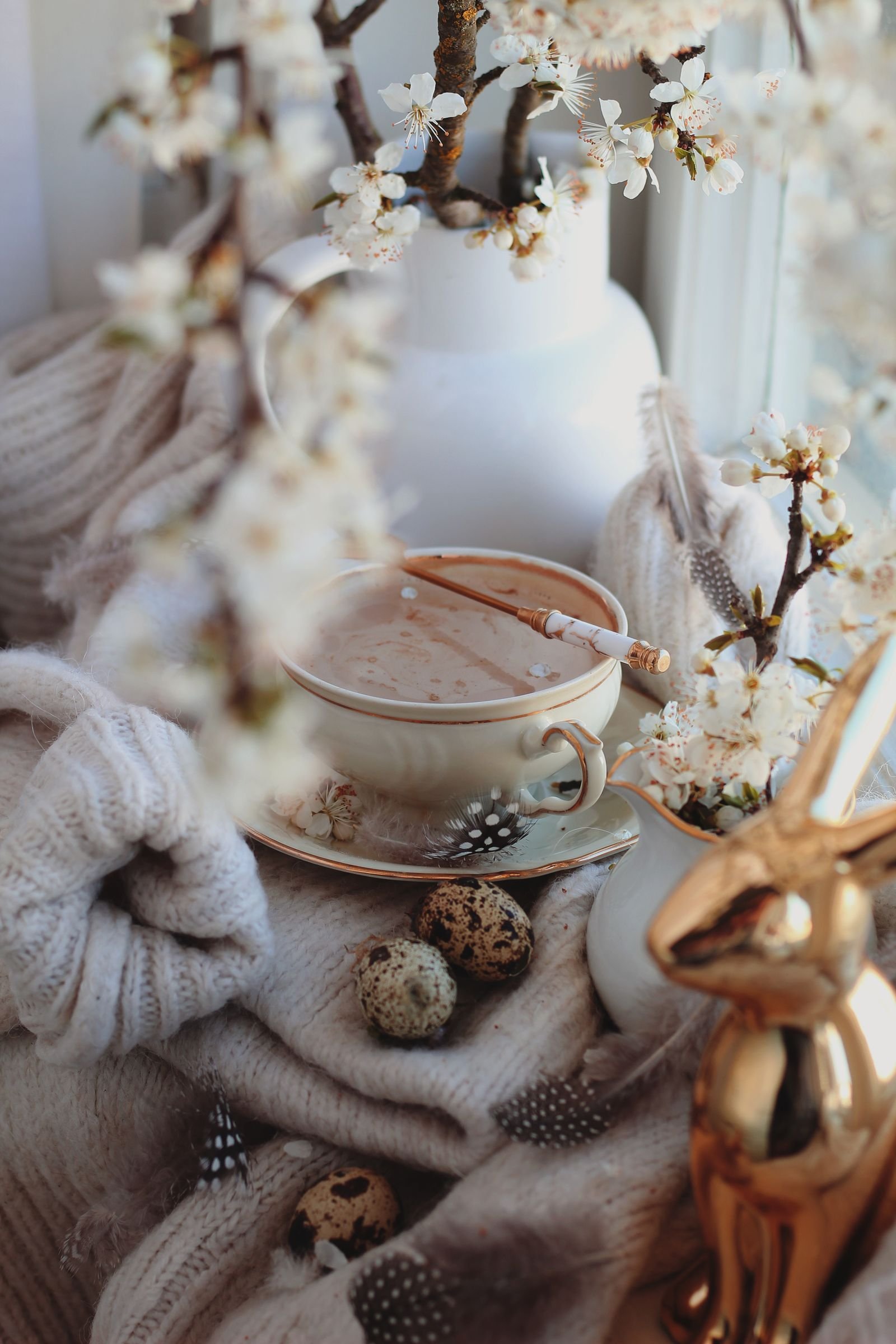
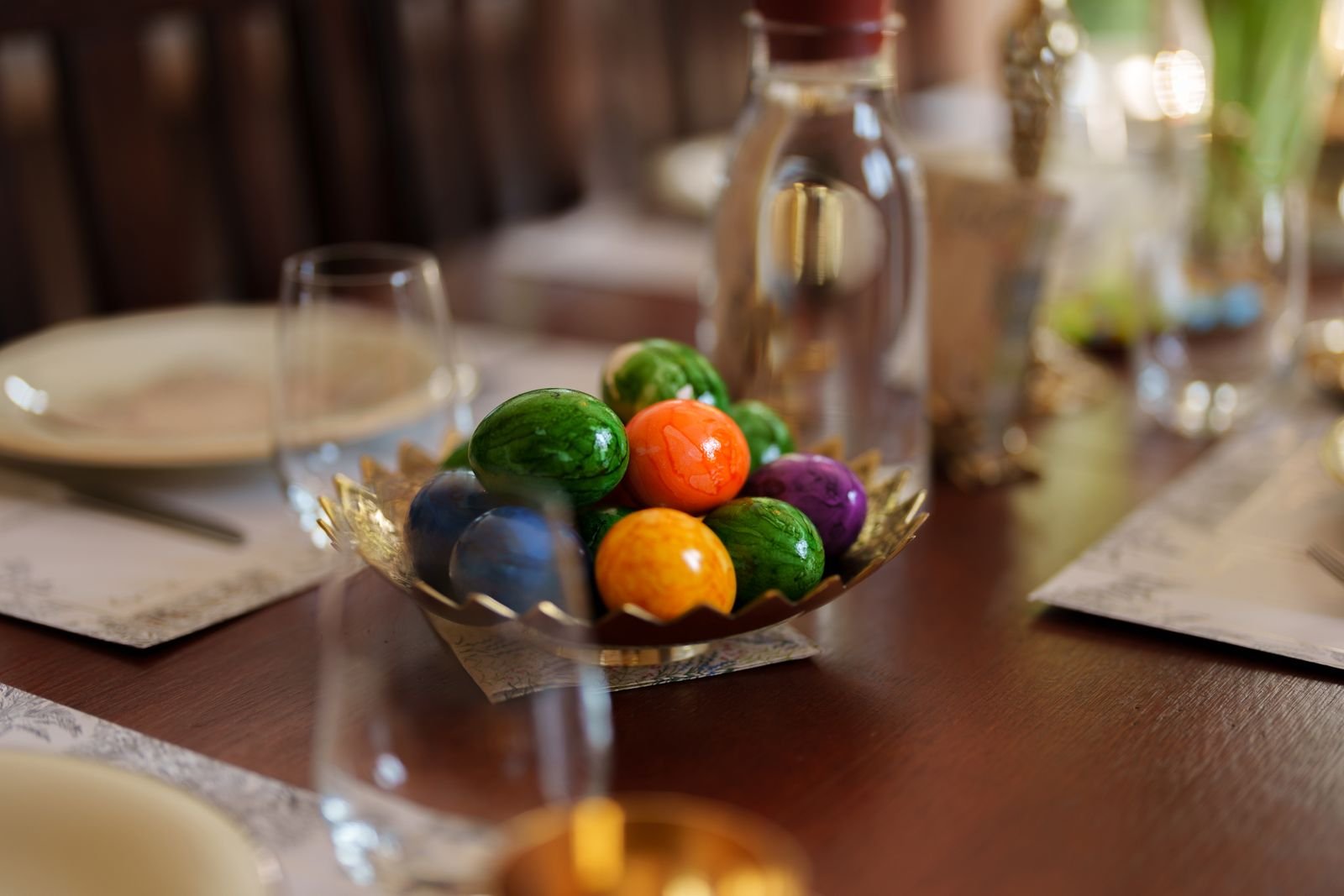
The Brunch Table: Linen, Layers, and One Centerpiece
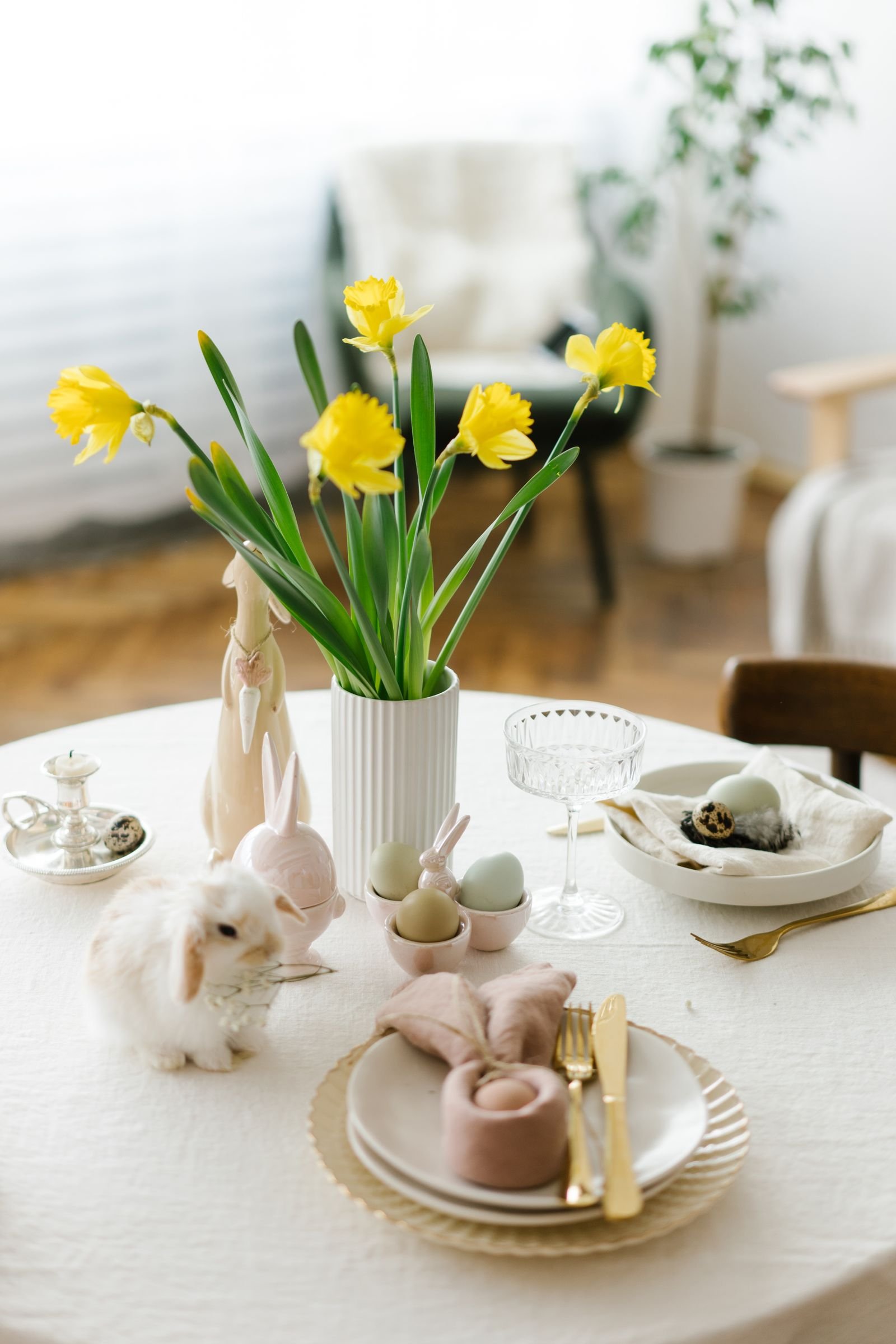
Easter brunch is the main event, and the table is where your palette gets to show off. The good news is that a beautiful Easter table is mostly textiles and one centerpiece — not a dozen themed purchases.
Start with the base. A plain ivory linen tablecloth, or a runner down bare wood, instantly moves the table out of party-supply territory. Linen napkins in your accent color — dusty rose, in my palette — do more than any centerpiece under $40. If you don’t own any, this is the one purchase I’d push: a set of six costs $15–$25 and survives every holiday.
For the centerpiece, pick one idea and commit:
- The low garden: a long, low arrangement of tulips, daffodils, and greenery in a shallow bowl or a line of small vases — low enough that guests can see each other over it.
- The egg runner: a loose line of speckled eggs and moss down the center of the runner, with candles tucked between. Five minutes, nearly free, and it photographs beautifully.
- The branch moment: one tall arrangement of blossom branches in the center, kept narrow so it doesn’t crowd the plates — drama without the sprawl.
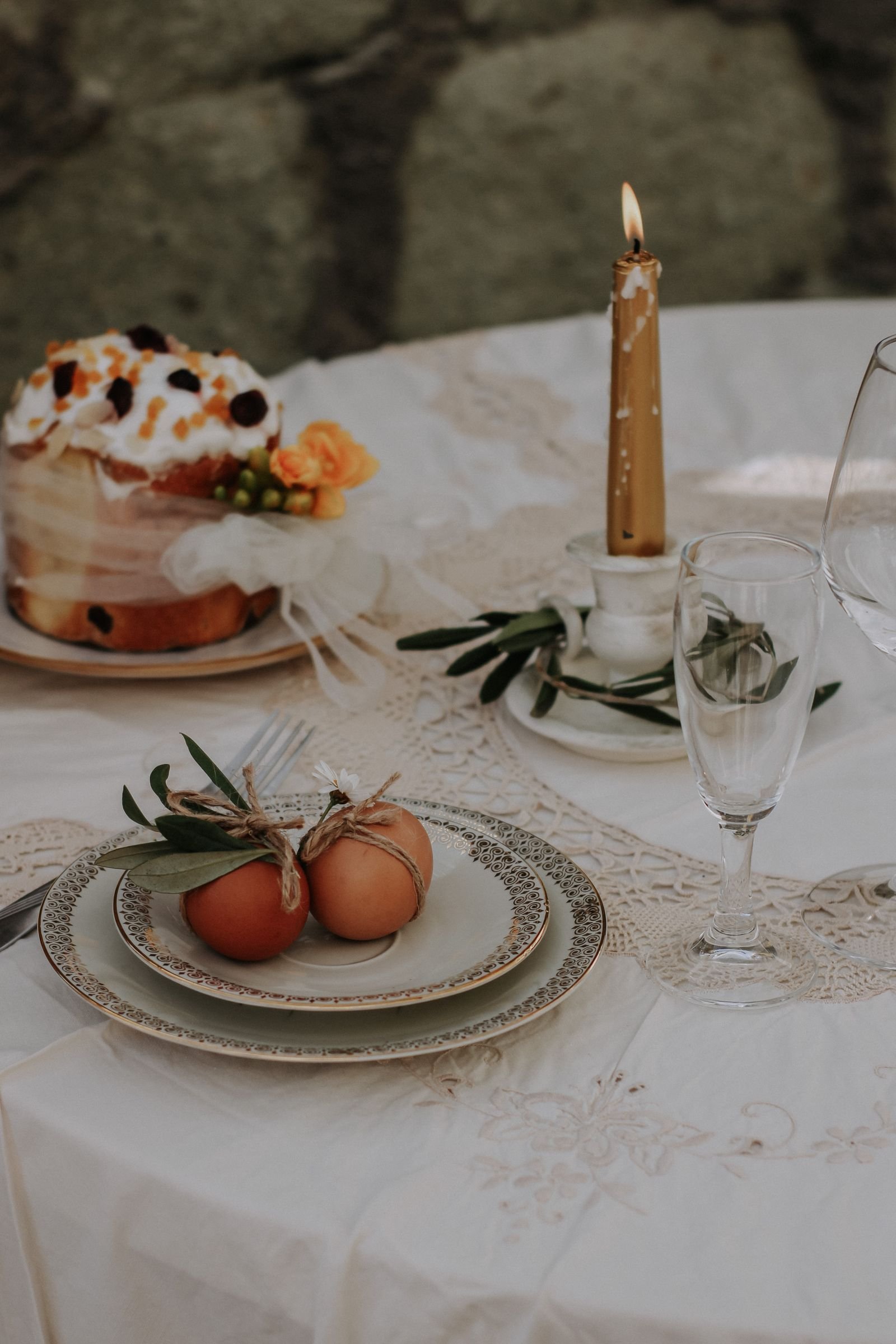
At each place, keep it simple: your everyday plates, a napkin, and one egg — a single speckled or dyed egg on the plate or in an egg cup is the kind of detail guests pick up and smile at. I learned the hard way that themed plates, bunny-shaped everything, and confetti eggs all compete with the food. The food is the point. The decor is the frame.
Eggs, Done Tastefully
Eggs are the symbol of the holiday, so there’s no avoiding them — nor should you. The difference between tasteful and tacky is entirely in the finish.
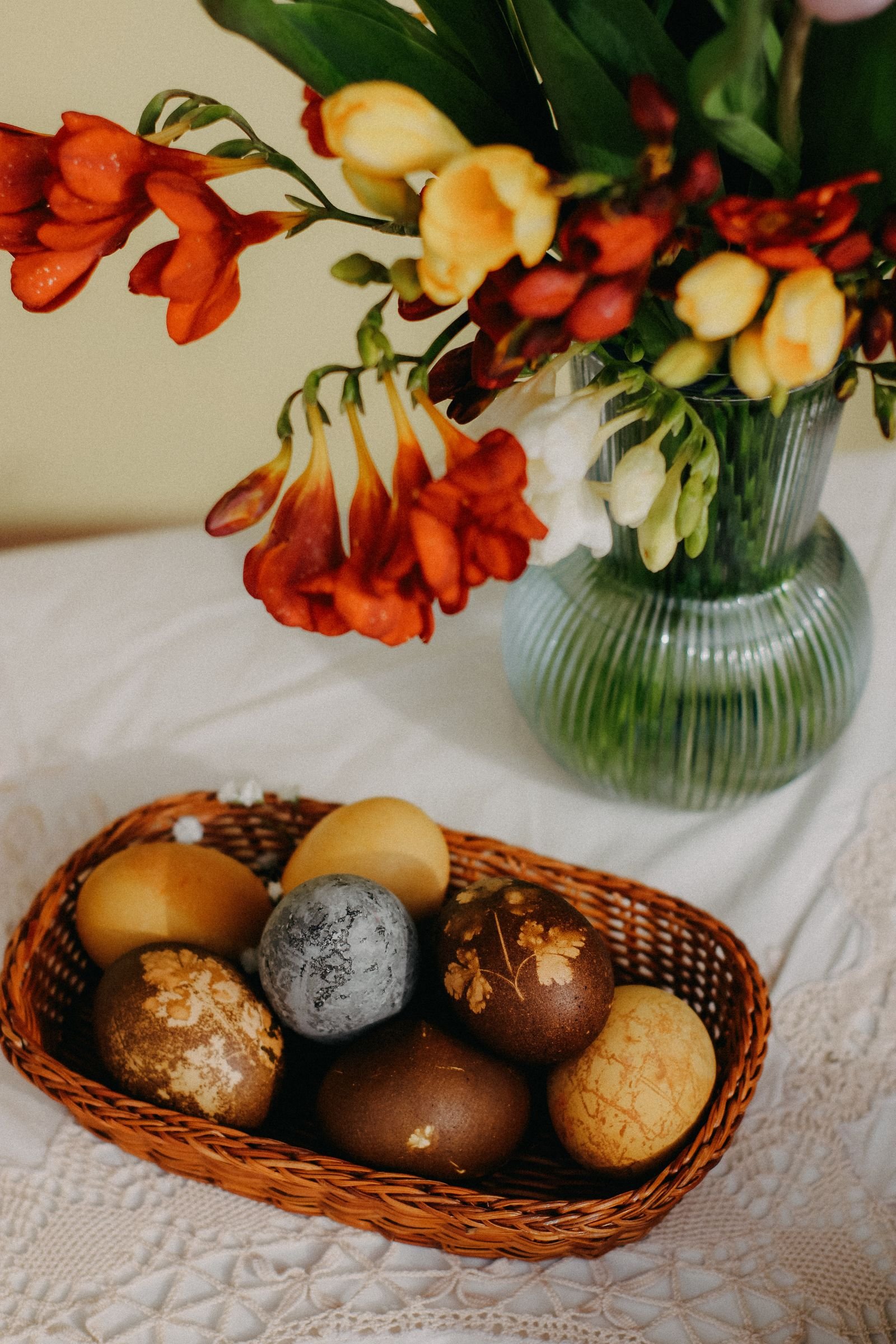
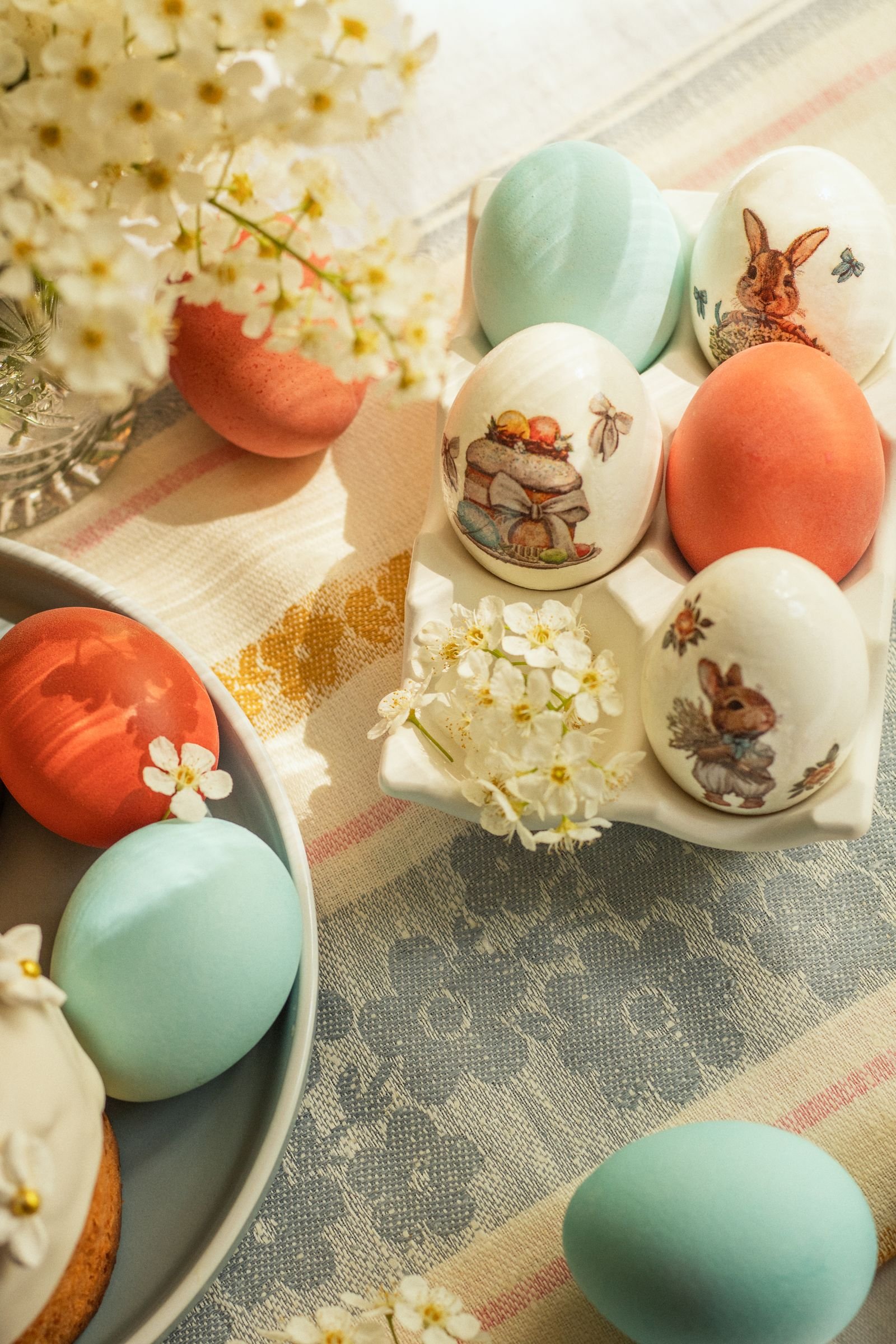
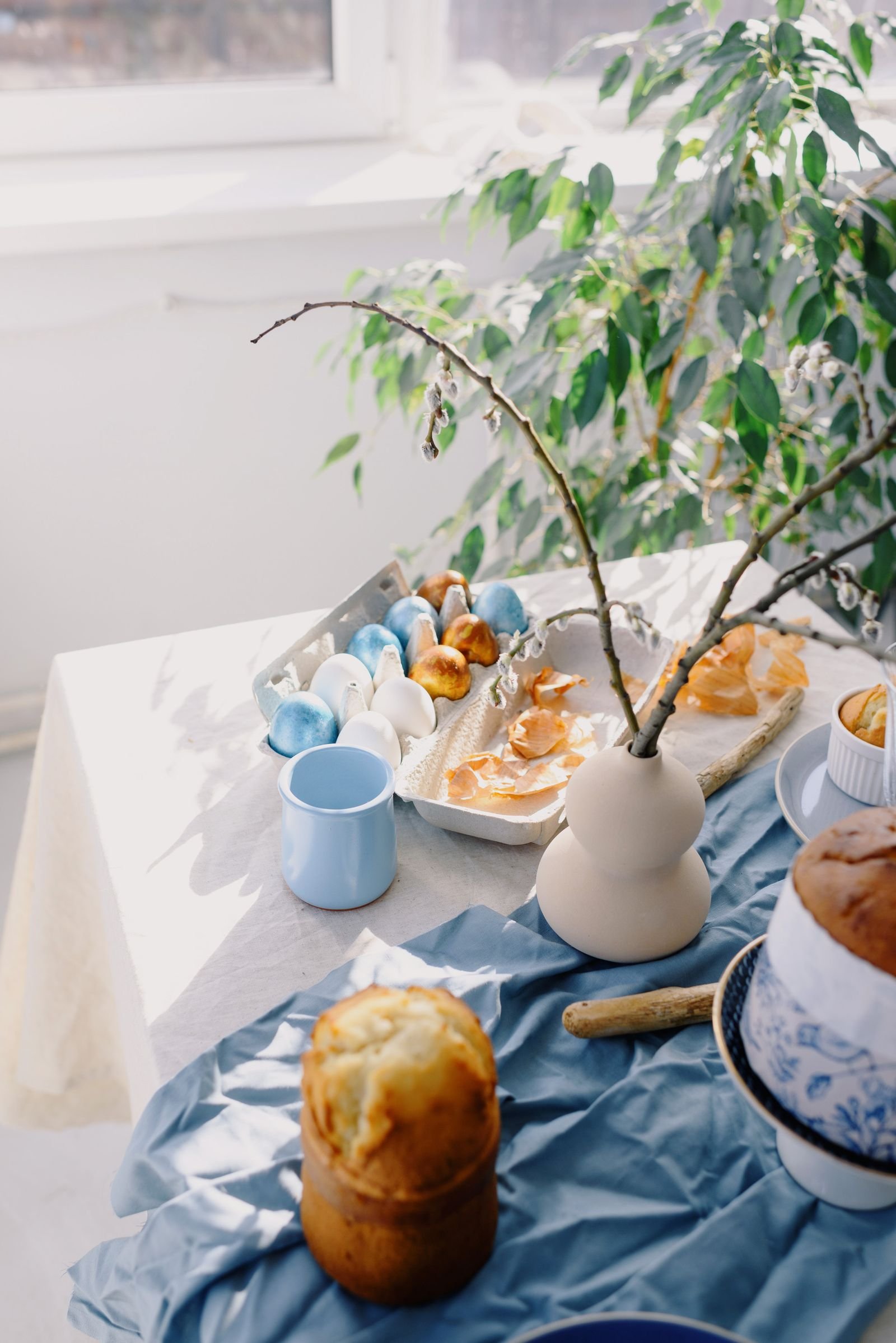
Natural dyes are the grown-up shortcut. Onion skins give you those deep amber and rust tones with leaf prints if you wrap herbs against the shell. Red cabbage makes dusty blue. Turmeric makes warm gold. Beet makes dusty rose — which, if you’re running my palette, is almost suspiciously perfect. The colors come out muted and varied, no two eggs alike, and that variation is exactly what makes a bowl of them look rich instead of uniform and plasticky. A dozen eggs and a pot of cabbage water cost under $5 total.
Speckled eggs are the other forever-yes. Leave eggs ivory or dye them one soft color, then flick a toothbrush dipped in thinned brown or gold paint over them for that bird’s-egg speckle. It takes ten minutes, it’s forgiving of shaky hands, and speckling forgives every uneven dye job underneath it.
Decoupage is for the one special batch. Tear — don’t cut — small pieces of a pretty paper napkin, brush them onto blown eggs with matte Mod Podge, and you get botanical-print eggs that look like they came from a very expensive shop. These are the ones for the mantel bowl and the place settings. The eating eggs can stay simple.
What ties all three together: keep the eggs in your palette, mix in quail eggs for contrast if you find them, and display them in real materials — a bowl, a nest of moss or straw. The vessel is half the effect.
Fresh Flowers Are the Real Luxury
Here’s the honest hierarchy I’ve landed on after years of getting it backwards: if you have $20 to spend on Easter, spend it on flowers, not decor. Fresh flowers are the luxury. Everything else is support staff.
Tulips are the workhorse — a bunch costs $6–$10 in March, the colors slot straight into any palette, and they keep growing and bending in the vase in a way that looks alive rather than arranged. Daffodils are the cheer: cheap, golden, and unmistakably spring, though keep them in their own vase for the first day since their stems make other flowers wilt faster. Hyacinths are the splurge for the entry or bathroom, where their scent does the decorating for you — one small pot perfumes a whole hallway.
Buy them two or three days before Easter Sunday, not a week. Trim the stems, use fresh water, and put the biggest arrangement where you’ll actually see it all weekend — the table or the kitchen counter, not the guest room. And once the eggs go back in their box, a vase of tulips on the mantel carries the house gracefully into April.
The Skip List (Honestly, Skip These)
Every year I refine this list, and every year it saves me money and visual peace:
- Plastic grass. In baskets, under eggs, anywhere. It reads cheap in every context, sheds everywhere, and moss, straw, shredded kraft paper, or a linen napkin does the same job beautifully.
- Cartoon overload. One playful touch for the kids is lovely — a chocolate bunny at each child’s place, say. Ten grinning characters across every surface turns your home into a themed restaurant.
- Everything pastel pink. Pink as an accent is gorgeous. Pink as the entire scheme, in shiny finishes, flattens the room and photographs like a baby shower. Anchor it with green, wood, and ivory, or choose the dusty version.
- Glitter eggs and foam shapes. They shed, they look flat in daylight, and they fight with every natural texture you’re trying to build.
- Anything that only works for one weekend. If it can’t stay out through spring or come back next year, it’s clutter with good PR. The best Easter pieces — the bowl, the bunny, the linen — earn their storage space.
The Bottom Line
Grown-up Easter isn’t about doing less. It’s about doing the few things that actually register: one palette held with confidence, eggs that look like they came from a garden rather than a factory, branches with height, linen on the table, and fresh flowers treated as the main event. My plastic bin still exists, but these days it holds one bowl, one bunny, and a stack of linen — and the house has never looked more festive. Start in the two weeks before March 28, begin with the palette, and let everything else be a short, calm list. Spring does most of the decorating for you. You just have to let it.