
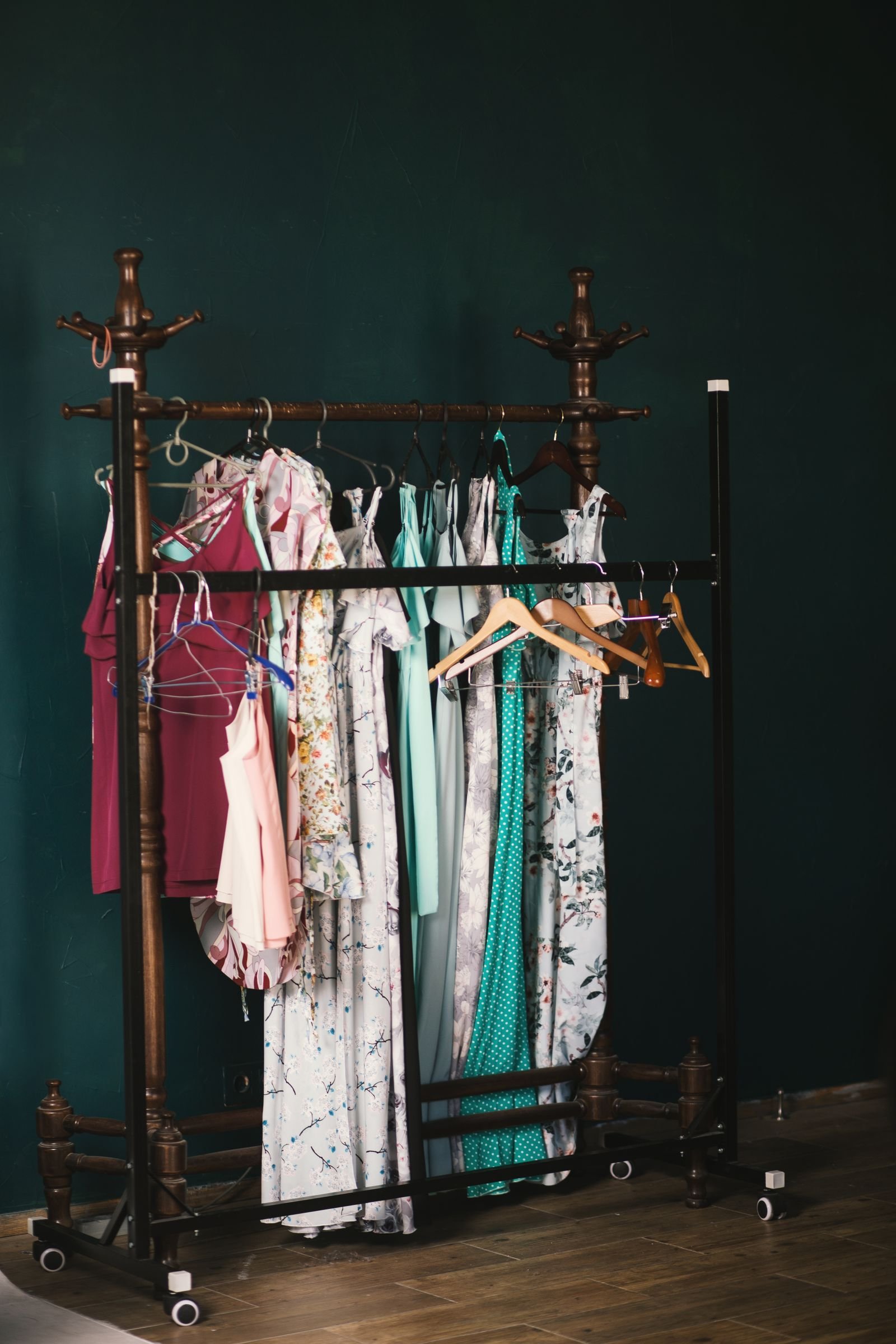
The first apartment I ever viewed with no closet, I actually laughed. The agent opened the bedroom door, waved at four bare walls, and said, brightly, “plenty of flexibility in here.” Flexibility. What she meant was: your clothes will live on the floor, on a chair, and eventually in a bin bag you step over every morning while quietly losing your mind. I took the place anyway — the rent was right and the light was lovely — and for the first month, that is exactly where my clothes lived.
Then I got stubborn. A room with no closet is not a room with no storage — you just have to build the storage yourself, on purpose. These are the no closet storage ideas I have lived with and set up in more small rentals than I can count: what each costs, honestly, what renters can do without a drill hole, and the one discipline that makes any of it work. If your bedroom is generally tight, our small bedroom organization ideas cover the rest of the room; this article is only about the clothes.
Start With the Wall, Not the Shop
Before you buy anything, find your longest unbroken stretch of wall. In most closet-less bedrooms it is the wall opposite the window, holding nothing more important than a poster and good intentions. That stretch, even at five or six feet, is your closet now.
Measure the depth too. A garment rack needs about two feet once clothes are hanging, and an armoire needs its depth plus room for the doors to open without kissing the bed. I once skipped that measurement and spent a year opening my wardrobe in two stages, like a puzzle box. Learn from my puzzle box.
One honest thing: no system here holds everything a walk-in holds. It holds a real, edited wardrobe beautifully — and the editing, which we will get to, is not the punishment it sounds like.
The Garment Rack, Styled Like a Boutique Rail
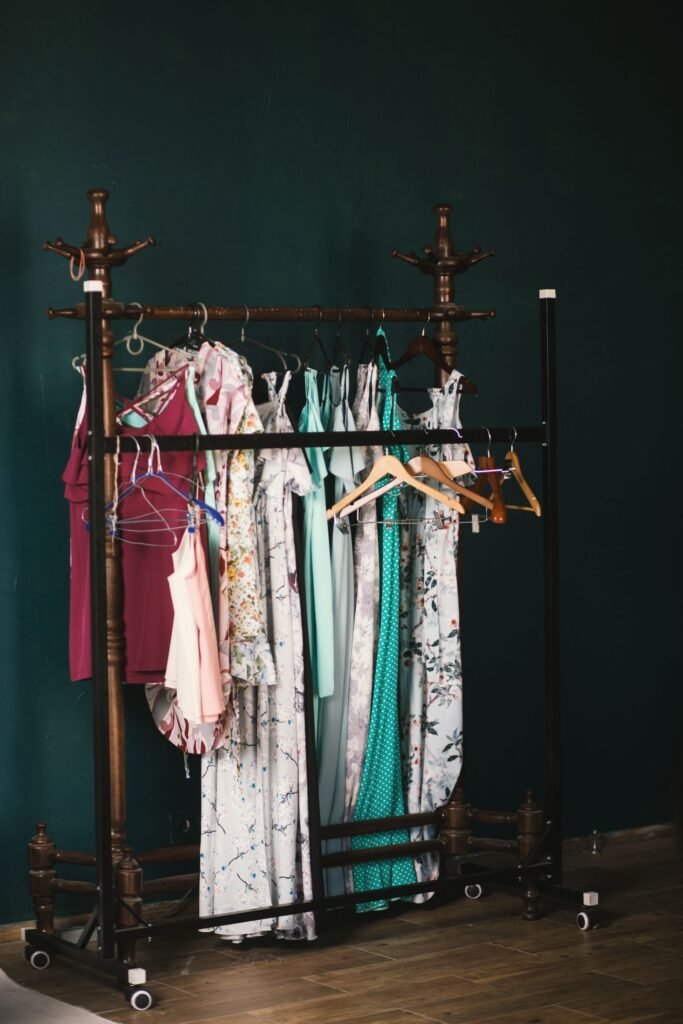
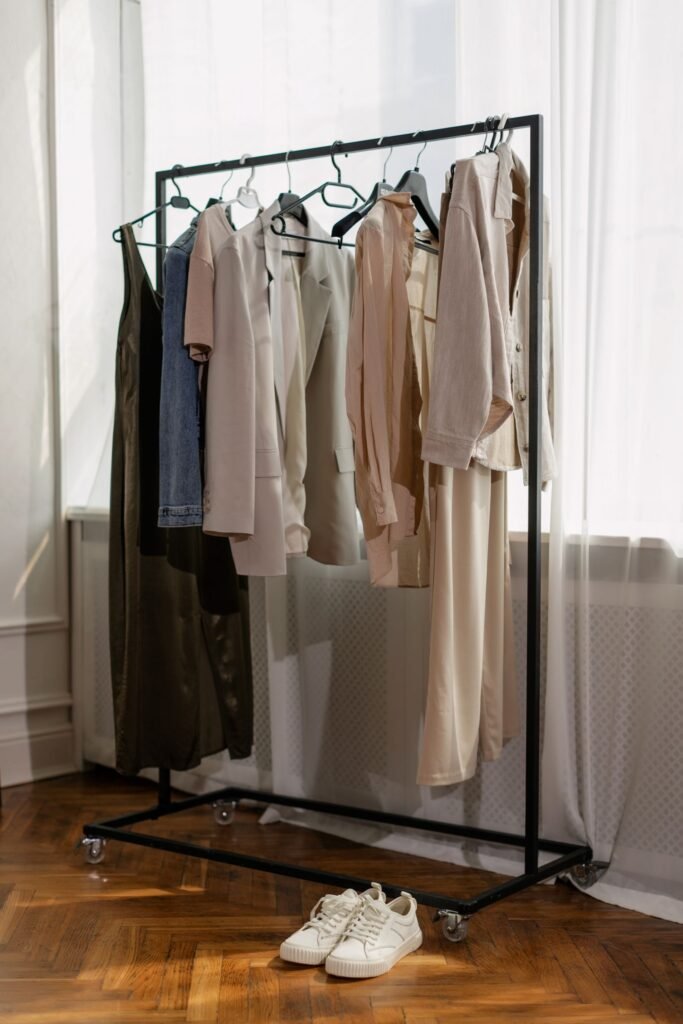
The garment rack is the obvious answer, which is exactly why it so often looks awful. Bought in a panic and loaded in a heap, it reads as “shop that exploded.” Bought deliberately and loaded with restraint, it reads as a boutique rail — the kind of thing design magazines photograph in lofts. The difference is never the rack. It is the rules you hang by.
- One rail, one hanger type. Matching wooden hangers are the cheapest transformation in this entire article. A $15 bundle turned my first rack from jumble sale to intentional in about ten minutes. Mixed wire and plastic hangers are visual noise; you hear them before you see the clothes.
- Hang by color, light to dark. Boutiques do this because it calms the eye. So does your bedroom. Within each color, go long to short, and the rail suddenly has a rhythm instead of a pile-up.
- Leave breathing room. A rail at eighty percent full looks curated. A rail at a hundred and ten percent looks like storage. If it is crammed, something has to leave — that is the rail doing you a favor.
- Use the ends and the base. A bag or a hat on the end hook, shoes lined up underneath on a low board or mat. The footprint you are already spending might as well work three jobs.
Cost, honestly: a sturdy rack that will not bow runs $40–$90. The wobbly $20 ones are a false economy — I have watched one fold slowly sideways at 2 a.m., fully loaded, and it is a sound you never forget. Wooden A-frame racks look like furniture; black metal reads modern. And for renters this is the dream category: it just stands there, and it leaves with you.
The Armoire: The Grown-Up Answer
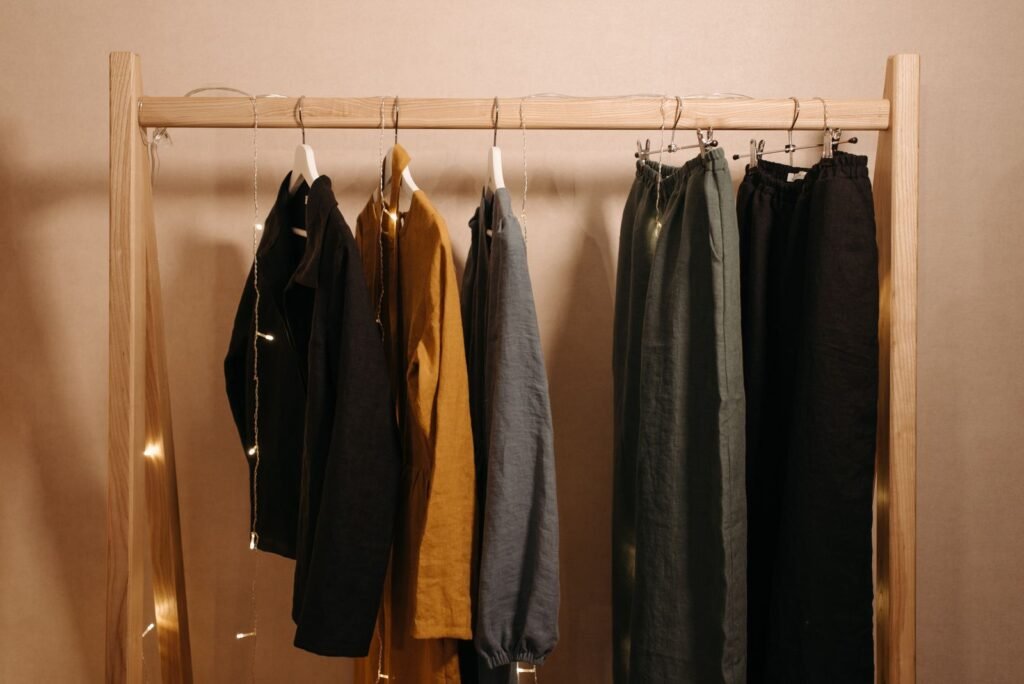
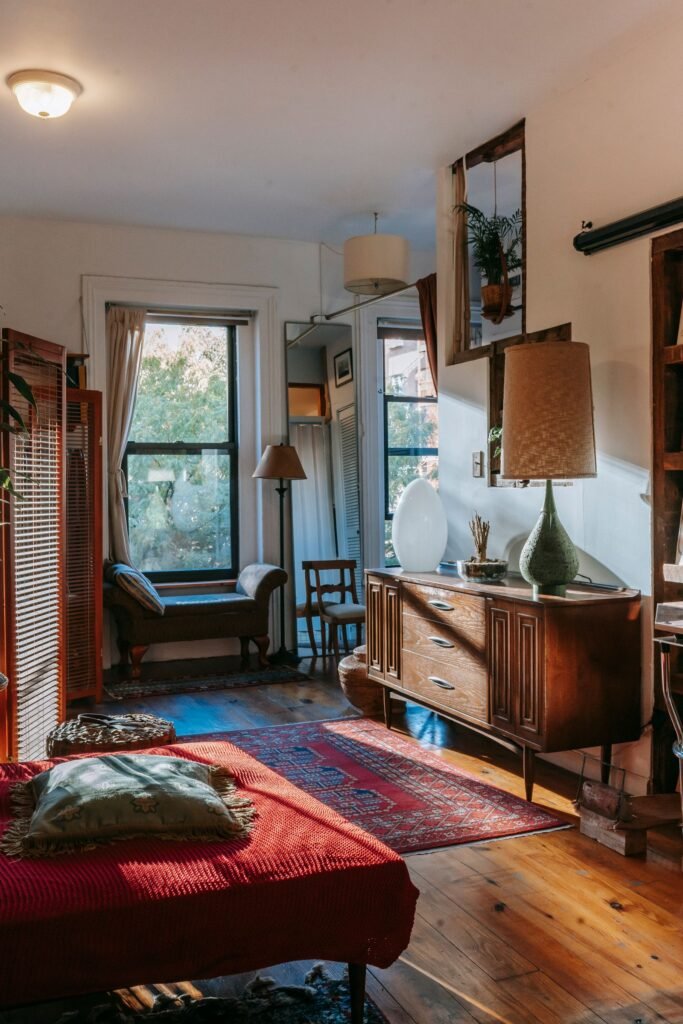
If the rail is the starter answer, the armoire is the settled one. A freestanding wardrobe gives you what open storage never can: a door. Behind it, life can be slightly less curated — nobody sees the sweater you folded badly. After two years of an open rail, buying a secondhand armoire felt embarrassingly luxurious.
Where people go wrong is size. Measure your ceiling height and your doorway before you fall in love, because a wardrobe that fits the room but not the hall is a heartbreak with delivery fees. In small rooms, a single-door armoire plus your dresser beats a double-door monster that eats the wall and the light.
- Buy secondhand first. Solid-wood wardrobes are some of the best value on resale sites — $80–$250 in most cities, often less than flat-pack, and heavier in the good way. Check the rail inside is firmly fixed and the back panel is sound.
- Set the inside up like a tiny closet, not a cupboard. Rail across the top, one shelf above for the rarely worn, boxes at one side for folded things, and shoes or the laundry basket in the dead space at the bottom.
- If yours is tiny rather than missing, that is a different problem with its own playbook — our small closet organization ideas are written for exactly that room. This article assumes there is no closet at all, which is why everything here stands on the floor or the wall instead.
Renters: an armoire is freestanding, so it is deposit-safe by design. Put felt pads under the feet — old wood on rental floors is a scratch waiting to happen — and you are done.
The Curtain-Hidden Rail, for Visual Calm
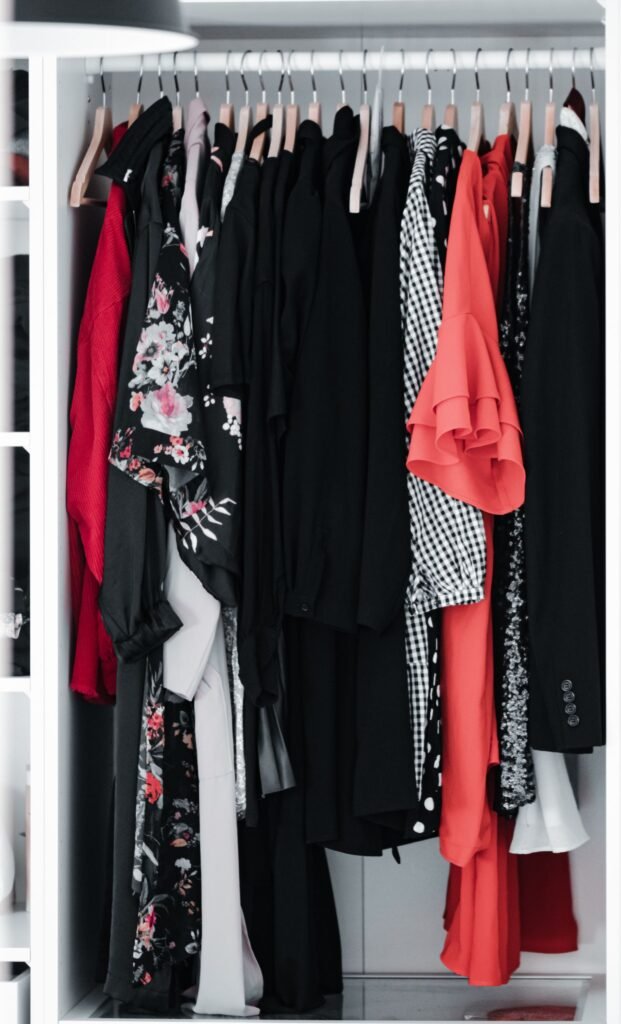
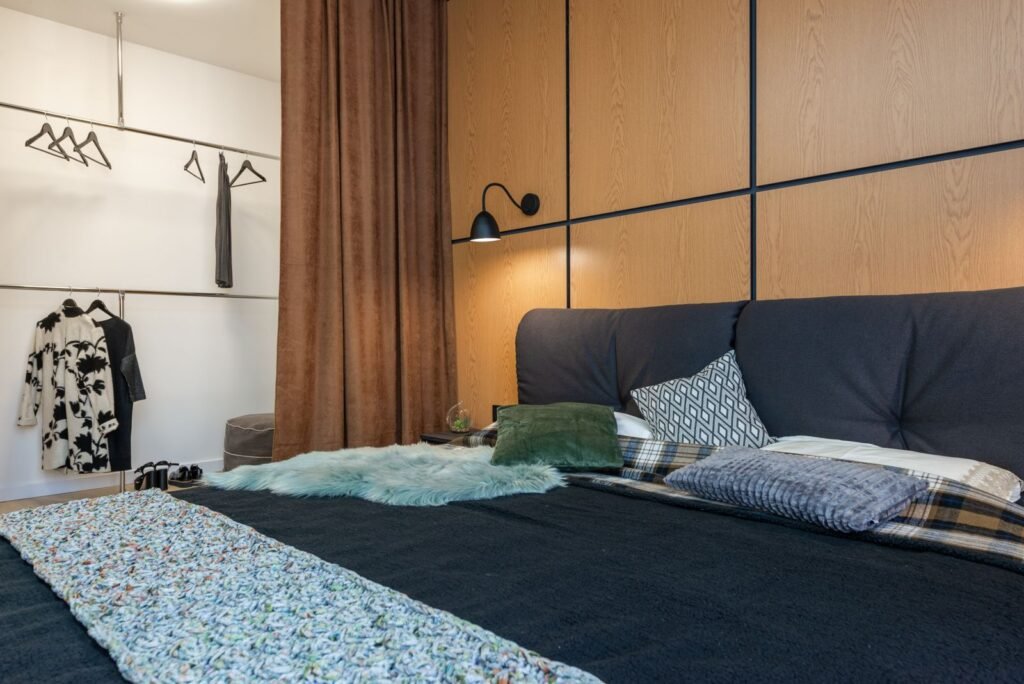
Here is the truth nobody tells you about open storage: some days you do not want to look at your clothes. You want a calm room, not a rail of decisions staring at you from the foot of the bed. The fix I recommend most in small rentals costs less than dinner: hang a curtain in front of the rail or the alcove, and the whole wardrobe disappears behind soft fabric.
A ceiling-mounted track is neatest, but it means fixings. The renter versions work nearly as well: a tension rod across an alcove, a linen panel clipped along a rail’s top bar, or — my favorite in one long rental — a rail screened by a tall folding screen I already owned. Linen and washed cotton look best, and never have that shiny shower-curtain energy.
Choose the curtain like bedding, not storage: a warm neutral or soft stripe you would happily look at every morning — because you will. The clothes are still thirty seconds away, but the room gets to be a bedroom again in the evenings. If you follow the wider renter playbook in our renter-friendly apartment decor ideas, you will recognize the principle: nothing fixed, everything soft, all reversible on moving day.
A Dresser System, Done Properly
Most closet-less rooms already have a dresser — it is just being used as a surface with drawers underneath, rather than the storage engine it should be. Done properly, one good dresser holds everything that does not need to hang, which is more than half most wardrobes.
The system is boring, and it works:
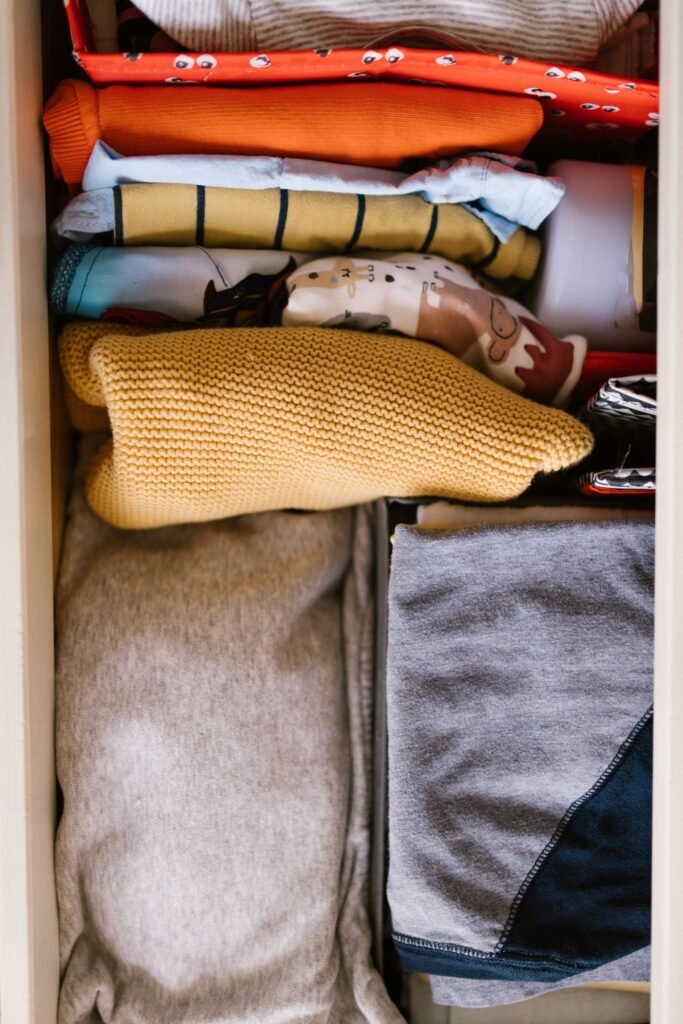
- File-fold, do not stack. Folding tees, knits and jeans so they stand upright in the drawer, like files in a cabinet, means you see everything at once and pull one piece without avalanching the rest. It genuinely doubles a drawer’s useful capacity. The first time I refolded a drawer this way I sat on the floor feeling smug for a full minute.
- One drawer, one job. Tops in one, bottoms in the next, underwear and socks corralled in a divided drawer or small boxes, gym things quarantined in their own. Mixing categories is how drawers become soup.
- Give the top a strict limit. The dresser top is for a lamp, something green, and the small tray that catches watch, earrings and pocket odds. The moment it becomes a second rail, the room tips from calm to crowded.
- Go tall before you go wide. A tallboy dresser holds a wardrobe’s worth of folded clothes on the footprint of a chair. In a small room, vertical is always the cheaper direction.
Secondhand dressers are everywhere for $50–$150, and a dated one with good drawers beats a new one with drawers that stick. Test the runners in the shop. Your future self, half-asleep and looking for socks, thanks you.
Under the Bed: The Seasonal Rotation
Whatever system you choose will only hold the current season comfortably — and that is fine, because you own a second storage room already. It is under your bed, exactly the size of your bed, and most people use it for dust and one lost slipper.
Flat lidded boxes or soft zip bags under there have one job: rotation. In spring, heavy knits get washed, folded with a cedar block, and go under the bed; summer things come out. Swap back in October. Two honest rules: only store clean clothes (moths read a food stain as an invitation), and keep a phone note of what went under — otherwise you will buy a duplicate scarf in November. I have the scarves to prove it.
If you want the deep version of this one space, our under-bed storage ideas go box-by-box through it. Here it only needs to play its supporting role: the quiet overflow that keeps the visible systems breathing.
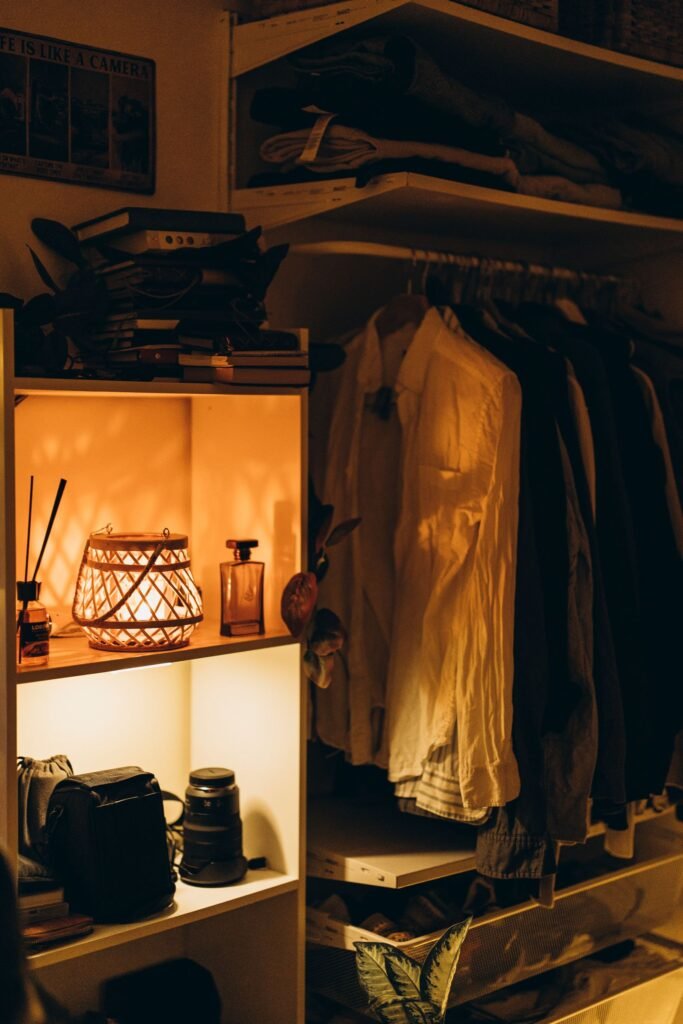
Hooks and the Back of the Door
Every closet-less room has one more surface people forget: the door. Hooks are the hardest-working cheap hardware in a small home. A row of them takes the coat, the bag, the robe, tomorrow’s outfit — the things that otherwise colonize a chair into the famous clothes chair, which I am convinced reproduces in the dark.
For renters, the no-drill hierarchy is simple. Over-door racks leave zero marks — get padded backs so they do not rattle. Adhesive hooks rated well above the load carry robes and light bags happily. A freestanding coat stand works too, in a corner that is otherwise dead.
Keep it disciplined: one hook, one job. Six hooks with six things look intentional; six hooks with nineteen look like the rail exploded anyway, just vertically.
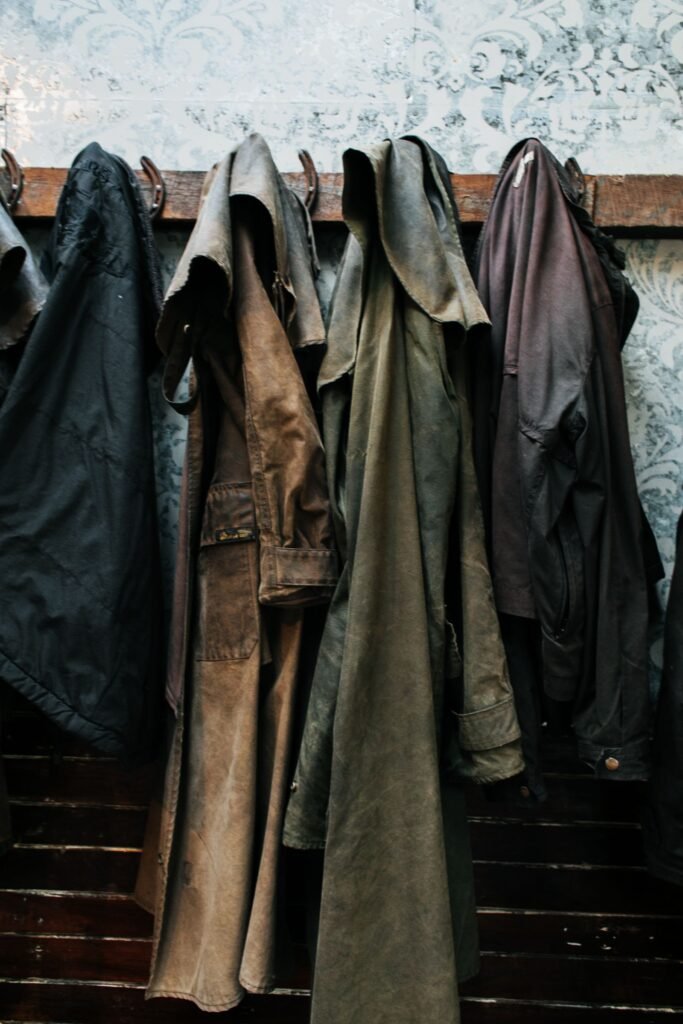
The Honest Part: The Capsule Discipline
I have saved the least shoppable idea for last because it is the one that decides whether the rest of this article works. No closet storage holds an unlimited wardrobe gracefully. At some point — usually around the moment the rail starts to bow and the dresser drawers stop closing — the problem stops being storage and starts being volume. Mine arrived holding a coat I had not worn in three winters, in a city where I no longer needed it, because it had been expensive once. You know your version of that coat.
You do not need a strict capsule with a number attached. What works is gentler: everything in active rotation should fit the systems you have built, with air around it. When something new comes in, something of the same kind goes out. Keep a small “not now” box for maybes if you need one, but date it — and when the date passes unopened, let it go unopened.
What surprised me is that getting dressed got easier. Fewer clothes, all visible, all fitting the life I actually live. The rail stopped being a compromise and became the part of the room I liked most.

The Bottom Line
No closet is a puzzle, not a verdict. Give the room one proper home for clothes — a rail styled like you mean it, an armoire with a door, a curtain for calm days — backed by a dresser that works as a system, an under-bed rotation, and hooks for the daily overflow. Measure first, match your hangers, keep it at eighty percent, and edit like the space is worth something. Because it is.