
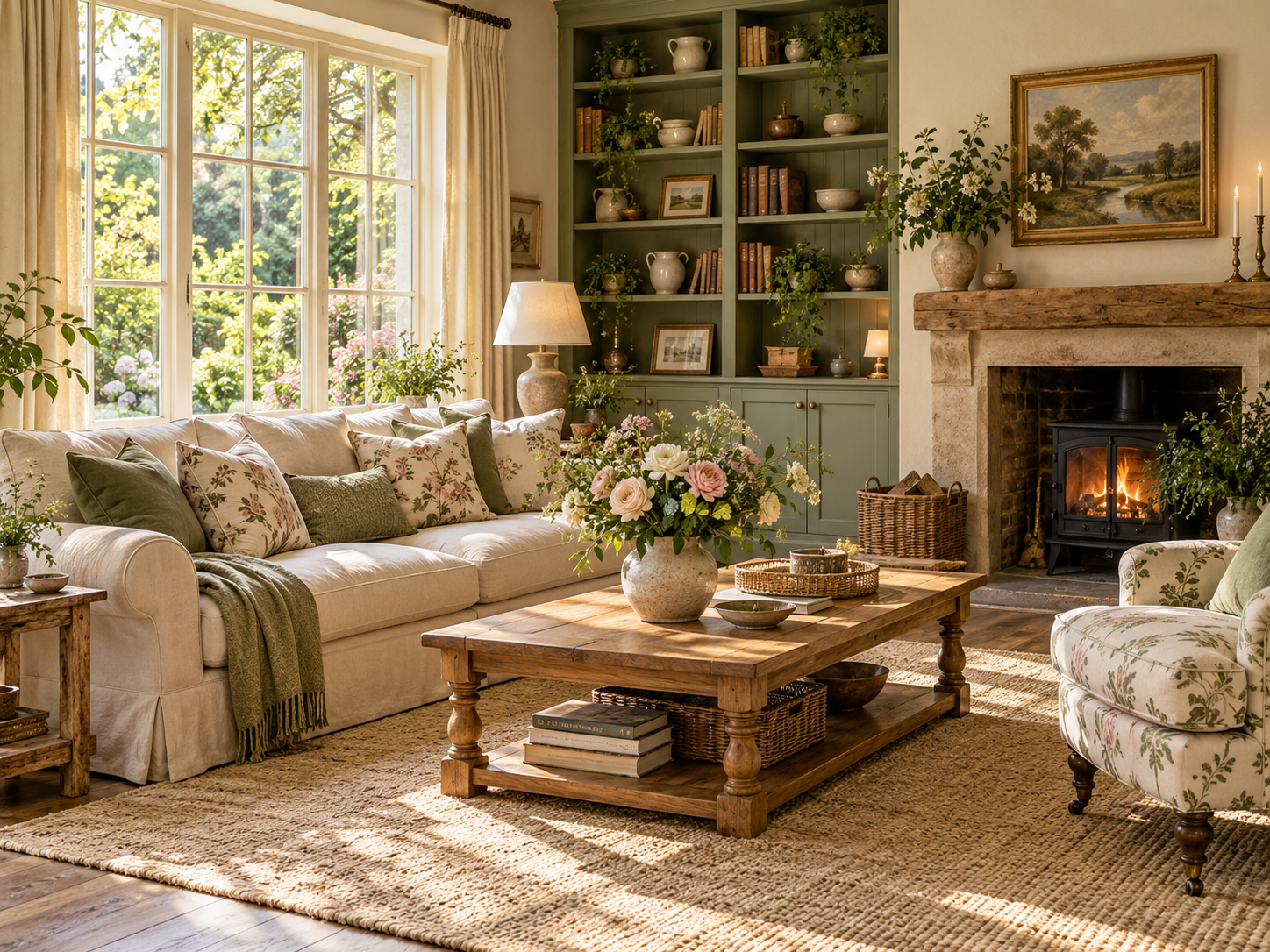
A living room can have a lovely sofa and freshly painted walls and still feel a little uninviting. Sometimes the light is too harsh. Sometimes the furniture feels disconnected, or there is nowhere comfortable to put down a cup of tea.
Making the room feel cozy starts with noticing those small things. Before buying anything, look at how you actually use the space: where you sit, what you reach for, and which corners you tend to avoid. These seven ideas give you a practical place to start.
1. Make one seat genuinely comfortable
Choose the place where you spend the most time. Sit down and check what is missing. Can you rest your back comfortably? Is there a surface within reach for a drink? Do you have enough light to read?
A cushion from another room, a small side table, and a neatly folded throw may be enough to improve the spot. Leave enough space on the seat to stretch out. If you have to remove a pile of cushions every time you sit down, try keeping just one or two.
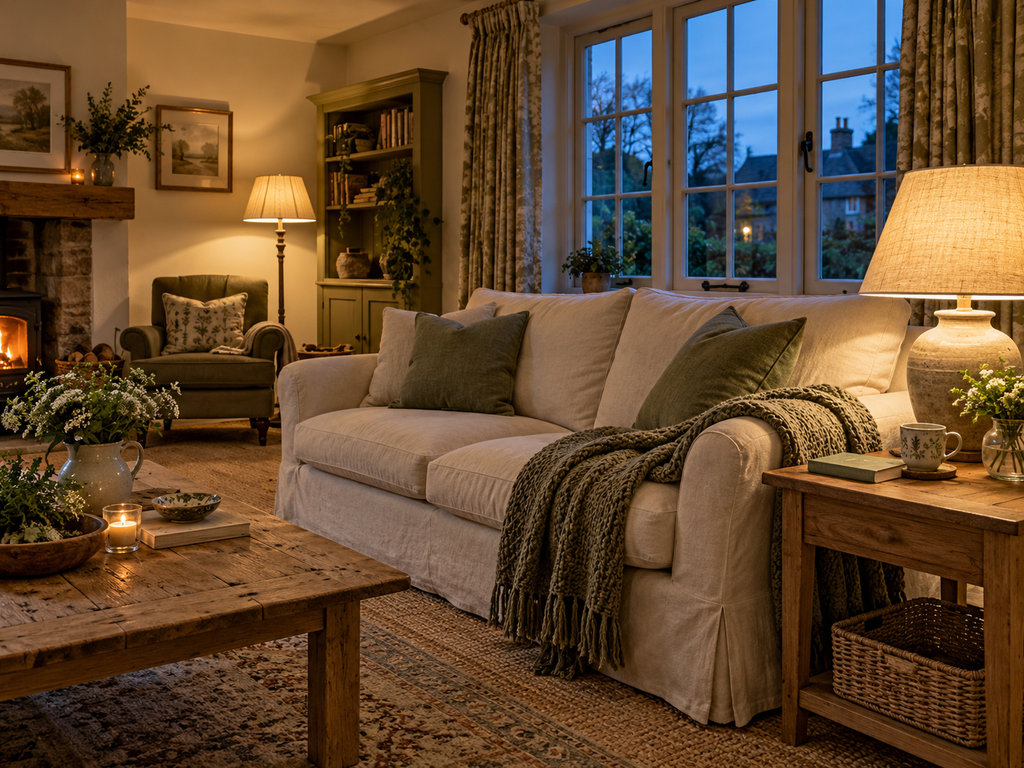
2. Give the room softer evening light
Look at your living room after sunset. A bright ceiling light can make every surface equally visible, but you may prefer a gentler atmosphere when you are relaxing.
Try switching on a table lamp beside the sofa or a floor lamp near an armchair. Use the overhead light when you need it, and experiment with smaller pools of light in the evening. Position lamps so you are not looking directly at an exposed bulb from your usual seat.
Start with what you have: Move an existing lamp into the living room for one evening. Notice whether the space feels more comfortable before deciding to buy another.
3. Bring a few different textures together
If the room feels flat, look at its surfaces. A smooth sofa, glass table, and bare floor can benefit from a little variation. A woven cushion, a cotton throw, or a textured rug introduces something different without changing the whole room.
You do not need every texture at once. Try a simple combination, such as a linen-look cushion against a smooth sofa, with a wooden side table nearby. Choose fabrics that suit everyday life. A washable cover may be more useful than a delicate fabric in a busy family room.
4. Arrange the seating around everyday life
Think about what happens in the room. If it is where people talk, seats should feel connected. If it is mainly used for watching television, everyone needs a comfortable view. A reading corner needs its own light and a place for a book.
In a larger room, try moving an armchair closer to the sofa rather than leaving it isolated against a distant wall. In a small room, keep the main walking route clear and avoid adding furniture simply to fill a corner.
After moving anything, walk through the space and sit in each seat. Check that doors open freely and that you can get around without squeezing past a table.
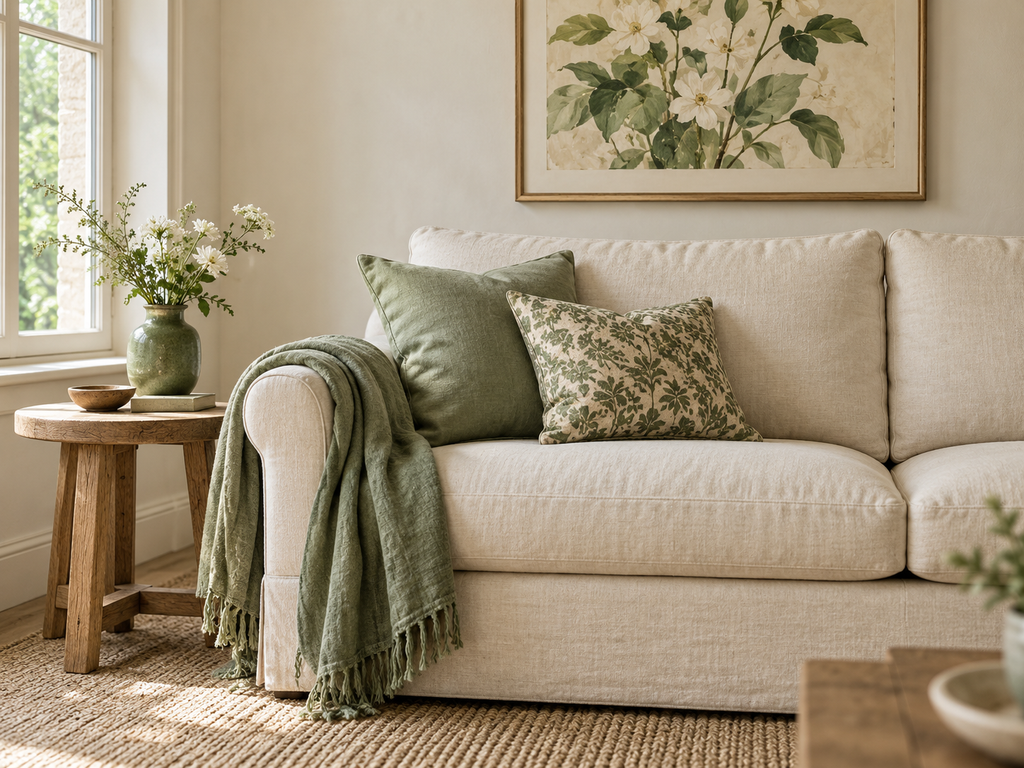
5. Repeat a colour you already enjoy
Look for a colour that is already working in the room. It might be the muted green in a picture, the warm brown of a wooden cabinet, or a soft blue in your rug.
Repeat that colour in a couple of smaller details: a cushion, a vase, or a throw. The shades do not have to match exactly. This gives you a starting point for decorating without replacing furniture or repainting the walls.
If you enjoy brighter colours, keep them. A cozy room does not have to be beige; it should feel comfortable to the people who live in it.
6. Clear a surface without removing its personality
Choose one busy surface, such as the coffee table. Remove everything, then put back what you use or enjoy seeing. Leave a clear spot for a drink or a book.
A small tray can keep remote controls together. A basket beside the sofa can hold a spare throw. Give everyday objects a convenient home rather than hiding them somewhere awkward to reach.
Keep the details that mean something to you. A family photograph, a favourite book, or a handmade bowl can make the room feel more personal than a collection of matching accessories.
7. Add a small touch of nature
A vase of flowers or a plant can give an empty corner a little life. Start small: one arrangement on a side table is often easier to enjoy and maintain than several crowded displays.
For a living plant, choose its position according to the light it needs rather than appearance alone. If plant care does not suit your routine, try botanical artwork or a wooden accessory instead. Keep arrangements out of busy walkways and leave useful table space clear.
A simple refresh to try this weekend
Start with the sofa area. Clear the side table, straighten the seating, and bring over a lamp you already own. Add one comfortable cushion and a throw if you will use it. Then sit down in the evening and see what still feels missing.
Live with those changes for a few days before shopping. You may find that the room needed a better arrangement more than it needed new things. Let comfort guide the next change, one corner at a time.