
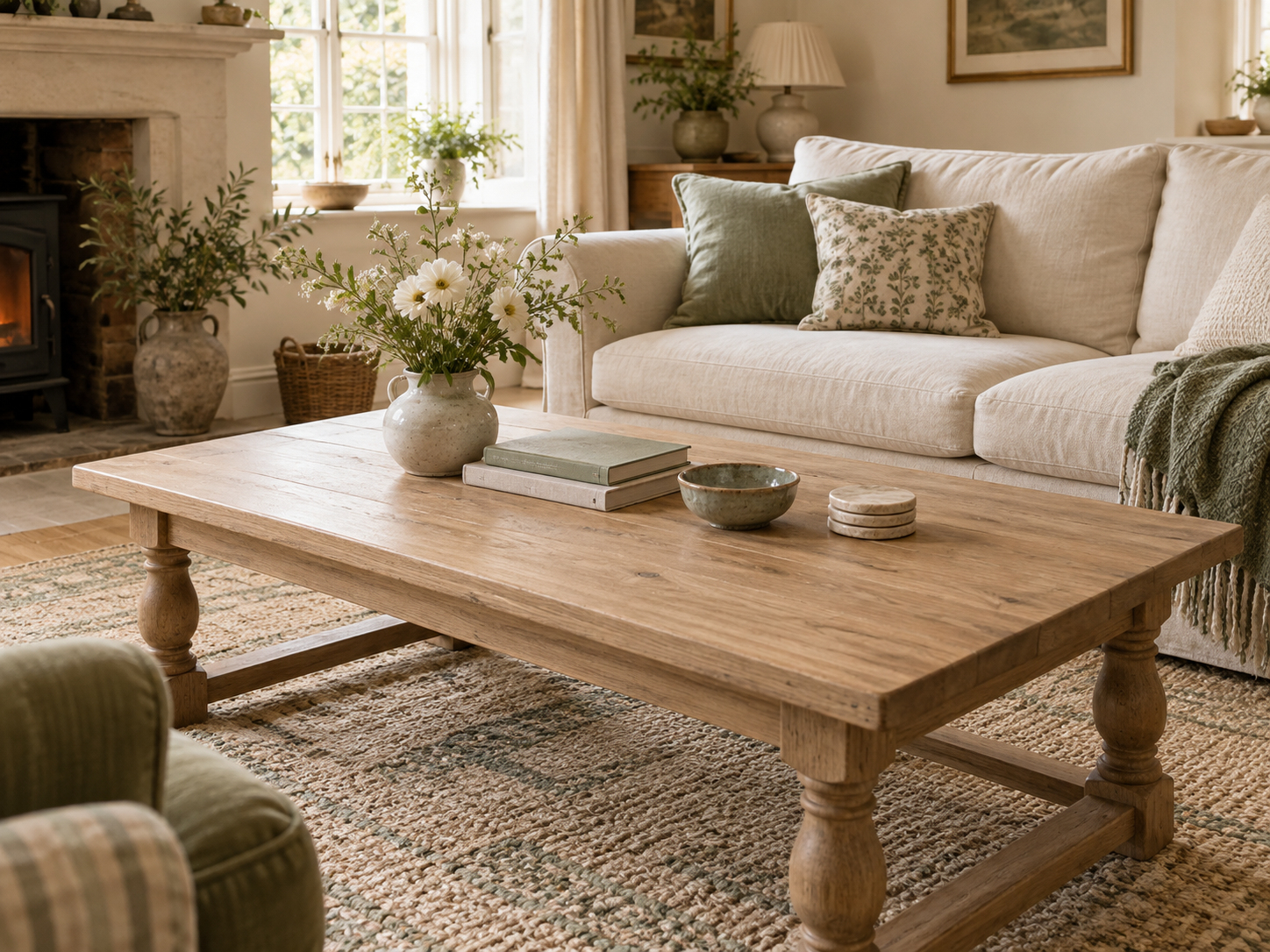
A coffee table has a busy job. It holds drinks, books, remote controls, and sometimes your feet at the end of a long day. Decorating it works best when there is still room for those everyday things.
If your table feels crowded, start by clearing it completely. Then build a small arrangement around the way you use it. A few well-chosen pieces can give the room personality while keeping the surface practical.
1. Leave space for a cup before adding decorations
Before choosing a vase or stacking books, sit in your usual place on the sofa. Put a mug and a small plate on the table. That simple test shows you which part of the surface needs to stay available.
Keep this space easy to reach. If every drink requires moving an ornament, the arrangement needs adjusting. In a shared living room, leave somewhere convenient for a second person to put their cup too.
2. Choose one piece to build around
Start with something you enjoy seeing: a ceramic bowl, a small vase, or a book with an interesting cover. Place it on the empty table and look at it from the sofa before adding anything else.
Consider its size in relation to the table. A wide bowl may suit a large rectangular surface, while a compact vase can work better on a small round table. Keep taller pieces away from the line of sight between people sitting opposite each other.
You do not need to buy a new centrepiece. Try an object from a shelf or another room first. Moving something you already own helps you judge the arrangement without committing to a purchase.
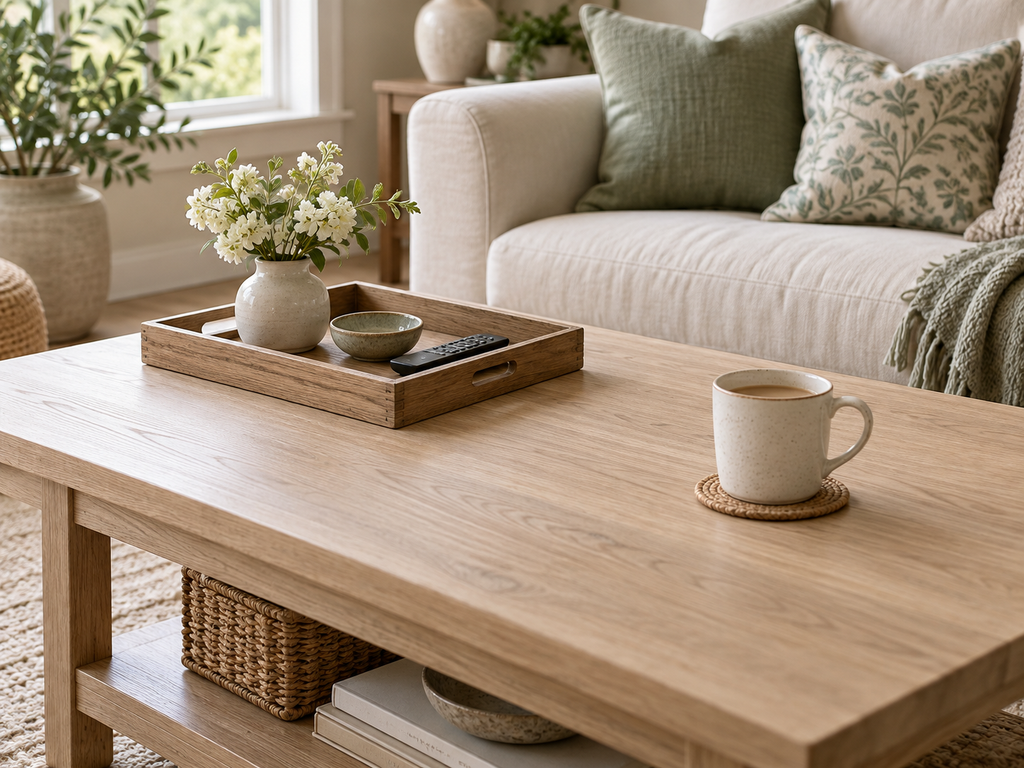
3. Use a tray when it makes everyday life easier
A tray can bring several small items together. It is useful for remote controls, a little bowl, or a vase that otherwise looks isolated on a larger table. You can also lift the whole arrangement away when you need more space.
Choose a tray that leaves usable space around it. On a small table, a large tray can take over the surface. If the tray adds bulk without solving a problem, leave it out and keep the arrangement simpler.
Check that it sits steadily, particularly on an upholstered ottoman used as a coffee table. Place drinks on a firm, stable surface rather than balancing them beside decorative pieces.
4. Add books you actually want to pick up
One or two books can add colour and a little height. Choose titles you enjoy browsing, whether they are about gardens, photography, travel, or interiors. A coffee table feels more personal when its books reflect your interests.
Keep the stack low and easy to use. If you place a heavy vase on top, you may never reach for the book underneath. Try setting the vase beside the stack instead, or leave the top book clear.
If your household uses the table for meals, drawing, or games, keep fewer books on display. Store the rest nearby so clearing the surface takes a moment rather than becoming a chore.
5. Mix materials without filling every gap
Look at the table itself before choosing accessories. A wooden surface might pair well with a smooth ceramic bowl or a clear glass vase. On a glass table, a woven tray can introduce a different texture.
Use a colour already present in the room to connect the arrangement with its surroundings. For example, a muted green vase can echo a cushion or a detail in nearby artwork. The shades can vary; they do not need to match exactly.
After adding each piece, pause. An empty patch of tabletop is useful space. You do not have to fill it just because another accessory would fit.
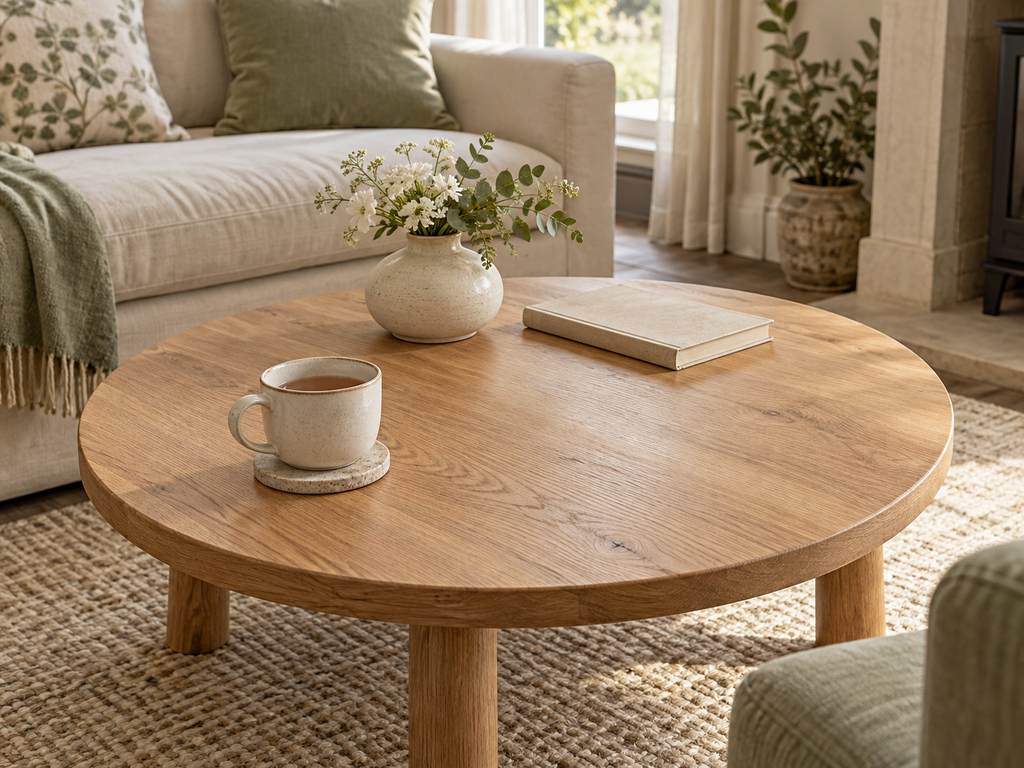
6. Keep flowers low and easy to move
A small vase of flowers can soften an arrangement without taking over the room. Choose a vase with a stable base and keep the display low enough that you can comfortably see across the table.
Set it where it is unlikely to be knocked by someone reaching for a drink. A coaster or suitable protective base can help keep moisture away from the table, especially on surfaces that mark easily.
If fresh flowers do not suit your routine, use a decorative bowl or another object you enjoy. There is no need to add greenery simply to complete a particular look.
7. Give the everyday clutter a nearby home
Notice which things return to the table each day. Remote controls might need a small dish or a drawer. Magazines can go in a basket beside the sofa. Charging cables are easier to manage when they have a convenient storage spot.
Choose storage you can reach without getting up or opening several containers. If putting something away is awkward, it will probably stay on the table.
Leave useful objects accessible. The aim is to make the surface comfortable to use, while keeping loose items from spreading across it.
Three simple arrangements to try
For a small round table: Try one low vase slightly off-centre, with a pair of coasters beside it. Leave the side nearest your seat clear.
For a rectangular table: Group a short book stack and a ceramic bowl towards one end. Keep the other end available for drinks, snacks, or whatever you use the table for.
For a busy family room: Use a small tray for remote controls and one sturdy decorative piece. Keep the arrangement easy to lift away, and choose objects suited to the people and pets sharing the space.
The final check: sit down and use the room
Once you have arranged the table, sit on the sofa with a drink or a book. Check that you can reach what you need, see the person opposite you, and move around the table comfortably.
If it feels crowded, remove one piece and try again. Live with the arrangement for a few days before adding more. The best version is one you enjoy looking at and find easy to use.