
The short answer: A winter porch is not a new decorating project — it is a one-afternoon edit of the Christmas porch. The bows, baubles and anything red-and-gold come down. The plain evergreen, the lanterns and the warm light stay. Then you add three winter things — birch or firewood, a wool layer, and one clear, safe path — and the porch works from January to March.
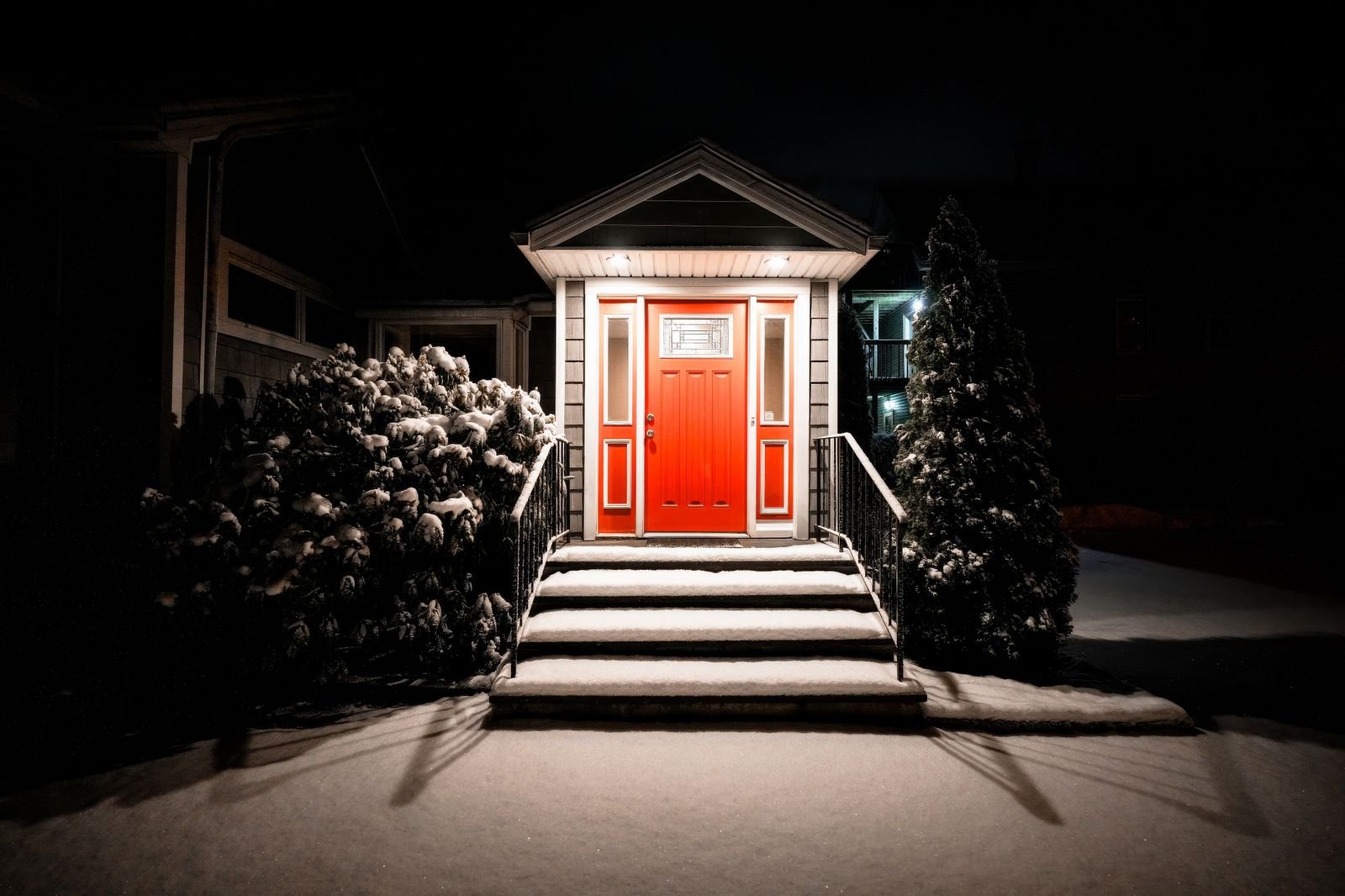
A Porch for the Months Nobody Decorates For
There is an awkward week every January when the Christmas porch starts to look wrong. The wreath is still handsome, but the bow reads holiday. The lights were charming on December 23rd and feel like a party that ended days ago by January 6th. Most people solve it by stripping the porch bare — and then the front of the house looks abandoned for the two coldest months of the year, exactly when a lit, cared-for entrance matters most.
This guide is the middle path: the one-afternoon swap. It is different from our Christmas front porch decor ideas, which are festive December styling built to peak on one week of the year. It is also different from our winter entryway decor ideas, which happen indoors, on the other side of the door. This is the outdoor porch for January, February and March — plainer than Christmas, hardier than autumn, and honest about what cold weather does to real plants, real candles and real concrete. The same after-Christmas logic runs through the whole house in our guide to winter decor ideas after Christmas; here it is applied to the one space every visitor and neighbour actually sees.
Step One: What Comes Down
Work with three boxes or bags on the porch: storage, compost, and rubbish. Down comes anything that says December specifically — red bows and ribbon, baubles and ornaments, tinsel, novelty signs, the Santa-adjacent anything. Coloured lights come down too; they are the single fastest thing to date a porch. Wreaths and garlands get a decision, not an automatic trip to the attic: if the greenery is plain, it stays (see below). If it is wired with ornaments or glitter, it goes.
Take the doormat seriously for a moment. A Christmas mat in January looks forgotten, and a worn mat in icy weather is a slip waiting to happen. Swap in the plainest, heaviest mat you own — coir or rubber-backed — and shake the grit out of it weekly. Finally, check every bulb and battery while you are out there. The swap is also a maintenance round: a porch light that died in December and never got replaced makes the whole entrance feel uncared for, however good the wreath is.
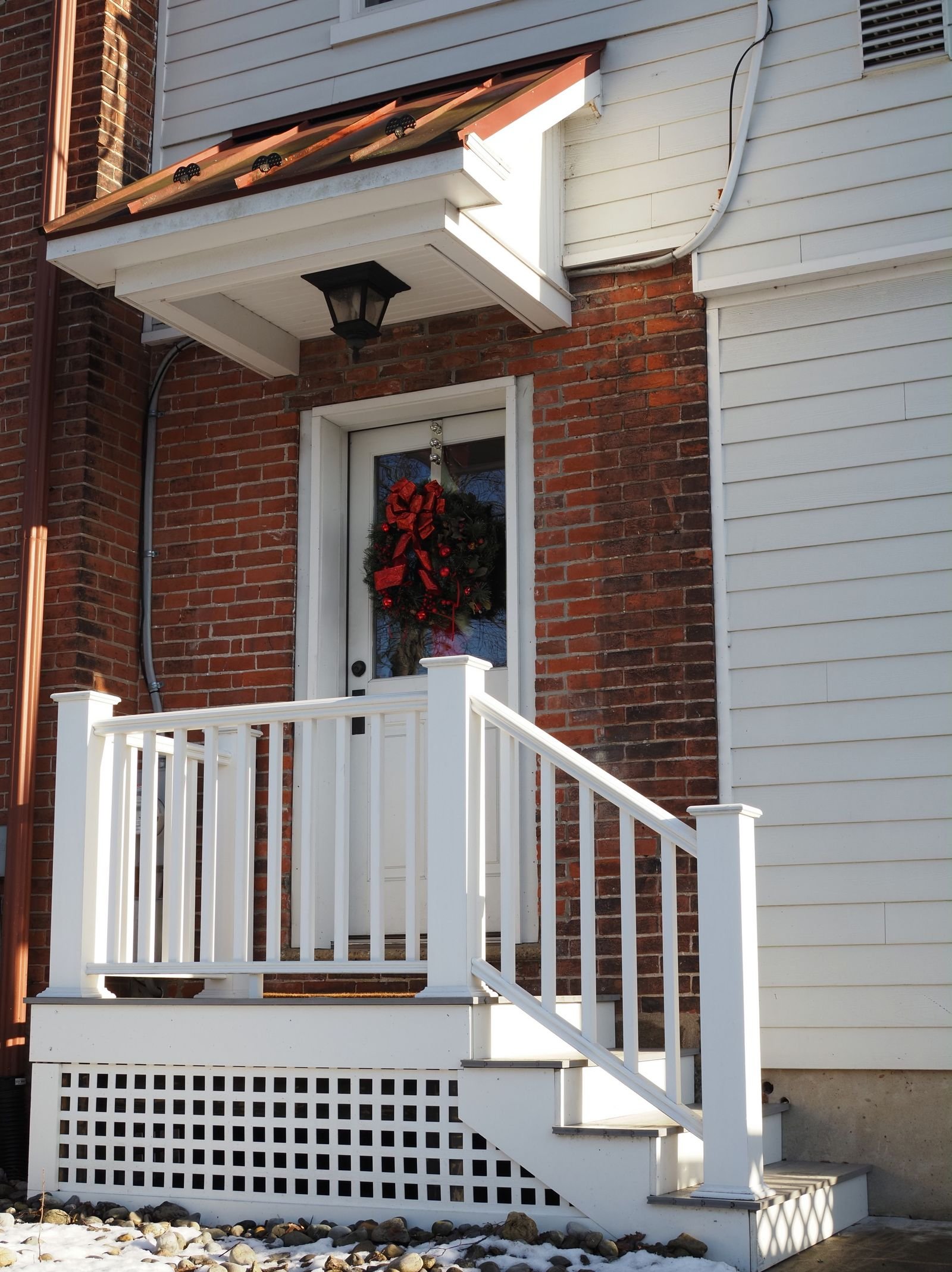
Step Two: What Stays — the Greens Earn Their Place
Plain evergreen is not Christmas decor; it is winter decor that Christmas borrowed. A simple fir, pine or cedar wreath with the bow removed reads completely differently in January — quieter, more like a farmhouse than a holiday card. The same goes for unadorned garland along a railing and for potted evergreens flanking the door. Lanterns stay. Warm white lights, honestly assessed, can stay too: a single strand along the door frame reads as winter glow rather than display, especially on the dark afternoons. If in doubt, keep one strand and store the rest; you can always take the last one down in February.
This is the part that saves money. Most of a good winter porch is already standing on your porch in late December. The edit is subtraction plus three additions, not a shopping trip.
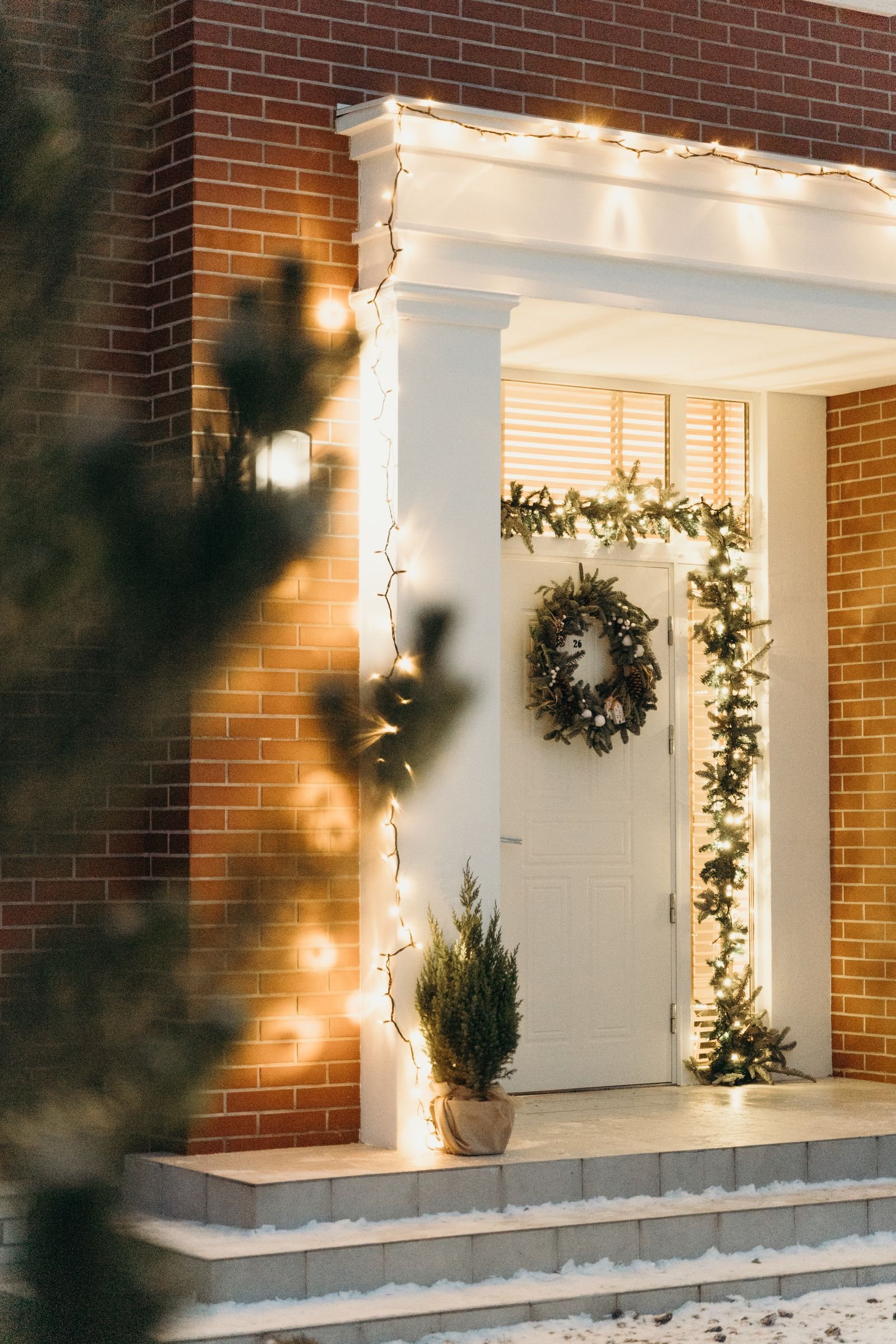
Step Three: What Gets Added — Birch, Lanterns, Wool
Winter additions should be things the cold cannot ruin. A bundle of birch logs in a tall basket or galvanised bucket beside the door is the classic move: pale bark against dark evergreen, no watering, no wilting, and it looks better slightly weathered. No birch nearby? A neat stack of split firewood does the same job and earns its place if you actually burn it. Lanterns are the second addition — one large by the door, or a pair at different heights on the steps — with LED candles on timers if real flames would worry you. In deep cold, real candle wax can crack and cheap batteries fade fast; LED pillars rated for outdoor use are the honest recommendation, set to come on at dusk so the porch lights itself.
The third addition is wool, used where it will not rot: a heavy plaid throw over a porch bench or chair, brought in when rain or wet snow is forecast, and a knit scarf or a pair of old skates hung by the door if your porch has that kind of hook going spare. Texture is what separates a winter porch from a merely emptied one — the eye reads wool, bark and basket weave as warmth even at twenty degrees.

The Wreath, Simplified
If you change only one thing, change the wreath. Take off the bow, the berries wired for December, the pinecones sprayed with glitter. What is left — plain green, perhaps a few natural cones — is the January wreath, and it can hang until spring without apology. A wreath that has gone brown at the edges or drops needles at a touch has finished, though; compost it and replace it with a preserved or good faux wreath rather than nursing a dead one for two more months. There is no prize for real greenery that looks tired by the door every single day.
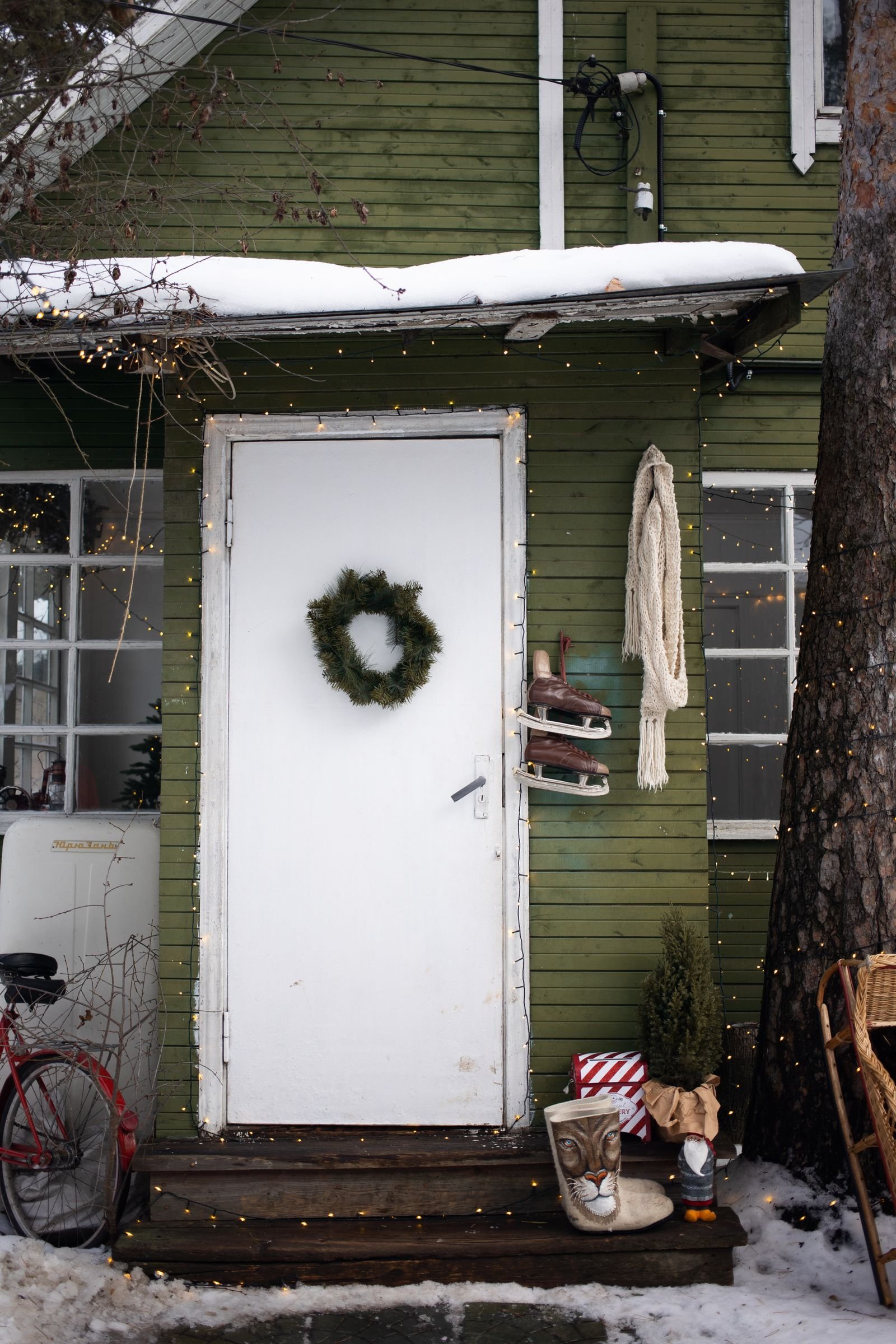
Light the Steps, Not Just the Door
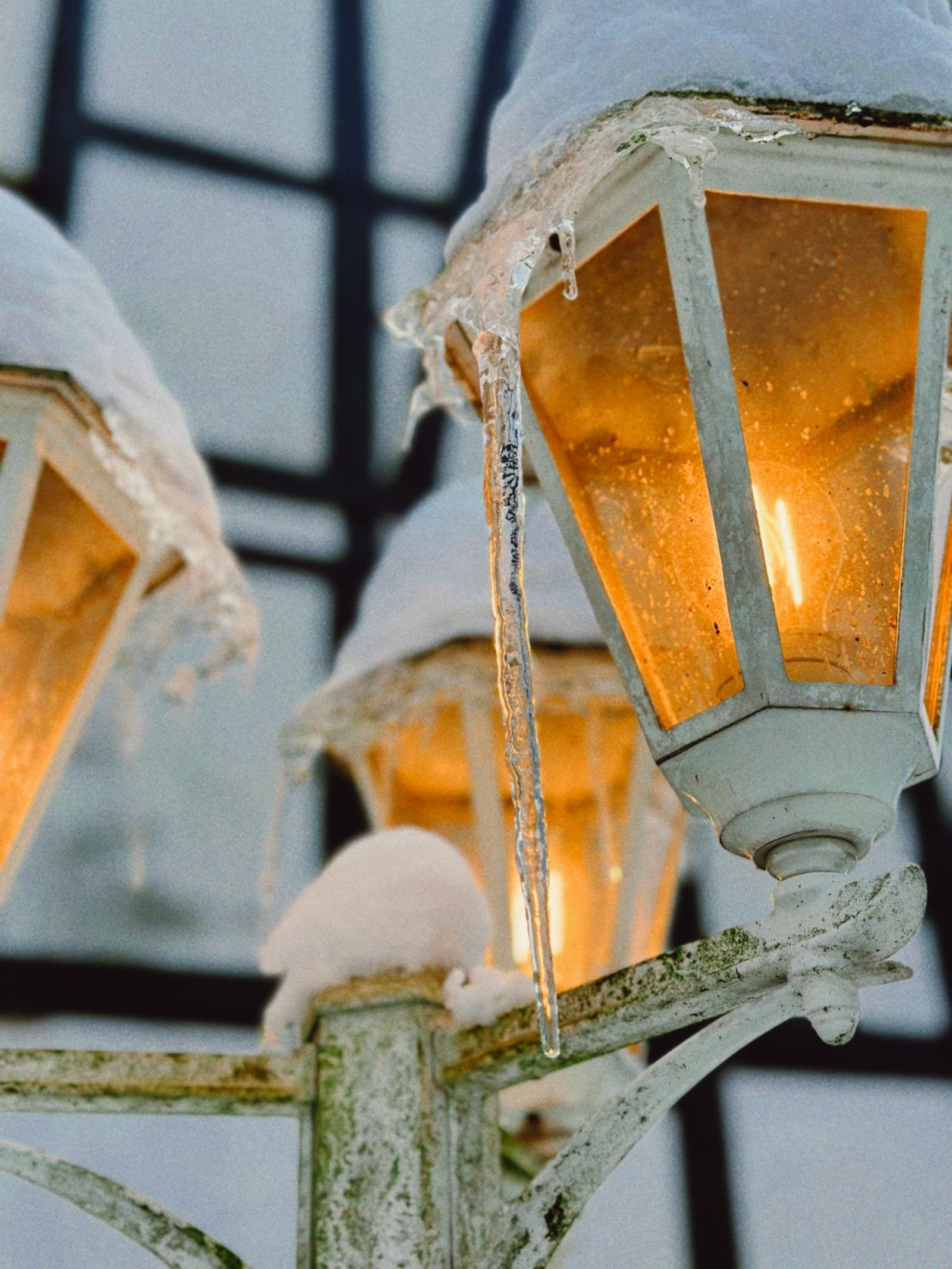
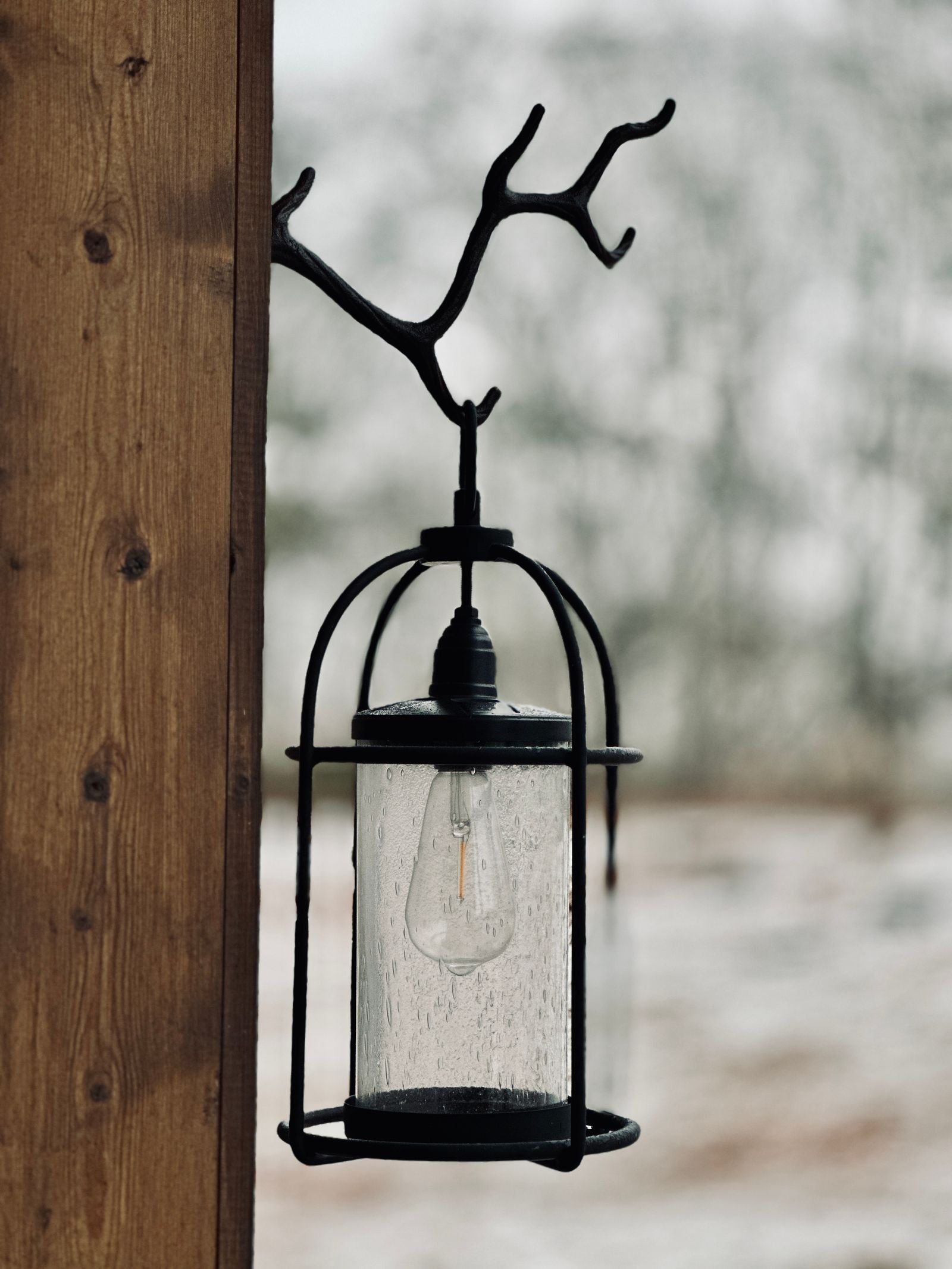
A winter porch is used in the dark more than in daylight, so judge it at night. The door light alone leaves the steps in shadow — precisely where ice forms. A lantern low on the steps, a lit garland strand, or a second lantern at path level tells visitors where the edges are. This is decor doing a safety job, and it is why the lantern photographs in this article are not styling extras: on a January evening, the warmest-looking porch is also the one nobody slips leaving.
A Seat Nobody Has to Earn
If your porch has a bench, a rocker or even one chair, winter asks one thing of it: make sitting conceivable for the length of a coffee. That does not mean cushions left out to freeze — foam cushions stored outdoors in January turn cold through and stay damp. It means a folded wool blanket in a lidded basket by the door, brought out when someone actually sits, and taken in again without ceremony. The bench in the photograph works because everything on it can be carried inside in one trip: a lantern, a basket, a few pinecones that cost nothing and fear nothing.
A covered porch can keep a hardier setup — a weatherproof cushion, a throw that lives in a deck box — but honesty again: anything textile that stays outside all winter will fade, mildew at the seams, or house a spider with strong opinions. The one-trip rule is the test. If the whole soft layer of your porch can be gathered in your arms in under a minute, it is a winter porch. If it needs a storage project, it is a summer porch photographed in January.
Cold-Weather Honesty: Greens, Pots and Ice Melt
Three things the pretty photographs do not tell you. First, real cut greens outdoors last weeks, not the whole season: in a cold, shaded porch a fresh January wreath can look good into February, but sun, wind and freeze-thaw cycles dry it out, and indoors it would fade far faster. Plan on refreshing once, or accept the slow fade as part of the look. Second, terracotta and cheap ceramic pots crack when wet soil freezes and expands; move precious pots under cover, and put winter evergreens in frost-proof containers — wood, metal, thick resin — or sink the nursery pot inside a basket you do not mind losing.
Third, ice melt. Keep it off your pots and plantings entirely — salt and chemical melts splash onto foliage and sit in pot soil, and evergreens show the burn by spring. Keep it off new concrete too: concrete poured within the last year can scale and pit when melt products drive freeze-thaw cycles in its surface, so use sand for grip on young slabs and steps. And store the melt bag itself away from the styled corner; a torn blue sack is the one accessory every winter porch has and nobody chose.


The One-Afternoon Order
| Order | Job | Time |
|---|---|---|
| 1 | Boxes out: bows, baubles, coloured lights and the Christmas mat come down | 30 minutes |
| 2 | Edit the greens: de-bow the wreath, keep plain garland and potted evergreens, compost what is brown | 20 minutes |
| 3 | Add the winter three: birch or firewood bundle, lanterns with timers, one wool layer | 30 minutes |
| 4 | Safety pass: clear wide path, sand on steps, melt stored away from pots, porch bulb checked | 15 minutes |
| 5 | Night check at dusk: stand at the street, confirm steps are lit and the door reads warm | 5 minutes |
Winter Porch Questions
How do I decorate my front porch for winter after Christmas?
Do the swap, not a restyle: remove bows, baubles, coloured lights and the holiday mat; keep plain evergreen, lanterns and warm white light; then add birch or firewood, a wool throw on the bench, and a clear, sanded path. One afternoon covers January to March.
How long do real evergreen wreaths last outside in winter?
Weeks rather than months. Cold outdoor air is kind to cut greens, and a fresh wreath on a shaded porch often looks good for four to six weeks, but sun, wind and freeze-thaw dry it out. Refresh once in February or switch to preserved or faux.
Can I leave fairy lights up after Christmas?
One warm-white strand, yes — along the door frame or in a lantern-style garland it reads as winter light. Coloured or flashing strands read as Christmas leftovers and date the porch fastest.
What is the best ice melt to use near porch plants?
None near the plants. Keep melt products away from pots and beds, use sand for grip on steps and on concrete less than a year old, and save chemical melt for the driveway where splash cannot reach your evergreens.
What if I have no porch, just a front door?
Shrink the formula: a plain wreath, one lantern, a heavy plain mat and a birch bundle in a bucket. The swap works at stoop scale exactly as it does at full-porch scale.
A winter porch asks for so little: an honest edit, three hardy additions, and light where the steps are. Do it on the next dry afternoon, and the front of the house stops apologising until spring.