
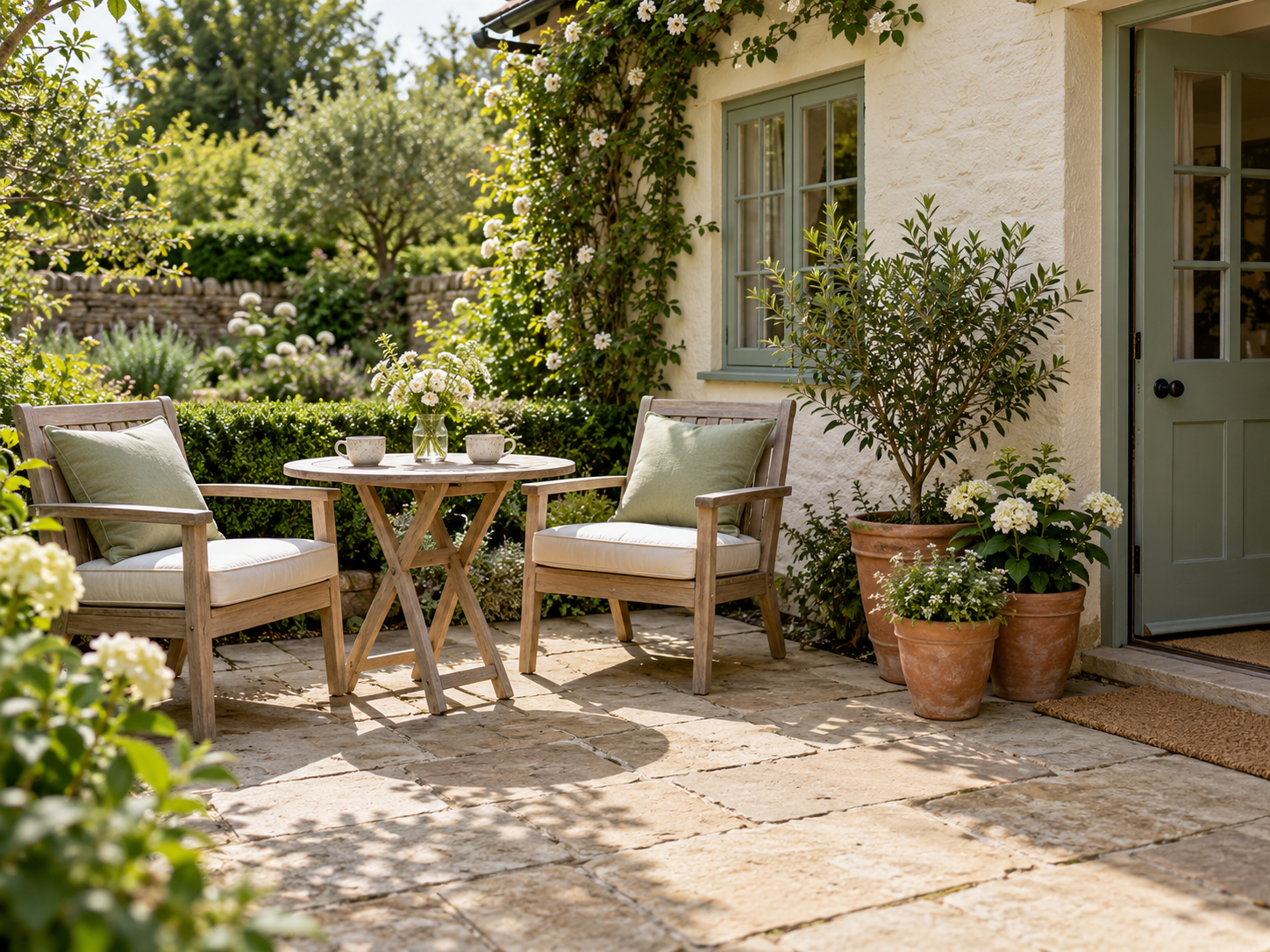
A small patio can become a place you use every day: somewhere to drink your morning tea, read a few pages, or sit outside after dinner. It does not need a full furniture set or a garden makeover. It needs a comfortable seat, room to move, and a few details that make spending time there pleasant.
Before buying anything, spend a little time outside. Notice when the sun reaches the space, which corner feels sheltered, and where people walk. Those observations will help you choose a layout that works beyond the photograph.
1. Decide what you want to do out there
Small spaces work better when you give them one main purpose. A patio for quiet coffee needs different furniture from a patio where two people regularly eat dinner.
For a reading corner, start with one comfortable chair and a small side table. For breakfast outside, a compact table and two chairs may be enough. If you like having friends over occasionally, folding chairs can provide extra seating without taking up space all week.
Write down your main use before shopping. When a lovely but bulky piece catches your eye, ask whether it helps you do that thing. This makes it easier to avoid filling the patio with furniture you rarely use.
2. Measure the space with the chairs pulled out
A table may fit neatly between two walls while leaving very little room to sit down. Measure the patio, then check the furniture dimensions with chairs in use rather than tucked underneath.
You can mark the proposed furniture footprint with removable tape suitable for the surface. Walk through the layout, open the door fully, and imagine carrying a tray outside. Keep a clear route between the doorway and each seat.
Choose pieces that suit your routine. A narrow bench can work along a wall, while lightweight chairs are easier to rearrange. A round table removes sharp corners from a tight layout, but check that its base does not get in the way of your feet.
3. Make the seating comfortable enough to stay
A beautiful chair will not make the patio inviting if you want to get up after five minutes. Try the seat when possible. Check its height, back support, and whether there is somewhere convenient to put your drink.
A cushion made for outdoor use can soften a firm seat. Check the care instructions and bring cushions inside when needed; outdoor fabric does not mean a cushion can stay wet indefinitely.
Keep a light throw indoors near the door for cooler evenings. Having it close by is often more practical than leaving it outside where it can collect moisture and dust.
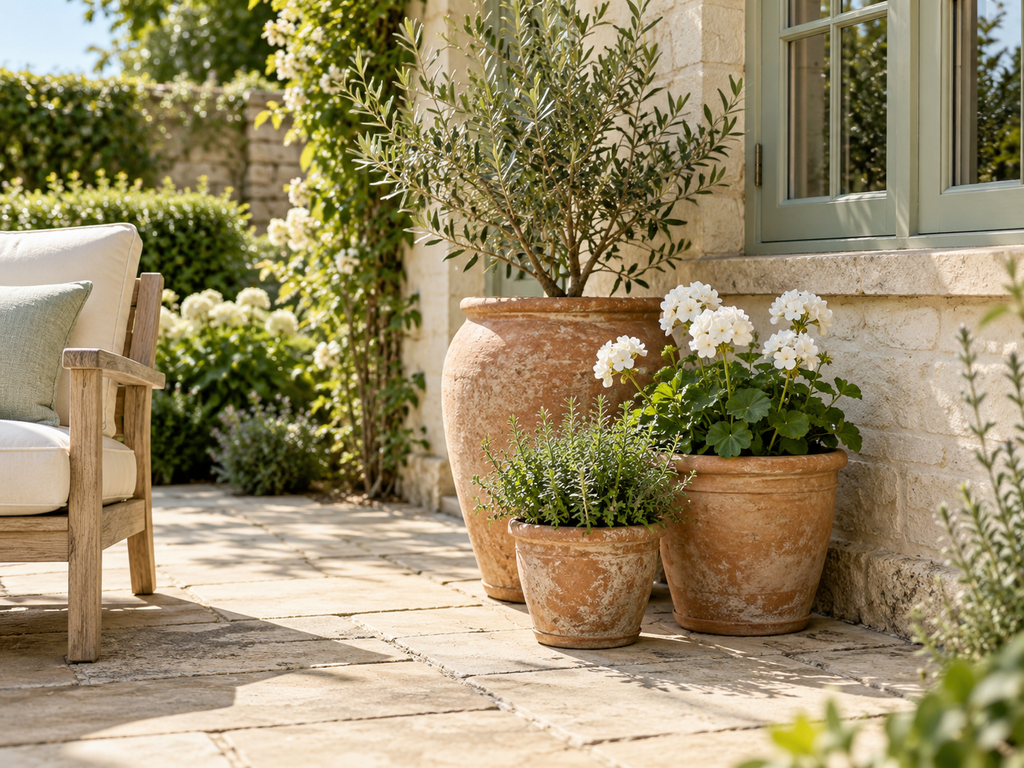
4. Group a few pots instead of scattering them everywhere
Plants can soften paving and plain walls, but a pot beside every chair leg makes a small patio harder to use. Try a compact group in one corner, leaving the doorway and walking route clear.
Vary the pot sizes slightly while repeating a material or colour. For example, three terracotta pots can look settled together even when their shapes differ. Leave enough room to reach each plant for watering and care.
Choose plants for the conditions you actually have. Observe the sunlight and wind, then check plant labels or ask a local nursery about suitable options. A plant chosen for a sunny sheltered garden may struggle on a shaded, exposed patio.
Use containers with suitable drainage and protect surfaces where necessary. If children or pets use the space, check that the plants are appropriate for them before bringing them home.
5. Keep the colours simple
You do not need to match everything, but repeating a few colours helps a small space feel considered. Start with what is already there: the paving, wall colour, door, or furniture finish.
Warm wood, cream cushions, and muted green details make an easy combination. Dark metal chairs can work with terracotta pots and a soft neutral seat pad. Choose a palette you enjoy rather than replacing useful pieces to follow a trend.
An outdoor rug is optional. If you use one, check that it suits the surface and exposure, lies flat, and does not interfere with the door. Lift and clean underneath it as needed rather than letting damp leaves collect out of sight.
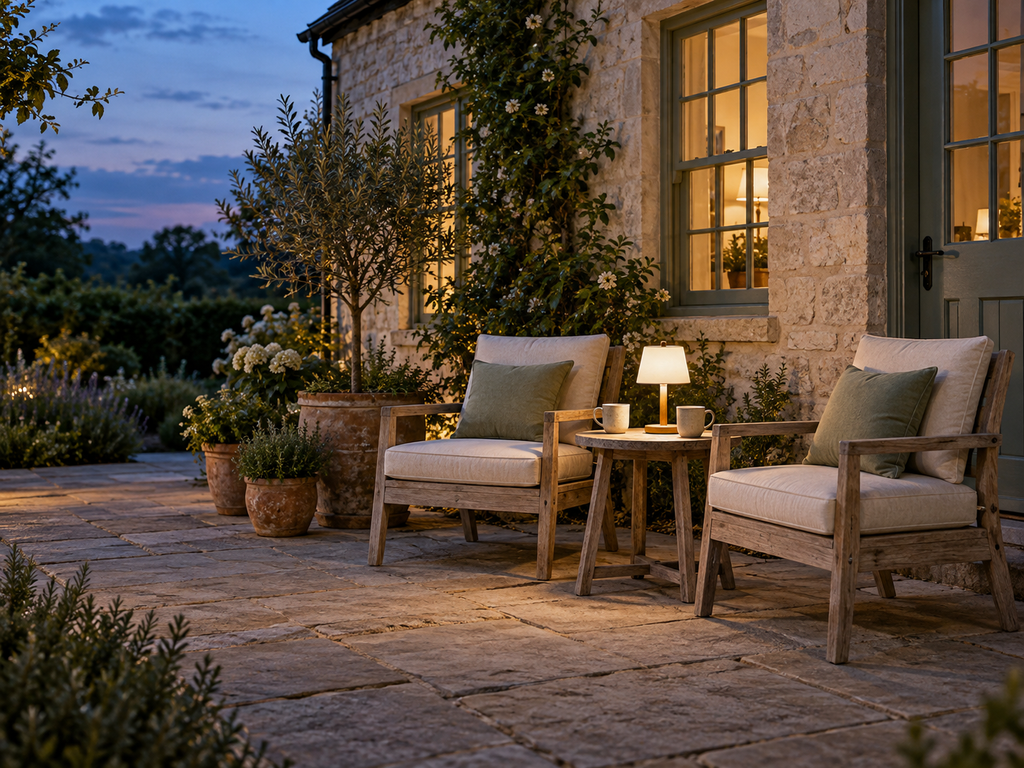
6. Add gentle light for the evening
If you use the patio after dark, light the places that matter: the doorway, the route to your seat, and the table. A small outdoor-rated rechargeable lamp may be enough for a quiet seating corner.
String lights can create a pleasant atmosphere, but they need suitable supports and fittings for the location. Use lighting and electrical equipment rated for outdoor conditions, follow the manufacturer’s instructions, and keep cables out of walking routes. Ask a qualified electrician about permanent electrical work.
Look at the lighting from your chair and from indoors. A light that shines directly into your eyes, or into a neighbour’s window, may need moving or adjusting.
7. Make tidying up part of the layout
A small patio becomes crowded quickly when watering cans, spare pots, and cushions have no regular home. Decide where those things will go before adding more decoration.
A compact outdoor storage box may help if there is room for it without blocking access. Check its weather protection and ventilation, and follow the cushion care instructions rather than storing damp fabric in a closed box.
Keep the everyday reset simple: take cups inside, put away cushions when needed, and sweep up leaves. A patio that takes only a few minutes to tidy is easier to enjoy regularly.
A simple starting layout
For a patio used by two people, begin with two chairs, a small table within reach, and a group of pots in one corner. Leave the route from the door clear. Add seat cushions and an outdoor lamp only if you need them.
Live with that arrangement before filling the remaining space. You may discover that one chair needs more shade, the table would work better on the other side, or you prefer the open area to another planter.
The best finishing touch is using the patio. Take your tea outside, sit down, and notice what would make that moment more comfortable. Let those small discoveries guide the next change.