
In a small bedroom, the biggest storage space in the room is usually hiding in plain sight — flat, dark and full of dust bunnies. The footprint under a queen bed is roughly 13 square feet. That is a whole dresser you are not using, in a room that probably does not have space for a dresser. The catch is that under-bed storage only works when it is planned: the wrong bin jams halfway in, the lid will not clear the rail, and everything you stash down there comes back dusty.
Under bed storage ideas for small spaces are really about matching three things — the height of your frame, the container that fits it, and the right category of stuff. Get those right and the space quietly swallows off-season clothes, spare linens and the shoe overflow, while the room itself stays calm. Below are the options that work in real small bedrooms, from a $12 fabric bag to a proper rolling drawer, with the measurements and prices that actually matter.
First, Measure the Gap: Clearance Is Everything
Every failed under-bed purchase starts the same way: someone eyeballed it. Before you buy anything, get on the floor with a tape measure and take three numbers:
- Clearance height: Measure from the floor to the lowest point under the frame — usually a side rail or the center support beam, not the edge you can see. Standard frames give you 7 to 12 inches; low platform beds can be as little as 3 to 4. Your container needs to be at least an inch shorter than that number, or it will scrape, jam or simply refuse to go in.
- Depth: From the side rail to the center support is often only 24 to 30 inches, even on a queen. That is why two medium bins side by side beat one giant one.
- Access side: If the bed sits against a wall, you effectively have one working side. Plan to pull everything from there.
Two cheap ways to gain height: bed risers ($12 to $20 a set) add 3 to 8 inches and turn an unusable gap into bin territory — just check they suit your frame type. And if your clearance is under 5 inches, skip hard bins entirely; vacuum bags and flat fabric organizers are your only honest options. If the whole room, not just the bed, needs a rethink, our small bedroom organization ideas cover the rest of the space wall by wall.
1. Low-Profile Bins and Fabric Boxes: The Five-Minute Fix
This is where most people should start. Low-profile containers — hard plastic bins with lids, or the soft fabric boxes with a clear window and zip top — slide in fast, keep the dust off, and cost very little. The standard under-bed size is about 28 to 30 inches long, 16 to 18 wide and 6 high, which fits two abreast under most queens. Long 40-inch versions exist for wrapping paper, spare bedding and the guest duvet.
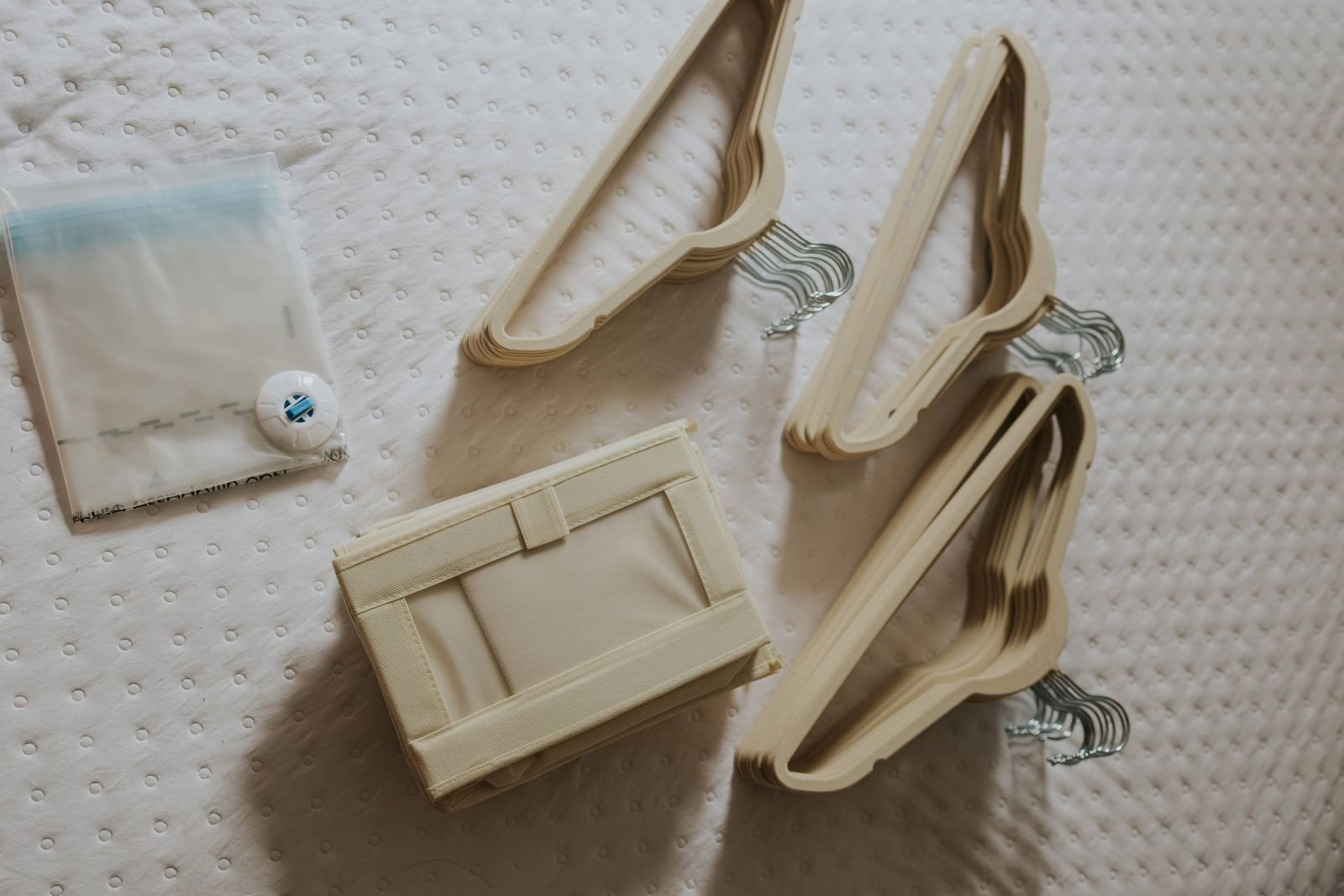
Choose hard plastic when you want stackable strength and a lid that seals properly — $12 to $25 each. Choose fabric when your clearance is tight or uneven, because it gives a little; a two-pack of fabric organizers runs $10 to $18. Either way, two details matter more than the brand: a handle on the short end (you will be pulling it one-handed, half asleep) and a label you can read from above, because in three months you will not remember which bin holds the winter scarves.
2. Rolling Drawers and Wheeled Boxes: For Things You Reach Every Week
Bins are for storage; drawers are for living with. If you will open it more than once a month — extra shoes, gym clothes, the kids’ pajamas, your everyday sweaters in a dresser-less room — put it on wheels. Rolling under-bed drawers and wheeled boxes glide instead of drag, which matters on wood floors and matters even more for your back.

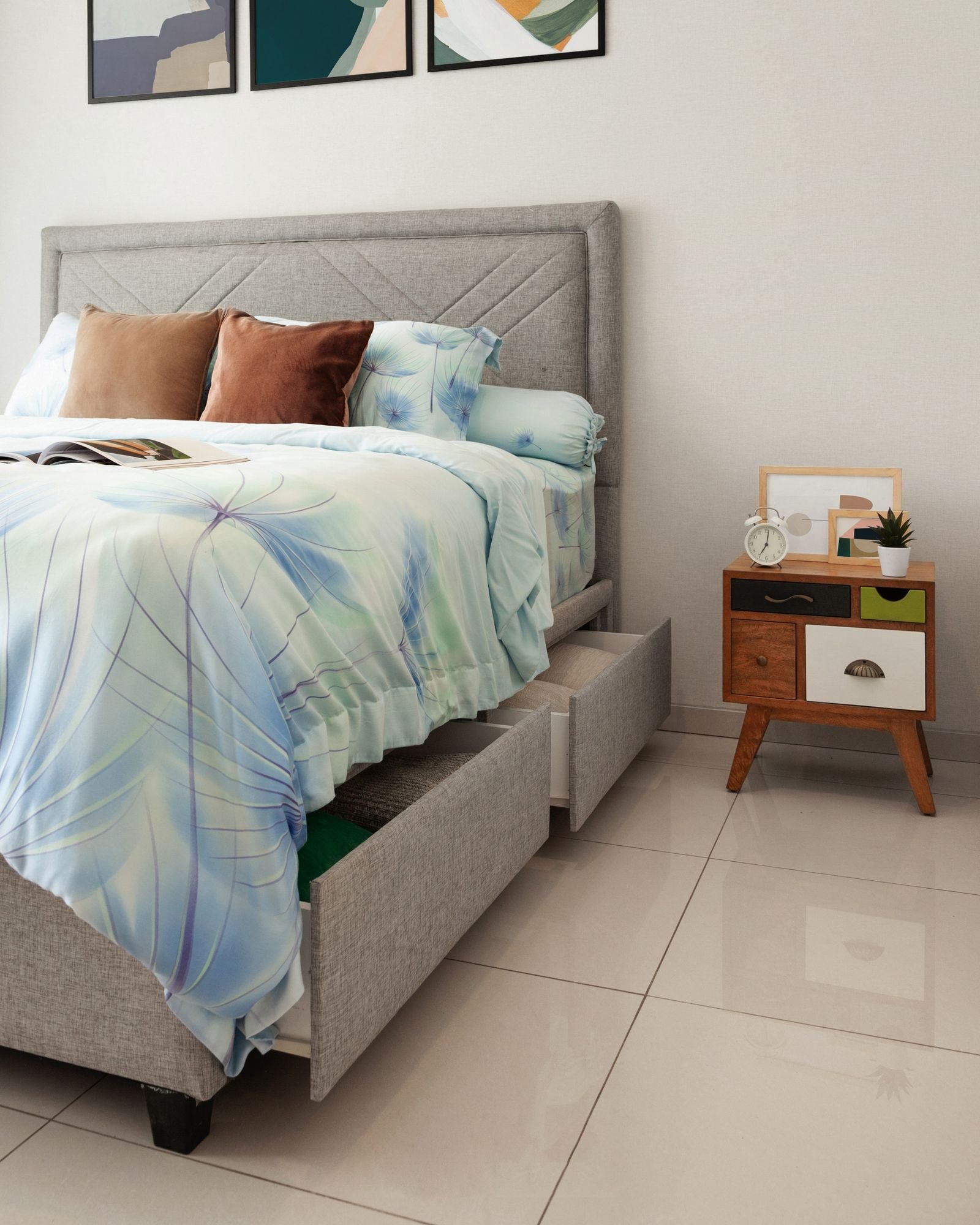
Ready-made rolling drawers run $40 to $90 each; solid wooden rolling boxes are $50 to $120. Measure the wheel height into your clearance — casters add an inch or two that product photos forget to mention. The built-in end of this idea is the storage bed itself, with drawers in the frame like the small bedroom above: it is the priciest route ($150 and up over a plain frame), but in a truly tiny room it can replace a dresser entirely, and it is the one option that never jams, because it was measured at the factory.
3. Vacuum Bags: The Only Way Bulky Bedding Fits
A winter duvet in a bin is mostly trapped air. Vacuum bags remove the air, and a comforter that started 8 inches thick flattens to 2 or 3 — suddenly it fits under even a low platform bed. This is the single best trick for off-season bedding, spare pillows and puffy winter coats.

A multipack of bags costs $15 to $25 and most seals work with any vacuum hose; the small hand pumps and electric pumps in the photos work too, just slower. Three habits keep vacuum storage from backfiring: store everything freshly washed and completely dry, do not overfill past the marked line (the seams are the weak point), and re-check the seal after a day — a bag that has puffed back up has a leak, and it is better to find that out now than in March. Natural fibers like wool and down prefer to be compressed for a season, not forever, so rotate them back out when the weather turns.
4. Shoes: The Overflow Drawer
Shoes are the perfect under-bed shape — low, sturdy and usually too numerous for the closet floor. A flat shoe organizer with individual slots holds 6 to 12 pairs depending on size, and at about 30 by 16 inches it claims exactly one bin’s worth of footprint.
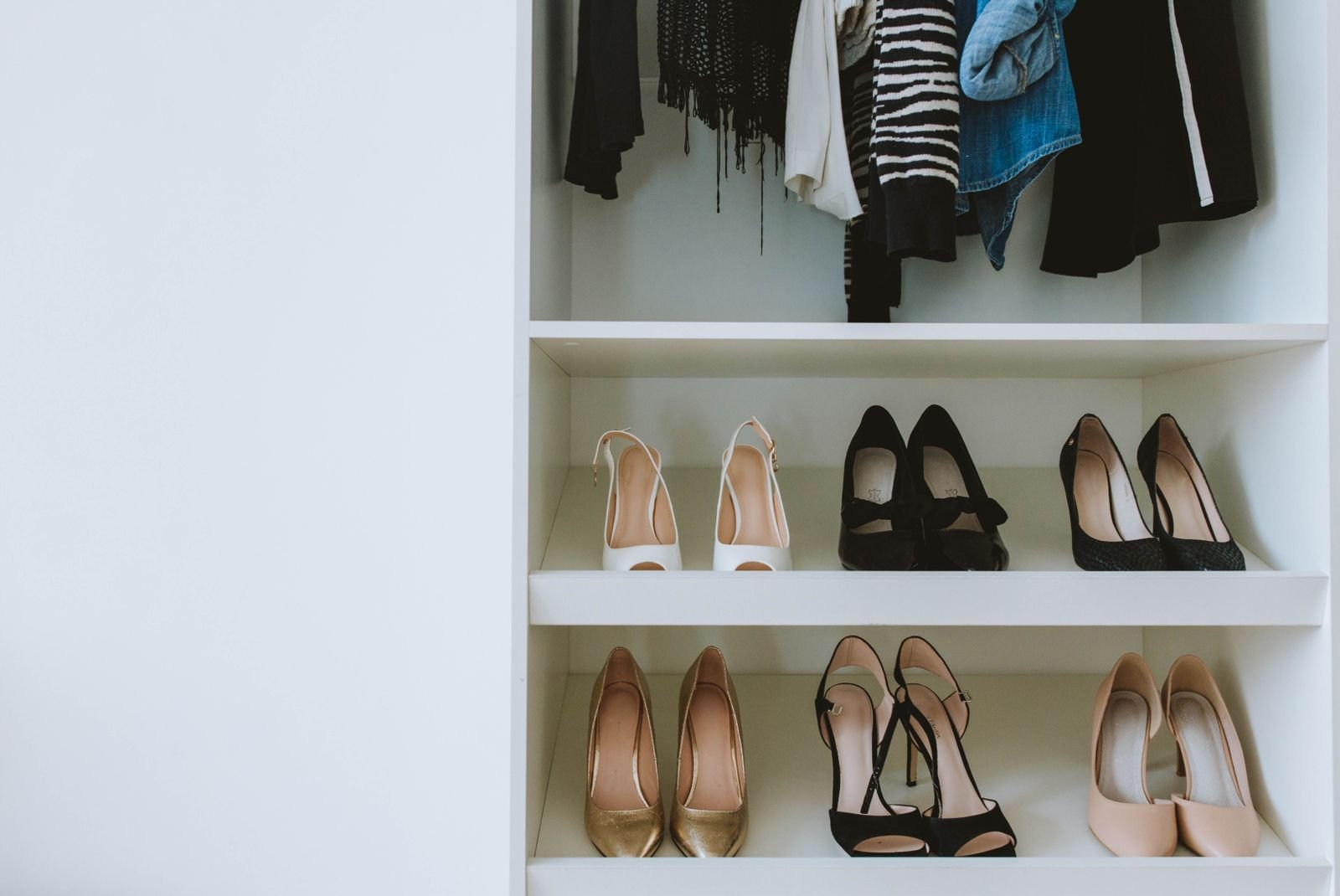
Rules that keep this working: only store clean shoes (brush soles off first, or the dust migrates to everything else down there), keep pairs you wear weekly in the rolling drawer rather than the deep middle, and let boots lie flat with a rolled towel inside if you care about their shape. This is the overflow zone, not the whole collection — the pairs you live in still belong by the door or on the closet shelves, like the neat rows above.
5. Spare Linens and Blankets: Flat, Soft and Easy
Sheet sets, the spare duvet cover, guest towels and extra blankets are under-bed naturals: they are flat, light, and you need them rarely but completely. Fold each sheet set inside one of its own pillowcases — the oldest trick in the book, and still the best — and one fabric box holds three or four sets without any of them escaping.
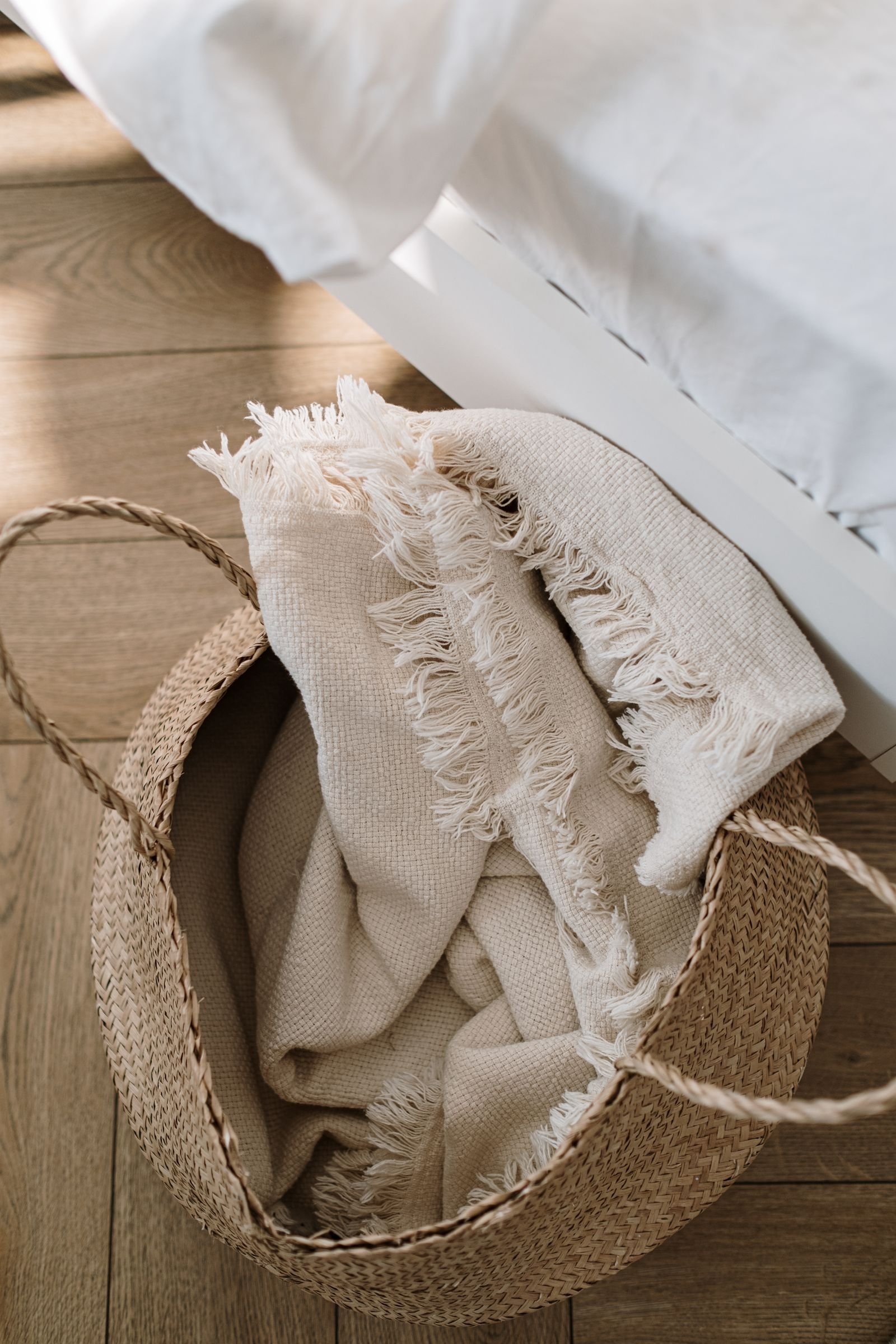
Keep one exception out in the open: the throw you actually curl up with. A basket beside the bed, like the one above, holds the everyday blanket and the current book, and it stops you dragging the under-bed bins out every evening. Under the bed is for the spares; beside it is for tonight.
6. Off-Season Clothes: Label It Like You Mean It
The seasonal swap is where under-bed storage earns its keep. Summer clothes go down in October, winter clothes in April, and the closet breathes again. It only works if future-you can find things without opening every container — so label on two sides, the top and the short end you see when it is pulled halfway out.
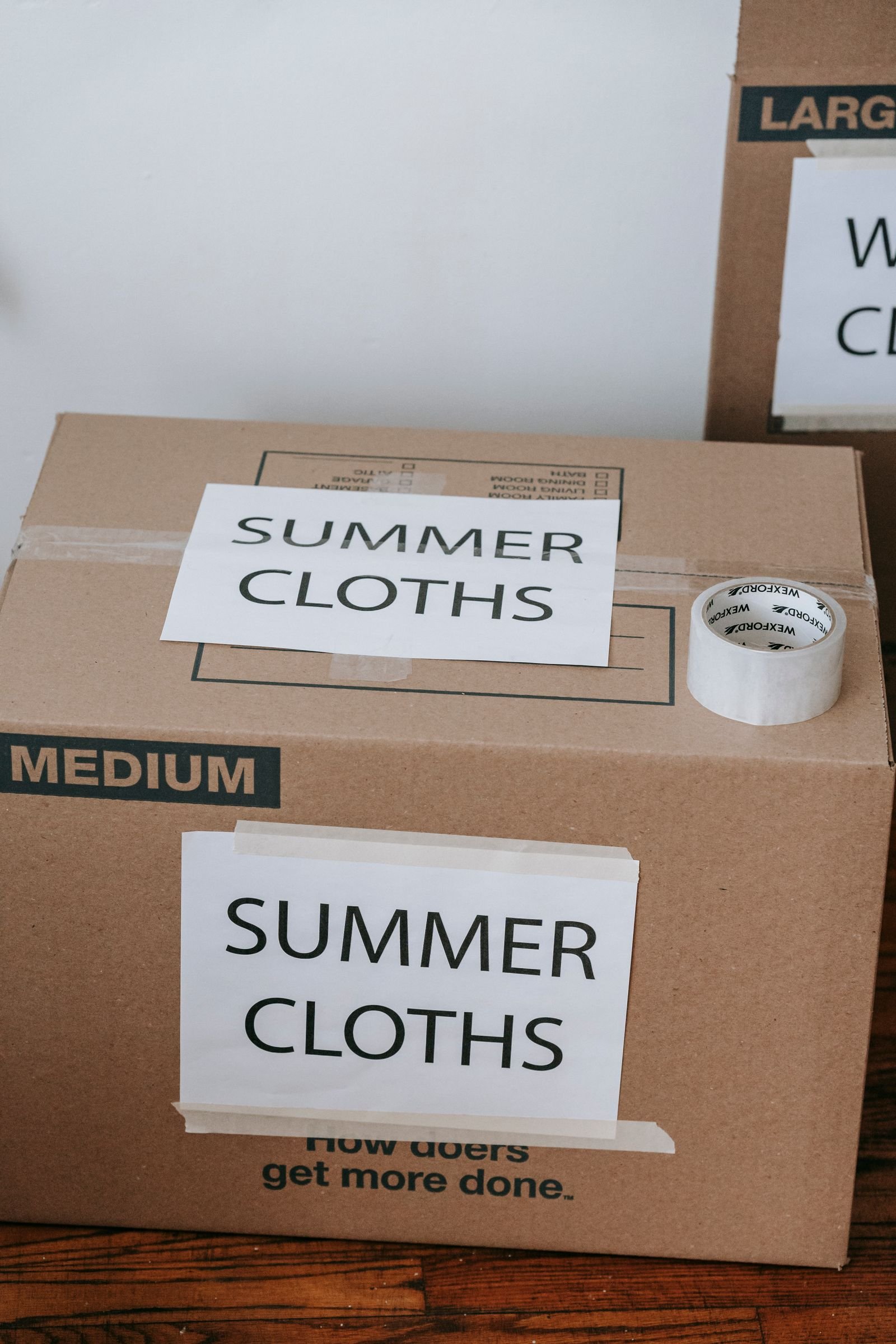
One honest note about that photo: the labeled box is doing the labeling part exactly right, but cardboard itself is the one material we would not slide under a bed long-term — it absorbs moisture, softens, and pests like it more than you do. Copy the labels, upgrade the box: a lidded plastic bin or a sealed vacuum bag keeps the same system without the risks. And before anything goes down there, make sure it deserves the space — our small closet organization ideas walk through the sort-out that should happen first.
7. The DIY Route: Drawers, Trays and Soft Sliders
The most satisfying under-bed drawer in the world started life as a dresser drawer. Add four low-profile caster wheels ($8 to $12 a set), screw on a handle or drill a finger pull, and a drawer rescued from a curb-side dresser becomes a rolling under-bed drawer for under $20 total. A shallow plywood tray on felt pads works the same way for shoes — measure your clearance, cut the tray two inches narrower, and it glides on hard floors.
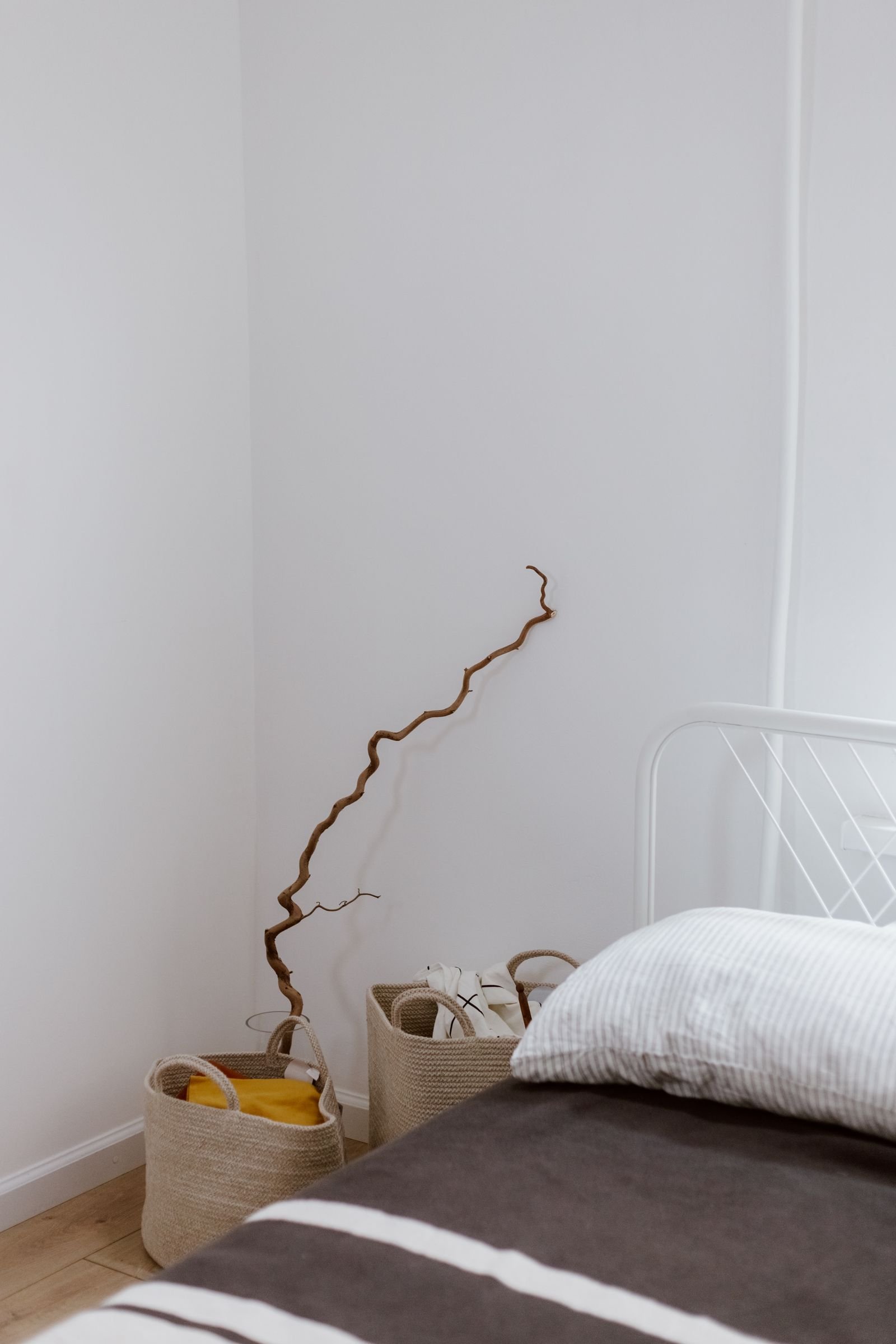
On carpet, wheels bog down and felt pads rule: soft fabric boxes and woven baskets with a flat base slide surprisingly well, and they are the renter-friendliest option of all — nothing to install, nothing to repair when you leave. If you are furnishing a whole small rental on a budget, our small apartment organization ideas pull the same low-cost thinking across every room.
Keep It Fresh: Dust and Moisture Under There
Under-bed storage fails quietly when things come back musty. A few small habits prevent it. Vacuum under the bed properly before anything goes down — you are sealing in whatever is already there. Everything stored should be clean and bone dry, and a silica gel pack or a cedar block in each bin keeps the air inside honest; replace or recharge them at each seasonal swap. In humid homes, keep bins a few inches away from exterior walls, where condensation collects, and lift everything out for a quick check twice a year.

And a short list of what does not belong under a bed at all: important documents and photographs (one leak or flood and they are gone), anything heavy you would have to drag — books are the classic mistake — flammables, and the things you use daily, which will simply migrate back out and live on the floor instead.
A Simple Weekend Plan (and What It Costs)
- Pull everything out and vacuum. Twenty minutes, $0. Most under-bed zones are currently storing three lost socks and a dead phone charger.
- Measure the three numbers — clearance at the lowest point, depth to the center support, and your access side — and write them on a sticky note for shopping.
- Assign zones: weekly things in the rolling drawer by your access side, seasonal things in bins and vacuum bags toward the middle and the far side.
- Label everything on two sides, then live with it for a season before buying anything fancier.
Budget tiers, honestly stated: under $25 covers two fabric organizers or a pack of vacuum bags; $50 to $100 adds a hard bin set or one rolling drawer; $150 and up is storage-bed territory. The biggest jump is the free one — from dust and chaos to measured, labeled zones.
The Bottom Line
The space under your bed is not a junk drawer you sleep on top of; measured properly, it is the largest free storage in a small bedroom. Match the container to your clearance, put weekly things on wheels, flatten the bulky stuff, label like you mean it — and that dark, dusty gap starts working as hard as any closet. Start with the free step this weekend: empty it, measure it, and look at those 13 square feet with fresh eyes.
