
Every small home has the same hidden square footage, and almost nobody uses it: the backs of its doors. A standard interior door gives you roughly 14 square feet of vertical, completely wasted space. Multiply that by a pantry door, a bathroom door, two closet doors and a linen door, and you are looking at a whole cupboard’s worth of storage that costs no floor space at all — and not one screw.
That is why over-the-door storage ideas are the first thing I suggest to anyone in a small home or a rental. Everything below hangs from hooks that slip over the top of the door, lifts off in seconds when you move, and leaves the paint exactly as it found it. The trick is matching the right organizer to the right door, and respecting a few honest limits — weight, clearance, and which doors should be left alone.
Before You Hang Anything: The Three Checks That Save Your Deposit
Two minutes of measuring now prevents every horror story you have heard about door storage. Do these three checks on any door before you buy for it:
- Door thickness. Most interior doors are 1-3/8 inches thick; front doors and older solid doors are usually 1-3/4 inches. Over-door hooks are sold in both sizes, and the wrong one either rattles loosely or will not go on at all. Measure the top edge of the door, not the middle.
- Top clearance. The hook has to fit in the gap between the door and the frame. Slide two stacked quarters along the top — if they pass through the closed door’s gap (about 1/8 inch), standard hooks will fit. If the gap is tighter, look for flat “no-clearance” hooks, which are made for exactly this.
- Swing and depth. Open the door fully: a pocket organizer adds about 2 inches behind it, a wire rack 5 to 6. Make sure the loaded door will not bang into a wall, vanity or towel rail.
One more renter essential: stick felt pads or a strip of foam tape on the back of every hook. It stops the midnight rattle, and it is the difference between “no damage” as a slogan and no damage in fact. Skip bifold and sliding doors entirely — their tracks and rollers were not built for the weight.
1. The Pantry Door: A Whole Extra Cupboard
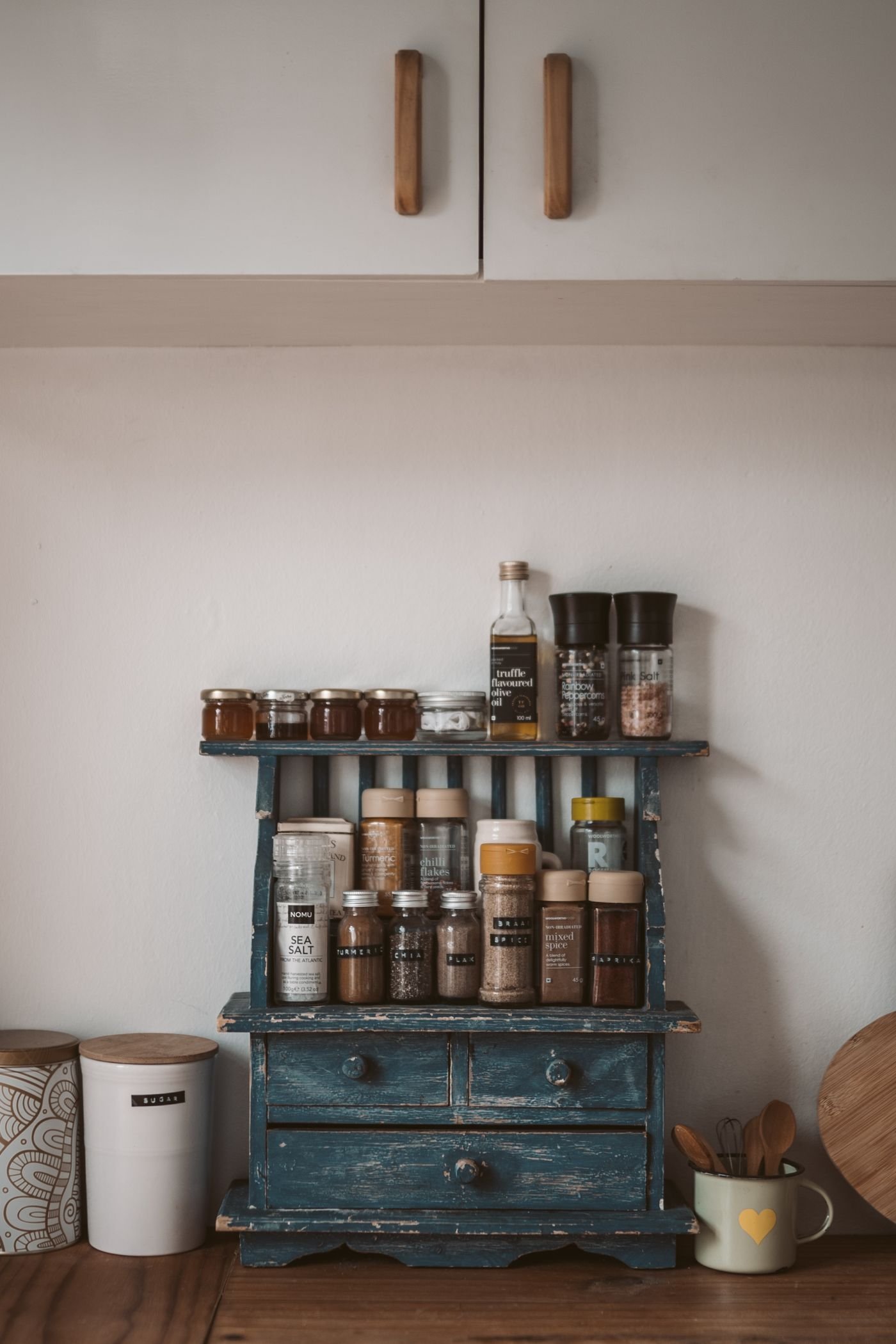
If you do only one door in the house, do this one. A wire rack on the inside of the pantry door holds the spice collection, the oils, the foil and wrap, the snack overflow — everything that turns pantry shelves into an archaeological dig. Tiered racks like the little blue one below keep twenty or more small jars visible at a glance, which is the whole secret: you stop buying a third jar of paprika when you can see the two you own.
Practical notes from hard experience: put heavy cans and bottles on the lowest shelf, as close to the hinge side as the rack allows, and keep the top shelves for light packets and spices. Most wire racks are rated for 30 to 45 pounds, but on a hollow-core pantry door I stay nearer 25 — the door, not the rack, is the weak link. Expect to spend $25 to $45 for a rack that does not sway, and check the hinges after the first week; a sagging door is telling you to move the cans back to a shelf. If your kitchen needs more than a door’s worth of help, our renter-friendly kitchen storage ideas cover the whole room with the same no-drilling rules.
2. Cabinet Doors Count Too
The same trick works at miniature scale. Small baskets that hook over a kitchen or bathroom cabinet door turn the dead inch in front of a shelf into storage for the things that never sit still: cling wrap and foil boxes under the sink, hair ties and cotton pads in the bathroom, spice packets in the cupboard where the decanted jars live.
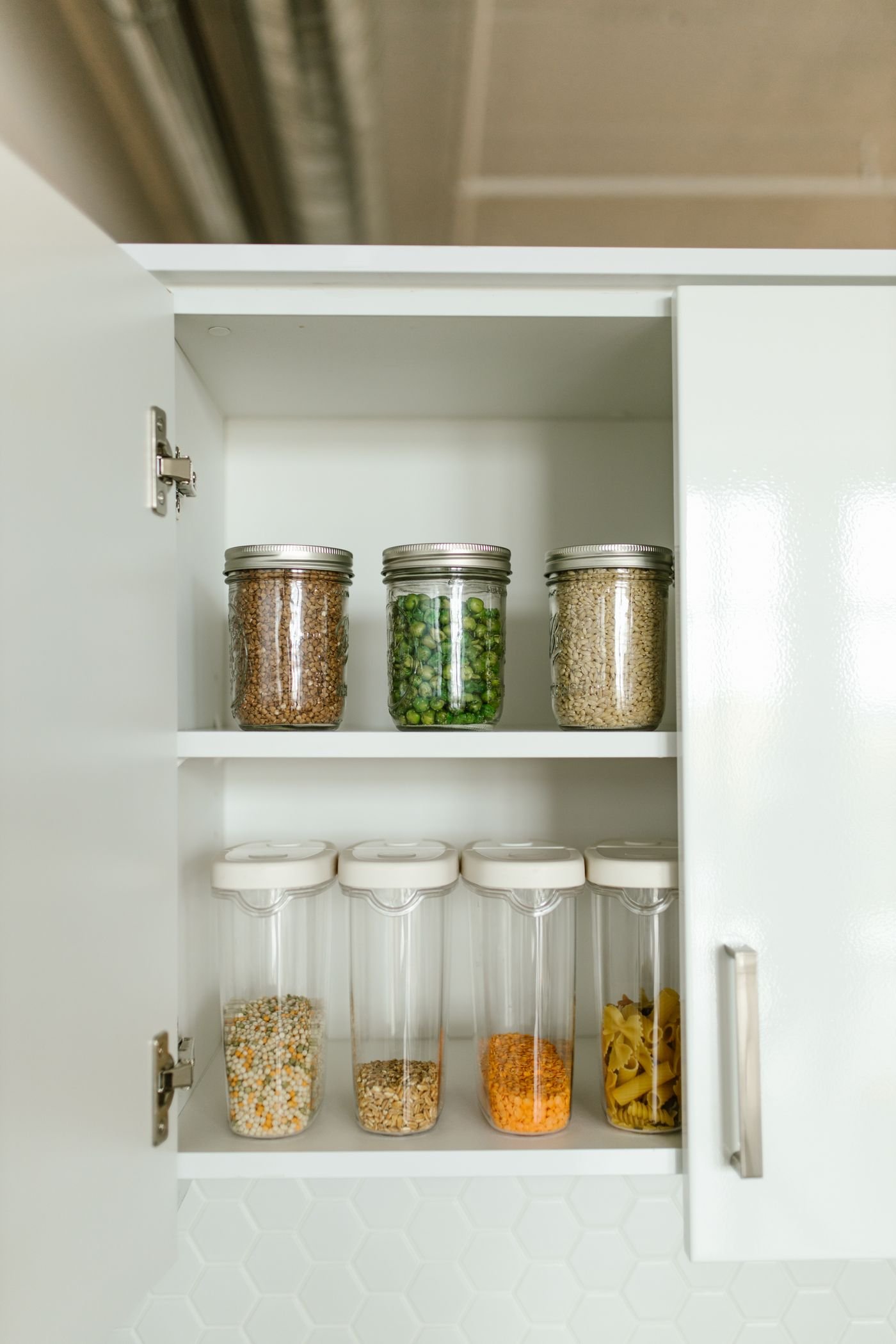
Cabinet-door baskets run $9 to $15, and the fit check is the same in miniature — the door has to close fully over the hook, so test before you load it up. Keep cleaning bottles on the door of the under-sink cabinet rather than the floor of it: same space, far easier to reach, and the cabinet floor stays visible if a pipe ever leaks.
3. Clear Pockets: The $15 Organizer That Holds Everything Else
The humble clear-pocket organizer is the hardest-working $15 in small-home storage. On a bedroom door it swallows sunglasses, scarves, belts, chargers and the sunscreen that otherwise lives in four different drawers. On a linen closet door it becomes the home for medicine-cabinet overflow, first aid and batteries. Because the pockets are clear, nothing gets forgotten at the bottom of a bin — what you see is what you own.
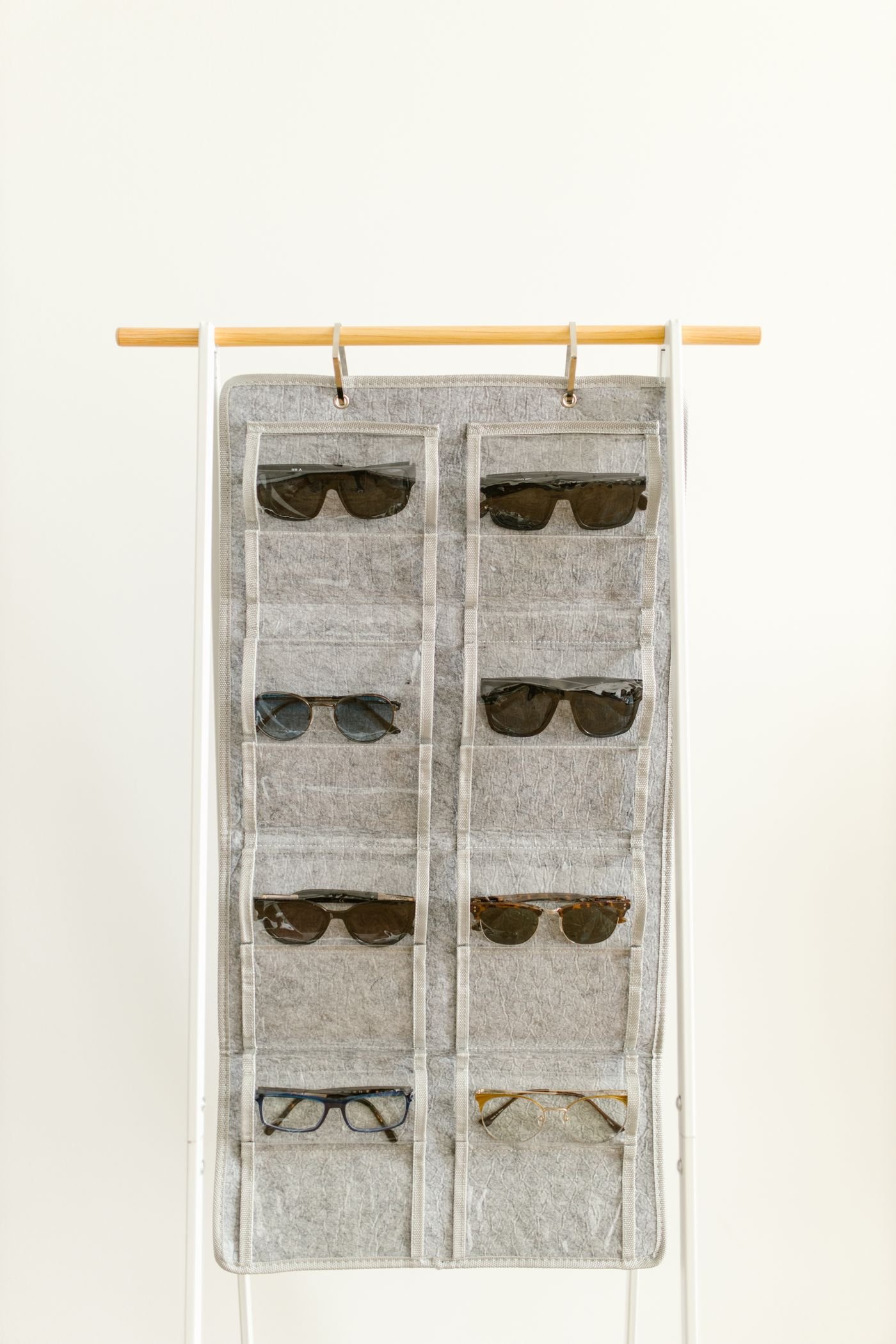
Choose the version with reinforced stitching and hooks at both the top corners; the cheapest ones tear at the grommets within a year. Keep the total load around 20 pounds, spread across the pockets rather than concentrated in the bottom row, and put the heaviest pocket contents — full bottles, tools — somewhere else. On a child’s door, do the pockets at their height for shoes, small toys and library books, and keep anything small, sharp or medicinal on a high door in another room entirely. This is also the organizer I reach for in our small apartment organization ideas — one door, one organizer, and a drawer problem somewhere in the home quietly disappears.
4. The Bathroom Door, Part One: Towels Off the Floor
Small bathrooms almost never have enough towel space, and the back of the door is the one surface that is always free. An over-door towel bar holds two or three full-size towels where a wall bar holds one, and a simple draped hand towel over a cabinet door — like the one below — keeps a dry towel within reach of the sink without a single fixture.

Two bathroom-specific warnings. First, steam is the enemy of adhesive: choose organizers that hang from hooks rather than sticky pads, which soften and let go in the humidity. Second, airflow matters — towels on a door dry best if the door is left open after showers, and a bar that holds towels an inch away from the door panel dries them faster than a hook that presses them flat against it.
5. Part Two: Hooks for Robes, Hair Tools and the Morning Rush
Below or beside the towels, give the bathroom door a row of hooks and it becomes the getting-ready station a small bathroom cannot otherwise fit: robe, the good towel, a hanging caddy for the hair dryer and brush, the toiletry bag for guests. A sturdy swing hook like the brass one below handles a heavy wet robe without blinking.
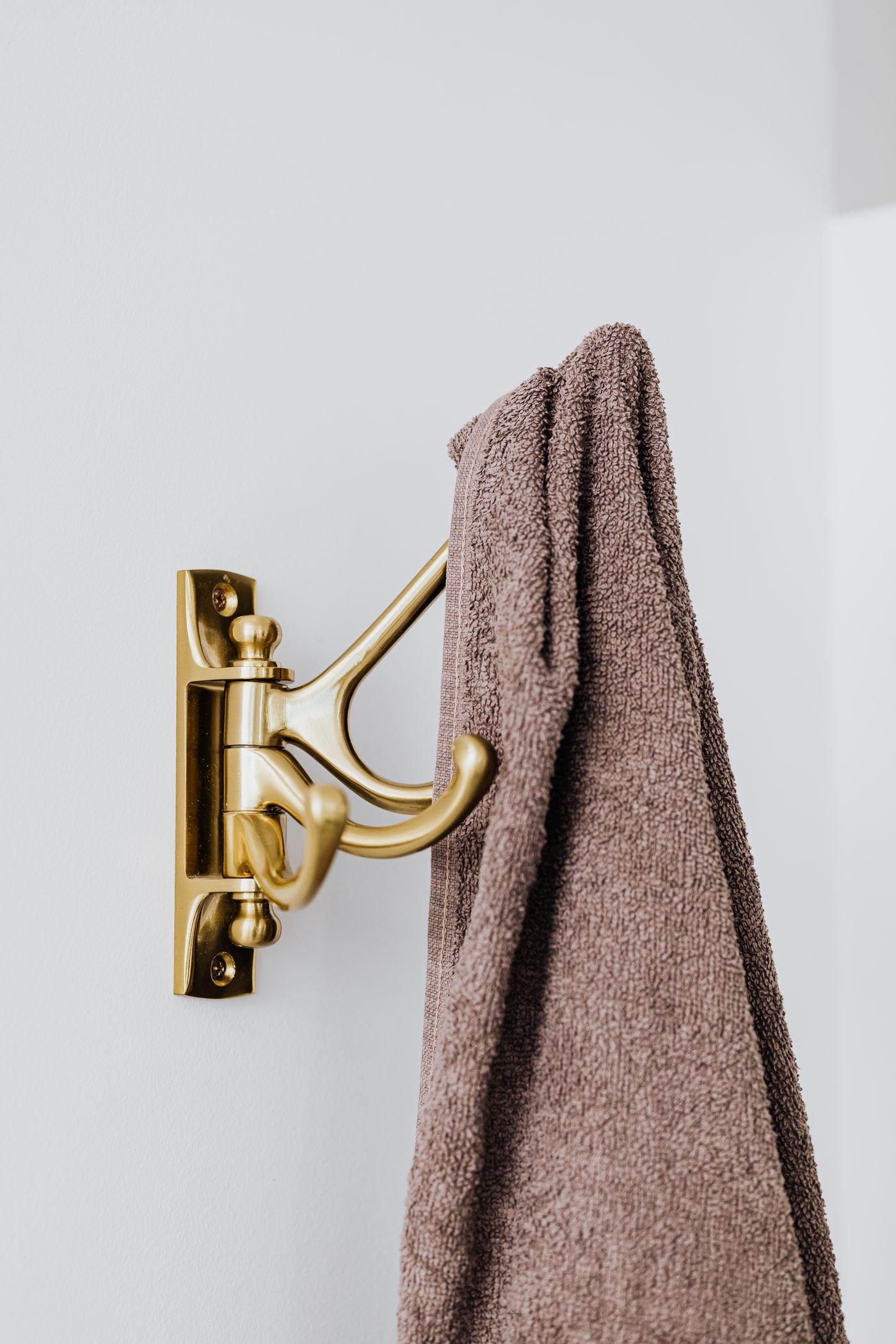
Keep the combined weight modest — a wet bath sheet is heavier than you think — and put hair tools in a heat-safe hanging caddy rather than a fabric pocket, for obvious reasons. If two people share the bathroom, a hook rail each at different heights on the same door ends the towel-on-the-floor argument more reliably than any conversation about it.
6. Shoes on the Back of the Closet Door
The closet door is where shoe storage belongs in a small home, because the shoes are already there — they are just in a heap on the floor beneath the clothes. A pocket organizer holds 12 to 24 pairs of flats, sneakers and sandals; a tiered rack handles fewer pairs but takes boots and heels better. Either way, the floor of the closet reappears, and with it the pair you thought you had lost.
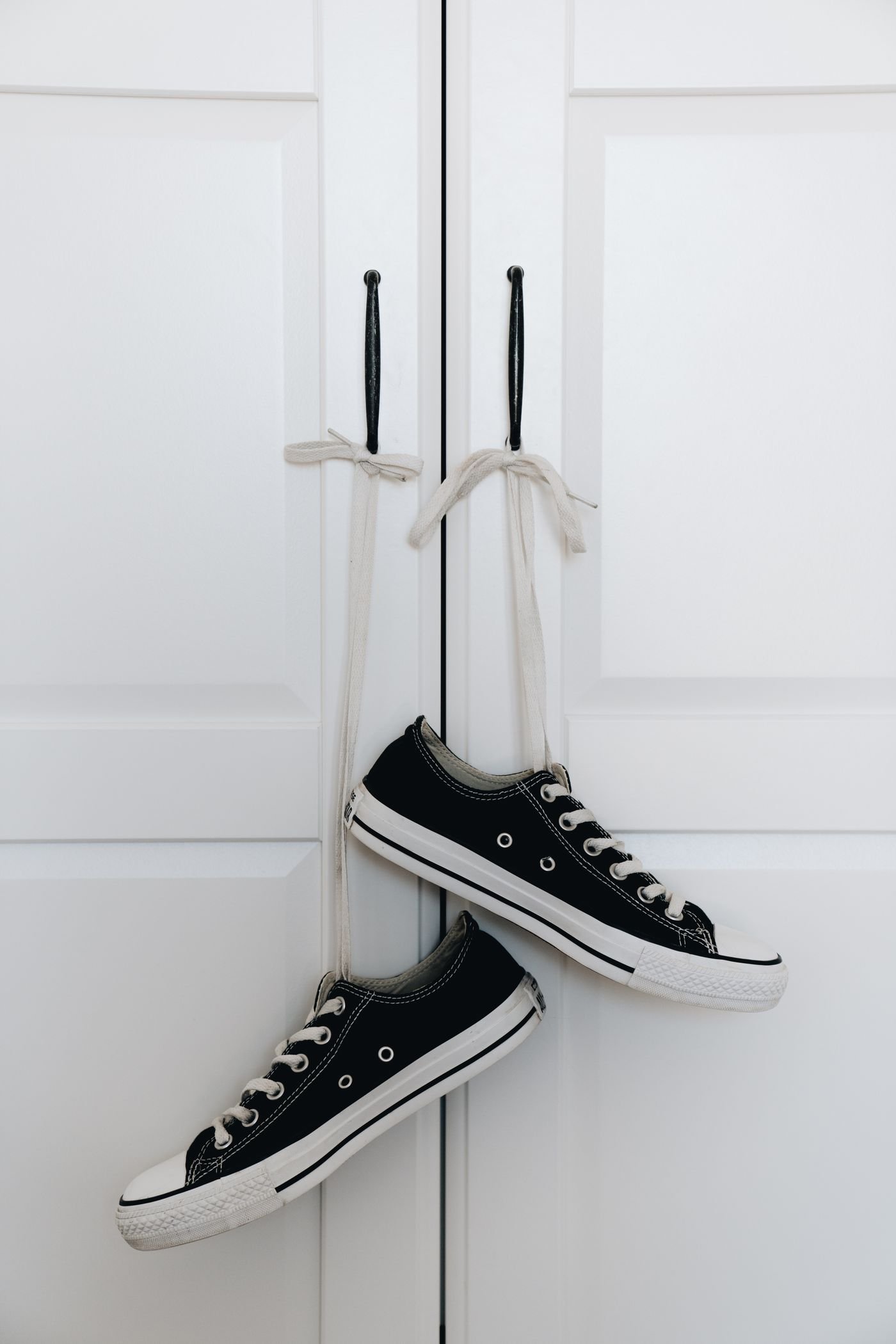
Be honest about weight here: twenty pairs of shoes can top 30 pounds, which is rack territory on a solid door and too much for a flimsy organizer on a hollow one. Everyday pairs at hand height, party shoes up top, and nothing muddy — door storage lives inches from your clean clothes, so give soles a wipe and a few hours on the mat first. Even sneakers hung by their laces from a hook to dry prove the principle: the door is a storage surface, not just a lid.
7. What the Door Frees Up Inside the Closet
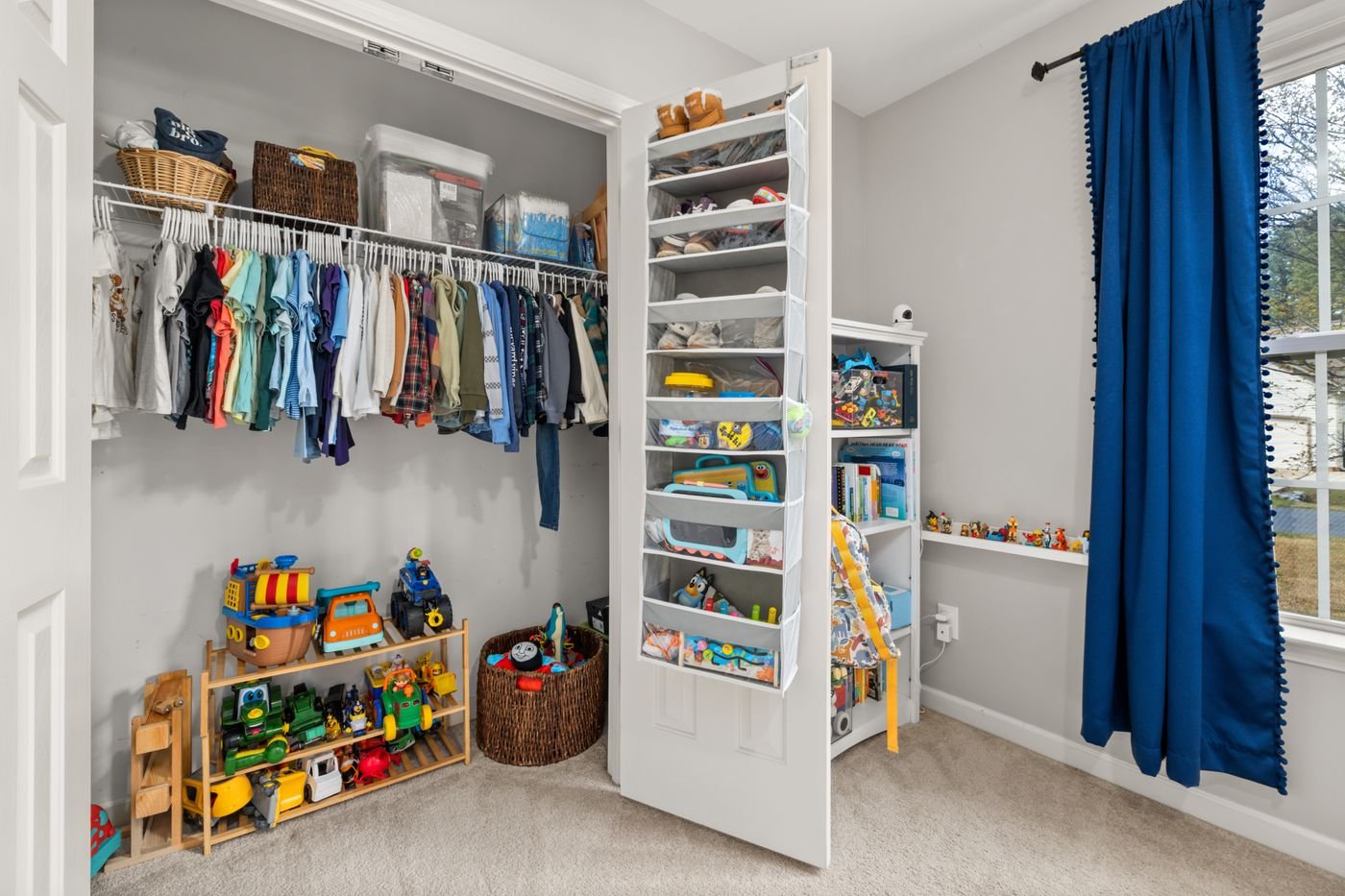
Here is the quiet payoff nobody photographs: once shoes, accessories and overflow move onto the door, the closet itself gets calmer. Shelves hold one category each instead of four, the hanging rail stops bulging, and you can finally see what you own — a closet like the one below, where the shoes have a system and the clothes have room to breathe.
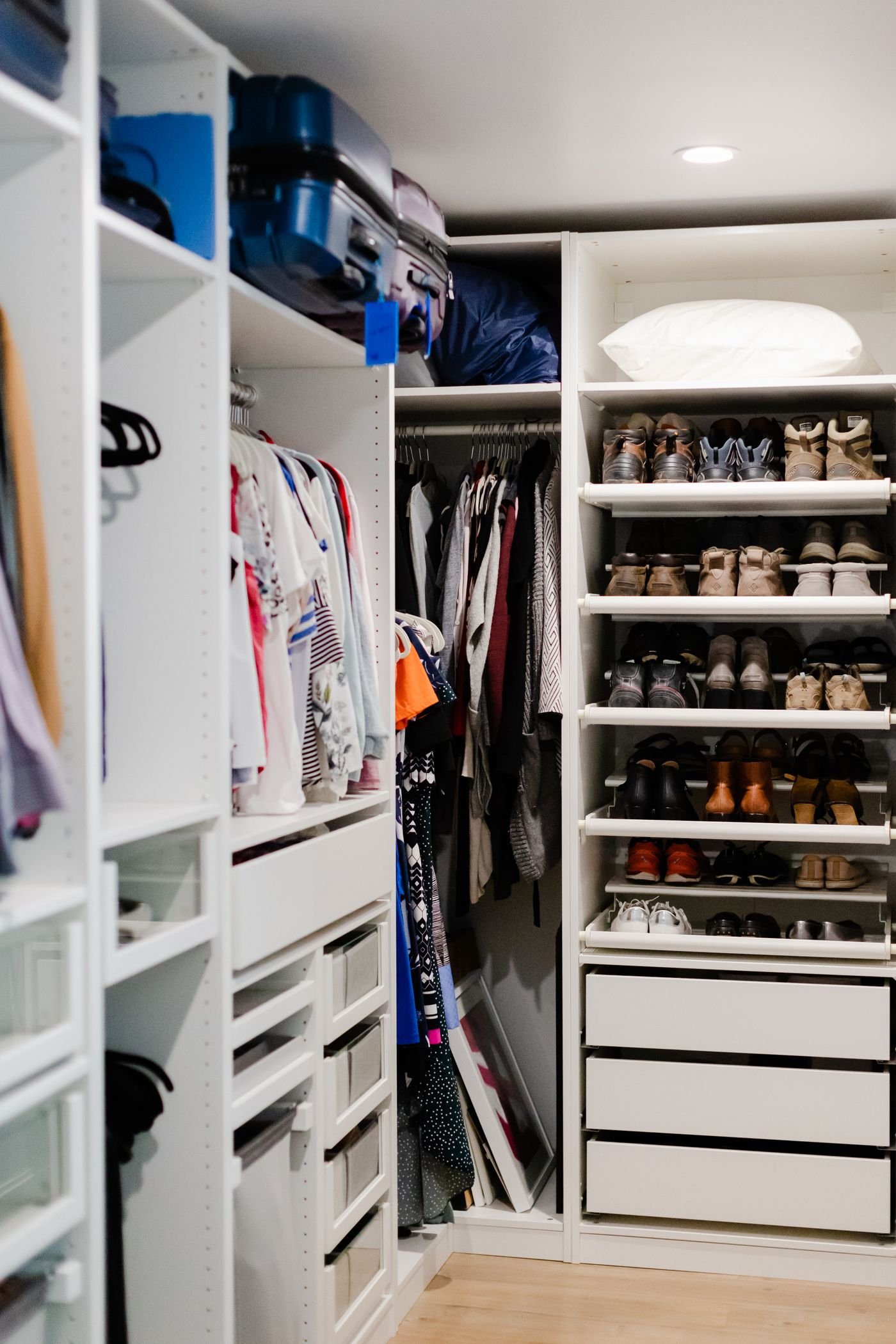
This is the real argument for door storage in a small home. It is not about cramming more in; it is about giving the storage you already have a fighting chance to work. Start with the closet door, live with the reclaimed shelf for a month, and you will find yourself eyeing every other door in the house — exactly the right instinct, with the weight limits above kept in mind.
8. The Entryway Door: Coats, Bags and the Five-Second Exit
The back of the front door — or the door of the coat closet beside it — is prime territory in a home with no mudroom. A hook rail over the door takes the everyday coat, the dog leash, the tote bag and the umbrella, so leaving the house becomes grab-and-go instead of a search. A simple peg rail with a woven bag and a hat, like the one below, is the whole idea in one picture: the things you need daily, hanging where you need them.
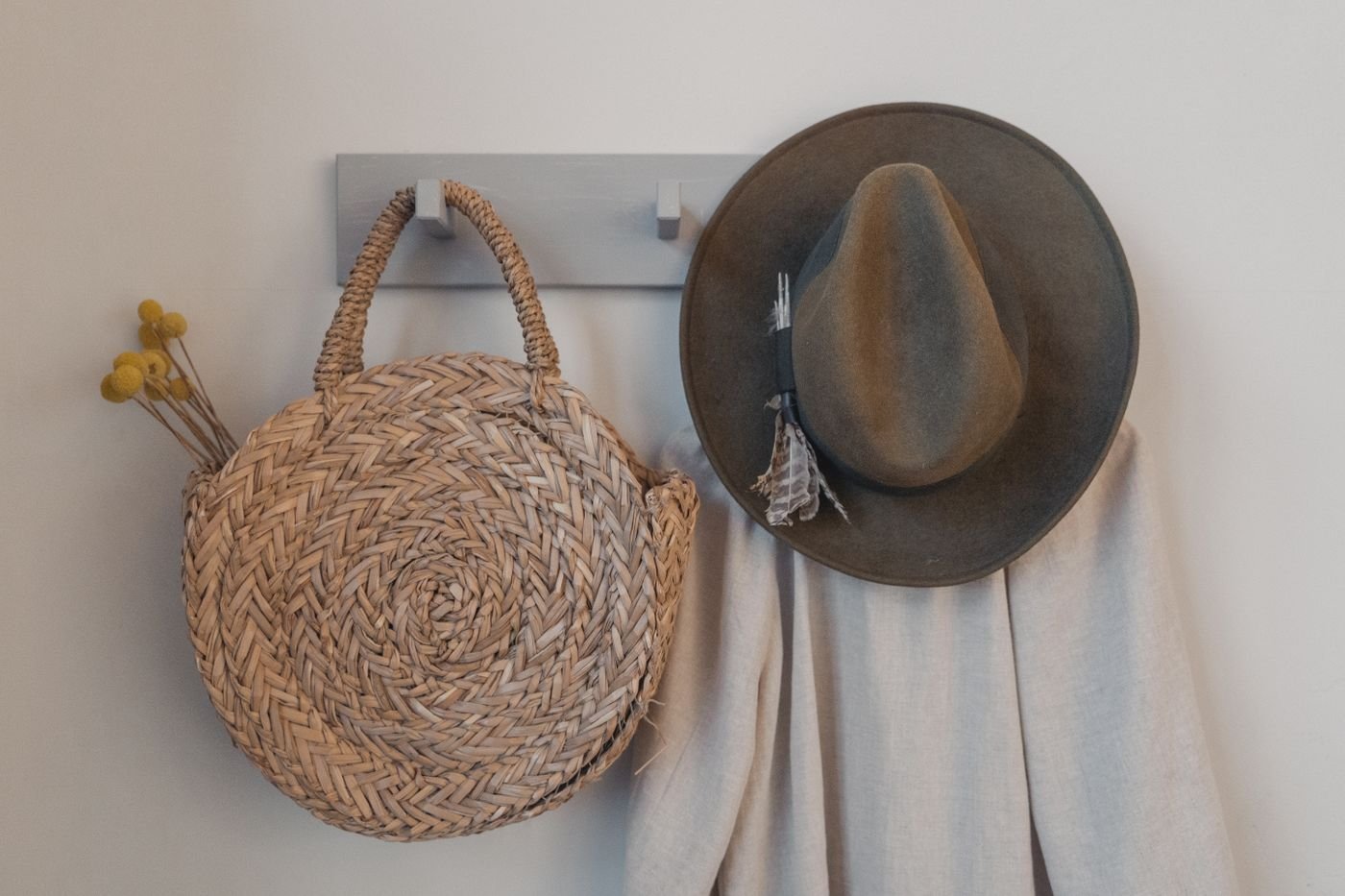
Keep this door’s load light and flat — coats and bags, not the winter parka collection — because it opens and closes most often, and check that nothing blocks it swinging fully open. If your entry needs a fuller system, with shoe storage and a place to sit, our small entryway ideas for coats and shoes build the complete version.
9. A Home for Keys and the Small Daily Stuff
The last door job is the smallest and, in daily happiness, maybe the biggest: one hook by the entry for keys, sunglasses and the library card, always the same hook, no exceptions. Keys hung on a pretty hook at hand height, like these on their rattan rail, end the morning key hunt more surely than any bowl — bowls collect everything else and bury the keys under it.

Put this hook on the inside of the coat closet door if your entry door faces a busy hallway, and keep it boring: keys only. The moment the hook also holds the dog treats, the spare tote and three lanyards, it stops working. One hook, one job.
What Not to Hang (and Other Ways Door Storage Goes Wrong)
A few honest limits, so your doors stay happy. Never hang anything on a door that must stay fully clear — a fire exit route in your building, or a bathroom door that swings against a glass shower panel. Do not load a hollow-core door past about 25 to 30 pounds total, whatever the organizer promises, and re-check hinges every few months on your hardest-working doors; sag shows up as a door that starts catching on the frame. Skip organizers on doors with molding the hooks cannot sit flat on, and keep glass jars off any door that children slam. Finally, if a door already sticks or sags before you hang anything, fix the door first; storage will only make a sick hinge sicker.
The Bottom Line
Over-the-door storage is the rare organizing upgrade that costs almost nothing, installs in minutes, and gives every bit of it back when you move. Start with the pantry door, add clear pockets where small things breed, give the bathroom door the towels, and let the closet door carry the shoes. Respect the three checks — thickness, clearance, weight — and your doors will quietly hold a whole extra cupboard while your deposit stays exactly where it belongs: coming back to you.