
There is a sad little ceremony that happens in our house every year, usually around December 28th. The tree comes down, the boxes go back to the attic, and the living room — which glowed for a month — suddenly looks like it has been emptied for moving day. The mantel suffers most. Stripped bare in the darkest, coldest weeks of the year, it makes the whole room feel like winter won.
Here is what I have learned after years of getting this wrong: January is not the month to take the mantel down to bare wood. It is the month to change its clothes. Almost everything that made the December mantel cozy — the candles, the greenery, the wood, the glow — still belongs there. Only the holiday costume has to go. This is the mantel chapter of the same reset we do room by room in our winter decor ideas for after Christmas, and it takes about an hour, most of it with a cup of tea in hand.
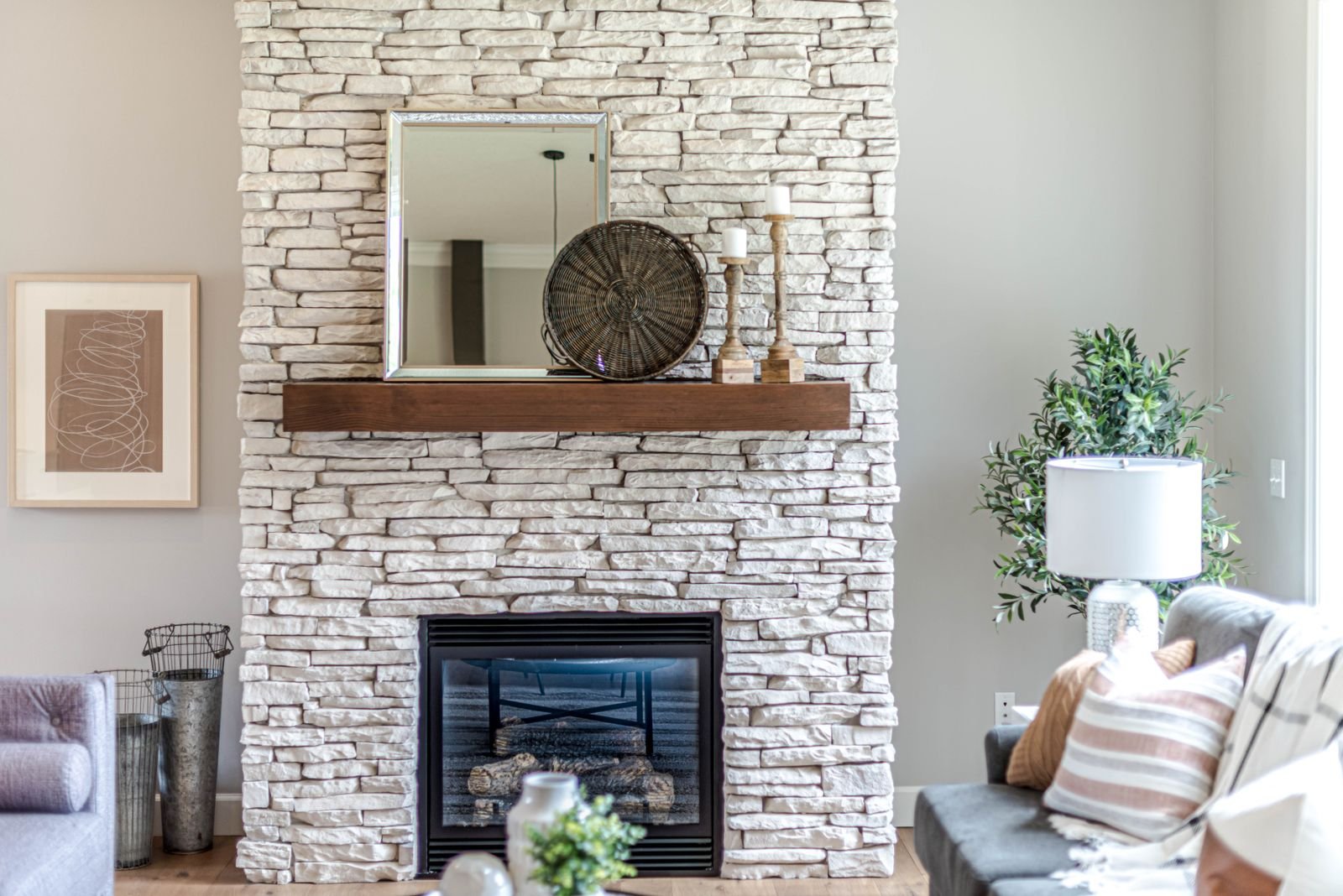
Start with the takedown: what goes, what stays
Stand in front of the mantel you built in December — ours follows the same bones as our Christmas mantel decor ideas — and sort everything on it into two piles: winter, and holiday. They are not the same pile, even if they arrived together.
Goes back in the box: anything red, anything with a word on it, stockings and their holders, ornaments of every kind, tinsel, colored lights, ribbon bows, and any figure that only makes sense in December. If it would look wrong in February, it is holiday, and out it goes.
Stays on the mantel: the plain greenery, every candle and holder you own, the mirror or picture frame at the back, pinecones (the natural ones — glittered cones go with the holiday pile), lanterns, a stack of good books, the log basket, and anything made of plain wood, brass, glass, or stone. Most people are surprised how much stays. On our mantel, about two-thirds of December is still there in January. It just reads completely different once the red and the sparkle leave the room.
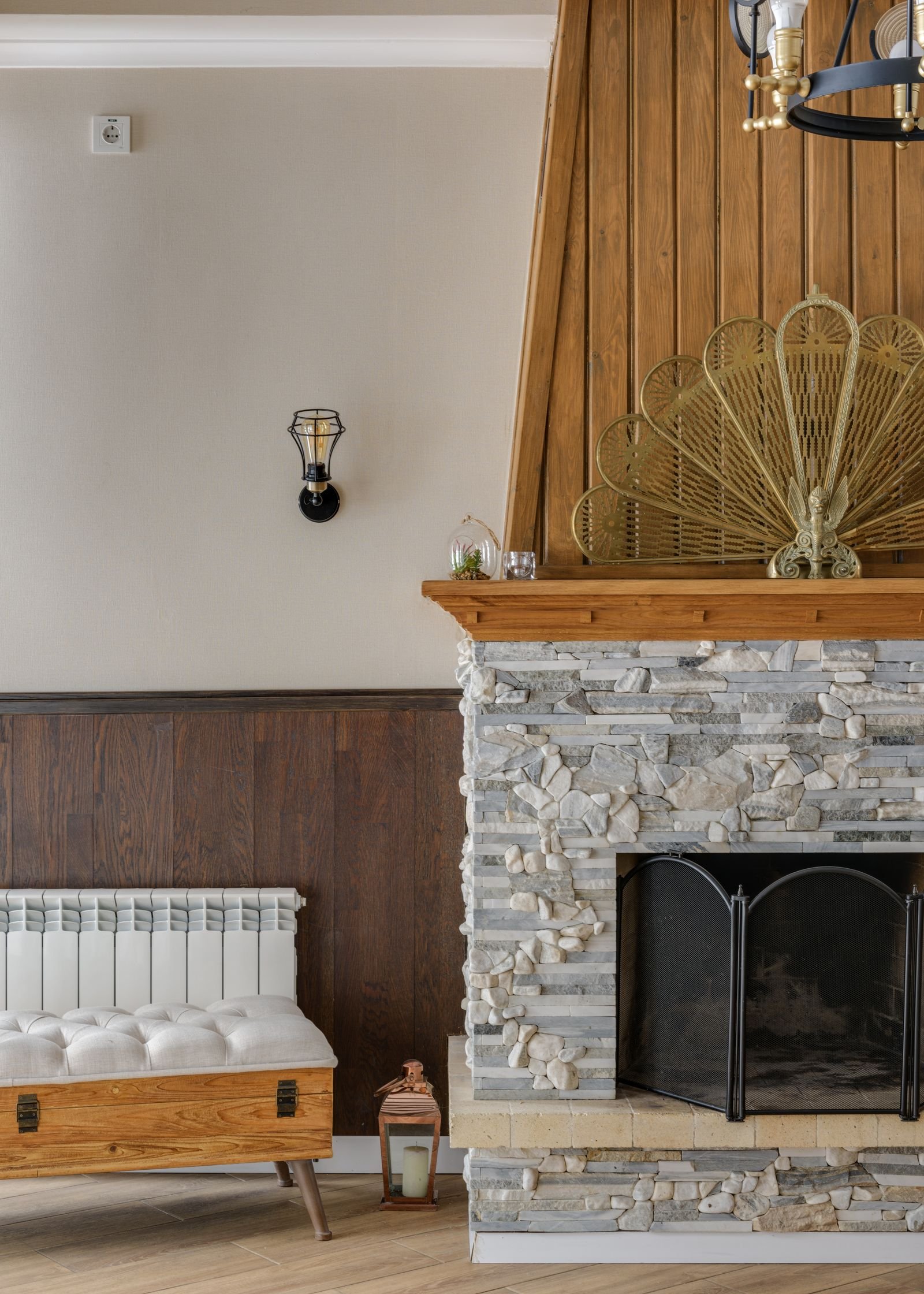
Reset the palette: winter whites, cream, wood and one quiet green
A winter mantel works because it is a palette, not a theme. December shouts; January whispers. Hold yourself to one of these combinations and let everything else in the room — cushions, throws, the rug — pass the same test.
- White and warm wood. The easiest reset there is. White candles, white ceramics, a pale mantel or surround, and one honest piece of wood — a beam, a bowl, a stack of logs — to keep it from going cold.
- Cream, greige and brass. Softer than white, kinder in north-facing rooms. Cream pillars, a brass candle holder or firescreen, oatmeal linen. This is the palette that makes grey January light look intentional.
- White, grey and eucalyptus green. The one quiet green of winter. Dusty eucalyptus, grey stone or paint, white everything else. Cool, calm, and very forgiving of a dark room.
The rule underneath all three: nothing on the mantel should be the brightest thing in the room except the fire. If a piece shouts, it belongs to a different season.
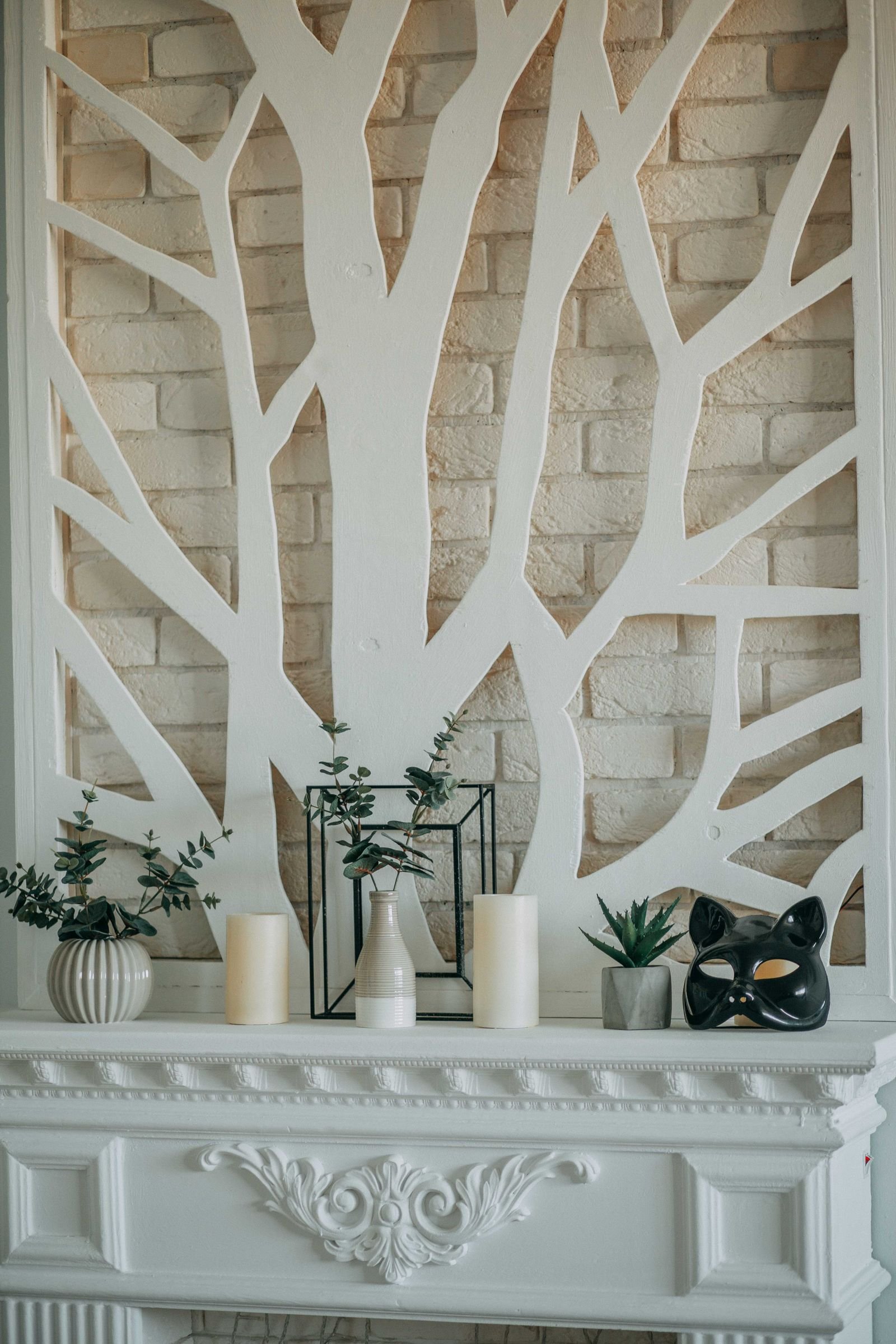
Edit the greenery: plainer, looser, less of it
Greenery does not have to go — it has to calm down. Take the December garland off, lay it on the table, and strip out everything that was tucked into it: ornaments, berries, ribbon, lights. What is left — plain pine, cedar, eucalyptus, or olive — goes back up, but looser than before. One gentle drape along the front edge, one end falling a few inches lower than the other, and nothing wired into a perfect symmetrical swag. Winter greenery should look gathered, not installed.
If your garland was mostly decoration and very little green, skip it entirely and let branches do the job instead (next section). And a practical note from experience: real pine and cedar are tired by January and will drop needles if you look at them. Eucalyptus and olive dry gracefully and can stay up for weeks; a decent faux stem in a dusty green does the same job for about $8–$12 and comes back every winter. Keep all of it clear of the firebox opening, and lift anything trailing before you light an evening fire.
Branches are winter’s flowers
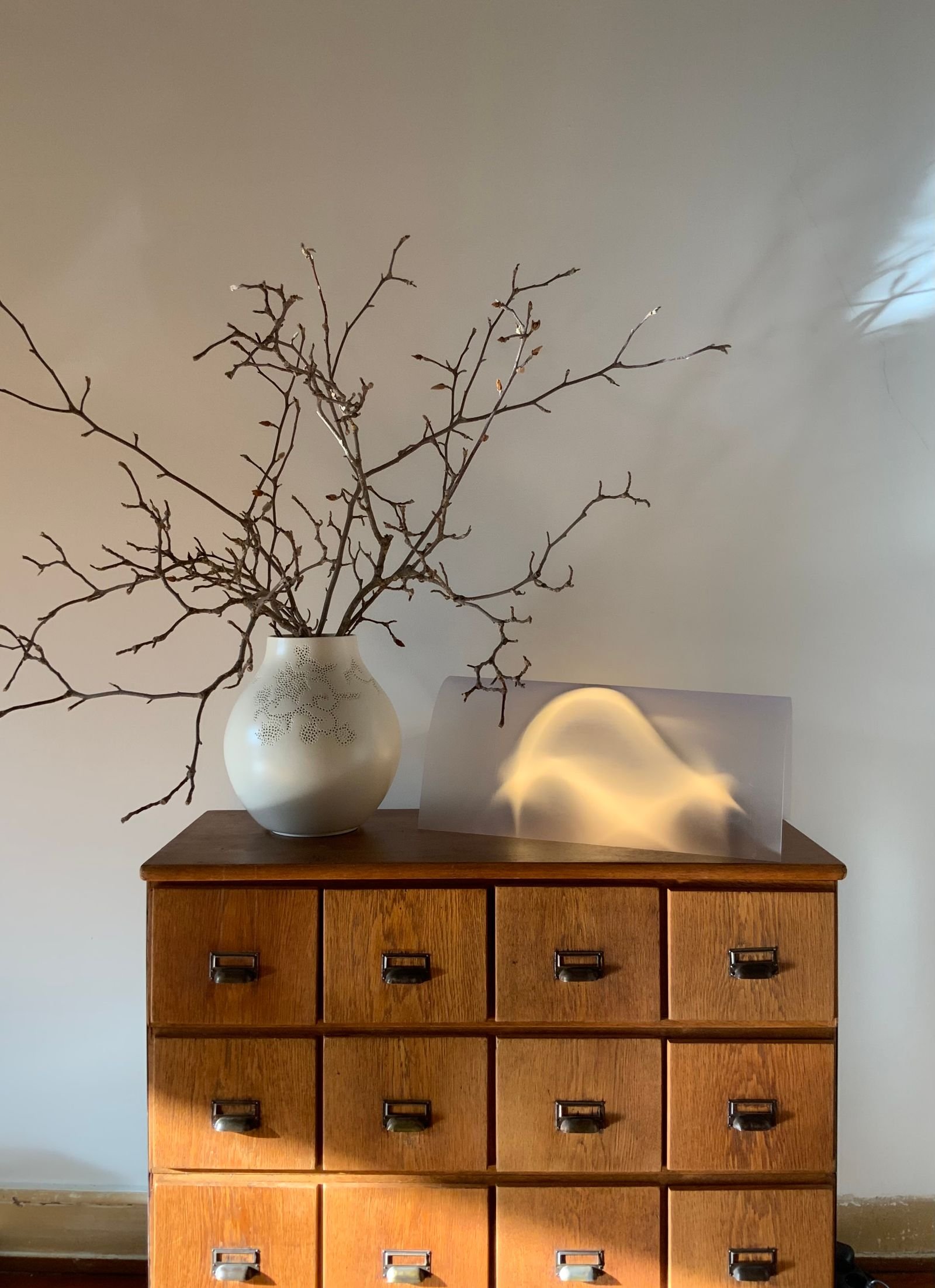
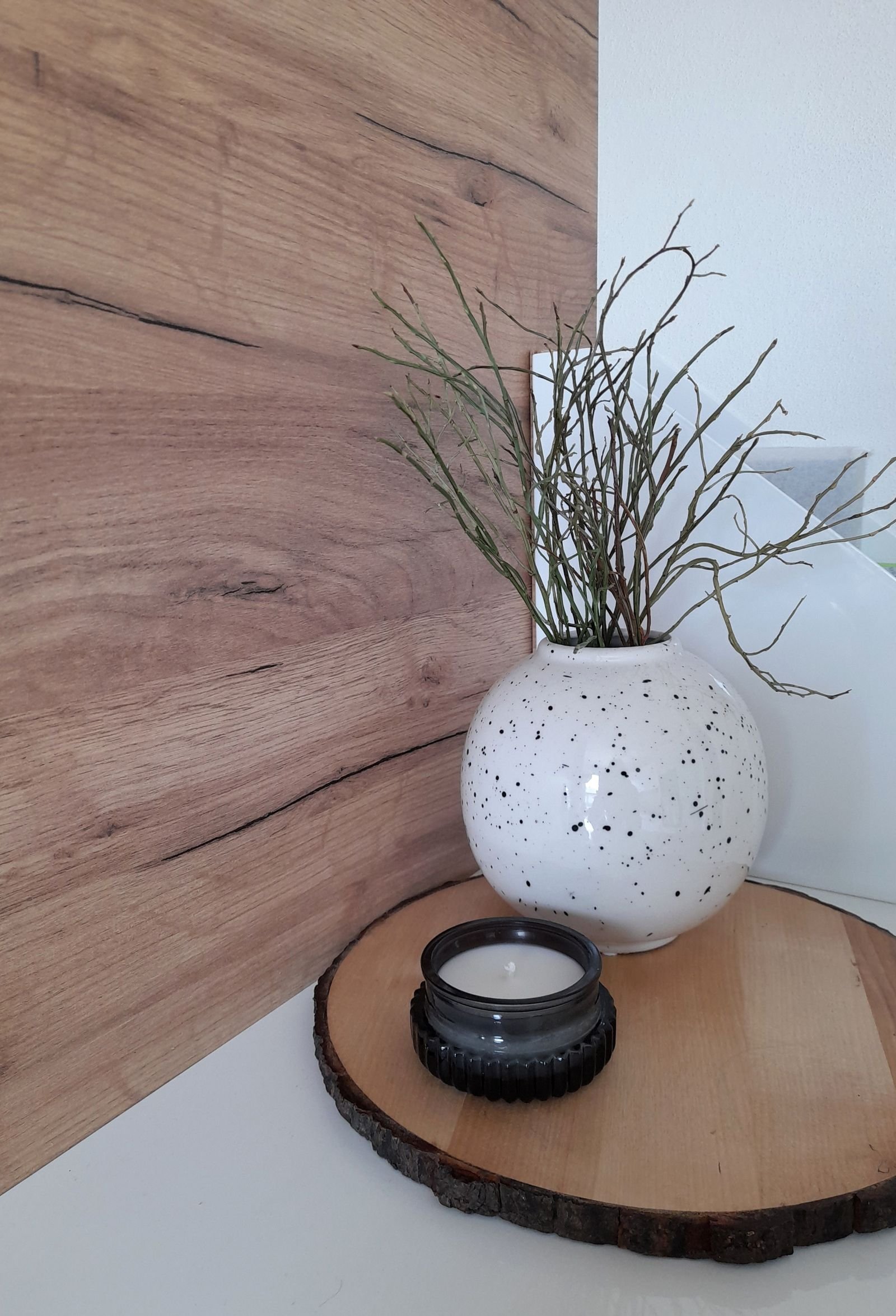
Every season gives the mantel one tall, living-looking thing. December had the garland and the tree; spring will have blossom. Winter has branches — bare, sculptural, and mostly free. A bundle of pussy willow, a few birch or curly willow stems, or branches clipped from the garden before pruning give a winter mantel the height candles alone cannot, and they last for weeks without water or attention.
Use the same heights that work in every season: a vase or stoneware jug 10 to 14 inches tall, with branches standing 24 to 36 inches above the shelf — roughly one and a half times the height of whatever hangs above the mantel. Set it a third of the way along the shelf, never dead center. Pussy willow costs $6–$10 a bundle at the grocery store in January; faux birch stems run $10–$14 and are indistinguishable at mantel distance. One bundle is enough. Two looks like a thicket.
Let candles do the work the tree lights did
People think January rooms feel flat because the decorations are gone. Mostly, they feel flat because the light is gone — a lit tree throws warm, low, flickering light into a room for a month, and then one evening it just isn’t there. Candles are how you buy that light back, and the mantel is the best shelf in the house for it.
Think in threes and in heights: a cluster of pillars at 4, 6, and 8 inches at one end, a pair of tapers in holders at the other, and one lantern down on the hearth. Cream and white candles only — the palette rule applies to flames too. Flameless pillars with a timer are the honest workhorse here: a set of three costs $15–$25, they come on by themselves at dusk, and they can sit safely near greenery where a real flame should not. Save the real tapers for the nights you are actually in the room, keep every flame a clear hand’s width from leaves and branches, and let a mirror behind the candles double all of it for free.

Put the mirror or the art back in charge
In December, the wall above the mantel usually belongs to a wreath. In January, give it back to the piece that lives there the rest of the year: the big mirror, the landscape print, the framed photo that got stored in the spare room for a month. Lean it rather than hanging it if you can — leaning reads softer, leaves no new holes, and lets you swap in five minutes.
Scale still matters: the piece should be about two-thirds the width of the mantel shelf, and its bottom edge should sit 4 to 6 inches above the shelf so the candles and branches have air. A mirror earns its place twice in winter, bouncing both the firelight and the thin daylight around the room. If you truly cannot give up a wreath, keep it to bare greenery only — no bow, no berries, nothing on it — and know that a plain one reads as winter, not holiday. But try the mirror first. Most mantels look more finished with it back.
Texture is the color of January
When a palette is this quiet, texture does the talking. This is the month for the chunky knit throw folded over the hearth bench or the arm of the nearest chair, the wool cushion covers that were too warm for December’s crowd, a linen runner under the mantel objects instead of a garland, and a woven basket doing honest work holding logs or spare blankets.
Keep the textures natural and the colors inside the palette: cream knit, oatmeal wool, pale linen, worn leather if you have it. One strong texture per surface is plenty — a mantel with candles, branches, and a stack of linen-bound books does not need a fourth idea. If the room still feels flat, add texture to the room before you add objects to the mantel.

Style the hearth, not just the shelf
A winter mantel fails from the bottom up: a styled shelf above a bare, sooty hearth looks like a hat on an empty head. Give the hearth the same ten minutes. A log basket filled — actually filled, not three logs arranged for a photo — a small stack of split wood on the other side, and a lantern or a firescreen with some brass or iron to it. That triangle of basket, fire, and lantern is most of what people mean when they say a room feels cozy.
Two practicalities. Keep the working pile of firewood to about a day or two’s worth indoors and top it up from the main stack outside; a week’s worth of logs by the fire is a lot of bark and dust in the room. And if the fireplace saw heavy use over the holidays, January is the honest month to book the chimney sweep — before the spring rush, and before you forget the state December left it in.

Styling around a TV above the mantel
If a television lives over your fireplace, the winter reset is actually easier than December’s, because winter styling is naturally low and quiet. Keep everything on the shelf below the bottom corners of the screen: the candle cluster at one end, the branch vase at the other, nothing tall in the middle. A low, loose line of greenery along the front edge softens the hard line where the TV meets the wall without climbing into the picture.
Skip anything reflective directly under the screen — the mirror moves to another wall for the season, or nowhere. Put the winter effort into the hearth instead: the log basket and lantern sit below the sightline and warm up the whole wall without ever competing with a film.

A simple budget plan
The good news about a winter mantel is that you probably own it already. Here is how the reset breaks down at three levels:
- $0 — the honest reset. Strip the holiday pieces, keep the candles and plain greenery, bring the mirror back from the spare room, and shop your own house: the stoneware jug from the kitchen becomes the branch vase, the knit throw comes off the bed, the log basket gets filled. This is the version in most of these photos, and it is enough.
- About $25. Add one bundle of pussy willow or faux birch stems and a timer set of flameless pillars. These two purchases do more for a January room than anything else on this page.
- About $60. Add the piece you will use all year: a proper lantern for the hearth, a stoneware vase with some weight to it, or the big mirror if your mantel has never had one. Buy it in January’s palette and it will never need storing.
Keep it cozy until spring
A winter mantel is not a display you finish; it is one you keep. Once a week, dust the shelf (winter light shows everything), shake out the throw, and check the greenery — the day it looks tired, it goes, and the branches carry the mantel alone. Some time in February, swap one thing: a bowl of forced bulbs or the first cheap bunch of tulips on the hearth, as a promise rather than a display.
And when the light changes and it is time to lighten everything again, our spring mantel decor ideas pick up exactly where this mantel leaves off — same shelf, same bones, softer season. Until then: keep the candles, keep the fire, lose the holiday. That is the whole recipe.