
The short answer: You do not need a spare room — you need about three square feet of found space and five things: a seat you can sit in for an hour, warm light that lands on the page, a surface for a mug, something soft, and your books within arm’s reach. The six spots below are the places small homes already have: a dead corner, a closet, a windowsill, the space under the stairs, the side of the bed, and the end of a hallway.
First, a Note on What This Article Is (and Is Not)
If you have already chosen your corner and want the build itself — the order to layer it in, the lamp height, the measurements — we have a whole step-by-step for that: our guide on how to create a cozy reading nook in any corner walks through building one corner from empty to finished. This article comes one step earlier. It answers the question small homes actually get stuck on: where does a nook go when there is no spare room and no spare corner either?
So instead of instructions, this is a list of found spaces — the six places that already exist in almost every small house and apartment, hiding in plain sight. Walk your home with this list open. One of them is yours.
Spot 1: The Dead Corner
Every small living room has one: the corner that holds nothing but a charger cable and good intentions. A dead corner is the easiest nook there is, because it asks for no building at all — one chair angled at 45 degrees, so it faces the room instead of the wall, and the corner stops being dead. Angling matters more than the chair does. A chair pushed flat into a corner looks like storage; the same chair turned slightly looks like a destination.
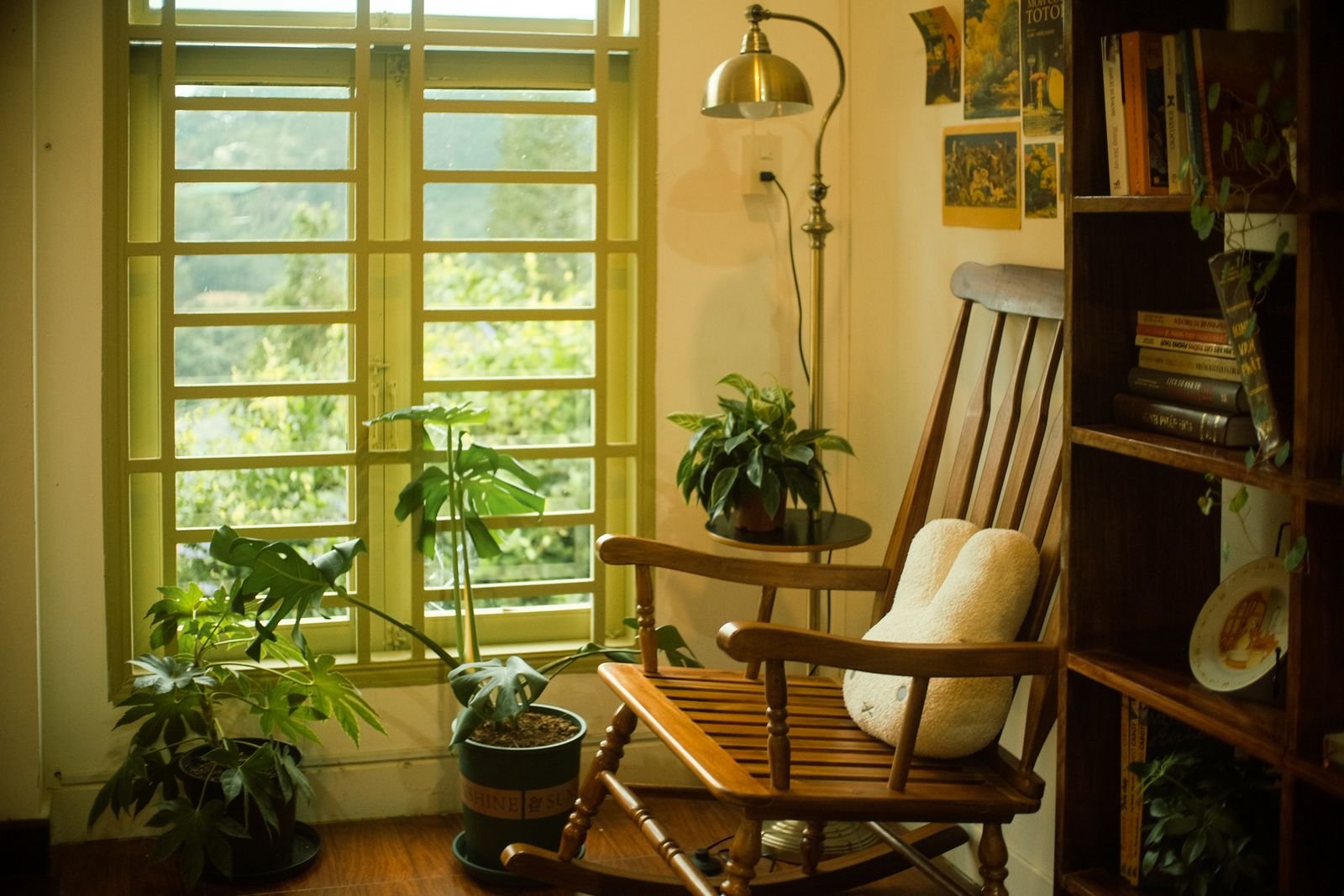
Keep the footprint honest: chair, one small side table or even a stool, and light. If the corner sits behind the sofa, it also gains a little privacy for free. The rocking chair in the photograph shows the classic version — a chair that earns its place, plants crowding the window, and the bookshelf close enough that you never have to get up mid-chapter. More ways to make a small living room carry corners like this are in our small living room cozy ideas on a budget.
Spot 2: The Closet Nook
A closet nook sounds like a project, but in a small home it is often the best seat in the house. Take the doors off a little-used closet — a linen closet that mostly holds towels you never rotate, the deep end of a bedroom closet — and the walls do the cozy work for you. Enclosed on three sides, a closet nook feels like a room within a room, and it swallows sound in a way an open corner never can.
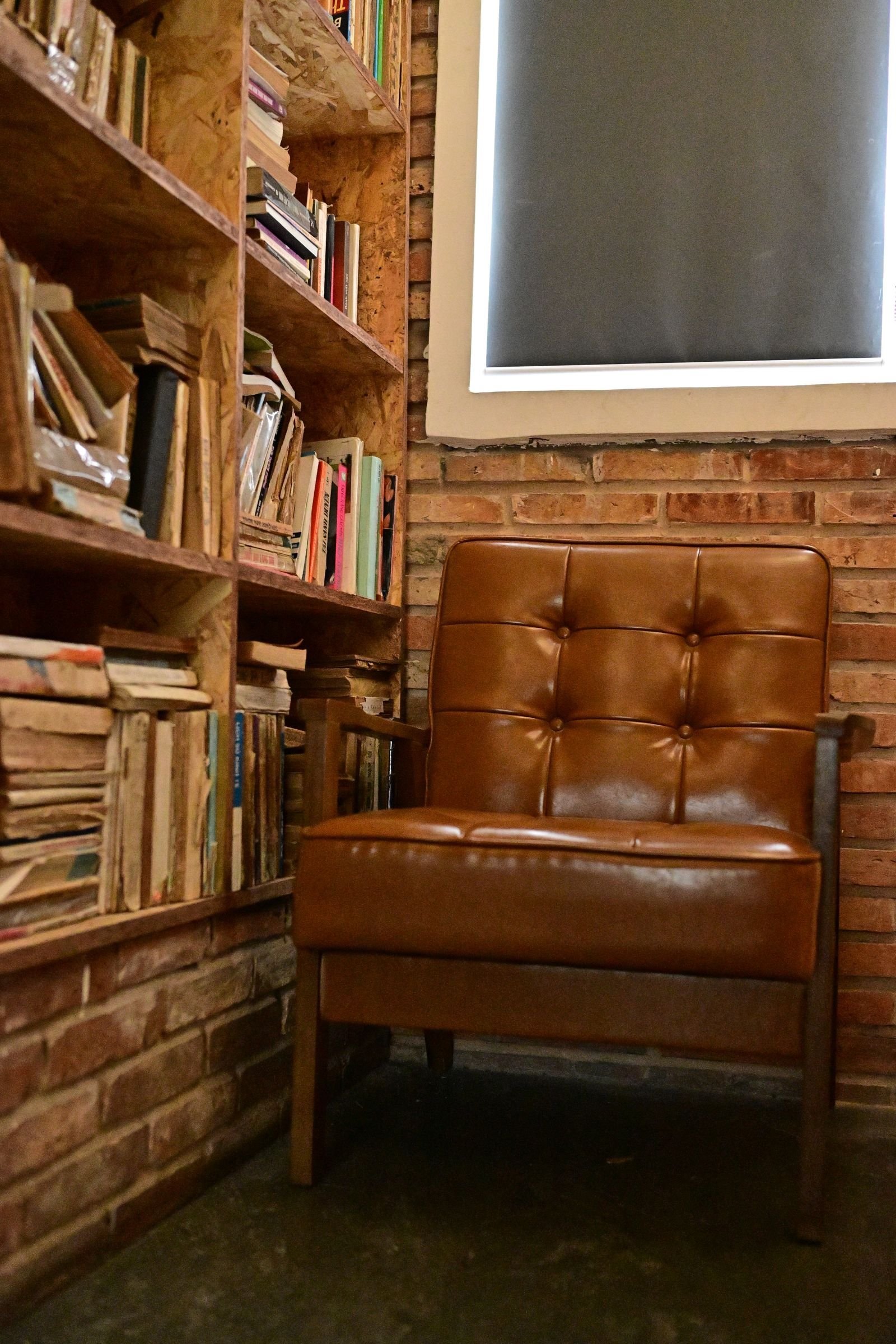
You do not need to fill it. A chair that fits the width, or a thick cushion on a low bench if the closet is shallow, plus a battery or plug-in wall light, because most closets have no outlet and no natural light at all. That darkness is the trade: the closet gives you enclosure and quiet, and you give it light. The leather chair tucked against floor-to-ceiling shelves in the photograph is the spirit of it — a seat that lives inside the books. Hang one small shelf inside for the current read and the mug, and leave the towels a new home on one bathroom shelf.
Spot 3: The Windowsill and the Window Seat
Light is the one thing money cannot add later, so if a window in your home gets good morning or afternoon sun, build the nook there and let the light be the luxury. There are three versions, in rising order of commitment. The simplest is a chair pulled right up to the sill, side-on to the glass, so the light falls over your shoulder onto the page. Next is the wide windowsill itself: a deep sill with two firm cushions becomes a perch for one reader and a stack of books. The fullest version is the low bench or window seat, bought or built, with storage underneath if you can manage it.
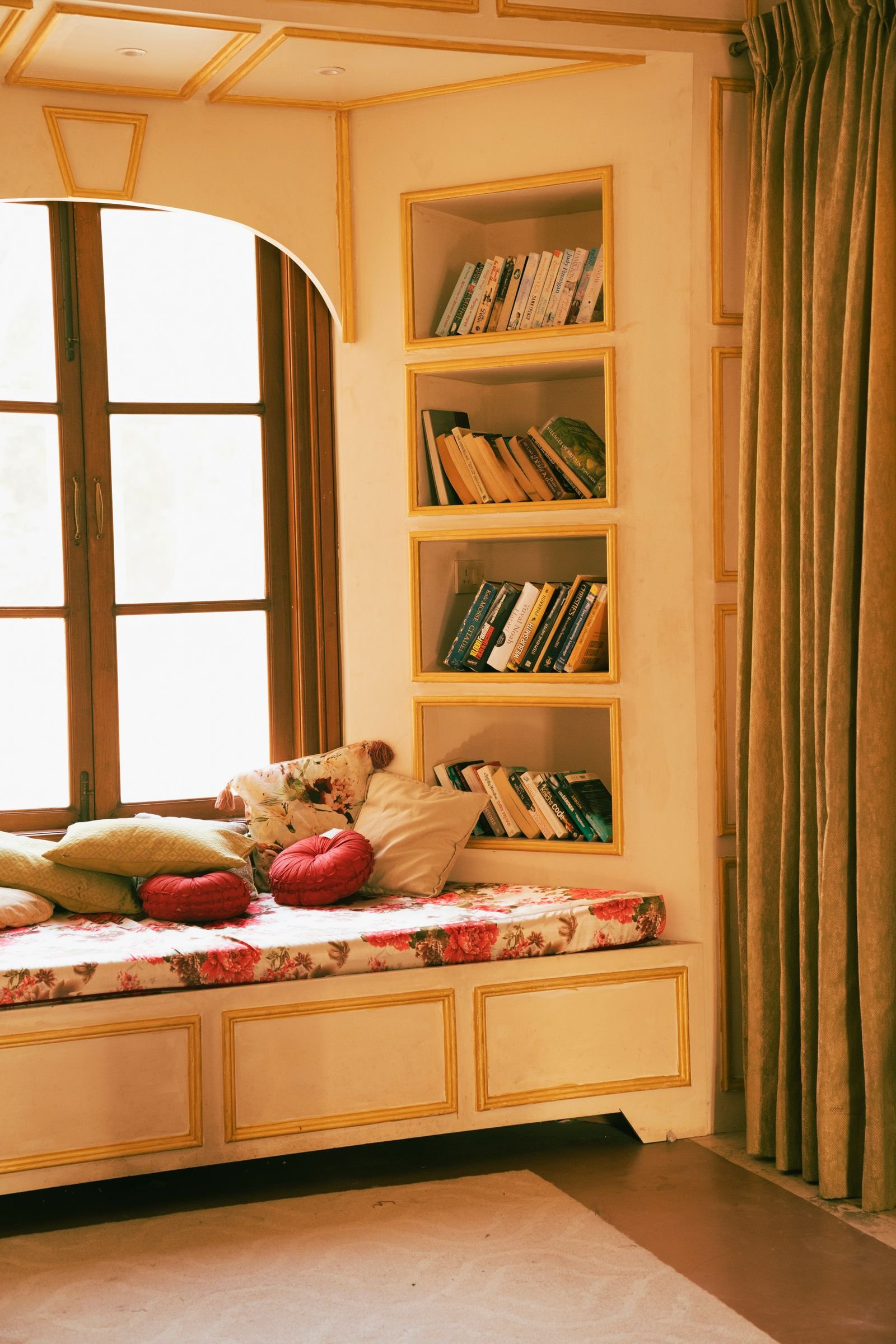
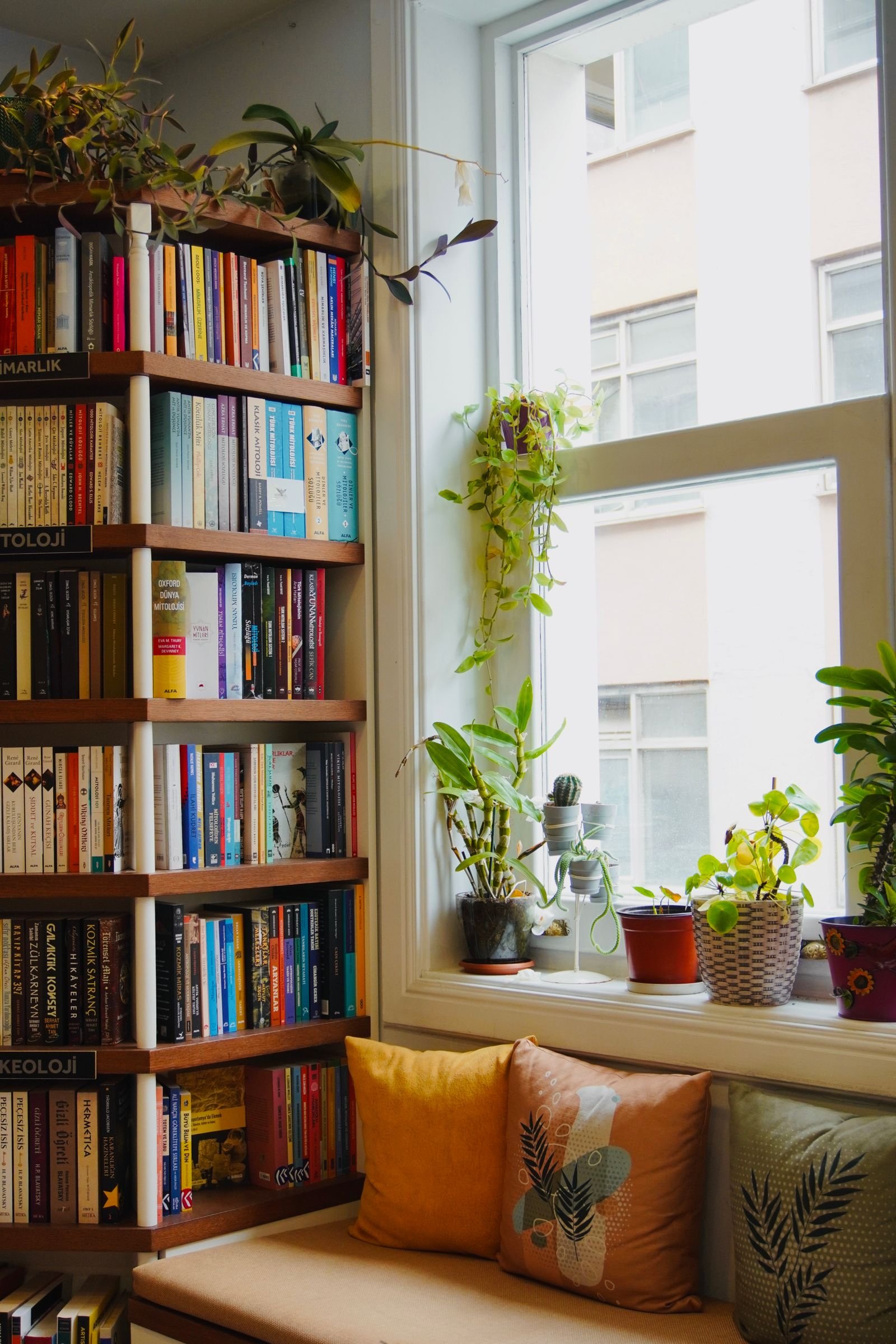
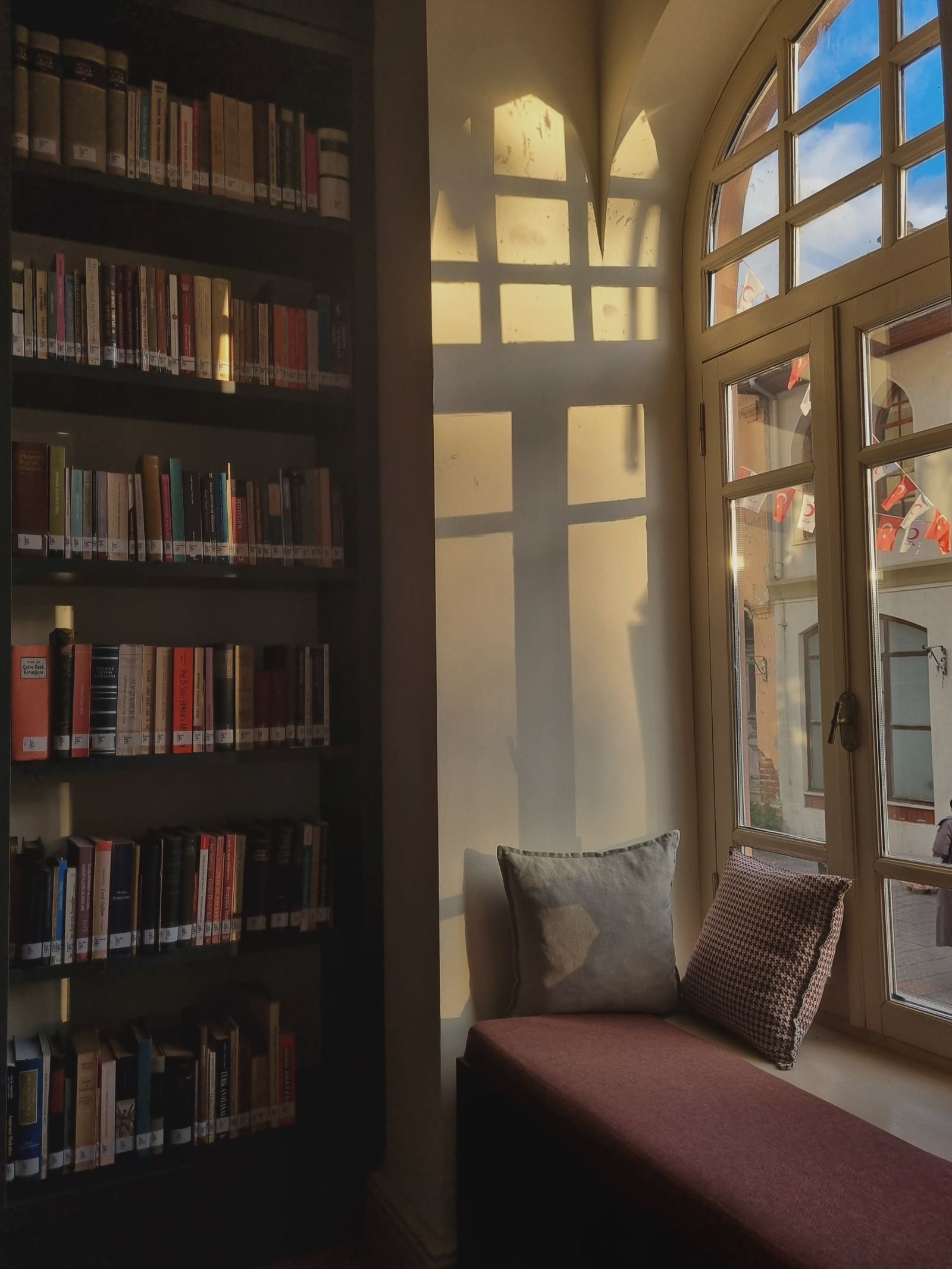
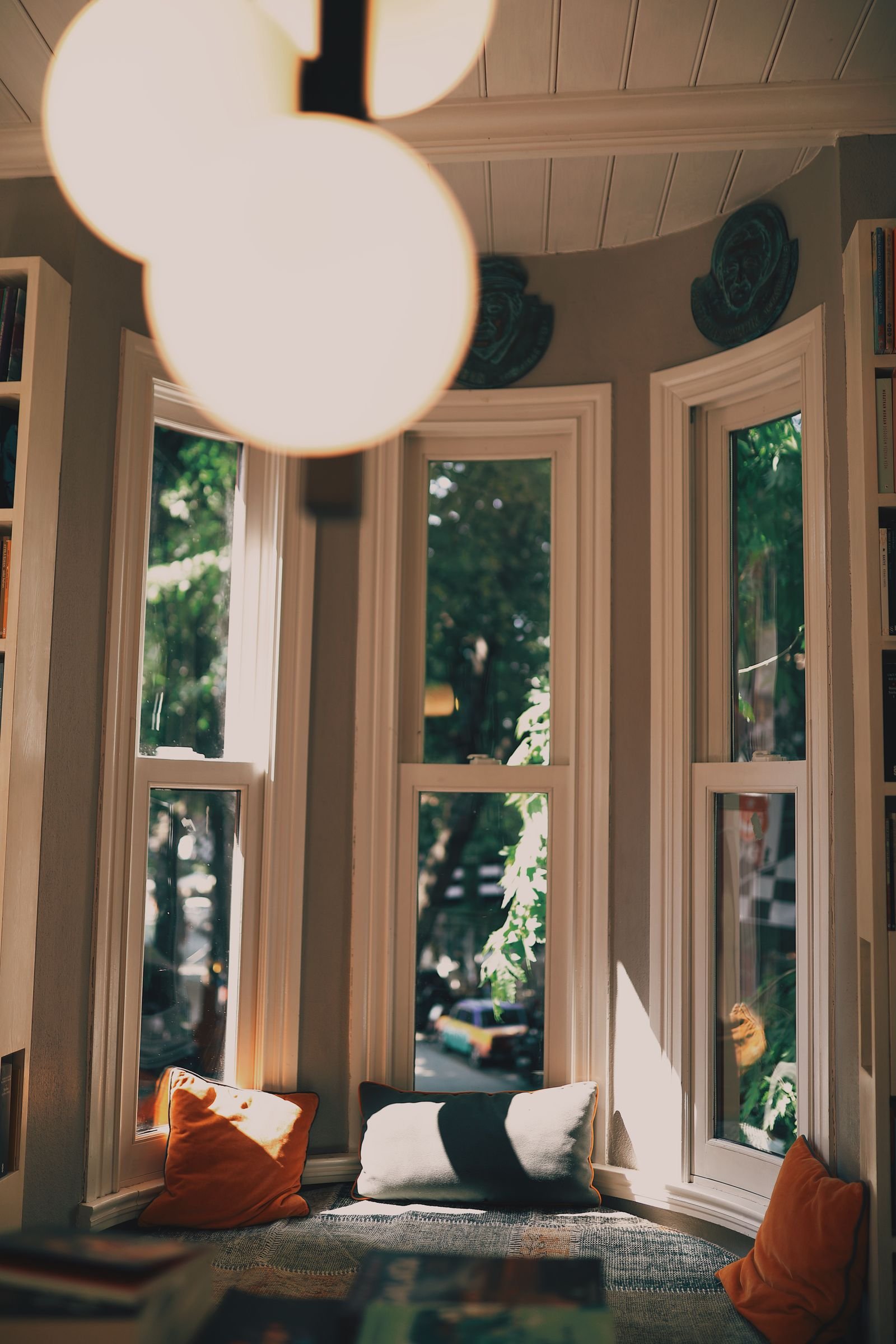
The photographs show all three moods: shelves and cushions gathered around one bright window, a cushioned bench running under a tall arched window with the bookshelf a step away, and a bay seat with cushions at both ends. Whichever version you choose, add one warm lamp for after dark — a window nook that only works at noon is only half a nook.
Spot 4: Under the Stairs
The space under a staircase is the most wasted square footage in most houses — too low for standing, too dark for storage you use daily, and exactly the right shape for sitting down with a book. Reading is one of the few activities that fits a sloping ceiling, because you do it seated and still. A low chair, a floor cushion with a backrest, or a small chaise all work where a bookcase would not.
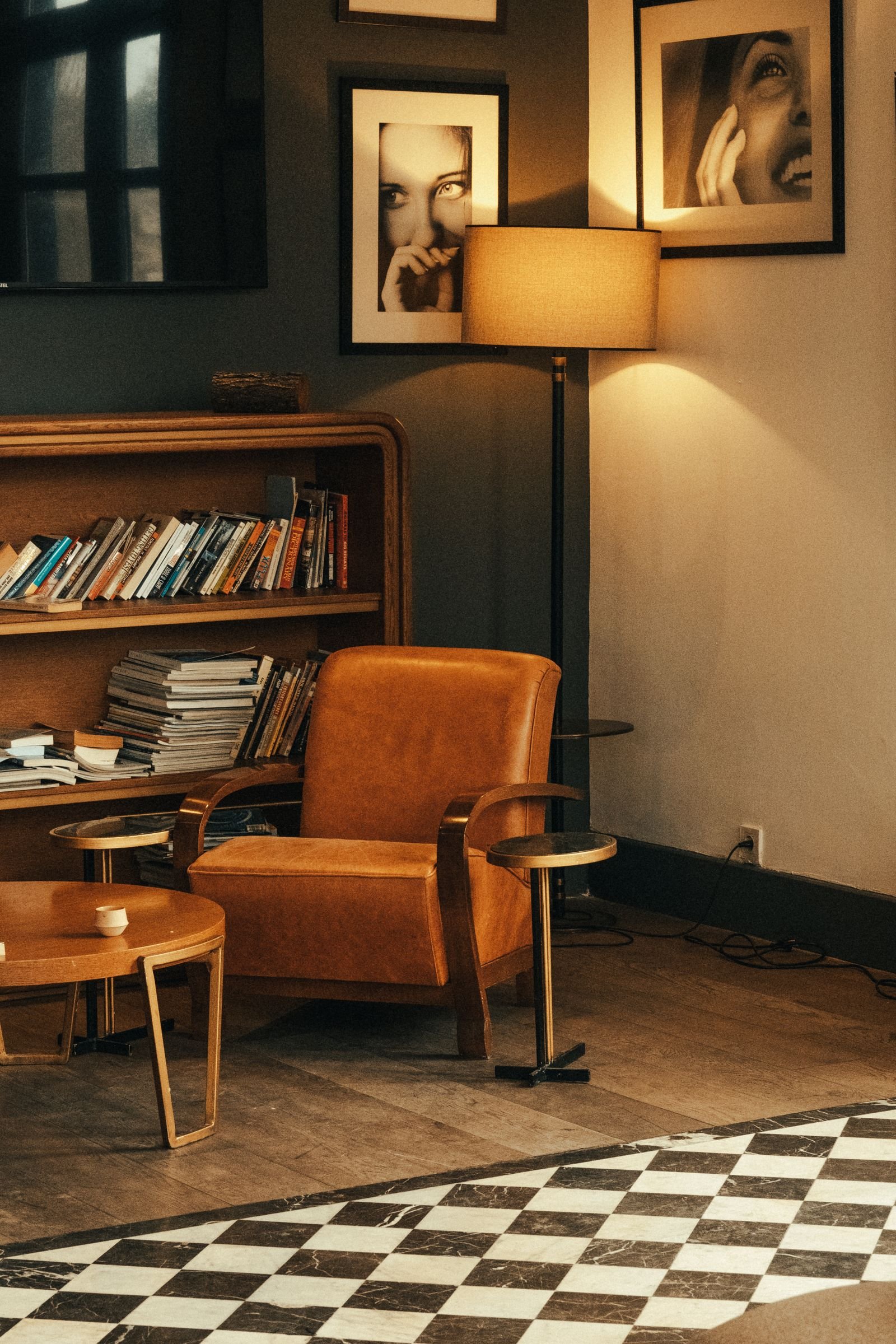
Two honest warnings. First, light: under-stairs spaces are caves, so plan on a warm lamp from day one, not daylight. Second, dust and traffic: stairs shed both, so choose a washable throw and expect the nook to be a pass-through at busy times of day. In return you get the most private nook on this list — a spot children claim instantly and adults rediscover. The low leather chair and lamp in the photograph sit at exactly reading height, in exactly this kind of borrowed, lamplit space.
Spot 5: Beside the Bed
In a studio or a small bedroom, the bed is already the softest seat you own — the nook move is to make one side of it a reading side on purpose. A proper pillow arrangement you sit up against rather than sleep on, a warm lamp on that side only, and a small stack of books that lives there instead of migrating around the house. It sounds too simple to count, but naming the spot changes the habit: the book is there, the light is right, and ten pages before sleep stops depending on willpower.
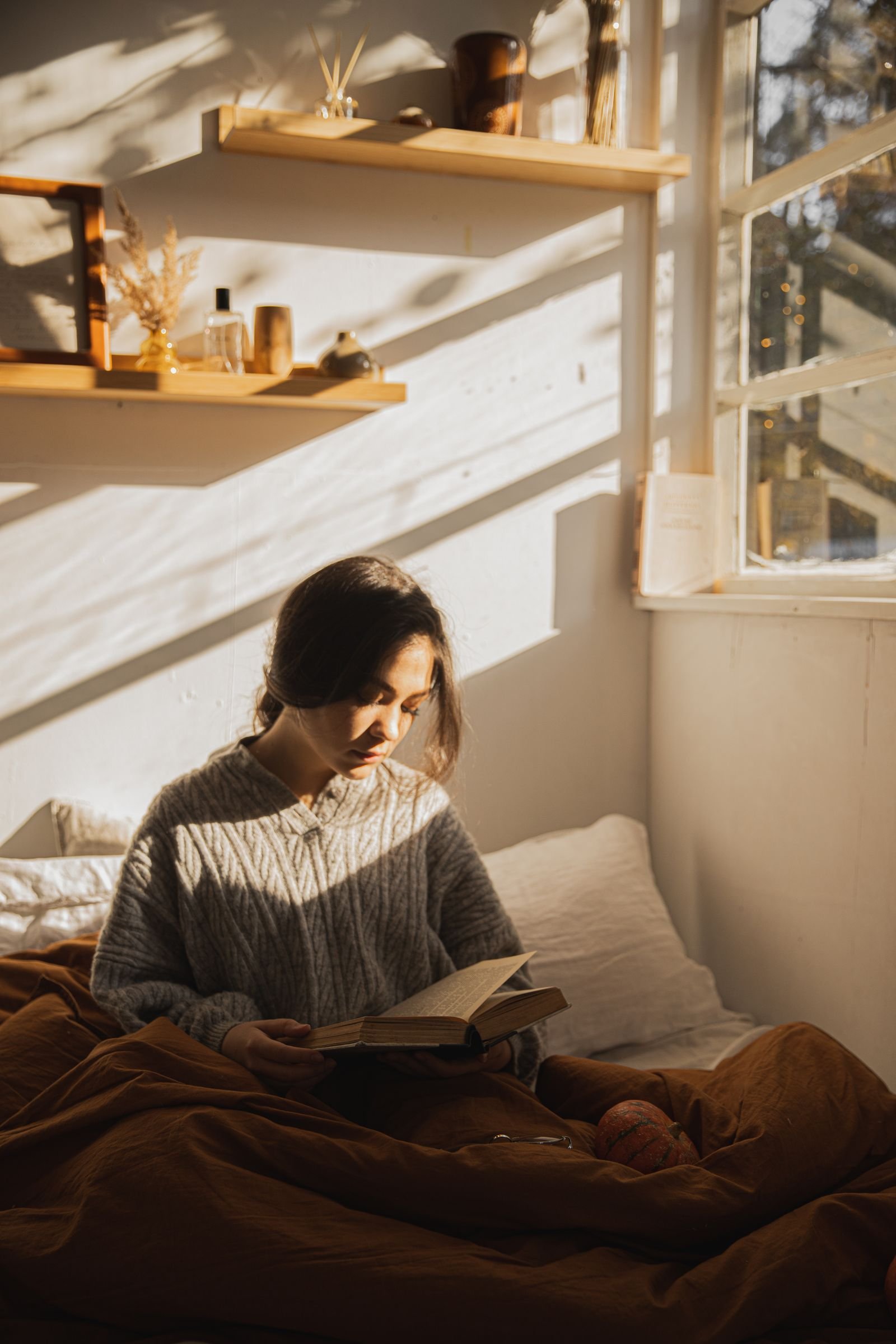
If there is floor space beside the bed, even eighteen inches, a narrow chair or a floor cushion turns it into a true separate nook and keeps the bed for sleeping. Either way, this is the spot that pairs best with the slow, lamplit end of the day — our winter bedroom ideas build whole rooms around this same feeling. The photograph is the honest version: morning light, rumpled bedding, a book that was picked up because it was right there.
Spot 6: The End of the Hallway
Hallways are pure pass-through — which is why the last two feet of one, the dead end by a bedroom door or a linen cupboard, is found space in its purest form. Nobody needs to stand there. A slim chair, a wall-mounted shelf instead of a table, and a plug-in wall light turn a corridor’s end into the quietest seat in the home, precisely because no one passes through it — they only pass the opening.
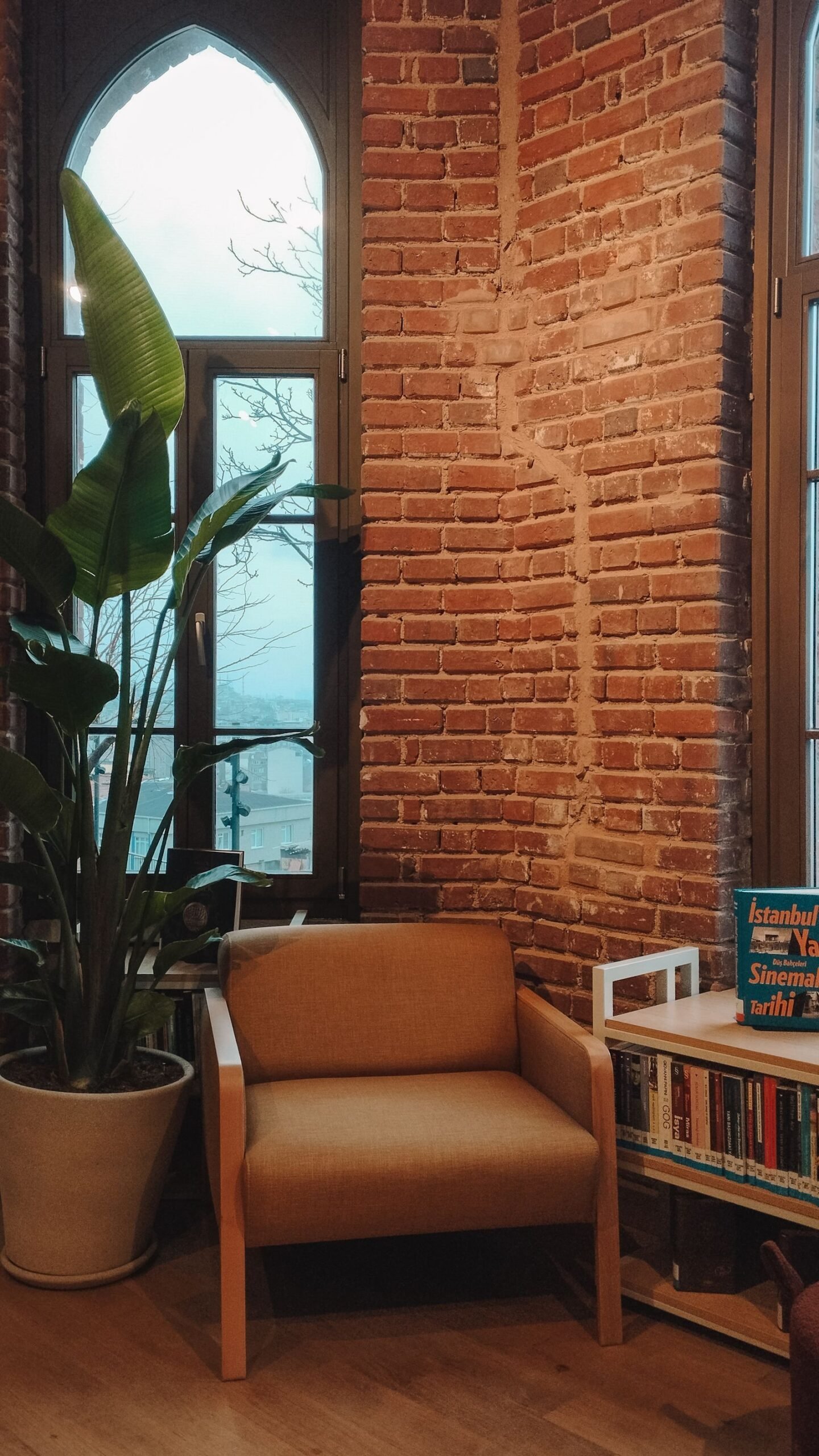
Keep it narrow and keep it calm: this nook works best as a one-person, one-book spot, not a mini library. The brick-corner chair in the photograph shows the proportions — one comfortable seat, one plant, books low and close, nothing else competing. If your hallway end has a window, you have won twice: light by day, and a reason the spot never feels like a cupboard.
The Five Essentials (Whatever Spot You Pick)
Every spot above works with the same five things. Miss one and the nook slowly turns back into furniture; have all five and even a hallway end feels like a retreat.
- A seat you can sit in for an hour. Test it with a timer, not a glance. If your legs go numb in a display chair at home, they will in this one too.
- Warm light that lands on the page. Over the shoulder, warm-white bulb, close enough to read small print without leaning.
- A surface within reach. Side table, stool, wide sill, shelf — somewhere a mug and the book can both land.
- Something soft. A throw or one good cushion. Softness is the signal your body reads as “stay.”
- Books within arm’s reach. A stack, a basket, one shelf. A nook you have to get up from to supply is a chair, not a nook.
What It Costs: The $0 / $50 / $150 Ladder
| Budget | What you do | What it buys you |
|---|---|---|
| $0 | Move a chair you own into a found spot, angle it, add a throw from the sofa and a lamp from another room | A working nook tonight — seat, softness and light, all borrowed |
| Around $50 | One good cushion or throw bought for the nook, a warm bulb, a small second-hand side table or stool | Comfort that lasts an hour, and a surface for the mug |
| Around $150 | A dedicated reading lamp, a small bookshelf or bench, and the cushion — the nook stops borrowing from other rooms | A permanent spot that no longer gets dismantled when guests come |
Reading Nook Questions
How much space do you actually need for a reading nook?
About three square feet — enough for one chair and a small surface. If a chair fits and you can sit in it without your knees touching a wall, the spot works.
What is the best spot for a reading nook in a small apartment?
The dead corner first, because it needs no building. After that, the windowsill for the light, or beside the bed if the bedroom is your quietest room.
Can you make a reading nook with no money at all?
Yes. Move an existing chair into a found spot, borrow a throw and a lamp from other rooms, and stack your books beside it. The $0 version is a rearrangement, not a purchase.
What should a reading nook never skip?
Light that lands on the page. A beautiful chair in bad light gets used twice; an ordinary chair in warm, well-aimed light gets used every day.
How is this different from a reading corner how-to?
This article helps you choose the spot — six found spaces, by home type and budget. The step-by-step build for the corner you pick is in our linked how-to guide.
Pick the spot tonight — not the prettiest one, the one with the light. A chair moved three feet has started more reading habits than any renovation.