
Short answer: The best terracotta living room ideas for a small room work by dose: start with one clay object or cushion, then textiles, then — only if you still want more — one wall. Most small rooms are happiest at dose two, and renters can get the full warm effect with no paint at all.
Why Terracotta Loves a Small Room
Big rooms can afford to be cool. Small rooms cannot — a small, pale room does not read as airy, it reads as unfinished, and that is exactly the problem terracotta solves. Terracotta is baked earth: a warm, browned orange that makes walls feel closer in the good way, like a fireside instead of a corridor. Used well, it does not shrink a small living room. It finishes it.
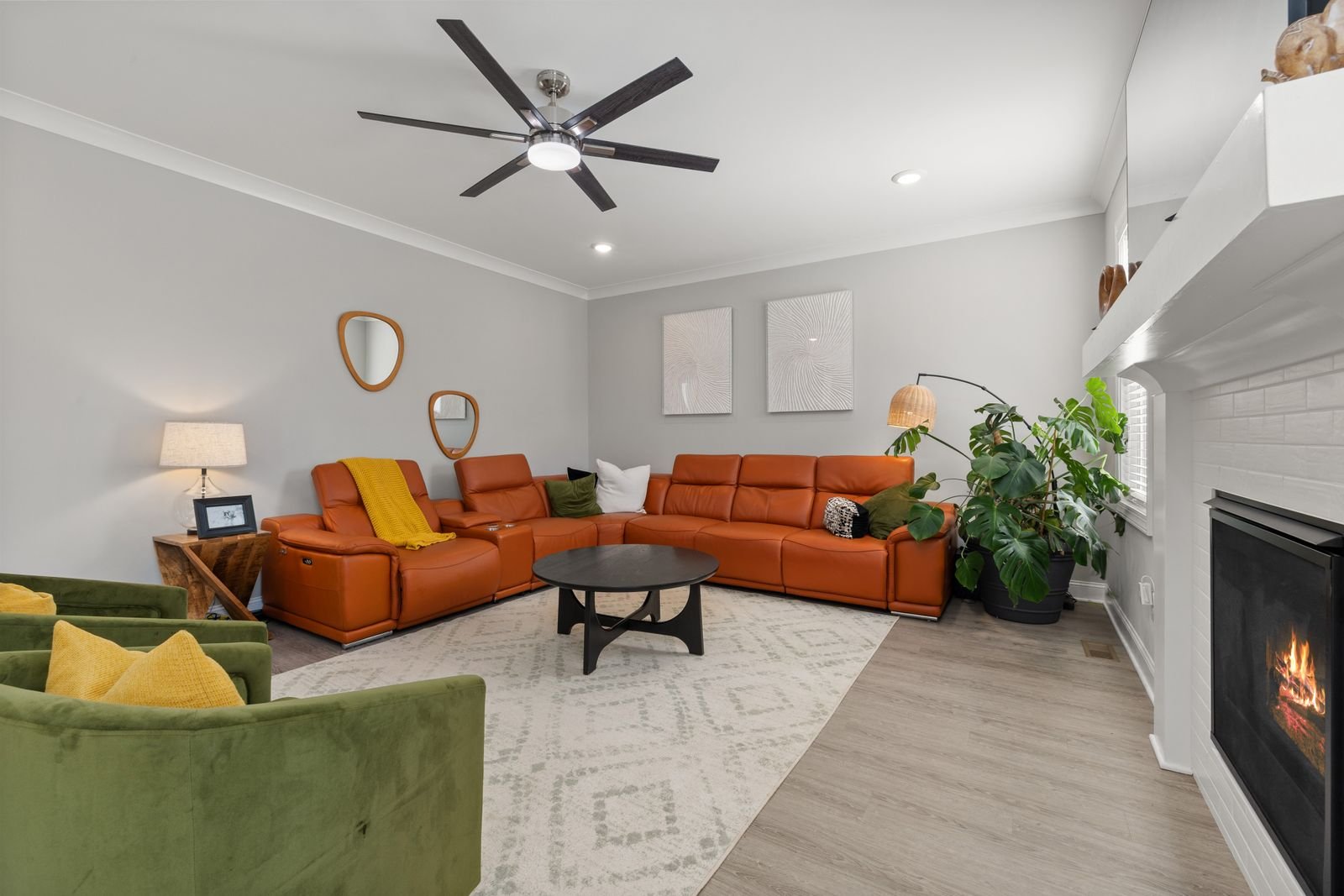
The featured room shows the full-confidence version — a terracotta leather sectional, a lit fireplace, a cream rug keeping the floor light, and, quietly, the most useful trick in this whole article: sage-green chairs opposite the terracotta sofa. Warm earth and soft green calm each other down. If you are building a whole palette, our cozy home decor ideas hub shows how terracotta sits inside a full warm scheme.
The mistake is dose, not colour. So this guide is organised by dose — four levels, smallest first — and you are allowed to stop at any level and call the room done.
| Dose | What you change | Cost feel | Renter-safe? | Best for |
|---|---|---|---|---|
| Level 1: One object | One vase, pot or cushion | $ | Yes | Testing the colour |
| Level 2: Textiles | Cushions, throw, rug, curtains, or a sofa | $$ | Yes | Most small rooms |
| Level 3: One wall | One painted or papered wall | $$ | Peel-and-stick only | North-facing small rooms |
| Level 4: Colour-drench | Walls + ceiling in terracotta family | $$$ | No | Confident, sunny rooms |
Level 1: One Clay Object (the $20 Test)
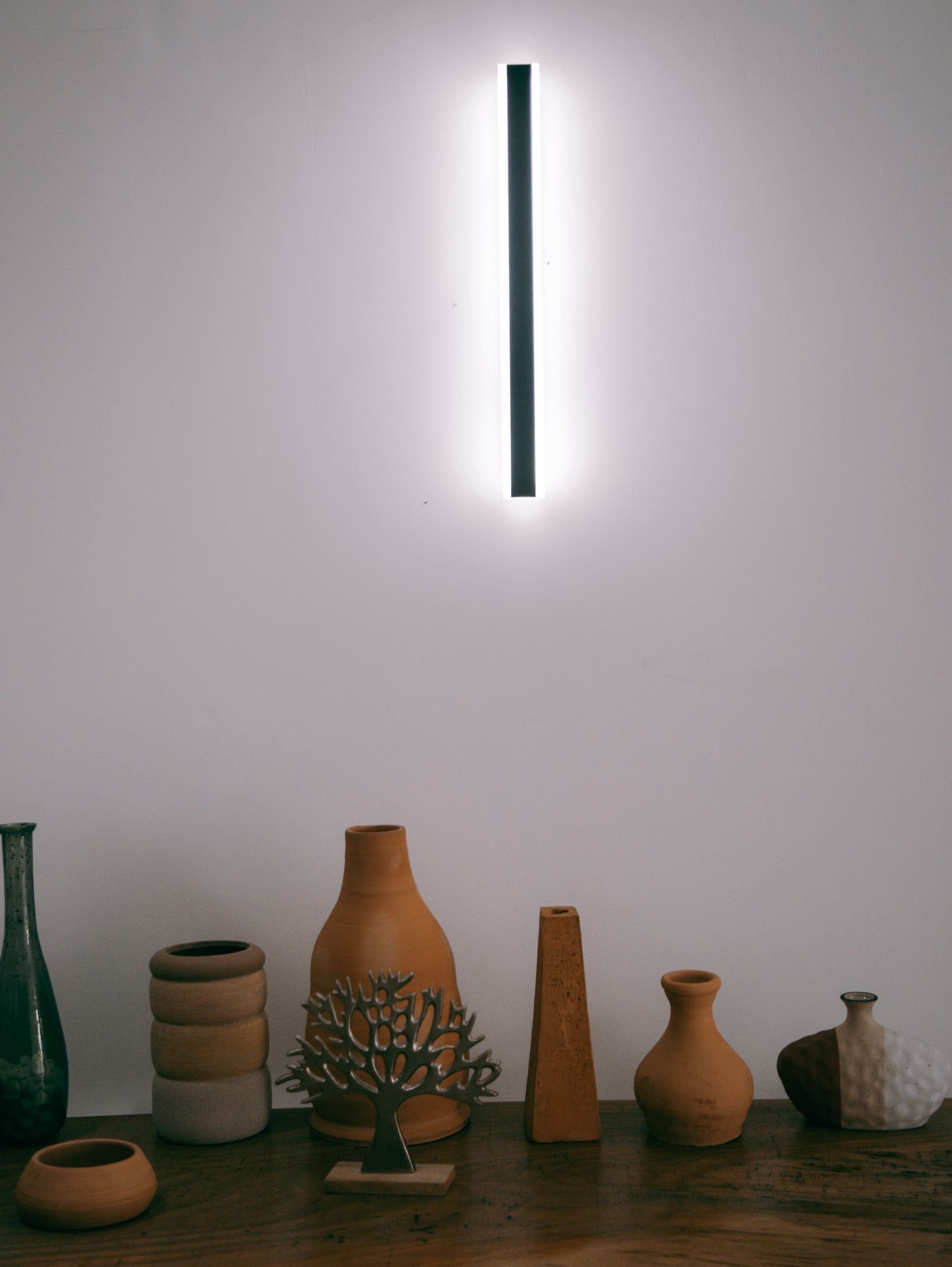
Before you buy anything large, buy one real clay thing. Not orange plastic — actual terracotta or matte clay, because the colour only works when it looks like earth. A tall vase on the table, a row of small clay pots, a single jug beside a plant: the collection below is the whole lesson. Different shapes, one earthy family, nothing matching exactly.
Place your one object where light hits it — terracotta in shadow turns brown and sulky, terracotta in sun glows. Live with it for a week. If you keep glancing at it happily, go to Level 2. If it annoys you, you have spent the price of a pizza learning your answer, which is the cheapest decorating education there is.
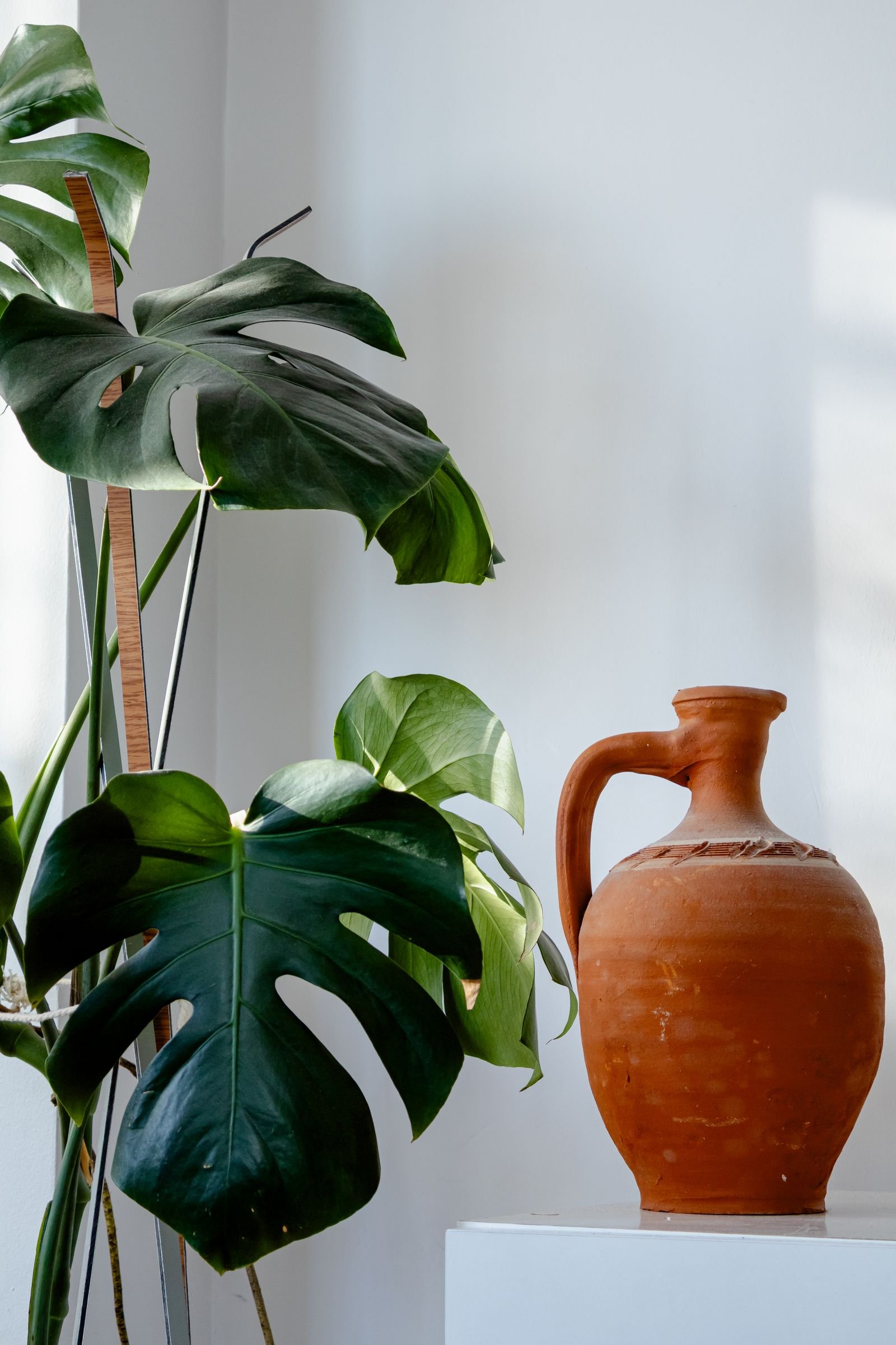
Plants are Level 1’s best friend. A terracotta jug next to green leaves — monstera, palm, even a grocery-store herb — is the classic warm-boho pairing, because green is terracotta’s natural opposite and makes the clay look richer. It is also your bridge to the sage pairing at the end of this article.
Level 2: Textiles and One Warm Seat (Where Most Rooms Should Stop)
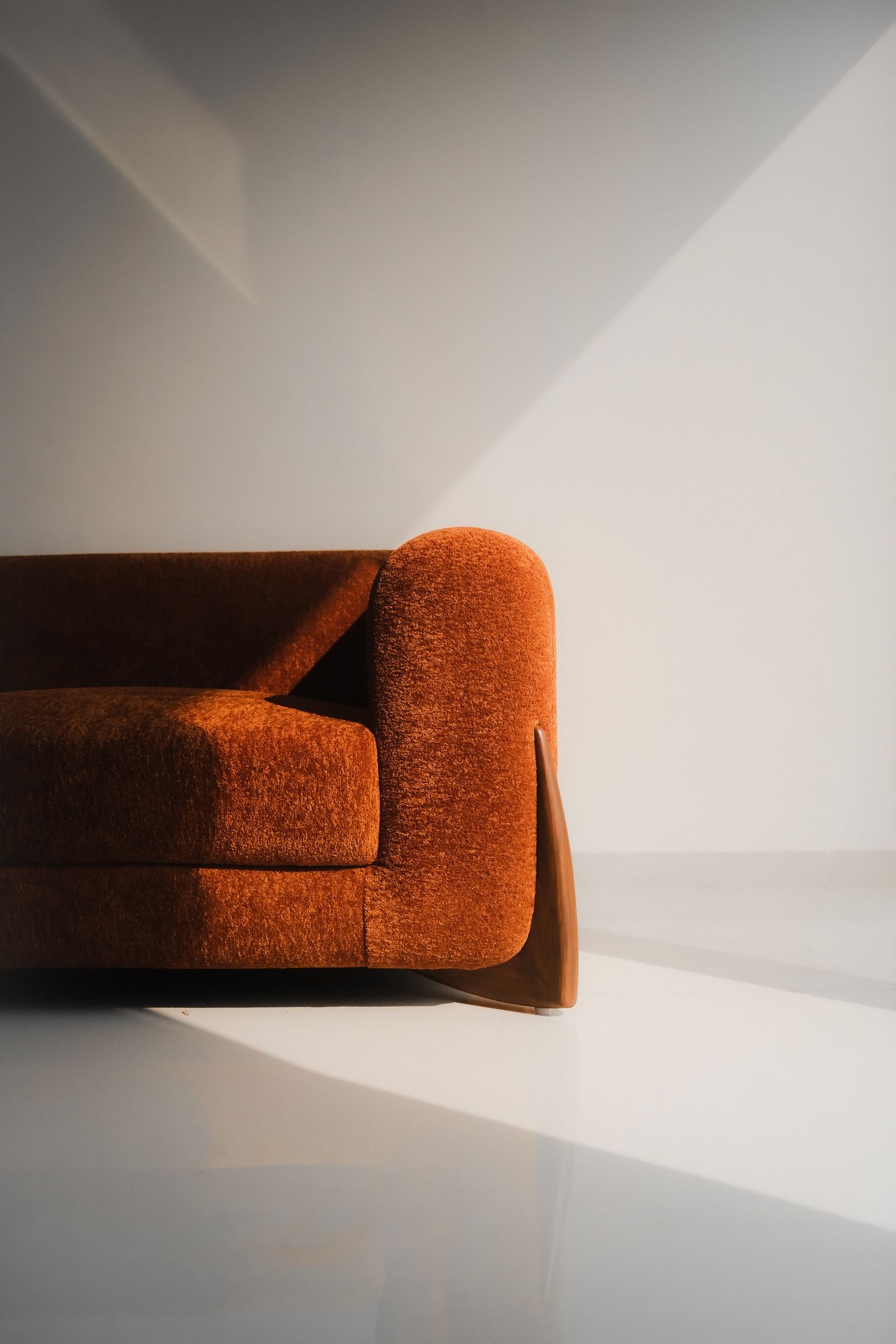
Level 2 is the sweet spot for small rooms: terracotta you can touch. Cushions, a throw, a rug with clay in its pattern, curtains — or, if your sofa is due for replacement anyway, one warm seat doing all the work. The rust boucle sofa detail below shows why texture matters at this dose: in sunlight, a nubby rust fabric reads as warmth itself, no pattern needed.
Keep the rest of the room light at this level. Cream walls, a pale rug, light wood — terracotta textiles against a light background look generous; terracotta textiles against dark walls in a small room can turn cave-like by evening. Repeat the colour three times in the sightline (cushion, throw, one small object from Level 1) so it reads as a palette, not an accident.
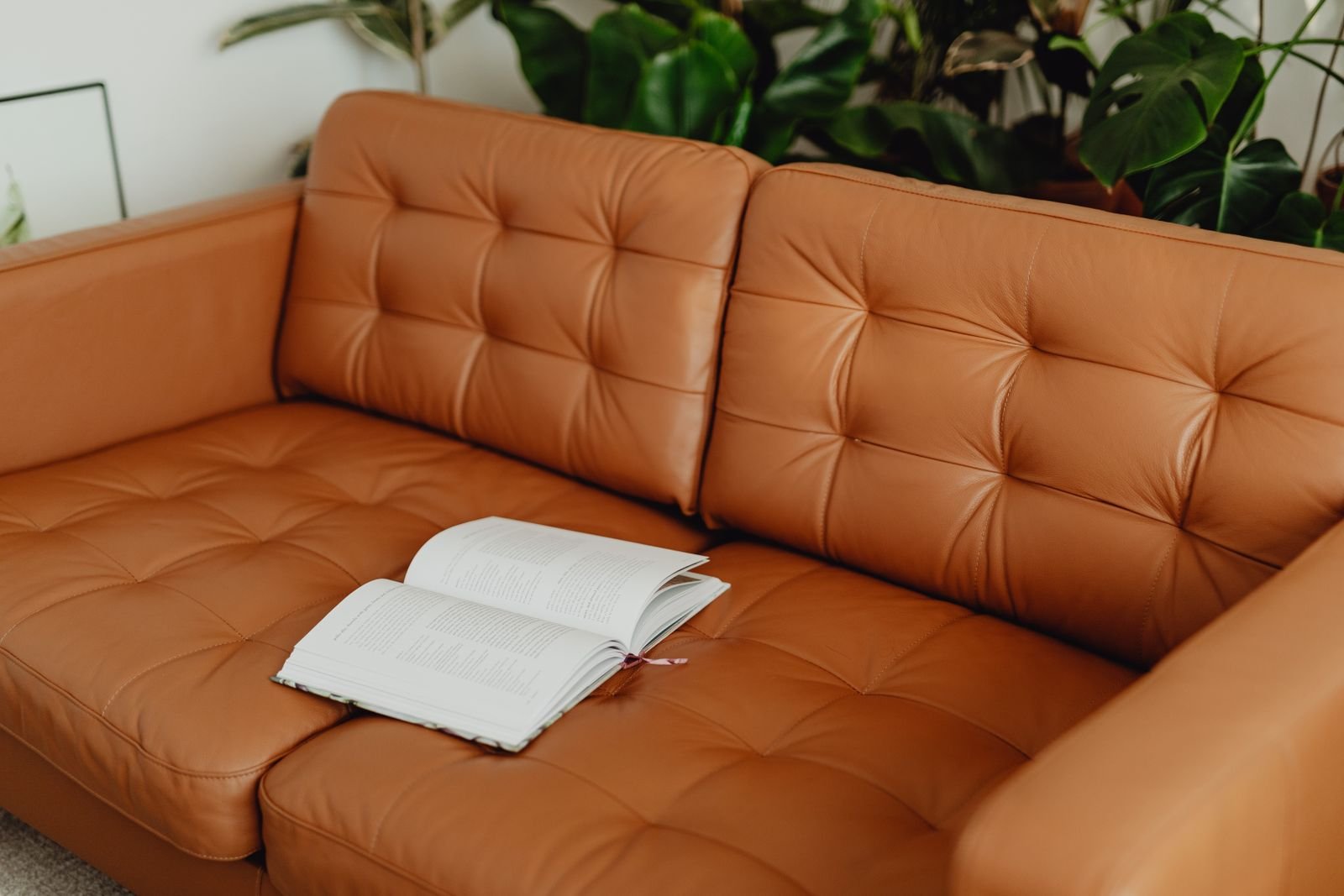
Leather deserves its own note, because tan and terracotta leathers are the most forgiving way to do Level 2 at furniture scale. A tan leather sofa with plants behind it and a book left open on it does not look styled — it looks lived in, which is the whole warm-boho point. Leather also deepens slightly with age and use, moving toward terracotta rather than away from it.
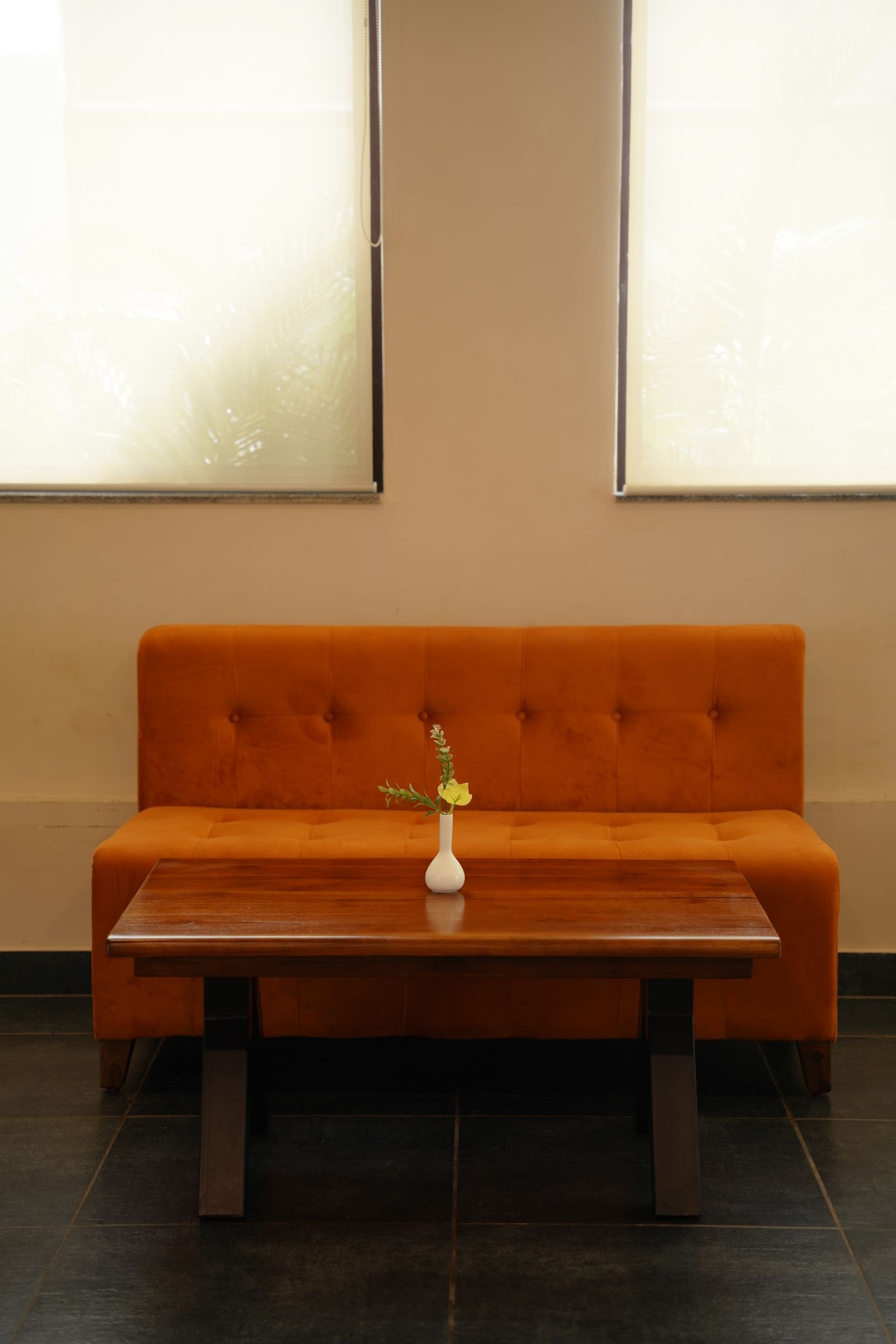
Small-room layout rule for Level 2: put the warmest piece where you sit, not where you look. A terracotta bench seat or loveseat against the short wall, a wood table in front of it, and one small white vase to keep it fresh — the compact room below seats people, holds drinks, and still has floor showing on every side. In a small room, visible floor is what reads as space; terracotta is what reads as warmth. You need both.
Level 3: One Wall (the Commitment Dose)
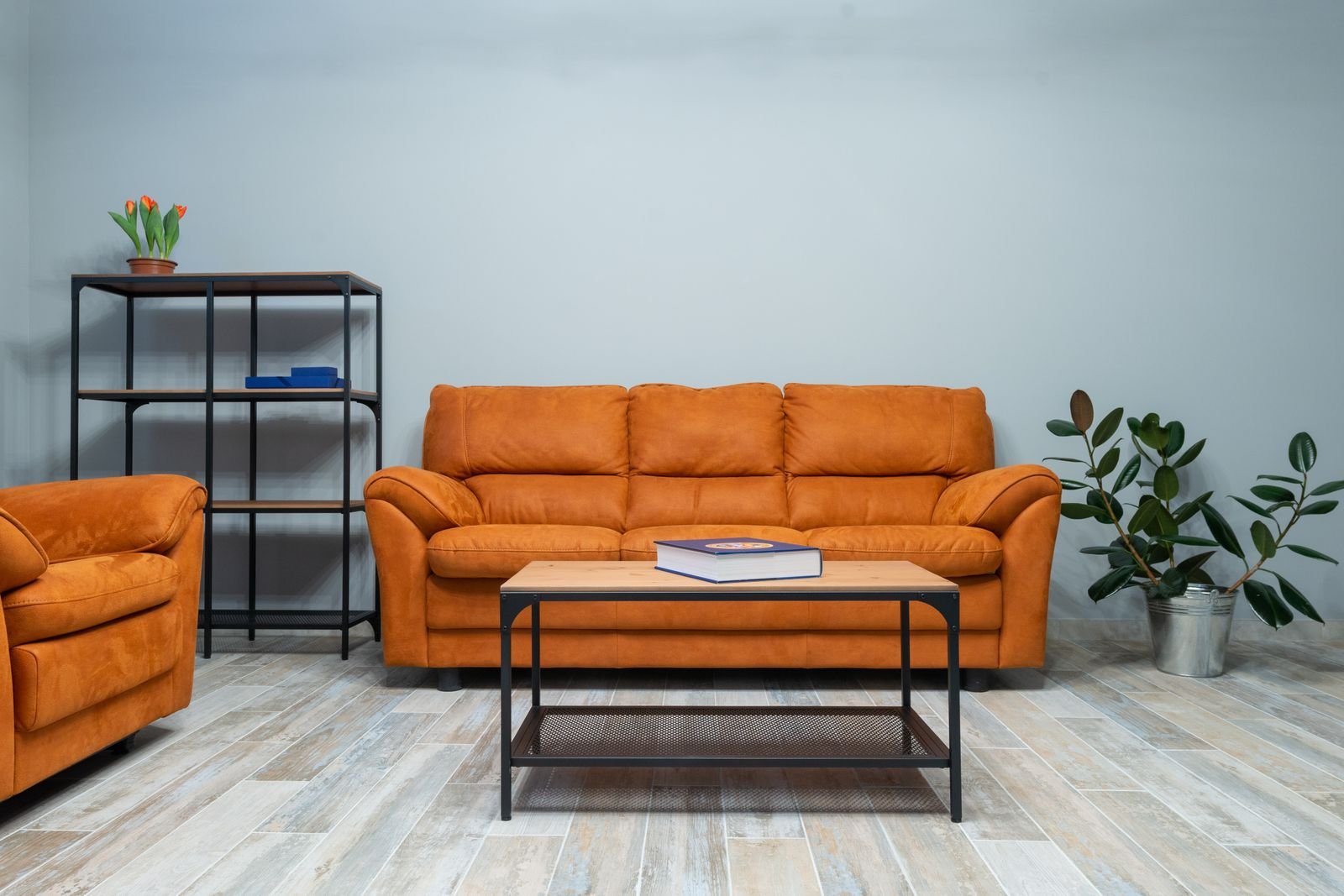
If textiles left you wanting more, one wall is the honest next step — the wall behind the sofa, never all four. The clearest proof in this guide is also its plainest room: a terracotta sofa and chair against a pale grey wall, wood underfoot, almost nothing else. Notice what the photograph teaches — when the furniture carries the colour, the wall can stay pale, and when the wall carries it, the furniture should quiet down. One carrier per room is the rule at every dose above Level 1.
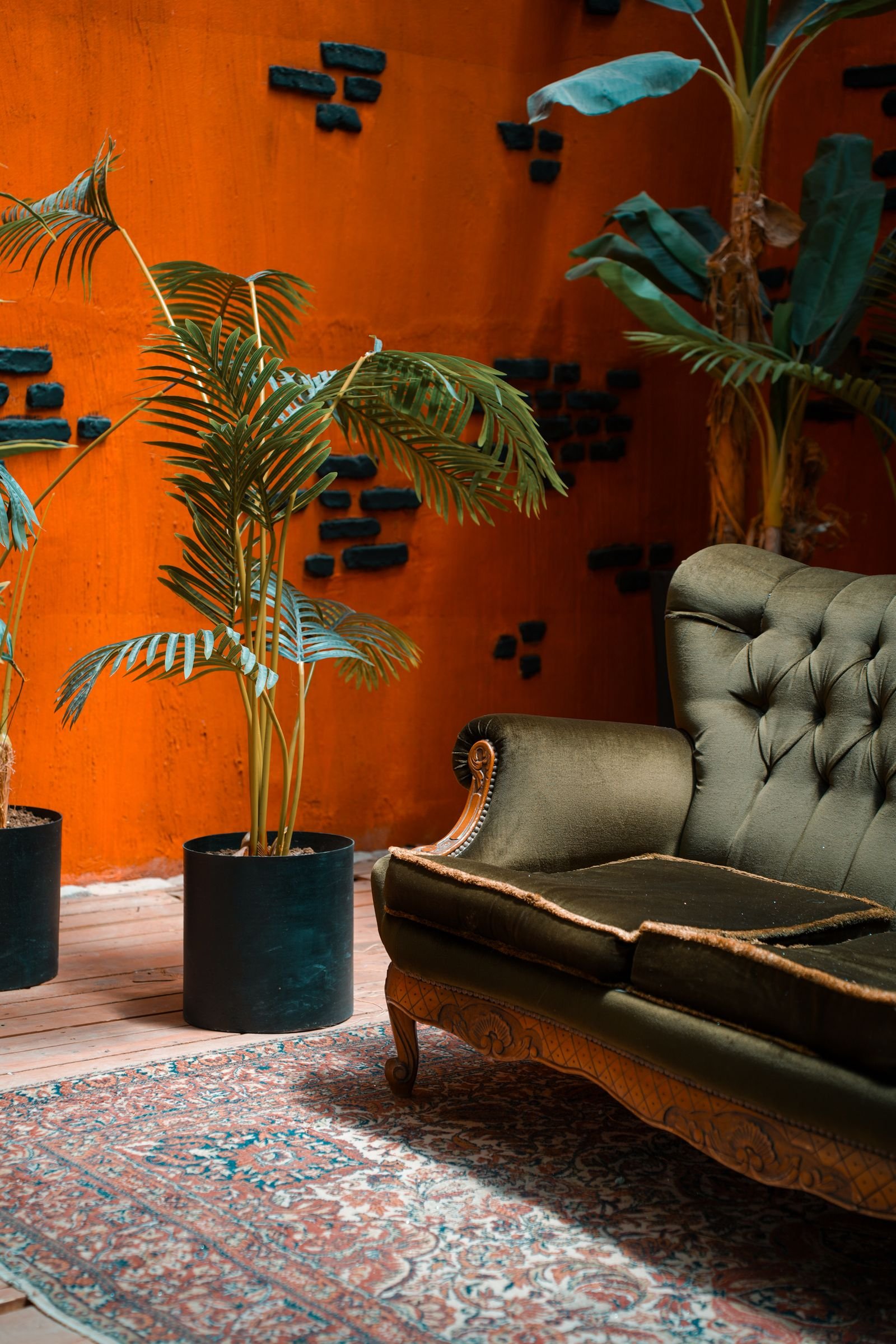
Painting the wall instead? Choose a terracotta with real brown in it and test it on the largest sheet of paper you can find, taped up for a full day. In north-facing light, terracotta walls go dusky and romantic; in hard south-facing sun, the same paint can turn loud orange by noon. The bold wall below — burnt terracotta behind an olive sofa, palms softening every edge — works because plants and a patterned rug break the colour up. A flat, empty terracotta wall with nothing in front of it is the one version of this idea that regularly disappoints.
Level 4: Colour-Drench (Beautiful, and Not for Every Room)
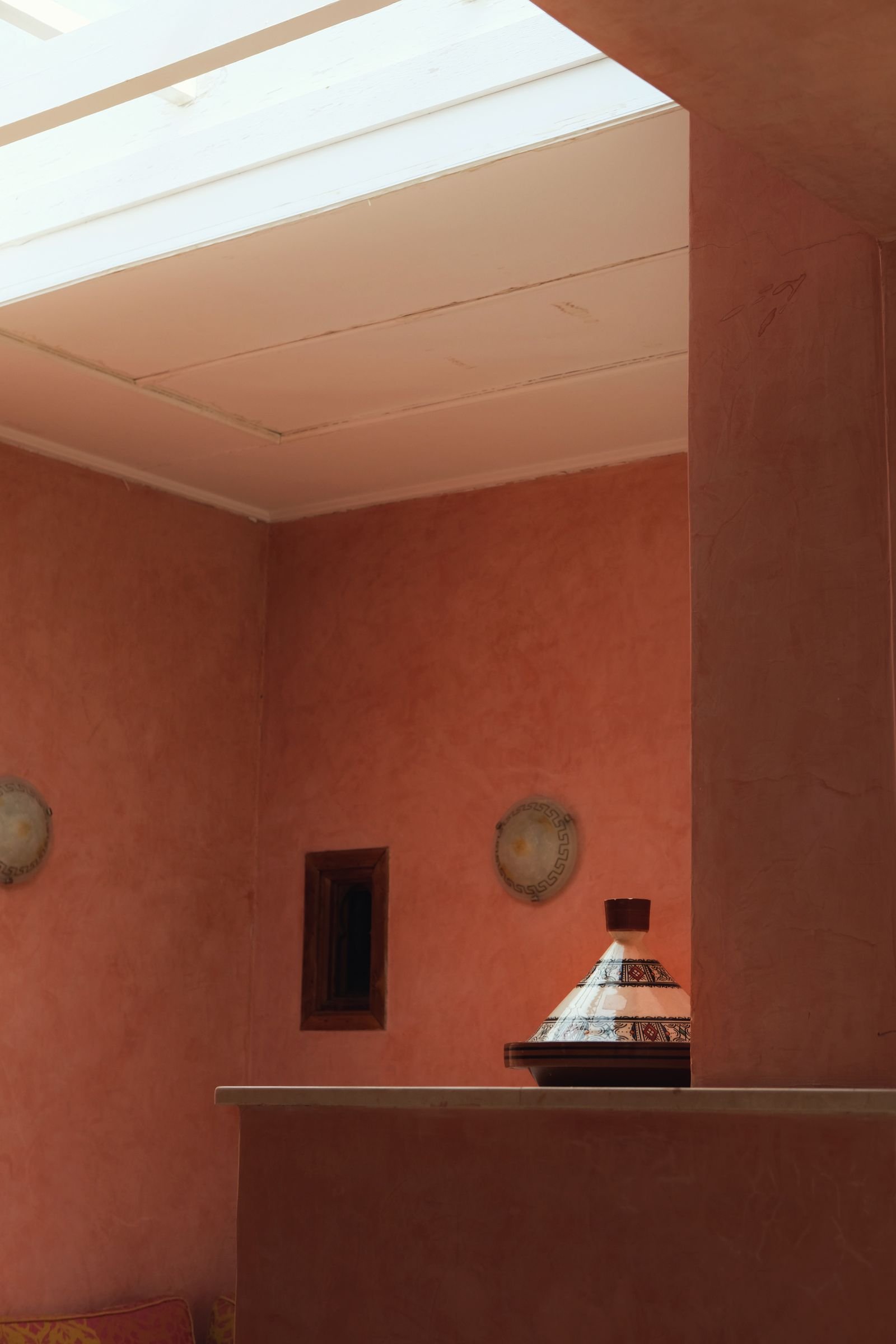
Colour-drenching means walls, and often the ceiling, all in the terracotta family, so the room feels wrapped in clay. The plastered room below, terracotta on every surface under a skylight, is genuinely beautiful — and it is a holiday-home, sun-drenched, high-ceiling beauty. In a small, low, north-facing rental it would eat the light. Attempt Level 4 only if your room has strong daylight, you own the walls, and you loved Level 3 for at least a season. Everyone else: Level 2 with confidence will make you happier.
The Renter-Friendly No-Paint Path
No paint allowed? You can still reach a full Level 3 effect: a large terracotta-toned rug as your “wall” on the floor, terracotta curtains framing the window (curtains are vertical colour, and the eye reads them like paint), your Level 2 textiles, and one oversized piece of art with clay tones behind the sofa. Add warm bulbs — 2700K, never daylight-white — because terracotta under cool light turns grey-brown and loses its whole reason to exist. Everything on this list comes down, rolls up, or moves with you.
The Pairing That Ties It Together: Sage + Terracotta
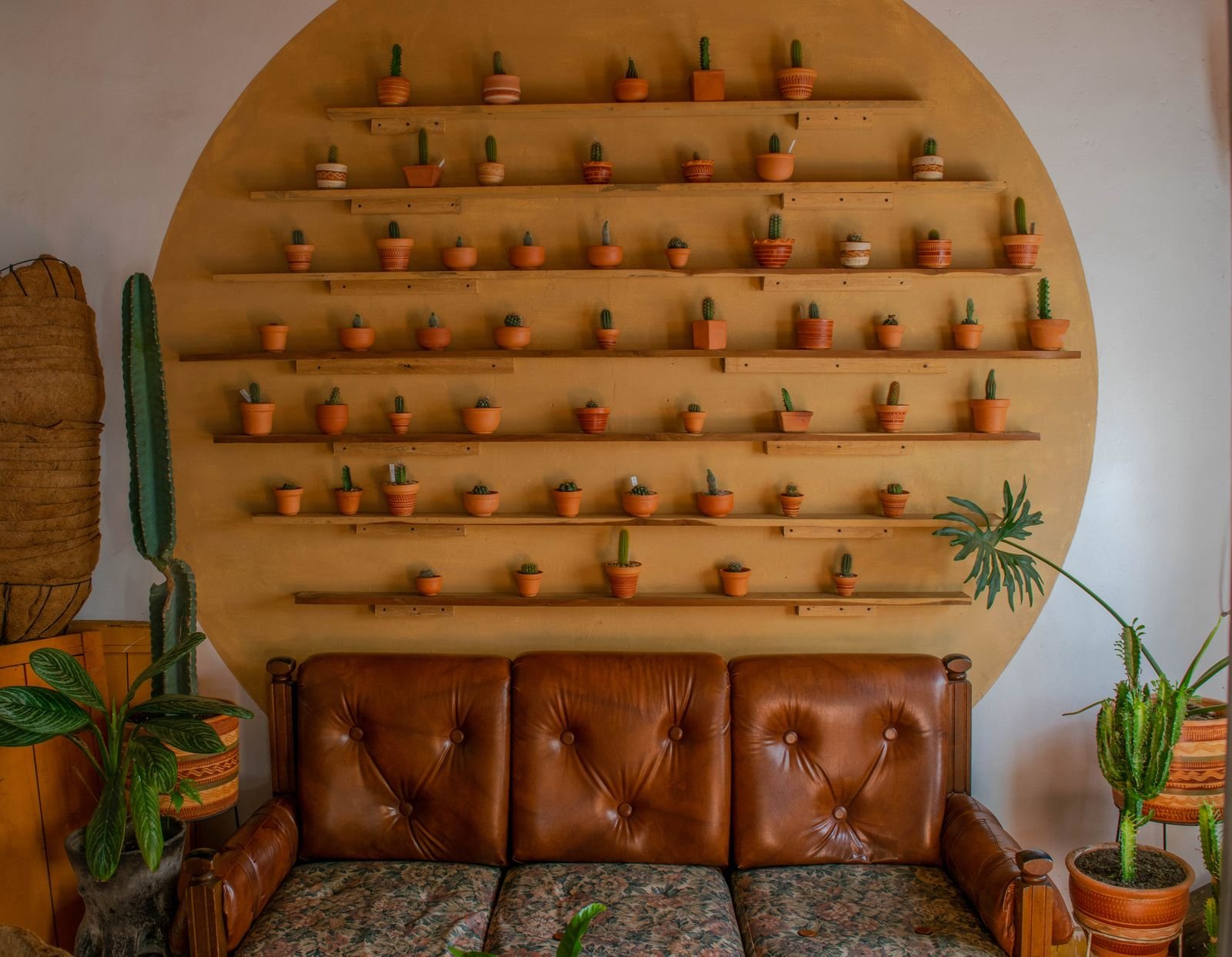
If this batch of articles has a signature palette, it is this one: sage green and terracotta. They are soft opposites — cool earth and warm earth — and each makes the other look more expensive. You saw it in the featured room (terracotta sofa, sage chairs) and in the bold-wall room (terracotta wall, olive sofa). The shelf wall below is the boho maximum: a leather sofa under rows of tiny terracotta pots, green cacti doing the sage work at plant scale.
To use the pairing at home: let one colour lead at roughly two-thirds, the other answer at one-third, and keep cream or light wood as the referee. Our sage green living room ideas show the sage-led version of the same rooms; for the deeper red end of the warm family, see how burgundy living room ideas handle the same small-room dose logic.
Choosing Your Terracotta Shade (Pale Clay to Deep Rust)
Terracotta is a family, not a single colour, and small rooms feel the differences more than big ones. At the pale end, clay pink and light terracotta read almost like a warm neutral — they are the safest choice for a Level 3 wall in a small room, and the kindest to north-facing light, because they warm a room without darkening it. In the middle sits classic terracotta, the colour of a flowerpot: this is the shade for sofas, rugs and curtains, strong enough to carry a room and soft enough to live beside every day. At the deep end, rust and burnt terracotta are dramatic and evening-like — wonderful for one cushion, a leather chair, or the wall behind a fireplace, and usually too much for all four walls in a small space.
A reliable way to choose is to match the shade to the light you already described to yourself at Level 3. Pale clay for cool, dim rooms. Classic terracotta for average light. Deep rust only where sun or firelight will keep it glowing. And whatever shade you choose, keep the finish matte: clay is a matte material in real life, and a satin or gloss finish is the fastest way to make an honest colour look like a theme park.
Where to Start (by Budget)
- $0: Move your warmest existing things into the living room — the clay pot from the kitchen, the rust-toned throw from the bedroom — and swap in warm bulbs. Live with the cluster for a week.
- Around $25: One real clay vase or two cushion covers in classic terracotta. This is Level 1 done properly.
- Around $100: A clay-toned rug or a pair of terracotta curtains — the two renter moves that change a room most.
- One piece at a time: When the sofa is genuinely due, choose the warm seat. Furniture bought in terracotta family tones, leather especially, ages toward the palette instead of away from it.
Three Terracotta Mistakes to Avoid
- Glossy orange instead of matte clay. If it shines like plastic or looks like a traffic cone, it is not terracotta. The colour must have brown in it and a matte, earthy finish.
- Every dose at once. Cushions plus sofa plus wall plus rug in a small room is not cosy, it is a kiln. Pick your level, then stop.
- Cool light bulbs. Daylight-white bulbs grey terracotta out. Warm 2700K light is not a detail; with this colour it is half the effect.
Terracotta Living Room Questions
How much terracotta is too much in a small living room?
When more than one large surface carries it. One carrier — sofa, wall, or rug — plus small repeats is the small-room limit; beyond that the room heats up visually and feels smaller.
Can renters do a terracotta living room without painting?
Yes. A clay-toned rug, terracotta curtains, textiles and one clay object give the full warm effect, and warm 2700K bulbs finish it. Everything removes cleanly.
What colours go with a terracotta sofa?
Cream and warm white first, then sage and olive greens, warm wood, and natural linen. Keep the floor and walls light so the sofa stays the single warm carrier.
Does terracotta make a small room look smaller?
At textile dose, no — it makes it look finished. At wall dose on all four walls in a dark room, yes. One wall, or none, is the small-room rule.
Is terracotta still in style?
Terracotta recurs in every warm-palette trend cycle because it is a material colour, not a fashion colour — clay has been in homes for thousands of years. Buy it matte and real, and it will outlast the cycle.
Pick your dose honestly, start with one clay object in the sunlight, and let the room tell you whether it wants more. Most small rooms, warmed this way, never ask for the paint tin at all.