
Start at the Seat, Not the Center
Most Valentine’s tables are decorated from the middle out: a big arrangement in the center, then whatever plates happen to be nearby. Guests experience a table the opposite way. Nobody sits in the centerpiece. Each person lives for two hours inside one small rectangle of linen, dishes, glass and light — and that rectangle is either thoughtful or an afterthought.
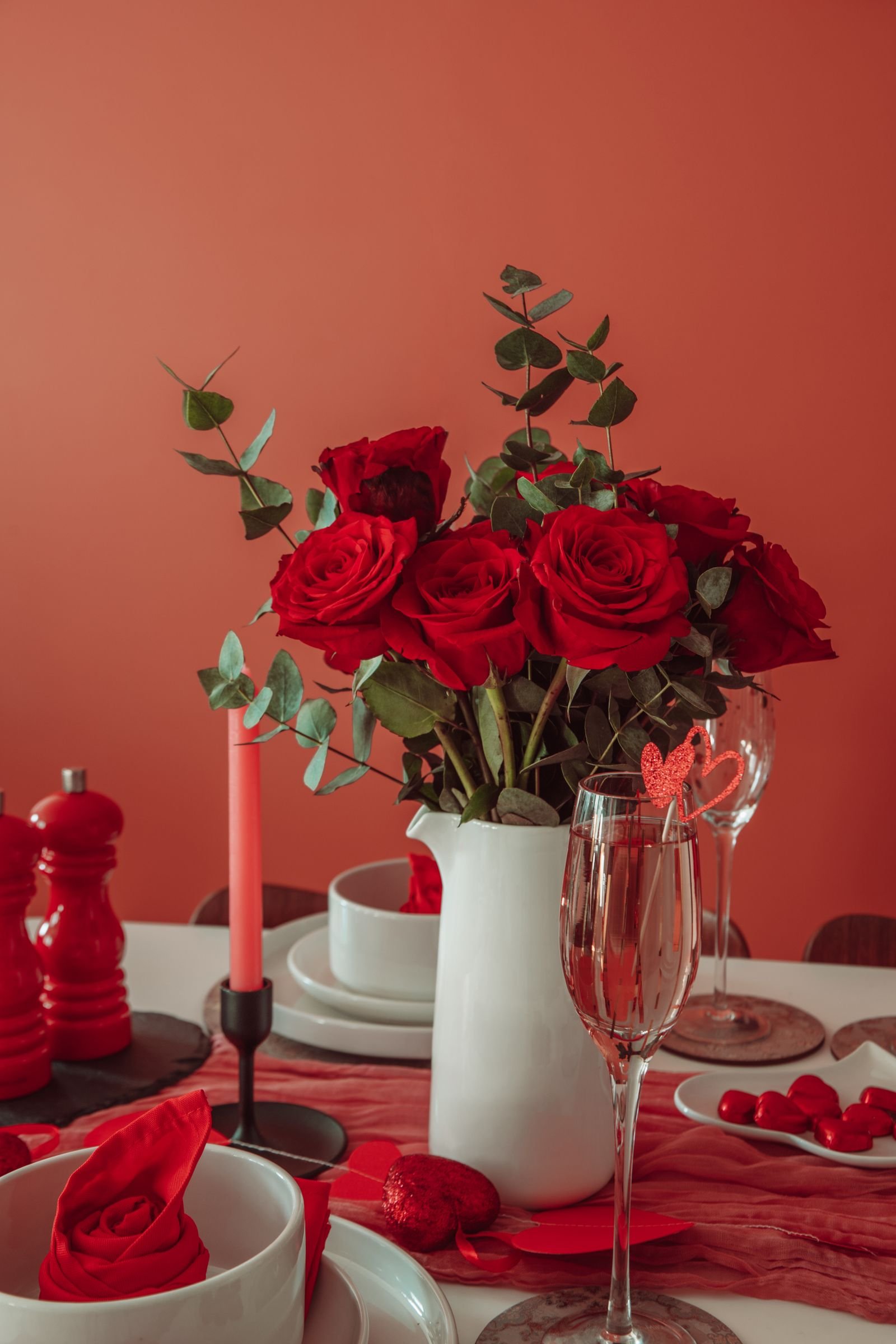
So build the table seat by seat. Design one complete place setting — cloth, dishes, glasses, metal, and a small light of its own — then repeat it, exactly, at every chair. One color story and one metal, carried seat to seat, makes a home table feel calm and expensive. Our story is burgundy and deep red softened by blush and cream, with gold as the single metal. If you set a December table with us, our Christmas table decor ideas used a centerpiece-first method; this table deliberately works in reverse.
Build One Setting, Then Repeat It
1. Lock the Color Story Before You Buy Anything
Write the palette down and shop only inside it: burgundy or deep red for depth, blush for softness, cream as the quiet base, and gold as the shine. Four tones is plenty. The discipline matters more than any purchase, because Valentine’s aisles push bright pink, scarlet and silver all at once, and a table that accepts everything ends up saying nothing. When every seat repeats the same four tones — red napkin, cream plate, blush flower, gold rim — the eye reads intention, even if each piece was inexpensive.
2. Choose One Metal and Refuse the Others
Pick gold, then be strict about it: gold flatware or gold-rimmed chargers, gold candle holders, a gold frame on the menu card if you use one. Silver, copper and black step aside for this one meal. Mixed metals are not wrong in a home, but at a small candlelit table they read as glare, because every reflective surface competes in the same low light. One repeated metal does the opposite — it stitches ordinary pieces into something that looks collected on purpose, and borrowed or thrifted pieces blend in unnoticed.
3. Layer the Linen in Three Honest Pieces
Each seat gets three textiles: a cream cloth or runner under everything, a placemat or charger that defines the seat’s border, and one cloth napkin in burgundy or deep red. Cotton and linen both work; what matters is that the napkin is cloth, pressed, and folded the same way at every place — a simple rectangle fold on the plate is enough. Paper napkins undo the whole setting in one touch, because the napkin is what a guest holds all evening. If cloth napkins are your one purchase this year, buy them in the deepest red you can find.
4. Stack the Dishes So the Seat Has Height
A single flat plate looks unfinished no matter what sits on it. Build a short stack instead: charger or larger plate at the bottom, dinner plate, then a smaller plate or the folded napkin on top. The stack gives each seat a little architecture and a clear edge, so the table reads as a row of considered places rather than plates scattered on a surface. Everyday white or cream dishes are ideal — the color lives in the napkin and flowers, so the same dishes can carry every holiday you host.
5. Give Every Seat Two Glasses, Matched in Shape
Two glasses per person — one for water, one stemmed glass for wine, juice or something sparkling — instantly make a home setting feel complete. They do not need to be crystal; they need to match each other, seat to seat. Set them in the same position every time, water glass above the knife and the stemmed glass beside it, and pour something with color into the stemmed glass before guests sit down. A table of filled glasses reads as a celebration before anyone has said a word.

Put a Light at Every Seat
6. One Candle Belongs to Each Place
Instead of concentrating all the candlelight in the middle, give each setting its own small light: a votive in a gold holder, a short taper, or a tea light in a glass cup, placed just above the glasses where it catches both glassware and faces. One flame per seat changes the whole mood — every person gets their own warm pool of light instead of borrowing glow from a distant centerpiece. Use unscented candles near food, keep flames a hand’s width from napkins and stems, and light each seat’s candle just before you call people in.
7. Keep the Middle Low, Narrow and Almost Empty
With the work happening at each seat, the center can finally relax. A narrow line is enough: a scatter of loose petals along the runner, or a single low bowl of roses kept below chin height for a seated guest. Nothing in the middle should need moving when serving dishes arrive, and nothing should block a face. That is the honest trade this method makes — a quieter center in exchange for a richer seat — and once you have eaten at a table set this way, a towering centerpiece feels like a wall with flowers on it.
8. Borrow the Flowers From One Bunch, Split Six Ways
Buy one generous bunch — deep red roses, blush garden roses, or a mix with cream — and divide it ruthlessly. Two or three stems go into a small vase or clean jam jar at each seat instead of one large arrangement in the middle. The same flower, repeated in miniature down the table, looks deliberate and lush, and costs a fraction of a florist’s centerpiece. Trim stems short so the little vases stay stable, and let one fallen petal stay where it lands. Perfection is not the goal; repetition is.
Three Tables From the Same Setting
9. Dinner for Two: Shrink the Table, Not the Care
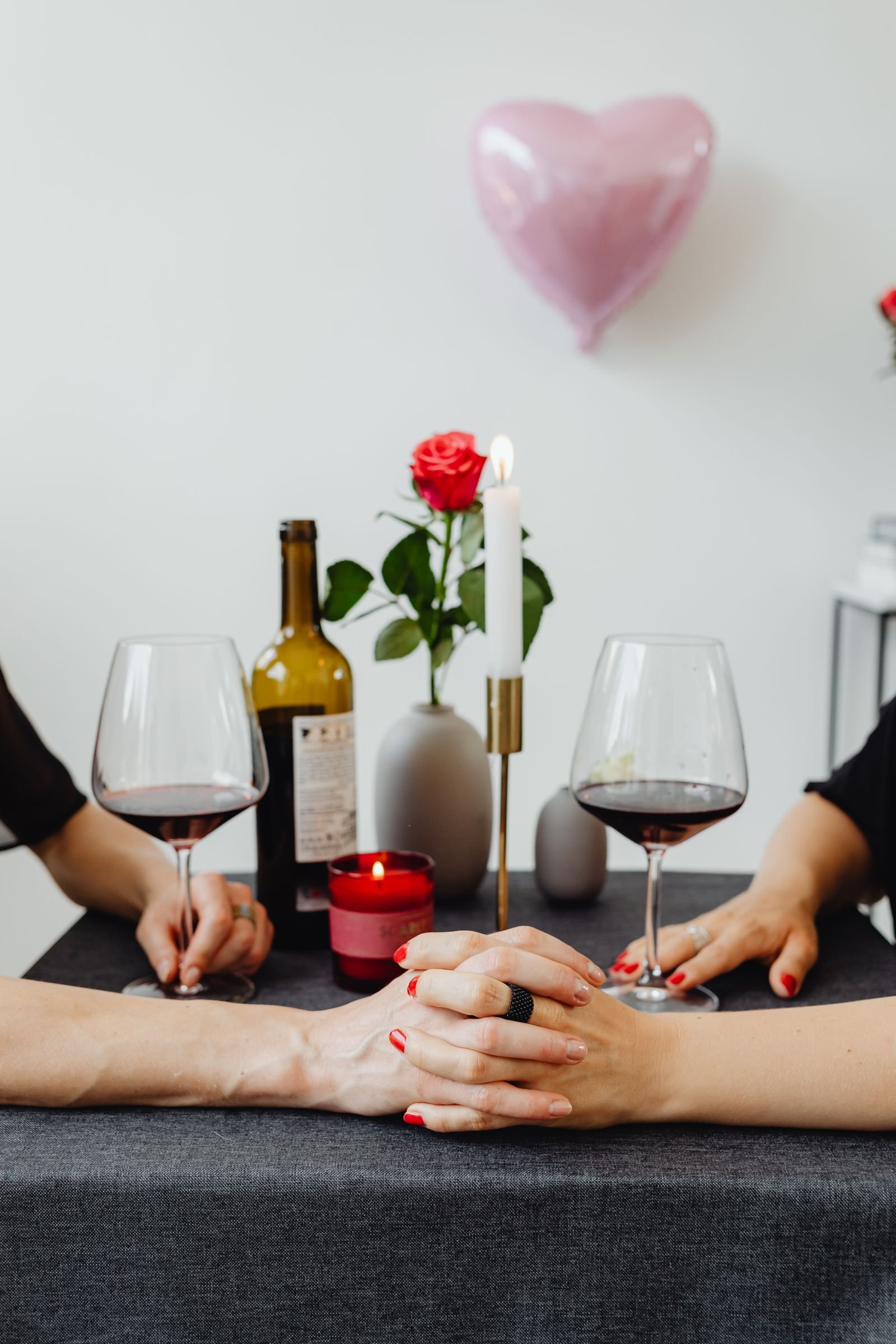
For two people, keep the full setting and change only the geography. Sit opposite each other at one end of the table, or use the smallest table you own, so the two settings feel close rather than stranded. One bud vase and one candle per person is suddenly generous at this scale, and a shared small plate in the middle — good bread, olives, a little cheese — gives hands something to meet over. Remove the spare chairs from the room entirely. An intimate table is not a big table with fewer plates; it is a small space where every repeated detail is within arm’s reach.
10. The Family Table: Keep the System, Soften the Rules
With kids and grandparents at the table, the system still works — it just bends. Keep the color story and the gold, but swap stemmed glassware for sturdy tumblers at younger seats, use flameless candles where small hands will reach, and make the napkin fold a simple roll anyone can undo. Children notice a set place with their initial on a small card more than adults do; being expected is the whole holiday at age seven. Serve family style from the quiet middle, and let the meal stay relaxed and loud in the best way.
11. Galentine’s: Turn the Blush Up and the Red Down
For a table of friends, run the same system in a lighter key: blush becomes the lead color, cream stays the base, deep red shrinks to a single accent per seat — one rose, one ribbon, one chocolate — and the gold stays exactly where it was. Add one shared ritual: a small card at each plate where every guest writes one true, specific compliment for the person on their left, read aloud with dessert. It takes five minutes, is never as awkward as people fear, and is the part of the evening everyone quietly keeps afterward.

The Budget Ladder: Same Setting, Three Spends
12. The Almost-Free Table (Under $25 Total)
Start from what the kitchen already holds: cream or white everyday dishes, your best glasses, and a plain cream cloth as the base. Spend the small budget on exactly two things — deep red cloth napkins and one bunch of red roses to split seat by seat. Candles come from the drawer of half-used votives every home already has. The system carries this table: same stack, same fold, same flower, same gold-toned holder borrowed from anywhere in the house. Nobody will guess the spend, because repetition reads as richness.
13. The Sweet-Spot Table (Around $60–$90)
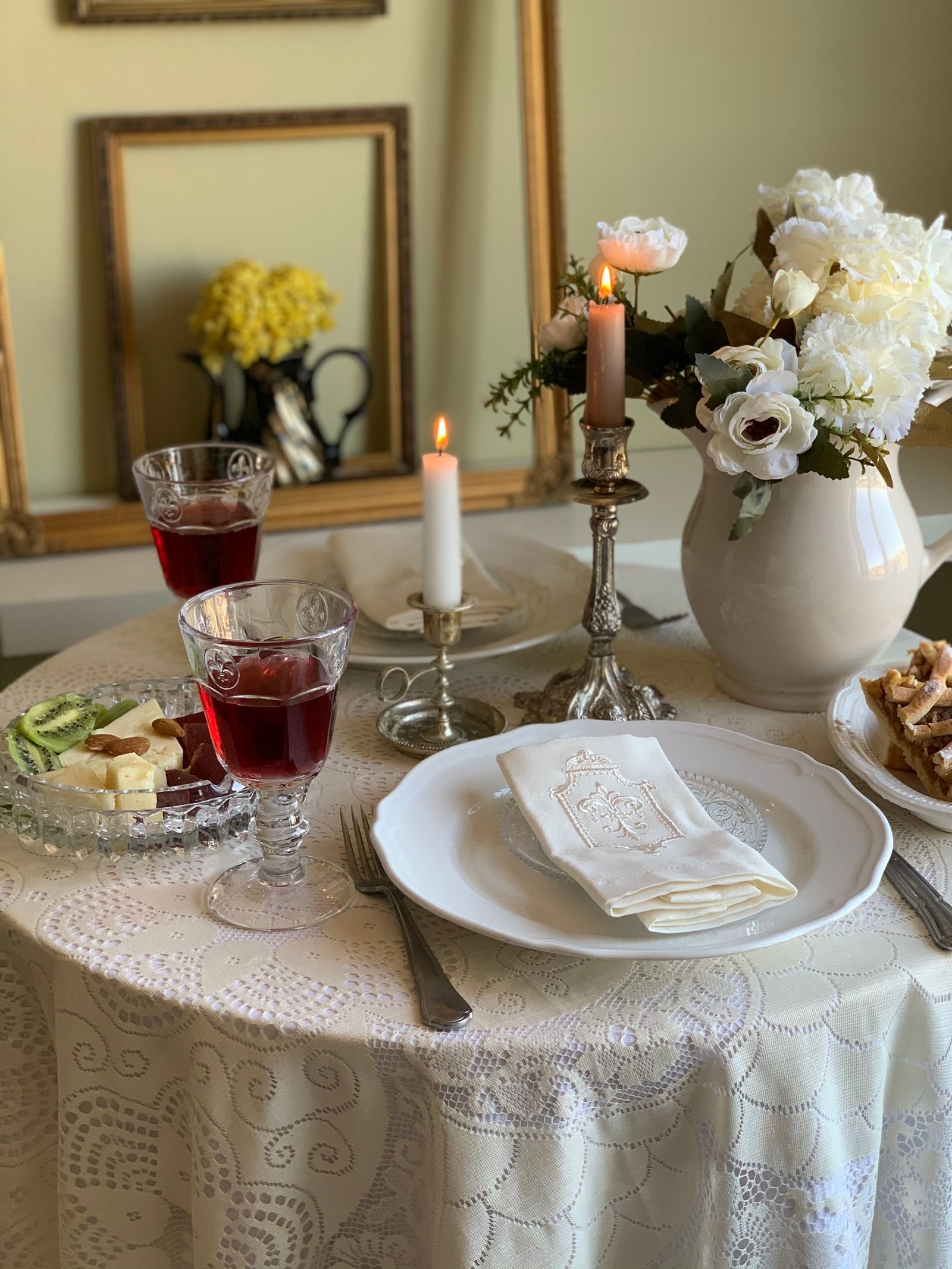
Add one unifying purchase the free table cannot fake: gold flatware or gold-rimmed chargers, whichever your dishes need more, because that single metal is what the eye tracks from seat to seat. Upgrade the flowers to two bunches — red and blush together — and add a proper votive holder per seat so each place’s light looks finished rather than improvised. This is the level most hosts should stop at: everything bought here is reusable for birthdays, anniversaries and the December table.

14. The Keepsake Table ($150 and Up, Bought Once)
The top rung is not more decoration; it is better basics, bought once and kept for years: real linen napkins in burgundy, matching stemware, heavy gold flatware, and one low gold vessel that holds roses in February and greenery in December. If you host the same people every year — our simple Thanksgiving table decor ideas make the same point for November — these pieces quietly become part of the family’s memory of your house. Spend here only if you love hosting; the system means the table already works two rungs below.
Valentine’s Table Questions
What colors work best for a Valentine’s table that does not look childish?
Depth is the difference. Burgundy and deep red instead of bright scarlet, blush instead of bubblegum pink, cream instead of stark white, and one warm metal — gold — repeated everywhere. The palette feels romantic rather than themed because every color is slightly muted, and hearts, if used at all, appear once per seat at most.
How do I set a Valentine’s table in a small dining space?
Keep the full setting and shrink the center. A small table suits this method: bud vases and a votive per seat take almost no room, the quiet middle leaves space for serving dishes, and two or four complete settings look generous rather than crowded.
Can I use fake flowers at each seat?
You can, and one bunch split six ways is where good faux stems earn their keep, because each small vase needs only two or three convincing blooms. Mix in one real element — a real petal scatter or real greenery — and keep faux flowers low in small vessels, where they read as color rather than imitation.
What should I do if my dishes and glasses do not match?
Match by seat instead of across your cupboard: give every person the same combination, even if that combination is itself a mix — the cream plate with the smaller patterned one, the same two glasses in the same positions. Identical repetition at every seat is what the eye registers as a matching set.
How far ahead can I set the table?
The day before, almost entirely: cloth, chargers, dishes, napkins, glasses and holders all wait happily overnight. Add flowers and water that morning, pour the colored drinks and light the per-seat candles in the last ten minutes, and keep a spare lighter in the kitchen — one candle always misbehaves.
Set one seat first, completely, and stand back. If that single place — deep red linen, cream dishes in a short stack, two glasses catching one small gold-held flame, two red roses in a little jar — pleases you, you have the whole table.
Now repeat it, chair after chair, without varying a thing. A Valentine’s table does not need a grand gesture in the middle. It needs the same small kindness, done carefully, waiting at every seat.