
Why Navy Works Like a Neutral
Navy is the color people reach for when white feels stark, gray feels tired and black feels like too much. It behaves like a dark neutral: it goes with almost everything, it hides everyday wear, and it makes the lighter things in a room — cream cushions, pale wood, a brass lamp — look brighter by contrast. If our burgundy living room ideas showed what a deep warm color can do, navy is its cooler, calmer sibling: less drama, more steadiness, and just as cozy when you handle it right.
Navy’s one risk is temperature. Used alone, in flat light, it can read cold or cave-like. Used with warm partners and honest light, it reads like the last hour of a clear evening — deep, quiet and settled. Every idea below follows the 60-30-10 rule for proportion, and a commitment ladder from a $20 cushion to a painted wall, so you only climb as far as you are sure about.
First, the Balance: 60-30-10
Before any single idea, learn the ratio that makes navy feel intentional. Sixty percent of the room stays light and neutral — cream or warm white walls, a pale rug, light upholstery on the pieces you are not changing. Thirty percent is navy: the sofa, or the accent wall, or the curtains — one generous dose, not five small ones. Ten percent is the warm accent that stops navy turning cold: brass, warm wood, tan leather, a rust or ochre cushion. When a navy room feels chilly, it is almost never the navy. It is a missing 10 percent — no warm metal, no wood, nothing for the eye to rest on. Fix the ratio before you repaint anything.
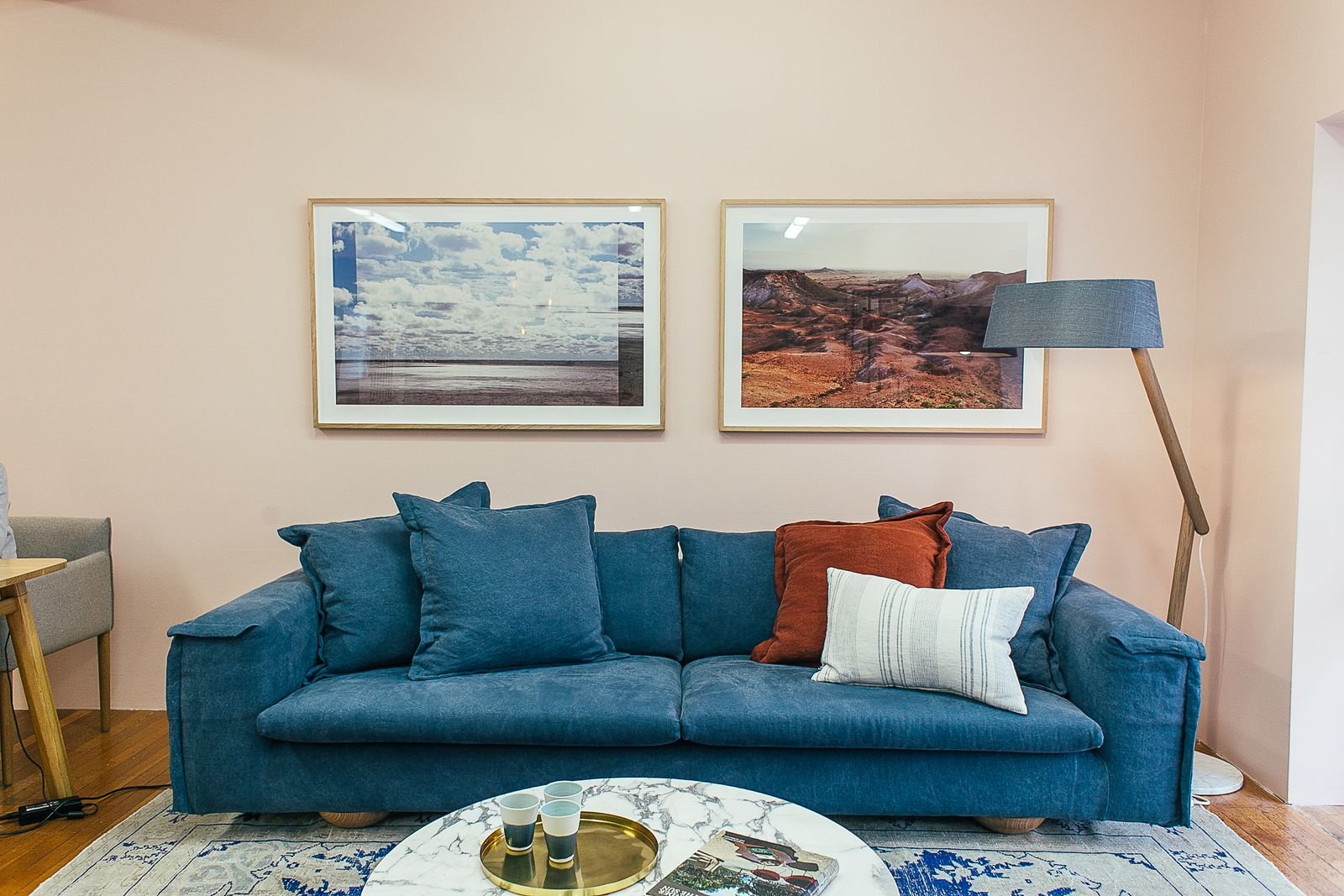
The Gentle Start: Navy in Small Doses
1. Test Navy With Cushions and a Throw
Start where every strong color should start: on the sofa you already own. Two navy cushions and a navy throw — around $15–$25 a piece — will tell you within a weekend how this color behaves in your light, morning and evening. Navy flatters cream, gray, camel and leather sofas, so almost nobody has to change furniture to run this test. Live with it for a week. If you keep straightening the cushions just to look at them, climb on.
2. Add Navy Curtains for a Framed Window
Curtains are the biggest sweep of navy you can hang without paint, and they do double duty: they frame the window and they deepen the room’s edges while the middle stays light. Hang them high and wide, in a matte linen-look fabric rather than anything shiny. In a small room, curtains are often the smartest navy of all — the color sits at the perimeter, so the room feels cocooned without a single dark wall closing in.
3. Ground the Room With a Navy-Patterned Rug
A rug where navy is woven into a pattern — mixed with cream, faded red or warm gray — grounds the seating area without darkening anything above ankle height. Choose a faded, traditional pattern over a solid block of navy; pattern forgives crumbs, pet hair and fading, and reads collected rather than matched. Keep the front legs of every seat on the rug.
The Middle Rungs: One Strong Piece
4. Commit to a Navy Velvet Sofa
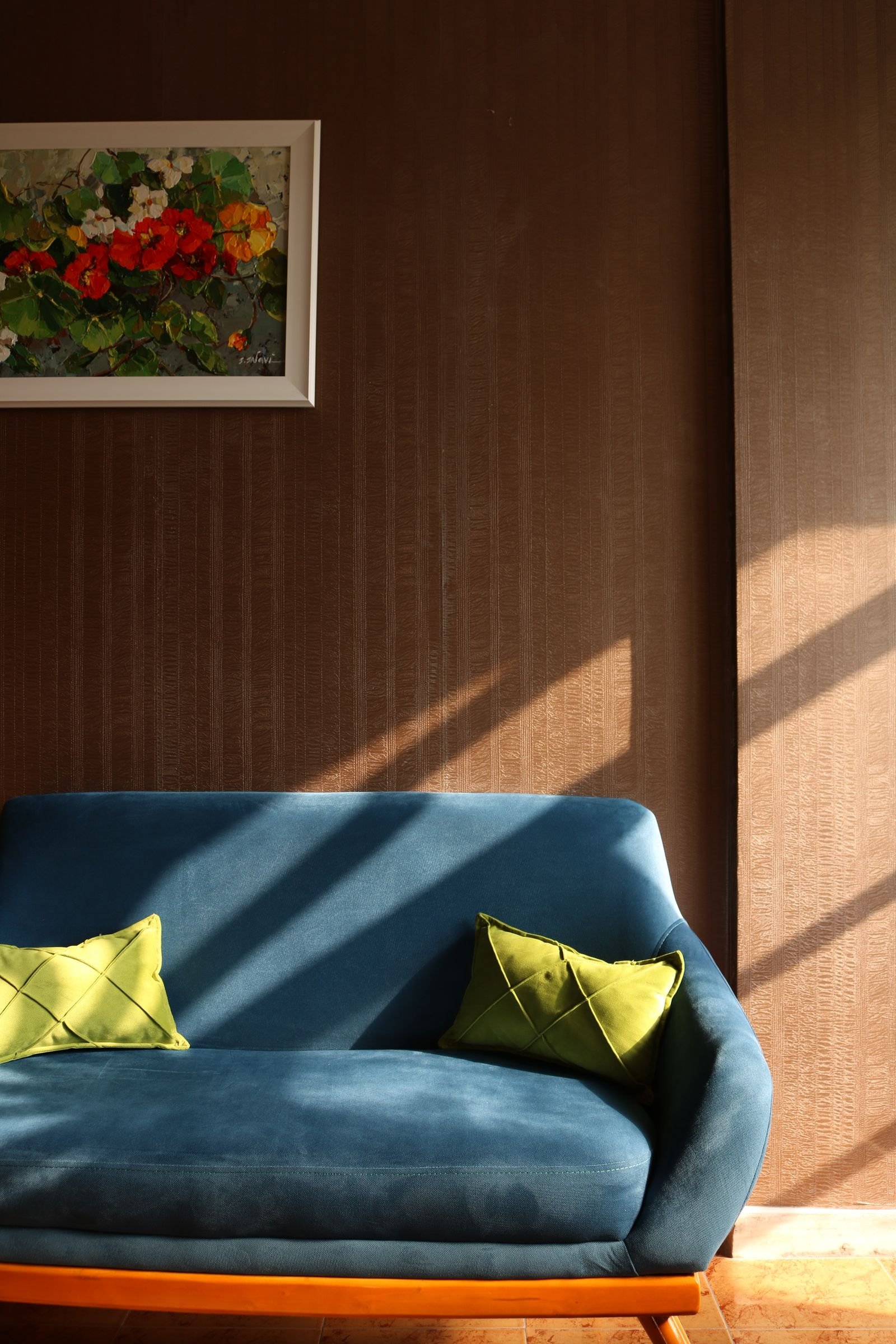
This is the room-defining rung, and the one in our featured photo: a full navy sofa, ideally in velvet. Velvet is navy’s best fabric because it refuses to sit flat — the pile catches light along every curve, so the sofa reads deep blue in shadow and almost bright where the light lands. Keep the walls cream and the cushions light or rust-toned, and the sofa becomes the calm center everything else arranges itself around. Practically, navy is the kindest sofa color there is: denim dye, coffee and dog hair all but disappear on it.
5. Or Take One Navy Armchair Instead
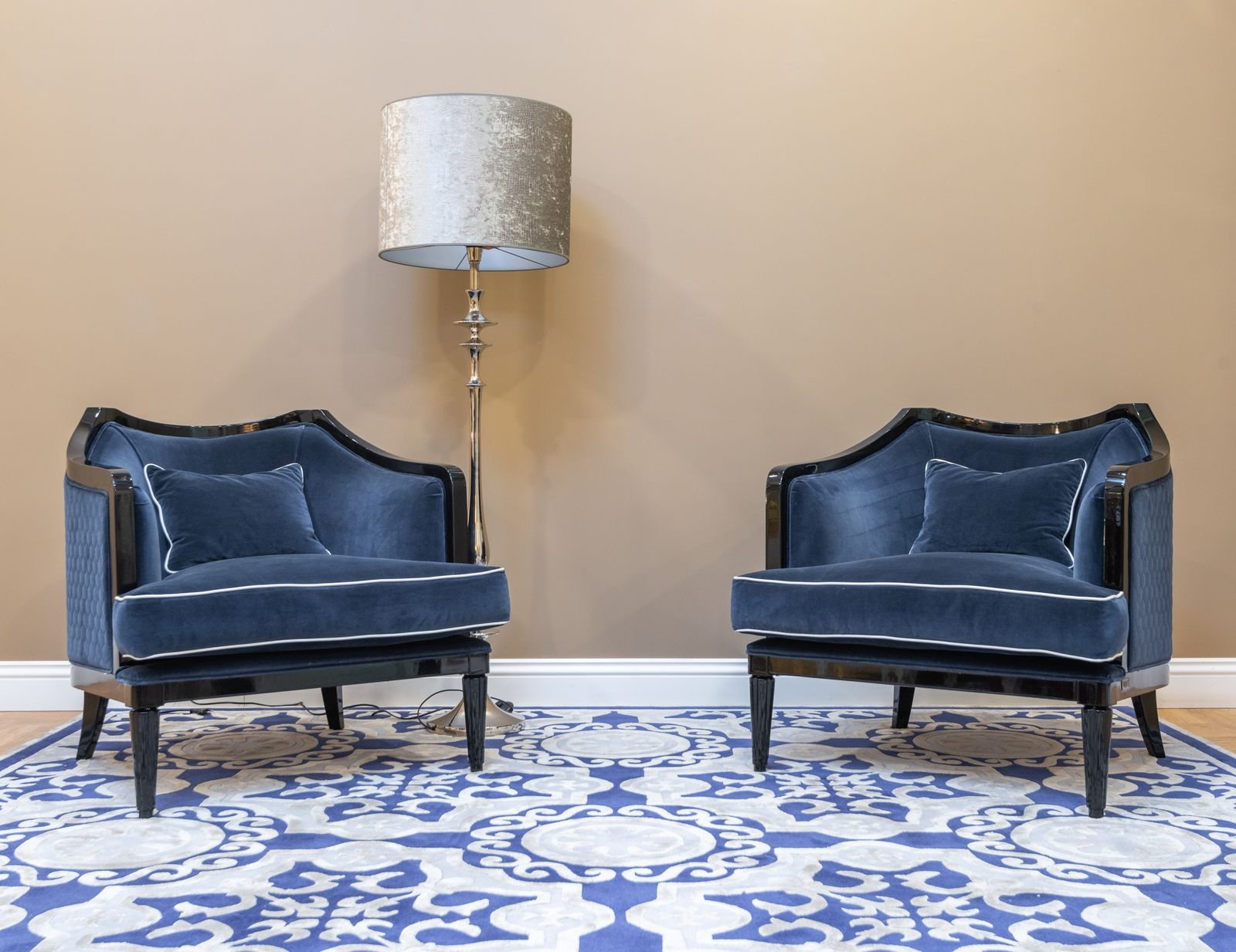
A single navy armchair — or a matched pair, as in the photo below — gives you the same deep note at a fraction of the commitment, and it solves the reading-corner problem at the same time. Put the chair where the light is best, add a small side table and the warmest lamp you own, and you have built the seat everyone will quietly fight over. Secondhand velvet chairs are plentiful and cheap; good bones matter more than perfect fabric at this size.
6. Let Navy Join the Woodwork: Bookcases and Cabinets
If your room has built-in shelves, a media unit or a sturdy cabinet, navy paint on that one piece gives you architecture-level color with furniture-level risk. Books, ceramics and brass objects glow against a navy backdrop, and the shelves break the color up so it never reads as a solid dark block. It is also reversible in a weekend.
The Paint Rungs: For When You’re Sure
7. Paint One Accent Wall — Behind the Sofa
When paint finally happens, one wall is enough — the wall behind the sofa or the fireplace wall, the one the room already faces. The photograph below shows navy walls honestly: deep, even and completely dependent on the warm floor and the daylight to stay friendly. Keep the other walls warm cream, never blue-white, and test the shade on a big board first. Choose a navy with a drop of warmth in it — the inky, almost-black blues stay cozy after dark, while bright royal blues can turn electric under lamps.

8. Paint the Lower Half Only
The most forgiving paint job on this list: navy below a picture rail or chair rail, cream above it. You get the cocoon feeling at seated height — exactly where you experience the room — while the upper walls keep reflecting light down. It is an old technique in dining rooms and libraries, it hides scuffs where bags and chair backs land, and in a small room it is the difference between “moody” and “box.” No rail? A level line at one-third height, taped carefully, does the same work.
The Pairings That Keep Navy Warm
9. Navy + Cream: the Safety Net
Cream is navy’s safety net, and it is not optional. Cream walls, a cream rug, cream cushions on the navy sofa — this is the 60 percent doing its job. Cream’s warmth cancels navy’s cool edge in a way stark white never can; white beside navy reads crisp and nautical, which is a fine look for a beach house and a chilly one for a family living room in February. If your room feels cold, swap white textiles for cream before you touch anything else.
10. Navy + Brass and Gold: the Glow
Every navy room needs one warm metal, and brass is the classic. A brass floor lamp, picture lights, a tray, the round detail on a sofa arm — small amounts, repeated two or three times, are enough. Brass does for navy what candlelight does for a face: it gives the deep color a warm point to reflect. Chrome and nickel do the opposite, sharpening navy toward cold, so if your hardware is silver-toned, let the brass live in lamps and objects where it can be changed easily.

11. Navy + Warm Wood: the Grounding Layer
Warm wood is the fastest way to make navy feel like a cabin instead of a boardroom. A walnut coffee table, oak floors left their natural color, a pine bookcase — the browns sit between navy and cream and stitch the two together. The sunlight photograph earlier in this article is the proof: a mid-blue sofa against a dark wood wall should feel heavy, and instead it feels like late afternoon, because wood and sun are doing the warming. Avoid gray-washed wood beside navy; two cool tones together are where the cave feeling starts.
12. Navy + Gray: Handle With Care
Gray is navy’s most requested partner and its trickiest. It works when the gray is warm — greige, mushroom, a gray with a brown base — and when the navy clearly leads. It fails when both colors are cool and mid-toned, because then nothing in the room is warm and nothing is in charge. If your sofa is gray and staying, let navy arrive as curtains and cushions, keep your wood warm and your bulbs warmer, and the pairing settles. Readers who loved the softer route in our sage green living room ideas will recognize the principle: one color leads, the rest support.
Small Rooms and Low Light: the Rules
13. Keep Navy Low, Light High
In a small room, place navy where your body spends time and keep the light zone above it. Navy sofa, navy rug, navy cushions — yes. Navy ceiling, navy curtains drawn across the only window at noon — no. Light walls and a light ceiling bounce daylight around the upper half of the room, while the deep color below makes the seating feel tucked-in rather than shrunk. Add two lamps at seated height on warm 2700K bulbs and switch them on before dusk; a navy room lit from below eye level glows, while the same room under one cool ceiling light sulks. Mirrors help if they face a window — place one to throw daylight onto the cream wall, not to multiply the dark one.
14. Finish With Texture, Not More Color
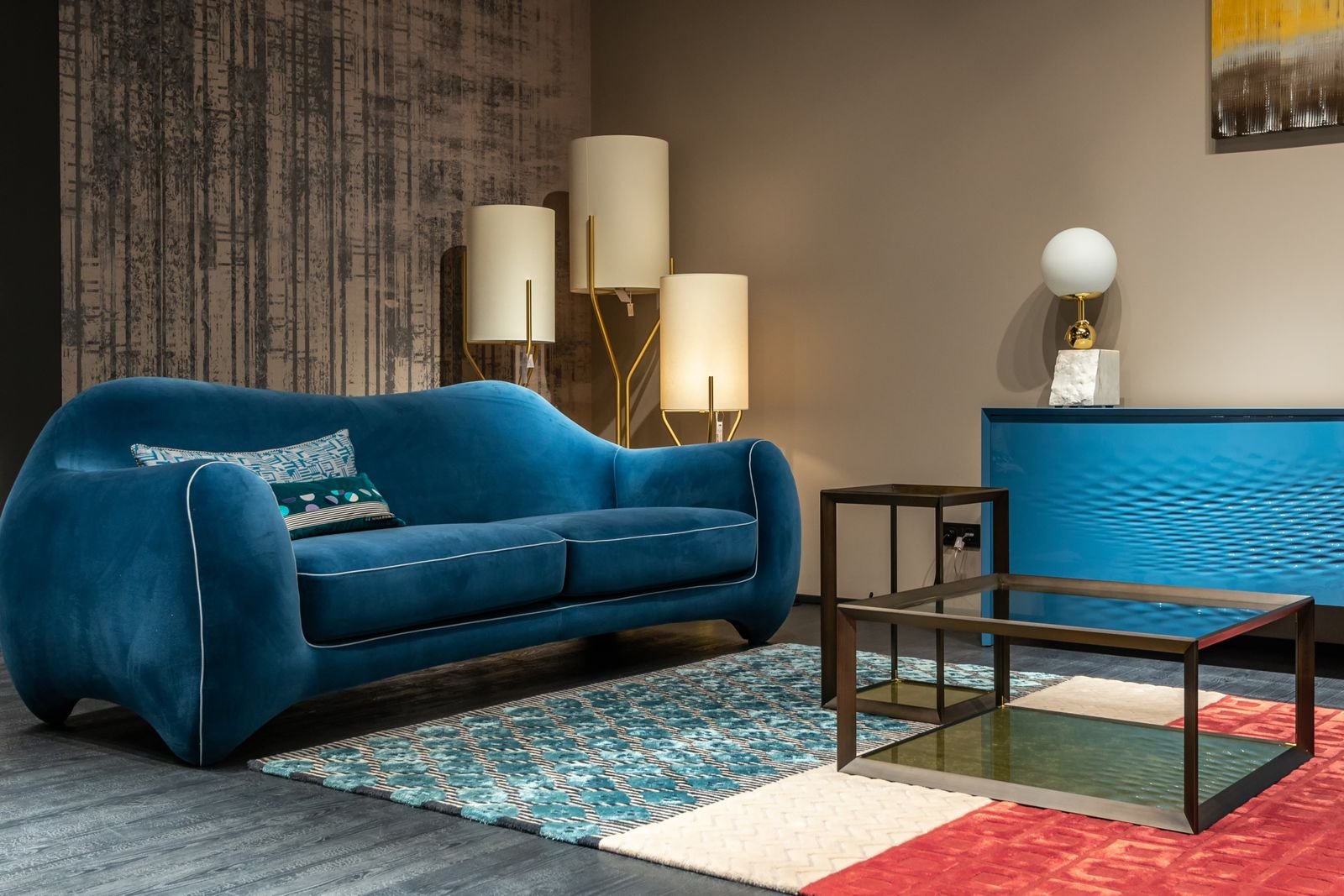
When a navy room is nearly right, the missing thing is rarely another color. It is texture: a nubby cream throw on the navy sofa, a woven basket beside it, linen cushions next to velvet ones, real books on the table. Navy is a smooth, deep backdrop, and rough, pale, touchable things against it turn “handsome” into “cozy.” Stop adding color. Start adding things hands want to touch.
Navy Blue Living Room Questions
Does navy blue make a living room look smaller?
Not when it stays low and the walls and ceiling stay light. Navy seating on a pale rug in a cream room reads cozy, not cramped. It only shrinks a room when it covers most walls in a space with little daylight — ideas 8 and 13 are the small-room-safe versions.
What colors go best with navy blue in a living room?
Cream first, then warm wood and brass or gold as the warm accents. Rust, ochre and tan leather warm it further. Warm gray works if the navy leads; avoid stark white, chrome and blue-gray wood, which all push navy toward cold.
Is a navy velvet sofa practical with kids and pets?
Yes — it is one of the most forgiving choices you can make. The deep color hides spills, denim dye and pet hair that a pale sofa would announce, and most modern velvet-look fabrics are polyester, which wipes clean and shrugs off daily wear.
Which navy paint shade should I choose?
An inky navy with a warm or neutral base rather than a bright royal blue. Paint a large test board and live with it for two days, checking it in morning light and lamplight — navy shifts more between day and evening than almost any other color.
I rent. How can I get this look without painting?
Cushions and a throw, navy curtains, a navy-patterned rug and one secondhand velvet chair give you most of the effect with zero paint — ideas 1, 2, 3 and 5 are all fully renter-safe and reversible in an afternoon.
How do I stop a navy room feeling cold?
Check the three usual causes in order: bulbs that are too cool (switch to 2700K), white textiles that should be cream, and a missing warm accent (add brass or warm wood until it is a clear 10 percent of the room). One of the three fixes it almost every time.