
Why Sage Works So Well in a Bedroom
Of all the colors that pass through our home, sage green is the one readers write to me about most. Our guide to sage green living room ideas has quietly become one of the most-saved posts on BrightVeya, and the question that follows is always the same: will it work in the bedroom too?
It works even better there. Sage sits right where gray meets green, so it calms a room the way gray does, but never feels cold the way gray can at 7 a.m. A bedroom wrapped in it seems to lower your shoulders a notch the moment you walk in.
The trick — and this is where most sage bedrooms go wrong — is keeping it warm. Styled with icy whites and chrome, sage turns chilly and a little sad. Styled the way we do it here, with cream instead of white, rust and terracotta instead of black, warm wood, brass, and lamplight instead of overhead glare, it becomes the coziest color in the house. Here are 14 sage green bedroom ideas arranged as a gentle ladder: start with the bedding-only steps, and climb only as far as you like.
Start Soft: Bedding and Textiles First
1. Swap In Sage Linen Bedding
The fastest honest test of any bedroom color is a duvet cover, and sage passes it beautifully. Choose washed linen or a linen-cotton blend in a soft, slightly grayed sage — the fabric’s natural slub and gentle creasing are part of the charm, so a rumpled bed reads as relaxed rather than messy. Keep your sheets cream or warm white underneath so the sage stays the single quiet statement. A good linen set costs less than a tin of paint plus brushes, and if you fall out of love, it folds away in a drawer. Nobody ever has, in my experience.

2. Layer Cream Knits Over the Top
Sage on its own is calm; sage under a chunky cream knit is calm and cozy. Fold a cream or oatmeal throw across the foot of the bed, add a second lighter blanket in a waffle weave, and let the layers show. Cream does two jobs here: it warms the green (pure white can make sage look minty and cold), and it gives the eye a resting place. This is also the cheapest winter upgrade on the list — one good knit throw, around $30–$45, changes the whole temperature of the room.
3. Warm It Up With Rust and Terracotta Cushions
Here is the color pairing I come back to again and again: sage + cream + rust. Two cushions in rust, terracotta, or a faded clay — linen or velvet, roughly 18 inches — placed in front of your sleeping pillows will make the green look richer and the whole bed look intentional. Think of it as a 60-30-10 room: 60% cream and warm neutrals, 30% sage, 10% rust as the spark. If rust feels bold, start with a single lumbar cushion; you can always add the second.
4. Test the Color With Curtains Before You Paint
Not ready to commit? Hang sage curtains for a week. They put the color in a big vertical sweep — much closer to a painted wall than a cushion is — and they shift with the light through the day. Live with them in morning sun and evening lamplight. If you keep glancing at them happily, your paint decision is made.
Paint, Done the Warm Way
5. Paint One Accent Wall Behind the Bed
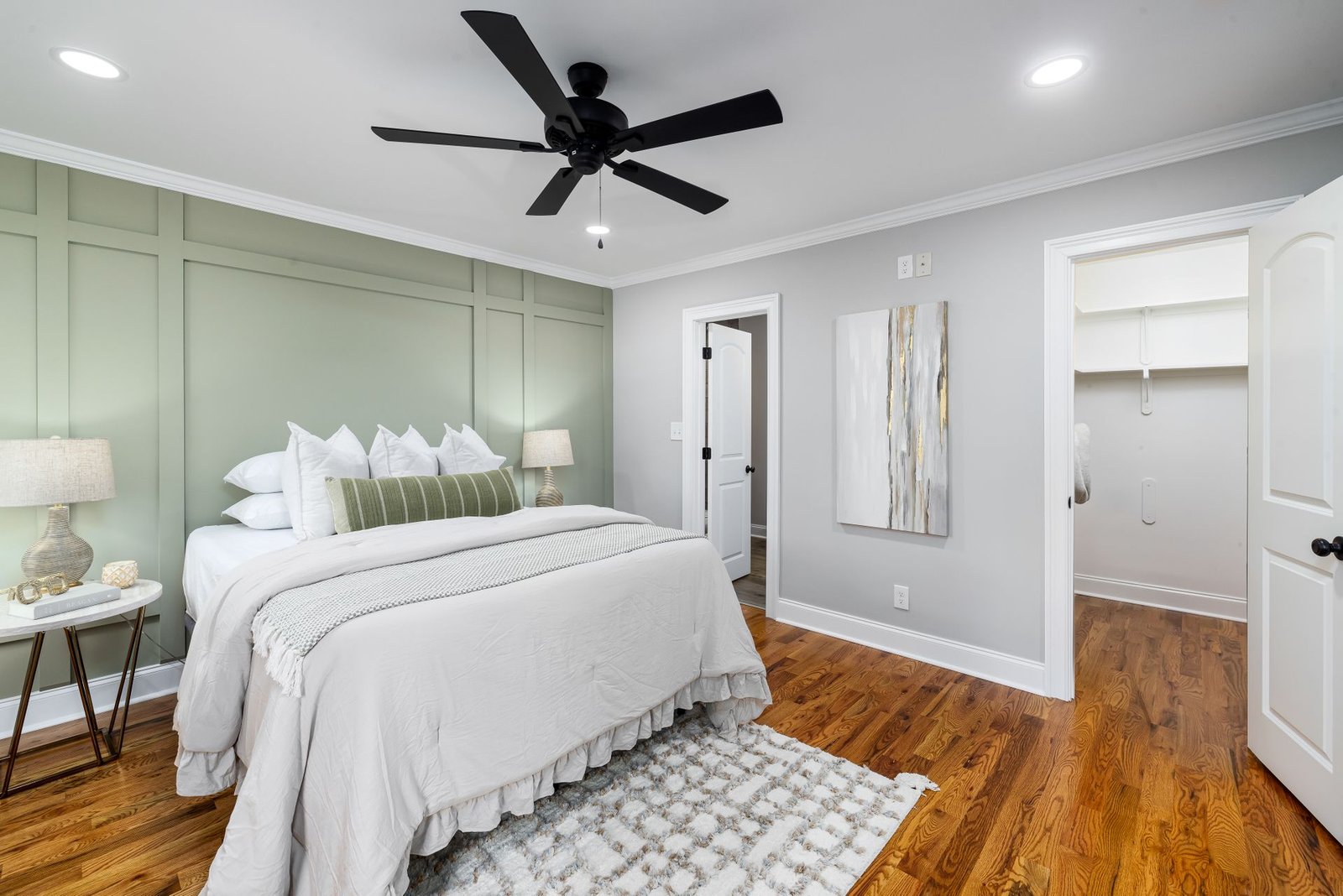
If you paint only one wall, make it the one behind the headboard. The bed is the room’s anchor, and a sage backdrop turns it into a focal point without overwhelming a small room. Board-and-batten or simple panel moulding painted in the same sage adds the shadow lines that make a flat wall feel crafted — it is a weekend project with primed wood strips, and the effect is far more expensive-looking than it is. Keep the other walls a warm cream (not stark white) so the sage reads soft, never sharp.
6. Choose the Shade by the Direction Your Windows Face
This is the step most people skip, and it is the one that decides everything. Sage is a shapeshifter: the same tin can look serene in one room and chilly in another.
- North-facing rooms get cool, blue-ish light all day, which pushes sage toward gray. Choose a warmer, slightly deeper sage to compensate — Benjamin Moore October Mist 1495 is the classic warm sage, and Sherwin-Williams Evergreen Fog SW 9130 holds up well too.
- South- and west-facing rooms get golden light, which warms everything for free. You can afford a paler, fresher sage here; a deeper one may turn muddy by afternoon.
Whatever you choose, buy the sample pot first. Paint a big swatch on two walls and check it at breakfast and by lamplight — ten dollars of samples saves a whole repaint.
7. Try a Half Wall of Sage Panelling
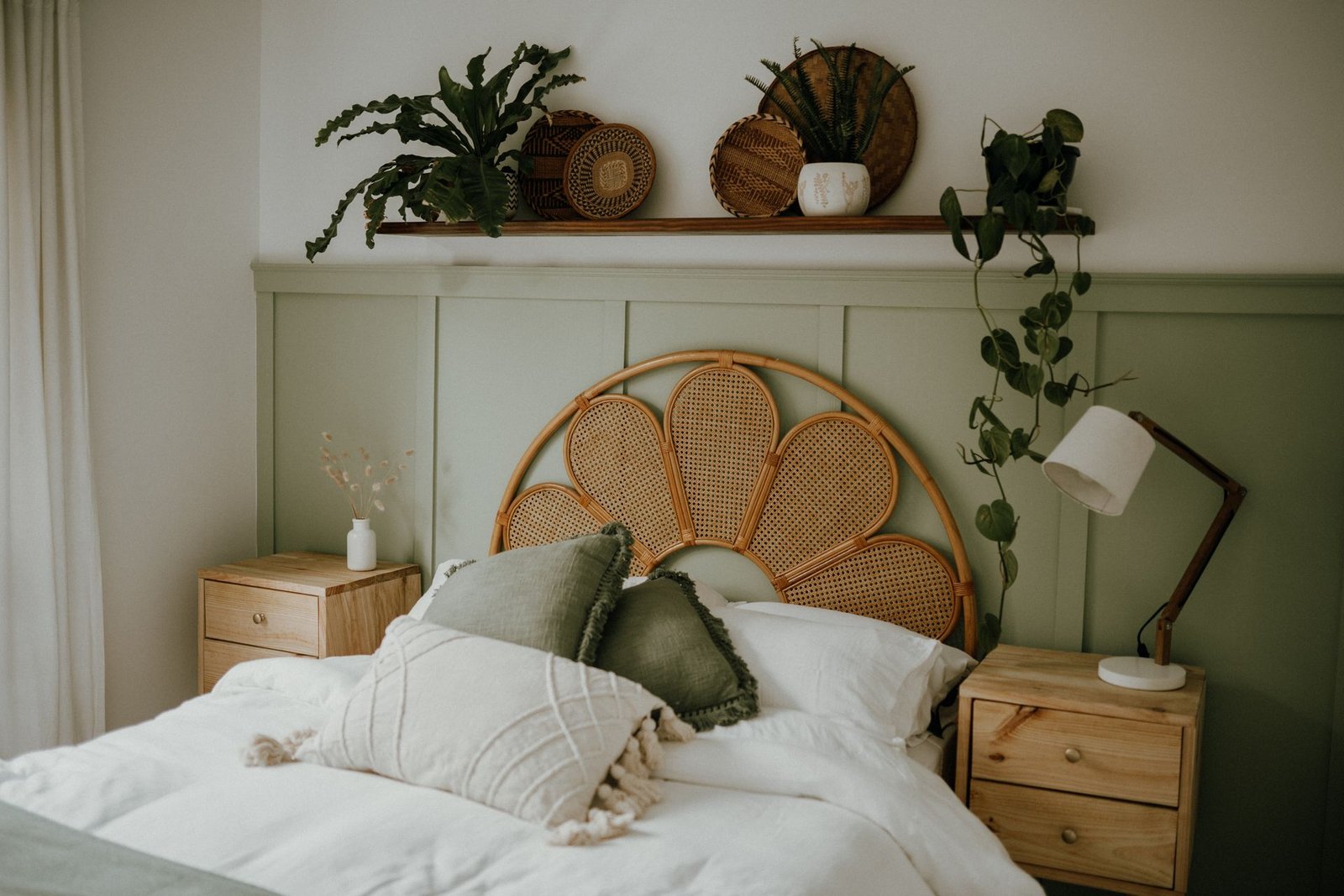
Half-height panelling — wainscot-height boards painted sage, with warm cream above — gives you the color in a measured dose and suits smaller bedrooms beautifully. It also hides the scuffs that beds and nightstands leave behind, which is a practical kindness in a guest room or a child’s room that will grow up. The look in our featured photo, sage panelling rising behind the bed, is exactly this idea done at a little over half height, and it is the single detail readers ask about most.
8. Go All In With a Color Drench
For the brave: paint walls, trim, and even the door in the same sage, and the room becomes a cocoon. Drenching works best with decent natural light and when everything else stays pale — cream bedding, light wood, one warm metal. Done with warm textiles, it feels like sleeping inside a leaf; done with cool grays, it feels like a waiting room, so keep every other choice warm.
Warm Wood, Texture and Greenery
9. Choose Warm Wood Beside the Bed
Sage’s best friend is warm wood. Honey-toned pine, oak, walnut, or rattan nightstands keep the green earthy, while black or chrome furniture makes the same room feel stark. If your nightstands are the wrong color, you do not need new ones: a wood tray or a rattan lamp base on top pulls the warmth in for a few dollars. Matching both sides is not required — an honest mix looks more like a real home anyway.

10. Add One Woven Moment: Rattan, Cane or Seagrass
Texture is what stops a calm room from becoming a flat room. A rattan or cane headboard is the statement version, and it glows against sage like nothing else. The smaller versions work nearly as well: a seagrass basket of spare blankets, or woven baskets on a high shelf. Pick one woven moment and let it be enough — texture works best in a single confident dose.
11. Let Plants Echo the Color
A sage room already speaks plant language, so real greenery doubles the effect. A trailing pothos on a shelf or wardrobe corner softens hard lines; a fern suits the soft, woodland mood; and a small olive-style tree in a terracotta pot by the window ties sage and rust together in one object. Use odd numbers — one trailing, one upright, one small on the nightstand — and keep pots to clay, cream, and woven textures so the planting looks like one family.

Light and the Finishing Layer
12. Light It Warm, Low and in Pairs
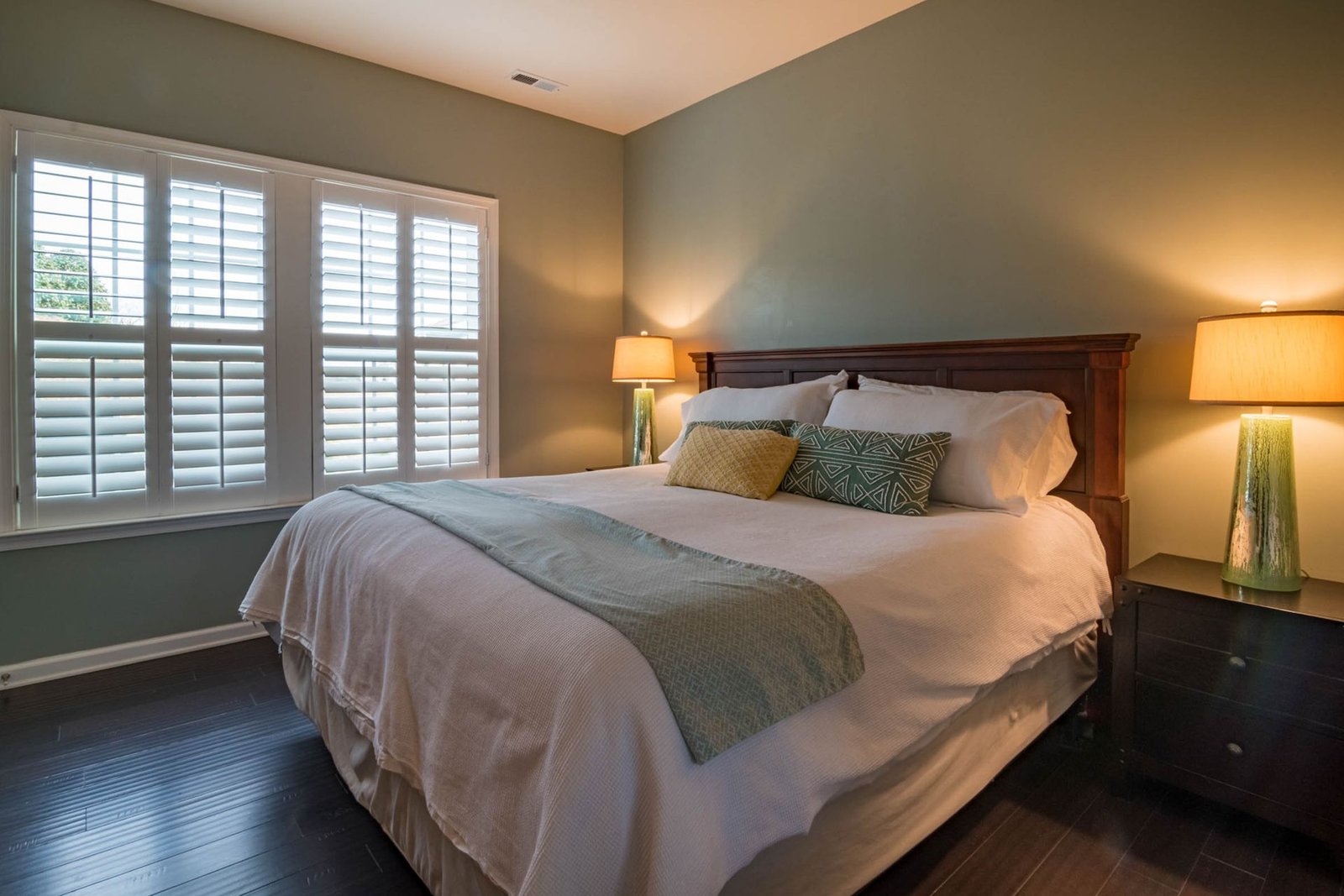
Sage is only ever as cozy as its lighting. Two rules make the difference. First, warmth: choose bulbs around 2700K (“warm white”) — anything cooler turns sage gray-blue at night and ruins the effect. Second, height: light should live at bedside level, in a friendly pair of lamps, with the overhead light off in the evening. A fabric shade flatters both the color and the people in the room. If better sleep is the real goal underneath the decorating, our guide to cozy bedroom ideas for better sleep pairs beautifully with this one.
13. Add Candlelight for the Last Hour
There is a reason sage bedrooms in old houses feel so peaceful in photographs: they were lit by flame. A candle on the nightstand for the last hour of the evening — in an amber glass holder, so the glow is golden — makes sage walls deepen and soften in a way no bulb matches. If open flame near bedding worries you (a fair worry), flameless candles with real wax shells are convincing from two feet away and can run on a timer. Either way, this is the cheapest idea on the list and, at 10 p.m., the most persuasive.
14. The Small-Bedroom and Renter Version: Just Three Things
If your bedroom is small, rented, or both, ignore everything above except this three-item formula: one sage duvet set, one plant, one warm lamp. Sage is kind to small rooms — it recedes like a neutral instead of advancing like a dark color, so a small bedroom feels calmer, not smaller. Skip the accent wall (paint is for owners and the patient), keep bedding cream-and-sage only, and choose a lamp with a woven or fabric shade to smuggle in the texture. Total spend can stay under $100, everything leaves with you, and guests will still ask what color your room is. It is sage. It is always sage.
Sage Green Bedroom FAQs
What colors go with sage green in a bedroom?
Cream and warm white are the base, and rust, terracotta, and clay are the accents that make sage feel cozy rather than cool. Warm woods, brass, and aged gold metals suit it far better than chrome or black. If you want a second color beyond accents, dusty blush and muted mustard both sit happily next to sage.
Is sage green a good color for a small bedroom?
Yes — one of the best. Because sage is desaturated (more gray than green), it behaves like a neutral and recedes visually, so walls feel farther away rather than closer. In a small room, keep the bedding mostly cream with sage as the lead accent, and the room will feel calm and open.
Which sage green paint color is the warmest?
Benjamin Moore October Mist 1495 is widely loved precisely because it leans warm and works in cool north light. Sherwin-Williams Evergreen Fog SW 9130 is a touch grayer and deeper — beautiful in bright rooms. Always test a sample on two walls and check it morning and evening; light changes sage more than almost any other color.
Can I get the sage look in a rental without painting?
Absolutely. Start with a sage duvet cover and two rust cushions, add a trailing plant and a warm-toned lamp, and you have roughly 80% of the look for under $100 — every piece removable and reusable in your next home. Sage curtains are the one upgrade that mimics a painted wall most closely if you want to go further.
A Calm Room, One Layer at a Time
The nicest thing about these sage green bedroom ideas is that none of them demand a renovation. A duvet cover this weekend, two cushions next month, a sample pot when you are ready for the wall — the room warms up one layer at a time, and you can stop anywhere along the ladder with a bedroom that already feels calm, soft, and entirely yours. A home you love, built gently, at your own pace.
If you try sage in your bedroom, I would love to know which step you started with — the bedding, or straight to the paint tin?