
The short answer: A winter kitchen works when it still feels warm at 5 p.m., after the daylight is gone. Fix the light first — one low, warm glow at counter height — then add wood and soft texture, and only then decorate. Most of it comes from your own cupboards, not a shopping trip.

The Dusk Test: Judge Your Kitchen at 5 p.m., Not at Noon
Every kitchen looks kind in morning light. Winter is decided later. In January and February the sun is gone before dinner even starts, and the room you cook in, eat in and drift back to all evening has to earn its warmth from lamps, wood and texture instead of daylight. So before you change anything, run the dusk test: stand in your kitchen at five o’clock, turn off the overhead light, and look honestly. If the room feels flat, grey and a little sad, the problem is almost never a lack of decorations. It is a lack of low, warm light.
That is what separates this guide from our Christmas kitchen decor ideas, which are festive and full of December sparkle. This is the kitchen after the tree comes down — quieter, plainer, and in some ways harder, because there is no holiday doing the atmosphere for you. It is also different from year-round styling: winter asks for more glow, more weight and more warmth than any other season. The nine ways below follow one order on purpose. Light first. Texture second. Everything else after.
1. Put One Warm Light Low, Where the Cooking Happens
The single most effective winter change costs nothing if you already own a small lamp: move warm light down to counter height. Overhead lights flatten a kitchen and push cold shadows into every corner. A small lamp on the counter, a candle beside the stove, or the warm pool from an under-cabinet strip makes the same room feel inhabited. Aim for one glow near where you chop, one near where you sit, and leave the ceiling light off while you cook. Warm bulbs only — the soft, yellow kind. Cool white light is the fastest way to make a January kitchen feel like an office.
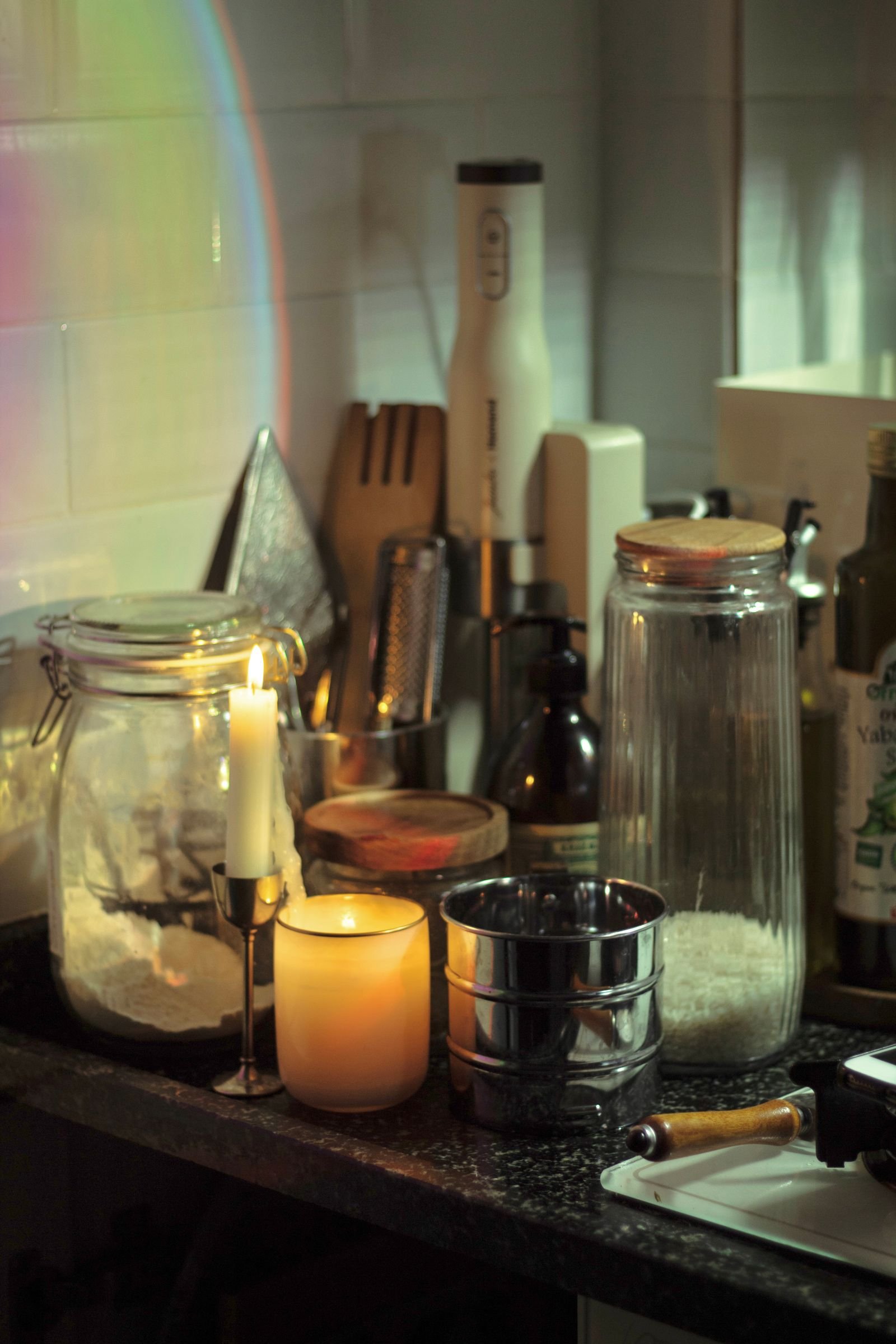
Candles count, with the usual respect: keep them on the counter away from towels and paper, and blow them out when you leave the room. The candlelit counter in the photograph is the whole idea in one frame — two small flames doing more for the room than any garland could.
2. Dress the Windowsill, Because the Window Is the Picture Now
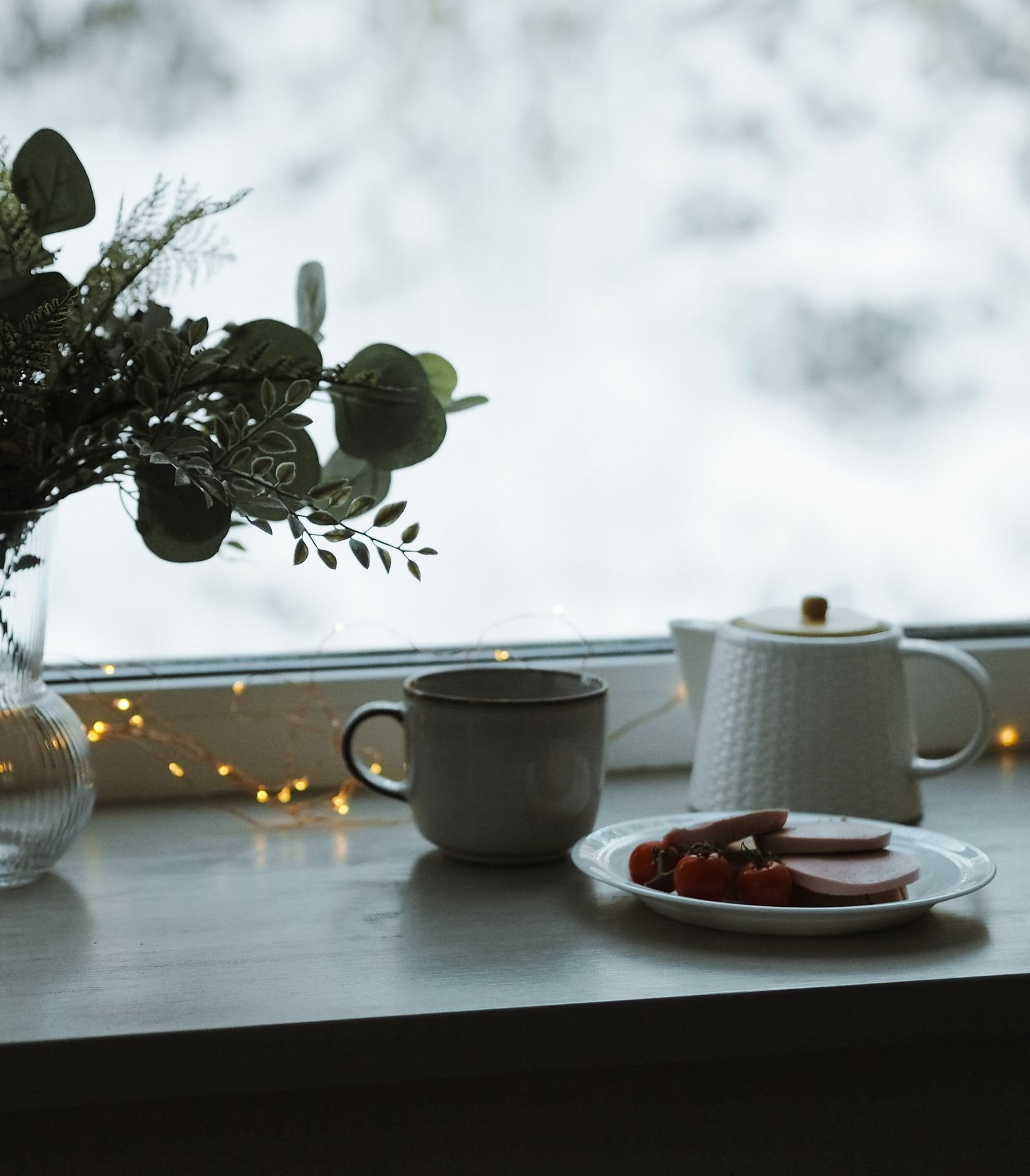
In summer the window is a view. In winter it is mostly darkness and your own reflection, so give the sill something to hold. A mug and a teapot that live there permanently. A small plant that tolerates low light. A short string of warm fairy lights along the frame — not a Christmas leftover, just a soft outline that makes the black glass feel deliberate instead of empty. If your sill is narrow, one beautiful thing is enough: a jug of eucalyptus, a bowl of clementines, a candle in a jar.
Renters, note that none of this touches a wall. Everything sits, nothing is fixed, and it all packs into one box in March.
3. Let the Snow Do the Decorating
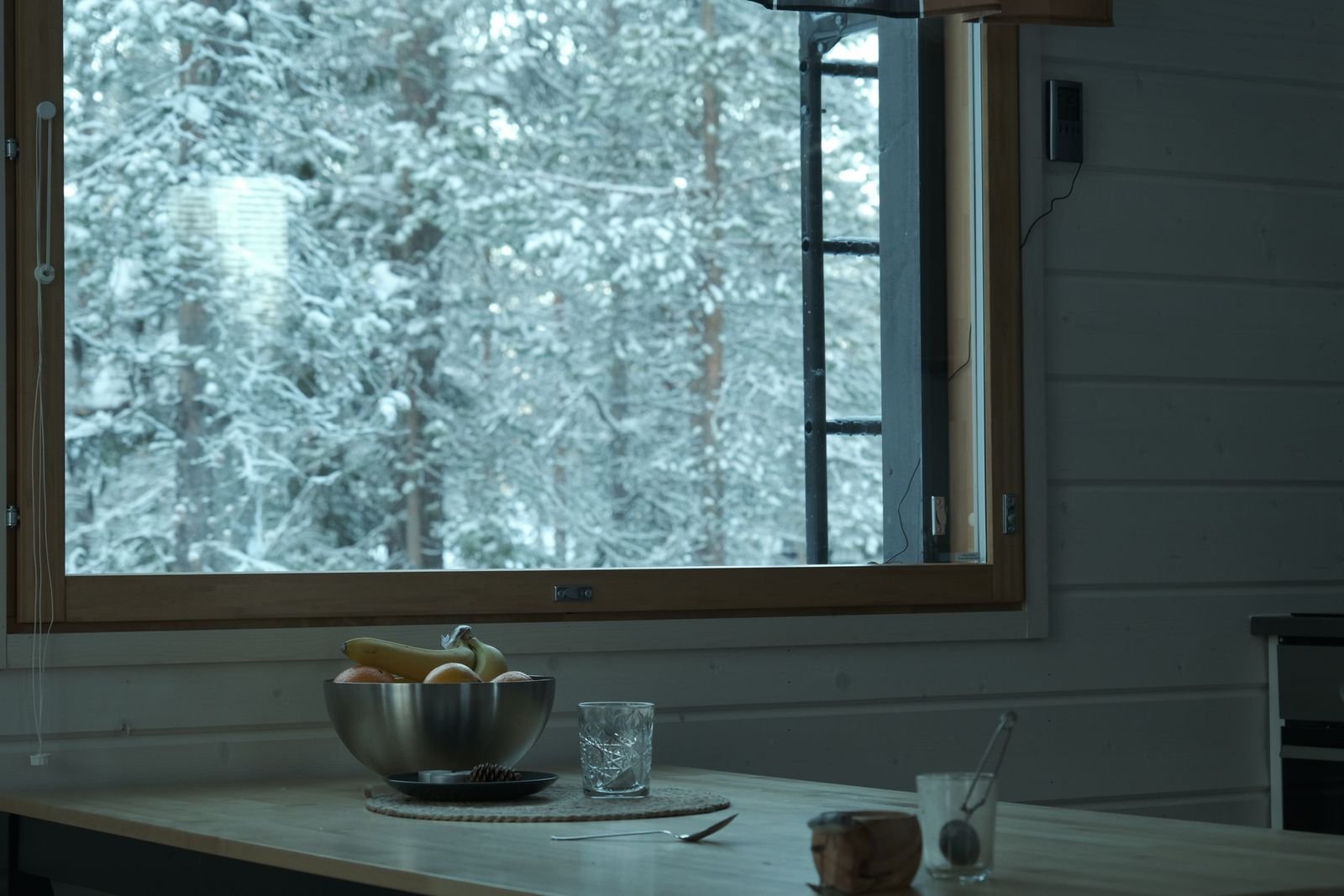
If you are lucky enough to have a real winter view, do not compete with it. A big window onto snow-covered trees is the best winter decoration there is, and it asks only that you keep the sill and the table in front of it simple: a fruit bowl, a woven mat, one glass. Pull the table a few inches closer to the window if you can, and eat breakfast there while the light lasts. On the greyest days, that pale blue-white light is still the brightest thing in the house — arrange the room so you actually sit in it, instead of turning your back to it at the counter.
4. Bring the Mugs Out Where You Can See Them
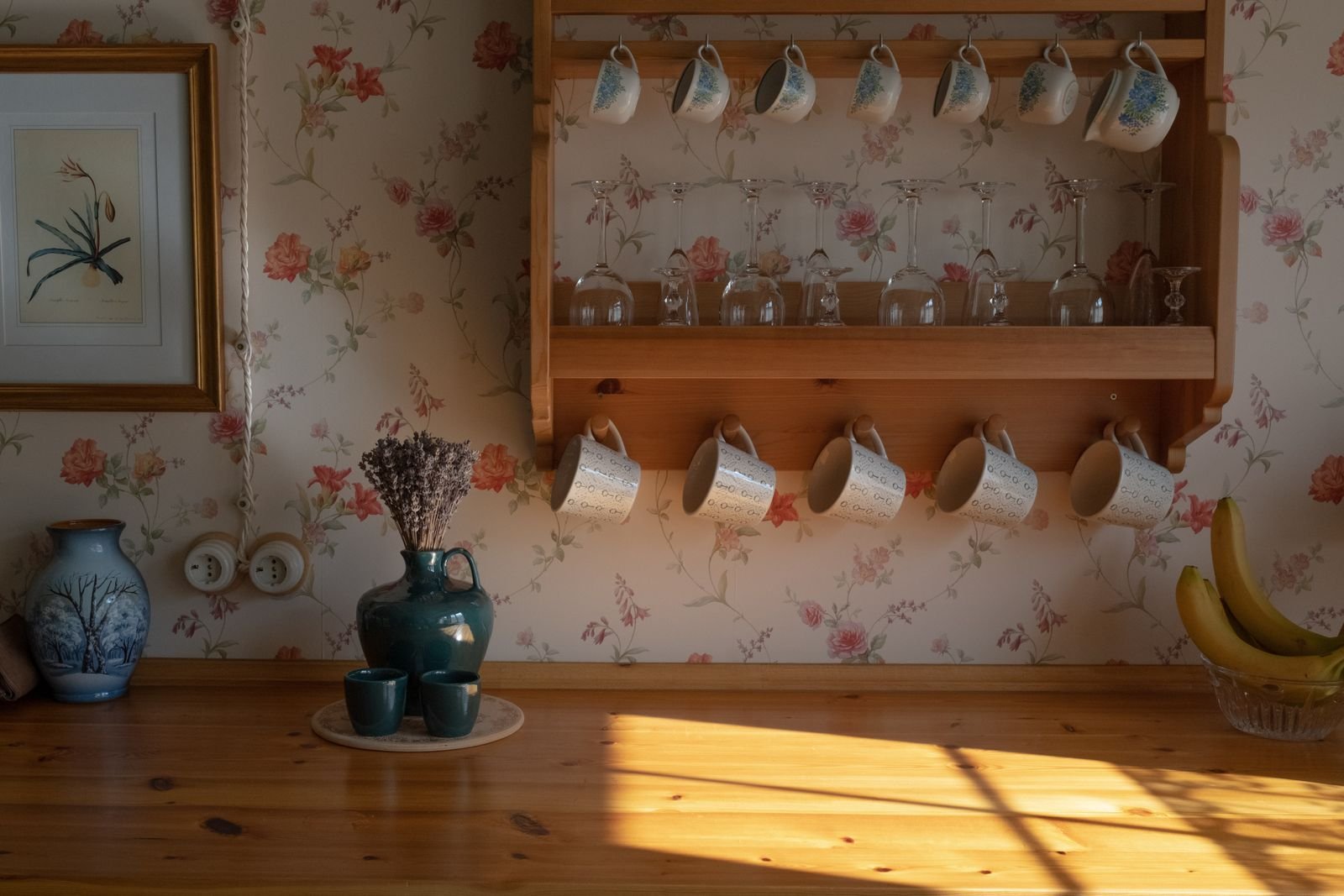
Winter is hot-drink season, and the mugs you reach for three times a day should not be hidden behind a cupboard door. A mug rack, a row of hooks under a shelf, or simply your six best mugs lined up on the counter turns a daily habit into decoration that earns its place. Choose the mugs with some life in them — floral, speckled, the heavy handmade one — and let the chipped and faded ones retire to the back. This is the shop-your-own-cupboard principle at its simplest: the decor was already in the house, it was just stored like clutter instead of shown like a collection.
5. Decant the Staples Into Glass and Stoneware
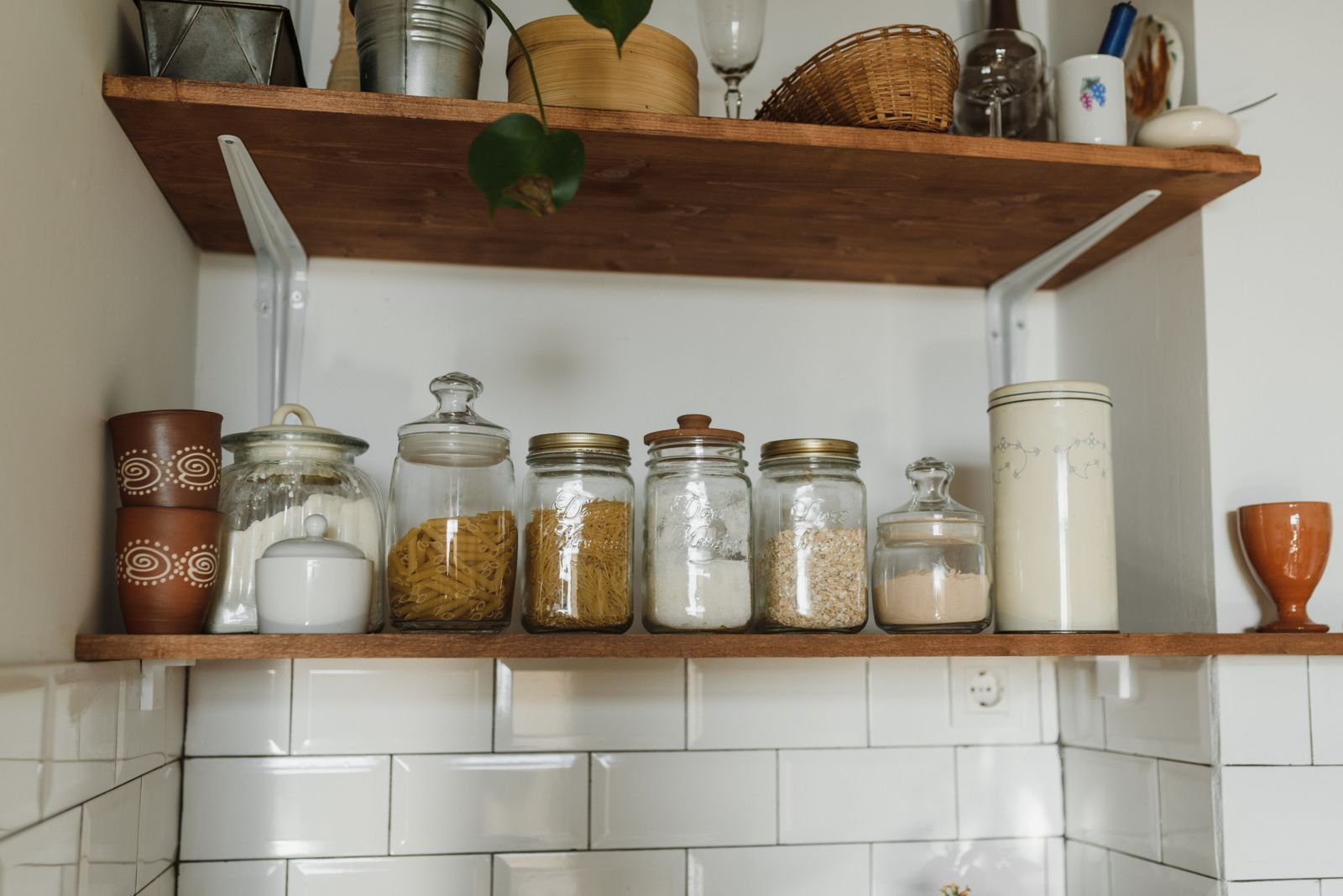
Flour in a torn bag looks like a chore. Flour in a glass jar on a wooden shelf looks like a kitchen that is loved. You do not need matching sets or labels — a shelf of honest jars, each one different, reads warmer than a uniform row bought for the photograph. Start with the three things you use daily, then add one shelf at a time. Crocks, jugs and jars are also the easiest secondhand finds in any thrift store, usually for less than a coffee. Keep the working shelf at eye level and the pretty-but-rarely-used things higher; a winter kitchen should still cook fast on a dark Tuesday.

6. Soften Every Hard Edge With Linen
Kitchens are all hard surfaces — tile, stone, steel, glass — and winter makes them feel harder. The fix is fabric, in small, washable doses. A folded stack of linen towels on a stool or the counter edge. A runner on the table. One cushion on the bench or the chair you always sit in. Choose natural textures — linen, cotton, a little wool — in cream, oatmeal and soft stripes, and keep two sets so one is always clean. Our full guide to what belongs on the counter itself, and what does not, is in our kitchen counter decor ideas; the winter rule is simply to trade one hard object for one soft one on every surface you touch daily.
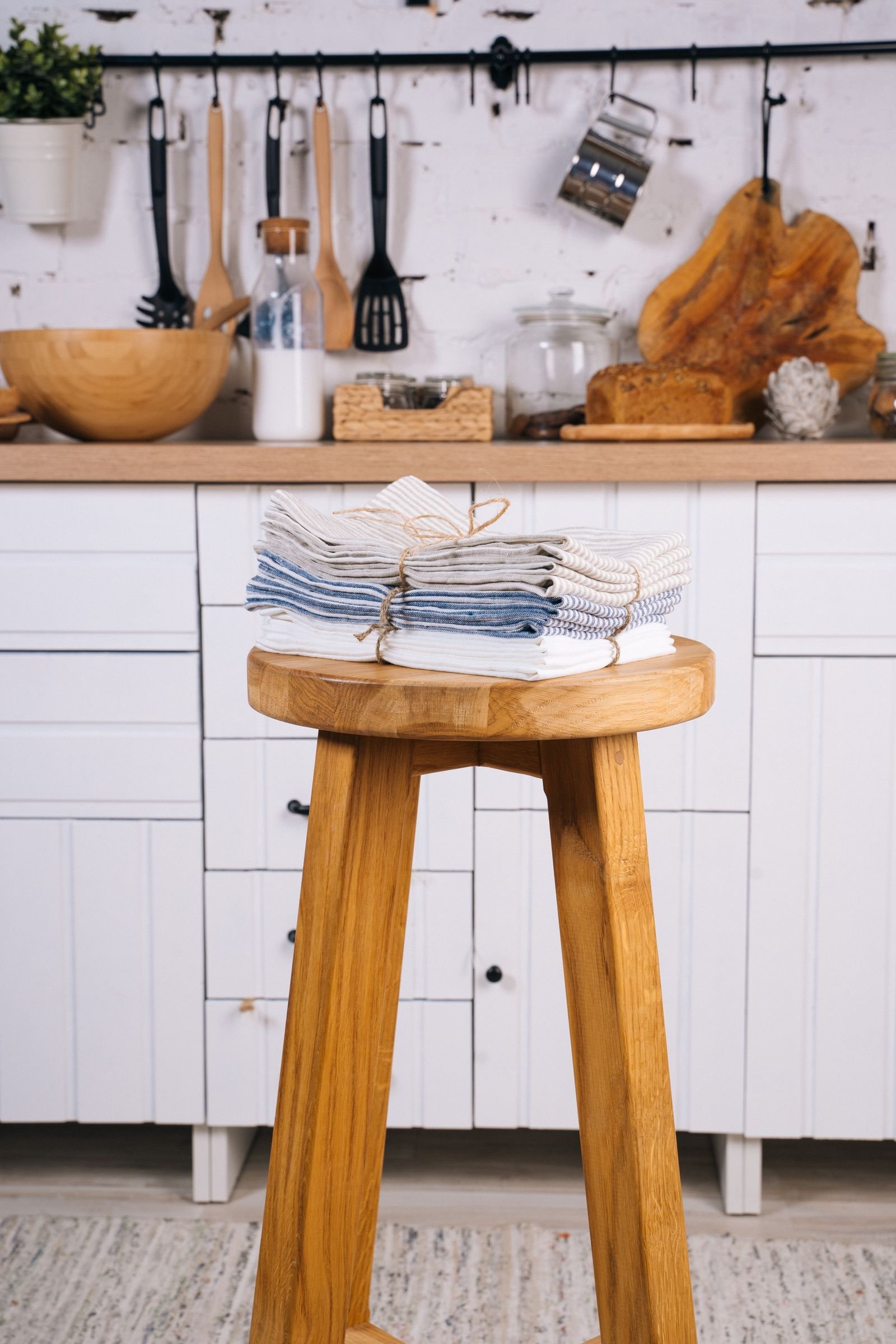
7. Make Tea and Coffee a Corner, Not a Chore
The kettle is the hardest-working object in a winter kitchen, so give it a home that looks intentional. A tray under the teapot and cups. The good tea in a tin you like looking at. A candle nearby for the evening cup. When the corner looks cared for, the small ritual of making tea at four o’clock — when the light goes and the house goes quiet — becomes the warmest moment of the day instead of a pause between tasks. It takes one tray and ten minutes to set up, and it works in the smallest kitchen: if floor space is tight, our small kitchen decor ideas show how to fit a ritual corner into a single stretch of counter.

8. Keep Counters Mostly Clear, and Group What Stays
Winter clutter creeps: post, gloves, chargers, the slow cooker that never went back in the cupboard. A winter kitchen feels calm when the counters are mostly empty and the few things that stay are grouped — jars together on one shelf, utensils together in one crock, fruit together in one bowl. Grouping is what makes stored things read as decor. Give everything that lives out a boundary — a tray, a shelf, a basket — and sweep the rest into drawers once a week. Five minutes, same time each week, keeps it from sliding back.
9. End With One Calm, Empty Stretch
The last winter move is subtraction. Leave one stretch of counter completely empty — just wood, a teapot on a tray, perhaps a single stem in a bottle. That emptiness is what makes the warm corners feel warm; a room where every surface is styled has nowhere for the eye to rest. In a season of short days and long evenings indoors, calm is a feature, not a lack of effort. Choose the stretch you see first when you walk in, and defend it.

Where to Start (by Budget)
| Budget | Do this first | Why it works |
|---|---|---|
| $0 | Move a small lamp to the counter, bring out your best mugs, group the jars on one shelf | Fixes the dusk test tonight with things you already own |
| Around $25 | Warm bulbs for the kitchen, one linen runner, a thrift-store crock or jug | Warm light plus one soft texture changes the whole feel |
| Around $75 | A small counter lamp, a wooden tray for the tea corner, two sets of linen towels | Builds the three warm corners: light, ritual, softness |
| Renter-safe at any budget | Everything sits on surfaces — lamps, trays, hooks over cupboard doors, nothing fixed | The whole look packs into one box when you move |
Three Winter Kitchen Mistakes to Avoid
- Decorating before fixing the light. New cushions in a cold-lit kitchen still feel cold at 5 p.m. Light first, always.
- Keeping the Christmas sparkle up until spring. Tinsel and red bows in February make the room feel stalled, not festive. Pack them away and let the quieter winter look begin.
- Buying a matching set of everything. A uniform row of new containers reads like a shop shelf. Mixed jars you already own read like a home.
Winter Kitchen Questions
How do I decorate my kitchen for winter after Christmas?
Take the festive pieces down, then rebuild around light: one warm lamp or candle at counter height, wood and linen for warmth, and your best mugs and jars out on display. Keep it quiet and useful rather than themed.
What colors suit a winter kitchen?
Warm neutrals do the heavy lifting — cream, oatmeal, warm wood, soft white — with one deep accent if you want it, like forest green or burgundy, in a towel or a jug. Avoid cool grey and blue-white light, which read cold in winter.
How can I make a small kitchen feel cozy in winter?
Use the dusk test and fix light first, then add one soft texture and one grouped shelf of jars. Small kitchens warm up faster than big ones because one lamp can reach the whole room.
Are fairy lights only for Christmas?
No. A short string of warm lights along a window frame or shelf reads as winter glow, not holiday decor, once the tree and ornaments are packed away.
What is the cheapest winter kitchen update?
Moving a lamp you already own onto the counter and switching the kitchen bulbs to warm white. It costs nothing to a few dollars and changes the room every single evening.
A winter kitchen is not decorated once. It is lit, softened and tidied a little each week, until the evenings feel like the best part of the day. Start with the lamp tonight.