
A Small Kitchen Does Not Need More Space — It Needs a Feeling
Most small kitchens are not ugly. They are just unfinished. The cabinets work, the appliances work, dinner gets cooked — but the room feels flat and a little cold, like a place you pass through rather than a place you stand in with coffee. And because the room is small, every plain surface shows. There is nowhere for the eye to land that feels warm.
Decor is the fix, and in a small kitchen it is mercifully cheap in space: it lives in color, light, cloth and a few beautiful everyday things, not in furniture.
This article is deliberately about look and feel only. If your real problem is fitting everything in, our 10 small kitchen organization ideas cover the storage side — read that for systems, and stay here for the part that makes the room feel like yours. Fifteen ideas, most of them renter-safe, none needing a renovation.
Start With Color: Light, Warm and Repeated
1. Choose a Light, Warm Palette and Let It Lead
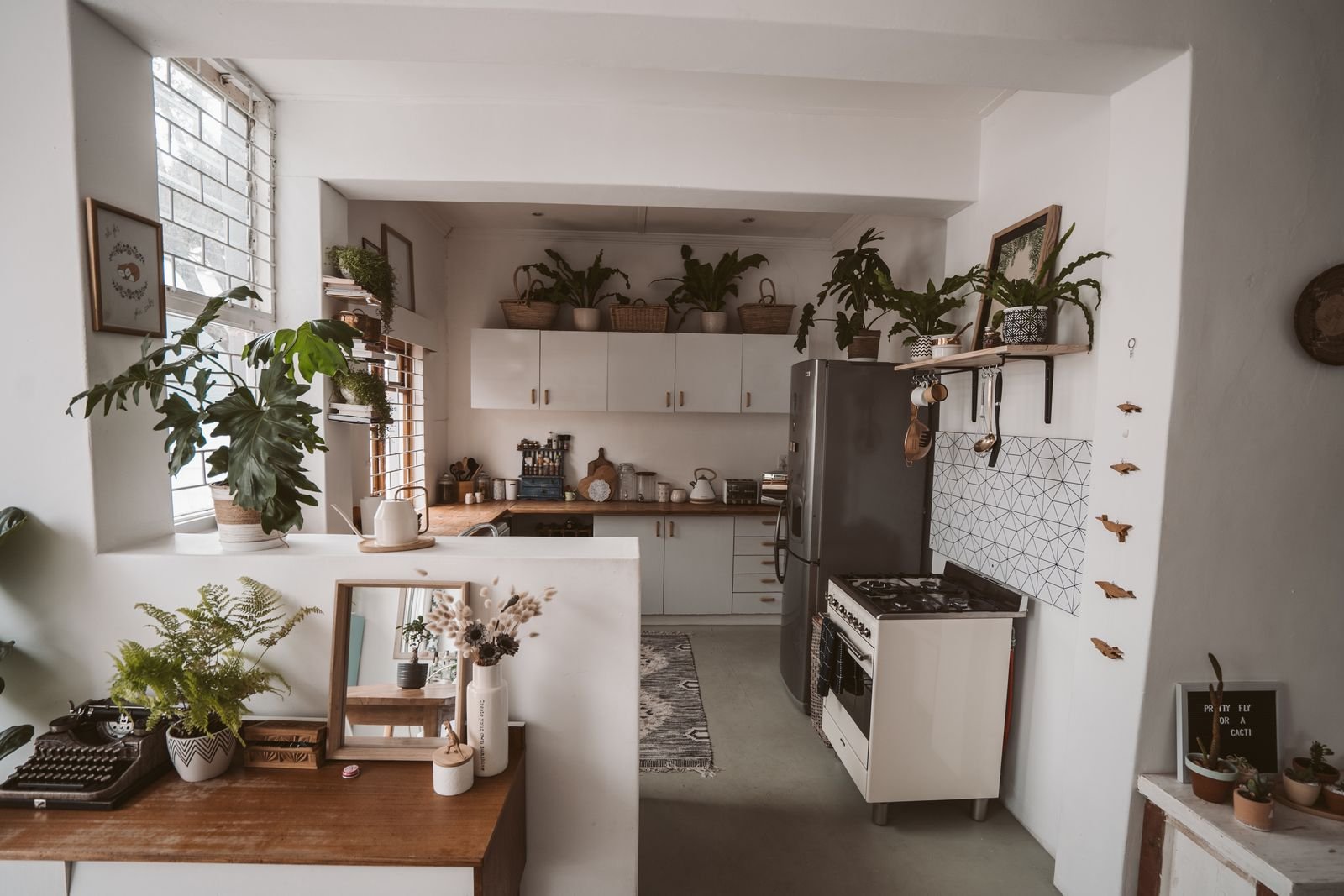
A small kitchen feels bigger in light colors and warmer in warm ones — you want both at once. Think warm white and cream instead of stark blue-white, pale wood tones instead of grey, and one gentle accent — sage, dusty blue, clay or faded terracotta — used sparingly. The test is the morning test: in flat daylight the room should read soft, not sterile. If your cabinets are a chilly builder white, do not paint yet; wood, cloth and warm light warm a cool base, and that is most of what the eye registers.
2. Repeat the Palette in Three Places So It Looks Chosen
One sage towel is an accident; a sage towel, a sage plant pot and a small sage print are a palette. Repetition is what turns scattered buys into decor. Pick your accent and your wood tone, then repeat each in at least three places around the room — high, middle and low if you can. This is also the cheapest discipline in decorating: it stops impulse buys, because a new item either joins the palette or it does not come home. If sage is your accent, our sage green kitchen ideas show the color carried through a whole kitchen, top to bottom.
Light It in Layers, Not in One Harsh Overhead
3. Layer the Light: One Overhead Is Never Enough
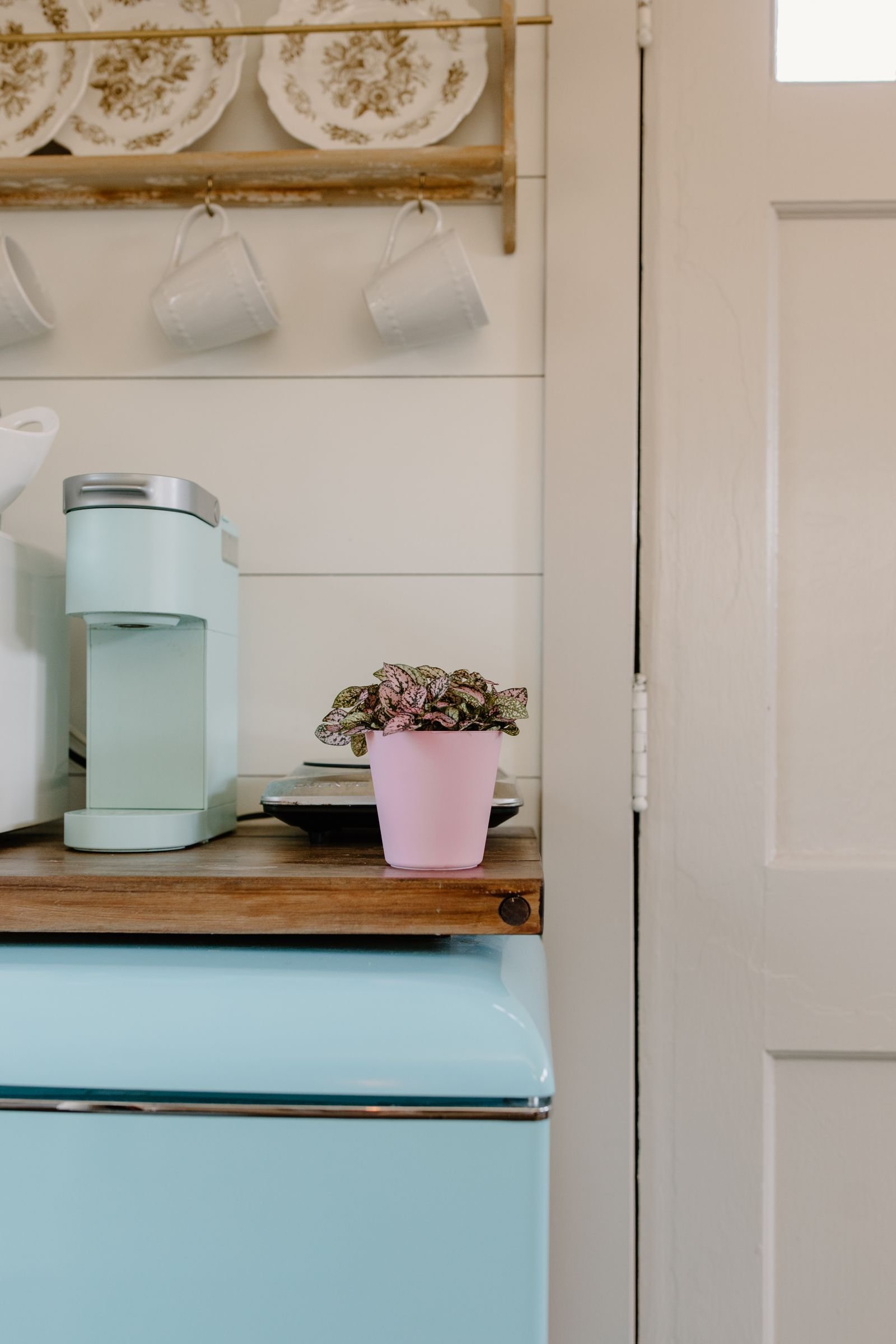
A single ceiling light flattens everything and casts your own shadow onto the counter. Cozy kitchens layer three kinds of light: the overhead for general brightness, a low light at counter level that makes the work surface glow, and one small soft light — a tiny lamp, a candle-style glow — purely for mood. The evening layer alone, overhead off, turns a small kitchen from a workstation into the warmest room in the house. Judge your kitchen at 8 p.m., not at noon.
4. Add Renter Lighting That Plugs In or Runs on Batteries
No wiring, no landlord problem. Battery or USB-rechargeable puck lights and light bars stick under cabinets with adhesive pads and lift straight off later. A plug-in picture light or small plug-in sconce adds a fixture’s glow with just a cord run neatly to an outlet. Rechargeable bulbs turn a thrifted lamp into a cordless one for a shelf. The point is permission: renters are allowed beautiful light too, and every option here leaves with you when you move.
5. Warm the Bulbs Themselves
If you change nothing else, change the color of the light. Bulbs marked 2700K give the warm, golden light that flatters wood, skin and food; cool daylight bulbs are why so many small kitchens feel like offices. Match every bulb to the same warm temperature — mixed temperatures read as a mistake even when nobody can name why. Warm light also unifies a mixed palette: creams, woods and pastels that quarrel at noon agree under a warm evening glow.
Soften It With Cloth
6. Run a Runner Down the Galley
A runner is the hardest-working piece of decor in a small kitchen. It warms a cold floor, muffles the echo of a hard little room, and draws one long line of color that makes a galley feel intentional instead of narrow. Choose a flat-weave, washable style in your palette’s accent or a faded vintage pattern that hides the evidence of cooking. Length matters more than width: let it run most of the room’s length, stopping short of the stove splash zone.
7. Treat Towels as the Easiest Rotating Decor You Own
Towels are pictures that dry hands. Because they hang at eye level and change weekly, they are the fastest palette lever in the room: linen-look stripes, a small check, a faded floral — two or three that match your accent, hung the same way each time. Retire the stained and threadbare to rag duty without guilt; the ones on display are decor and should look like it. A seasonal swap — rust in fall, fresh green in spring — refreshes the whole kitchen for the price of a sandwich.
8. Dress the Window With a Soft Curtain
A bare kitchen window is a missed frame. A cafe curtain across the lower half keeps privacy and lets light pour over the top; a sheer softens hard morning sun into a diffused glow. Keep the fabric light in color and weight — heavy drapes swallow a small room — and hang it on a tension rod if you rent, so there are no holes to answer for. A soft curtain behind green leaves is the prettiest backdrop in this article.
Show a Little, Beautifully
9. Curate Open Display Instead of Showing Everything
Open display decorates only when it is edited. Whether it is a shelf, a plate rack or one open cabinet section, choose what earns visibility: the pretty everyday dishes, the glasses that catch light, one stack of bowls in your accent color. Group in odd numbers, leave real breathing room between groups, and repeat your wood tone in a board or rail so the display reads as one composition. Everything that is not beautiful simply lives behind a closed door, out of the photograph your eye takes every morning.

10. Grow Plants and Herbs as Living Decor
Green is the one color no small kitchen palette regrets. A trailing pothos from a high shelf, small herb pots on the windowsill, one upright snake plant by the sink — plants soften every hard edge a kitchen is built from, and herbs add the honesty of a room actually cooked in. Match the pots to your palette (terracotta counts as warm wood’s cousin) and repeat one pot style so the green reads as a collection, not a crowd. Start with the forgiving ones, and let success, not ambition, set the number.

Renter Swaps and Warm Materials
11. Use Peel-and-Stick Finishes Where They Show Most
Peel-and-stick is the renter’s paintbrush. A warm stone-look backsplash film behind the stove, wood-look film on one tired shelf edge, matte decals that warm a plain fridge — applied where the eye rests longest, these change the room’s temperature without touching its structure. Work slowly, squeegee bubbles as you go, and test one hidden corner first; quality films remove cleanly, bargain ones can argue. Keep the pattern quiet: the finish should read as a material, not a print competing with your display.
12. Bring Warm Wood In at Three Heights
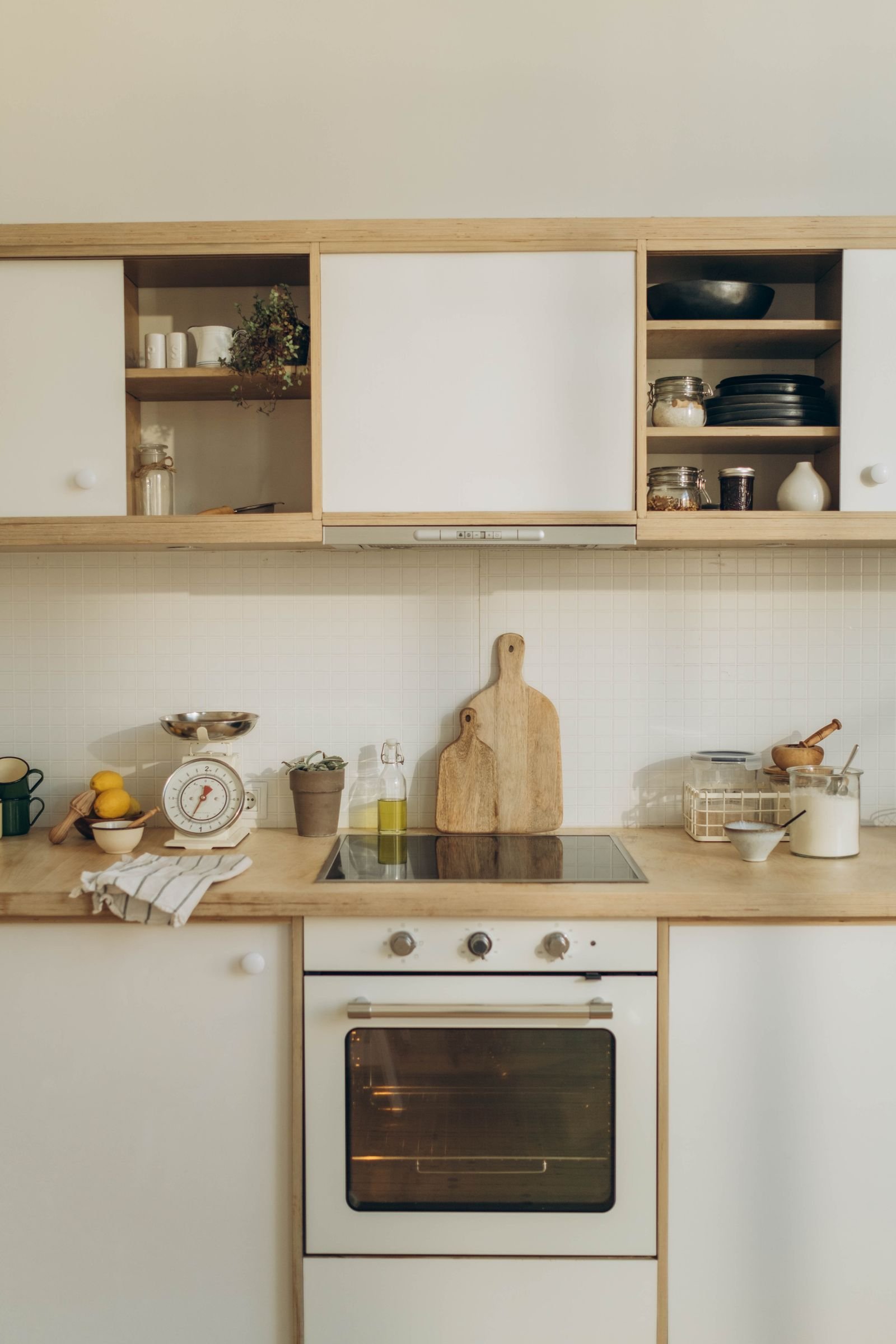
Wood is warmth you can see. If your kitchen has none, add it at three heights: a wooden rail, shelf or plate rack up high; cutting boards leaned against the backsplash at counter level — decor you genuinely use; and a small stool or crate down low. Keep the tones in one family, honey and light oak together, walnut with other deep browns, so the room feels gathered rather than accidental. Two boards are useful; three boards, varied in shape, are a vignette.
13. Build Exactly One Tray Vignette
Pick one spot — the corner by the window is the classic — and build one small, finished scene on a tray or woven mat: a plant, a pitcher or kettle, one candle, perhaps the mugs you love most. One vignette, done properly, does more than scattered prettiness in five places, because it gives the eye a single place to rest and say “this room is cared for.” Keep it clear of the stove and the sink’s splash zone, and stop at one: our kitchen counter decor ideas cover counter styling in full — a small kitchen needs one beautiful moment, not five competing ones.

14. Add One Piece of Art or One Personal Thing
Kitchens are allowed art. One framed print leaned on a shelf — a small botanical, a vintage food illustration — instantly tells the brain this is a room, not a utility. Lean it rather than hanging it if you rent, keep it away from steam’s direct path, and choose a frame in your wood tone or thin brass. The personal version works just as well: a handwritten recipe card in a small frame, a postcard, a grandmother’s bowl. Decor that means something outlasts decor that merely matches.
15. Finish With the Five-Minute Evening Reset of the Look
A decorated small kitchen stays decorated with a tiny ritual, about appearance, not systems: towels straightened, the runner shaken, the vignette’s candle lit or its battery glow switched on, display groups nudged back into their breathing room. Five minutes, mostly with your eyes. The room you reset at night is the room that greets you kindly at the kettle in the morning — and in a small kitchen, that greeting is the whole point.
Small Kitchen Decor Questions
How do I decorate a small kitchen without making it look cluttered?
Edit harder than you add. One palette repeated in three places (ideas 1–2), one curated display with breathing room (idea 9), and one tray vignette (idea 13) give a small kitchen a finished look without crowding it. If a new piece cannot join the palette or the one vignette, it does not belong on show.
What colors make a small kitchen feel bigger and warmer?
Warm light colors: warm white, cream, pale wood tones and one soft accent such as sage, dusty blue or clay. Light colors open the room up; keeping them warm — and using warm 2700K bulbs (idea 5) — is what stops “bigger” from feeling cold.
How can I add kitchen lighting as a renter?
Use battery or rechargeable puck lights and light bars with adhesive pads under cabinets, plug-in sconces or picture lights, and rechargeable bulbs in a small lamp. All of them layer light at counter and mood level with no wiring and no holes (ideas 3–4).
Are peel-and-stick backsplashes worth it in a small kitchen?
Yes, where the eye rests most — behind the stove and along the main counter run. Choose a quiet, material-looking finish, apply it slowly, and test removal in a hidden corner first (idea 11). It is the fastest renter-safe way to warm a cold wall.
What plants work best as small kitchen decor?
Forgiving ones in good spots: a trailing pothos from a high shelf, herbs on the bright windowsill, and a snake plant in a low-light corner. Match and repeat the pots so the green reads as a collection (idea 10).
How much should I spend decorating a small kitchen?
Very little, in the right order: warm bulbs first, then towels and a runner in your palette, then one plant and one piece of art. Most of this article is rearranging, editing and repeating what you already own — the palette discipline in idea 2 is free, and it does the heaviest lifting.