

The Color That Finally Makes Kitchens Feel Calm
Of every room we have written about, the kitchen is where readers ask for sage green most — and it makes sense. Kitchens are the busiest, brightest, most appliance-filled rooms in the house, and sage is the rare color that calms all of that down without turning cold. It worked in the living room, it worked in the bedroom, and in a kitchen it does something extra: it makes stainless steel and white counters look deliberate instead of clinical.
The mistake to avoid is treating sage as one color. It is a family — pale gray-greens that nearly read as neutral, mid sages that clearly say “green,” and deeper olive-sages that behave like a dark neutral. Which one your kitchen needs depends on its light, and this list is organized to help you choose: decor-only steps first, then surfaces, then the full cabinet commitment, with the light rules woven through. Start where your budget and courage meet.
Decor-Only Sage: No Paint, No Tools
1. Start With a Living Herb Row
The cheapest sage in a kitchen is the kind that grows. A row of herbs on the windowsill — actual sage, plus rosemary and thyme, which share its gray-green coloring — puts the color in the room in its original form and earns its keep in your cooking. Terracotta pots warm the green up; white pots cool it down. Choose terracotta. If your windowsill is dark, one small potted olive tree (faux is fine) in a corner does the same job at larger scale.
2. Swap the Small Textiles
Tea towels, a runner, a linen curtain on a small window, the cushion on a breakfast-nook bench — these are the kitchen’s soft furnishings, and changing them to sage and cream is a one-shopping-trip transformation. Textiles are also where you test your shade: live with a sage tea towel against your cabinets and counters for a week before committing to paint. The color you love at the store under fluorescent light is not always the color that comes home.
3. Style the Counters in Sage and Cream
A sage ceramic utensil crock, a stack of cream bowls, a wooden board leaned against the backsplash — this is the layer our guide to kitchen counter decor ideas is built on, and it is where a kitchen starts to look collected rather than equipped. Keep it to things you actually use daily. Sage works hardest when it is on the objects your hands touch, not on decorative clutter you have to dust around.
4. Give the Coffee Corner the Sage Treatment
If you have built yourself a little coffee station — and our coffee bar ideas for small spaces will help if you haven’t — it is the perfect first sage zone. A sage tray under the machine, cream mugs on a small rail, a tiny plant: one square meter of calm that you stand in front of every single morning. Small, finished, and seen daily beats a whole half-done kitchen.
Surfaces: Tile, Walls and Small Paint Jobs
5. Paint One Wall, Not the Cabinets
The wall behind open shelves, the wall around the window, or the small wall at the end of a galley kitchen — one sage wall gives a white kitchen its color story without a single cabinet door coming off its hinges. Walls are also the cheapest surface to repaint when trends move on, which makes this the smart commitment for the cautious. Use a washable kitchen paint in an eggshell or satin finish; matte shows every splash.
6. Put the Green in the Backsplash Tile
A deep green or sage tile backsplash with cream cabinets reverses the usual arrangement — and it is a gift for real kitchens, because tile hides splashes that would show on painted walls, and the grout lines give the green texture and shadow. Glossy tiles bounce light and read brighter; matte zellige-style tiles read softer and more handmade. If a full re-tile is too much, peel-and-stick tiles in a sage tone have improved enormously and survive surprisingly well behind a sink (keep them away from direct hob heat).

7. Paint the Island Only
An island painted sage in an otherwise white or cream kitchen is the highest-impact small paint job there is: one piece of furniture, four sides, a weekend. It works because the island is already the room’s centerpiece — coloring it just admits it. Keep the perimeter cabinets neutral and let the island carry the color alone. If you later fall in love, the perimeter can follow; if not, you have repainted one box, not twenty doors.
8. Try Sage on Open Shelves or a Hutch
A freestanding hutch, a plate rack, or the backs of open shelves painted sage gives you the collected, farmhouse-kitchen feeling with the color contained in one piece. The backs of shelves are a decorator’s trick worth stealing: paint only the back panel, and every cream dish you own suddenly sits in a sage frame. It photographs beautifully and takes an afternoon.
The Cabinet Commitment
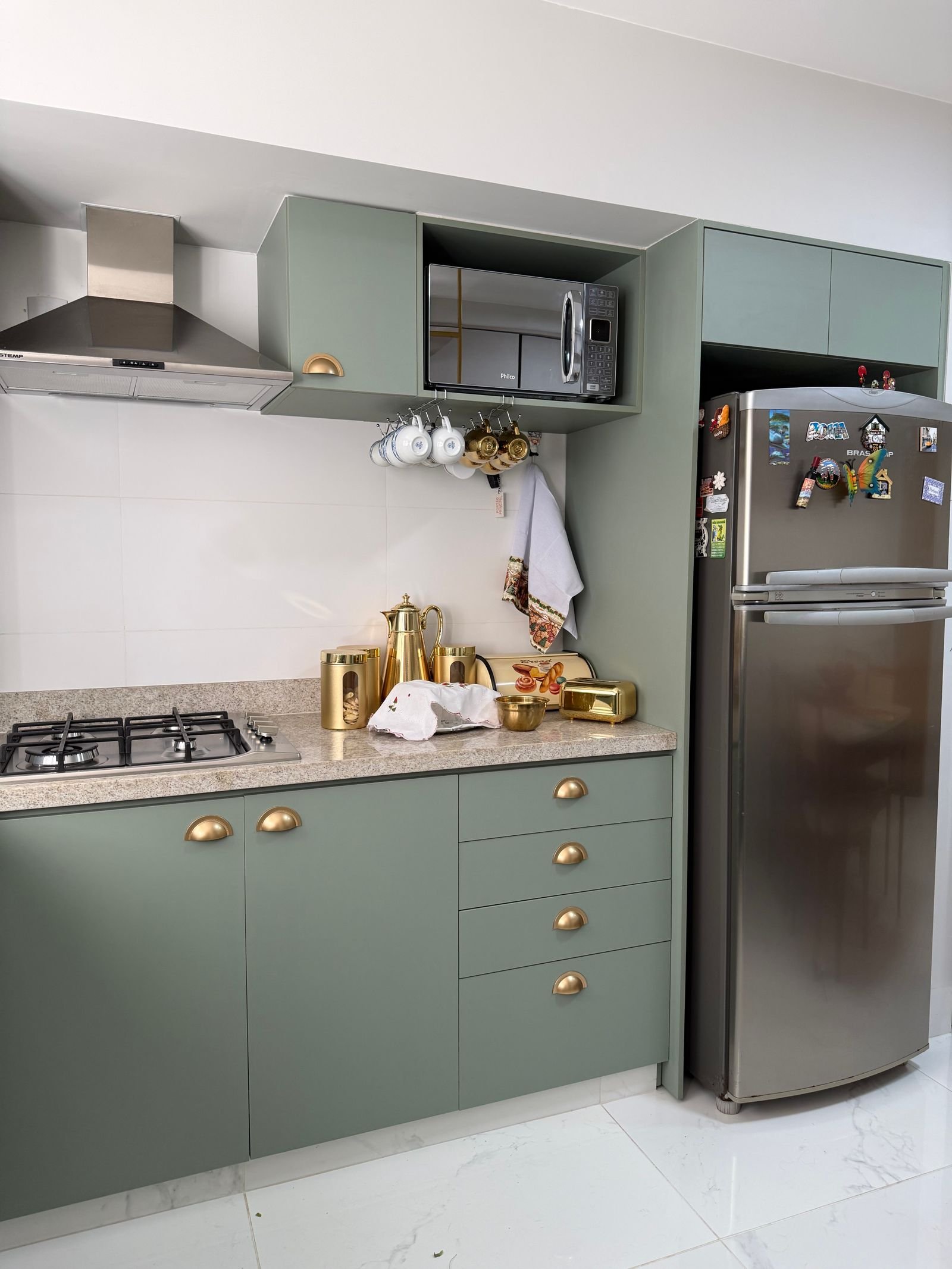
9. Change the Hardware First
Before any cabinet paint: brass. Sage and brass are made for each other — the warm metal lifts the cool green and stops it reading flat. Swapping handles and knobs on existing cabinets costs $40–$120 for a whole kitchen and takes an hour with a screwdriver. Do this first even if you plan to paint, because half the time the hardware change alone makes people realize their cabinets were fine — they were just wearing the wrong jewelry.
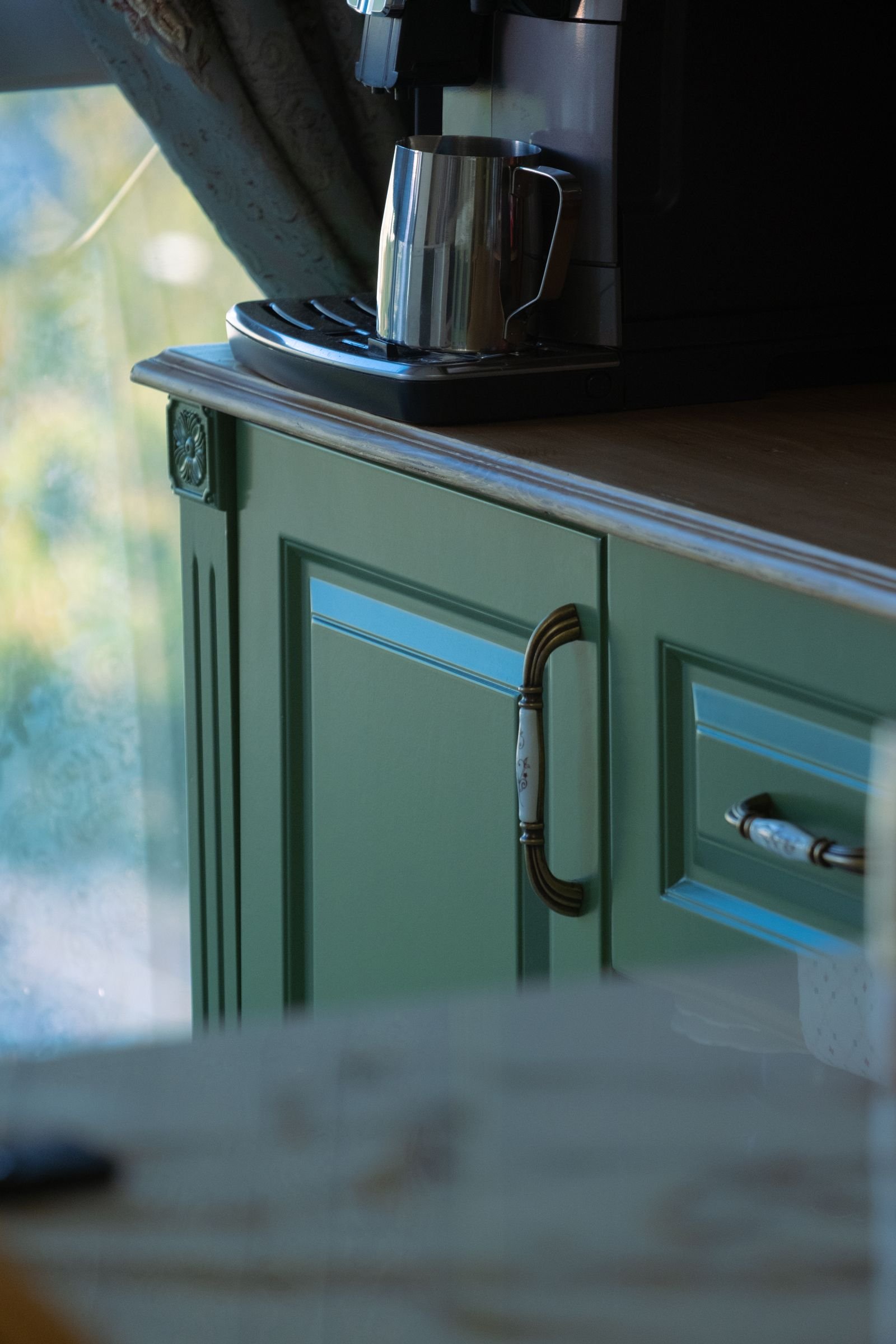
10. Paint the Lowers Only
The classic two-tone arrangement — sage below, cream or white above — exists for a practical reason: kitchens feel top-heavy and dark when the color goes all the way up, and grounded and calm when it stays low. Lowers also take the knocks, and sage hides scuffs and splashes far better than white. Uppers in warm cream keep the room’s light bouncing at eye level where you need it.
11. Or Reverse It: Sage Uppers, Pale Island
Less common, and lovely in bright kitchens: sage on the upper cabinets with a pale wood or cream island below. It suits rooms where the uppers are the long unbroken run and the island is small. The rule that keeps either version working is the same — only one zone gets the color, everything else stays warm and quiet.

12. Go All In: Full Sage Cabinets
The full commitment, and in the right room it is glorious — sage on every door, with brass hardware, a pale counter and warm wood somewhere to break it up. The right room has one of these: big windows, a pale floor, or high ceilings. If your kitchen has none of the three, stop at idea 10. Full sage in a small dark kitchen is the one version of this color that can feel like a cave, and no amount of styling rescues a light problem.
13. Choose Your Shade by Your Light
The most useful paragraph in this article. North-facing kitchens get cool, blue-ish light all day, which pushes sage toward gray and mint — choose a warmer, more olive-leaning sage to compensate. South-facing kitchens get warm light that flatters everything; you can take sage paler and grayer. East and west kitchens change character morning to evening, so test your shortlisted shade on a big board and look at it at breakfast and at dinner before deciding. Paint the board, not a patch on the wall — you can move a board around the room, into the darkest corner, beside the fridge. That is where your shade has to survive.
The Warm Partners
14. Add Wood Wherever You Can
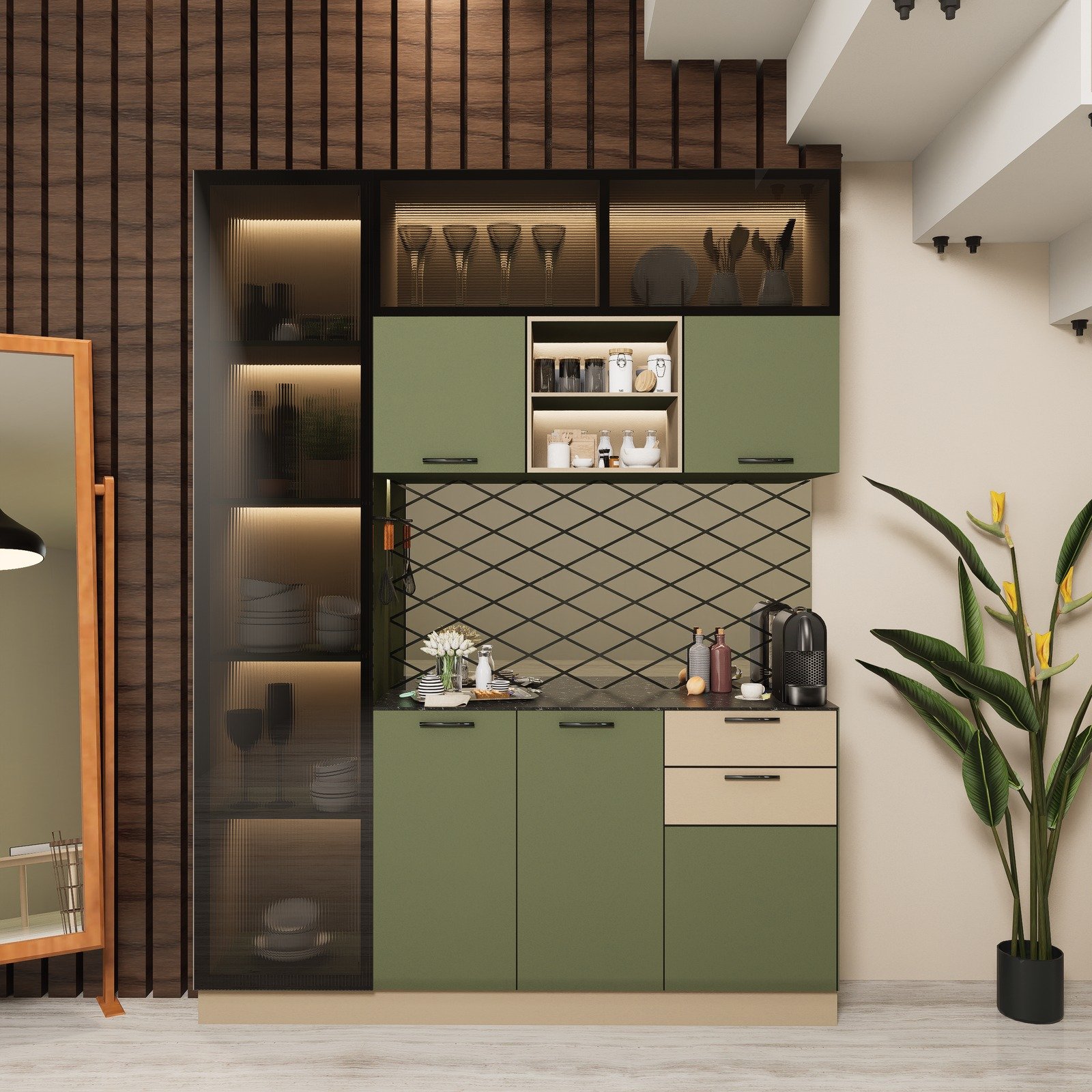
Sage’s warmth comes from its partners, and wood is the chief one: a butcher-block counter or island top, wooden stools, a thick chopping board that lives out, wooden shelf brackets. In small kitchens especially, dark wood against sage gives the collected, slightly European feeling that makes a rental kitchen look owned. One substantial piece of wood is enough — it is a seasoning, not a second main course.
15. Keep the Metals Warm
Brass, brushed gold, copper, even oil-rubbed bronze — warm metals all shake sage’s hand. Chrome and bright stainless are the cold notes; you cannot remove a stainless fridge, but you can stop adding to the cold side of the ledger. Choose the warm option for the kettle, the tap if you are replacing it, the pendant lights, and the hardware (idea 9), and the appliances stop reading as a cold block and start reading as one element among warm ones.
16. Finish With Cream, Not White
The last rule, and it applies to every idea above: where a choice offers white or cream, choose cream. Stark white beside sage makes the green look minty and the white look blue; cream makes sage look soft and itself look warm. Cream counters, cream uppers, cream textiles, warm-white bulbs. It is a small discipline that costs nothing extra and is the difference between a sage kitchen that feels calm and one that feels chilly.
Sage Green Kitchen Questions
What shade of sage is best for kitchen cabinets?
A mid-tone, slightly warm sage — gray enough to stay calm, green enough to read as a color. Pale sages can vanish under bright kitchen lighting; very deep sages belong in large, bright rooms. Test on a board in your own light first (idea 13).
Does sage green work in a small, dark kitchen?
Yes, with the two-tone approach: sage lowers, cream uppers, warm hardware, and the best lighting you can give it. Avoid full-height sage on all four walls of cabinets in a windowless kitchen.
What countertop goes with sage cabinets?
Butcher block for warmth, pale quartz or marble-look surfaces for brightness, and warm cream rather than stark white in either case. Avoid gray-veined counters — the cool gray fights the green.
How much does it cost to paint kitchen cabinets sage?
DIY with a good cabinet paint, primer, and new hardware: roughly $150–$300 for an average kitchen and a long weekend. Professional spraying typically runs $1,500–$4,000 depending on door count — which is why ideas 1–9 exist: most kitchens can get the feeling for far less.
What color walls go with sage cabinets?
Warm cream is the reliable answer. If you want contrast, a soft warm white on walls with cream textiles still works; keep any additional color to wood tones and terracotta accents.