

Warm and Polished Is a System, Not a Shopping Trip
Winter business casual fails in two directions. Dress for the office and you freeze on the platform; dress for the weather and you arrive looking like you’re leading an expedition. The women who manage both are not buying more clothes — they are using formulas: a coat that does the polish, thin layers that do the warmth, and proportions that keep boots and trousers from fighting each other.
That is exactly how this list is built. Twelve formulas, most of them assembled from the capsule pieces in our winter capsule wardrobe guide — if you built that wardrobe with us, you own almost everything here already. Each formula names the pieces, the warmth trick inside it, and the proportion rule that makes it read as office rather than errands. Nothing here requires a shopping trip; a few formulas might send you to your own closet with new eyes.
One honest complication before we start: you dress for two climates every day. The street may be 25°F, but the office is heated to shirt-sleeves, and the meeting room runs hotter. Every formula below is built to come apart gracefully — coat off, maybe the knit too, and what remains still looks like an outfit. If a winter look only works fully assembled, it is a costume, not a work outfit.
The Coat Formulas: Let the Coat Do the Polish
1. Camel Coat + Fine Knit + Straight Trousers
The cornerstone formula. A camel or beige wool-look coat over a fine-gauge knit (crew or turtleneck, tucked in) and straight-leg trousers in black, navy or charcoal. The warmth trick is invisible: a thin thermal base layer under the knit adds more heat than a chunky sweater does, without the bulk that ruins a coat’s line. The polish rule is length — the coat should end at or below the knee, so the whole silhouette reads as one calm column with the trousers just showing beneath.
2. The Belted Coat Trick
Same pieces, one addition: belt the coat. A belted wrap coat creates a waist over all those layers, which is the difference between “warm” and “frumpy” in every winter photograph ever taken. If your coat has no belt, a leather belt over it (buckled, not tied) works on any straight coat with enough structure. Keep everything under it slim — this formula is the argument for the thin-layer system in a single picture.
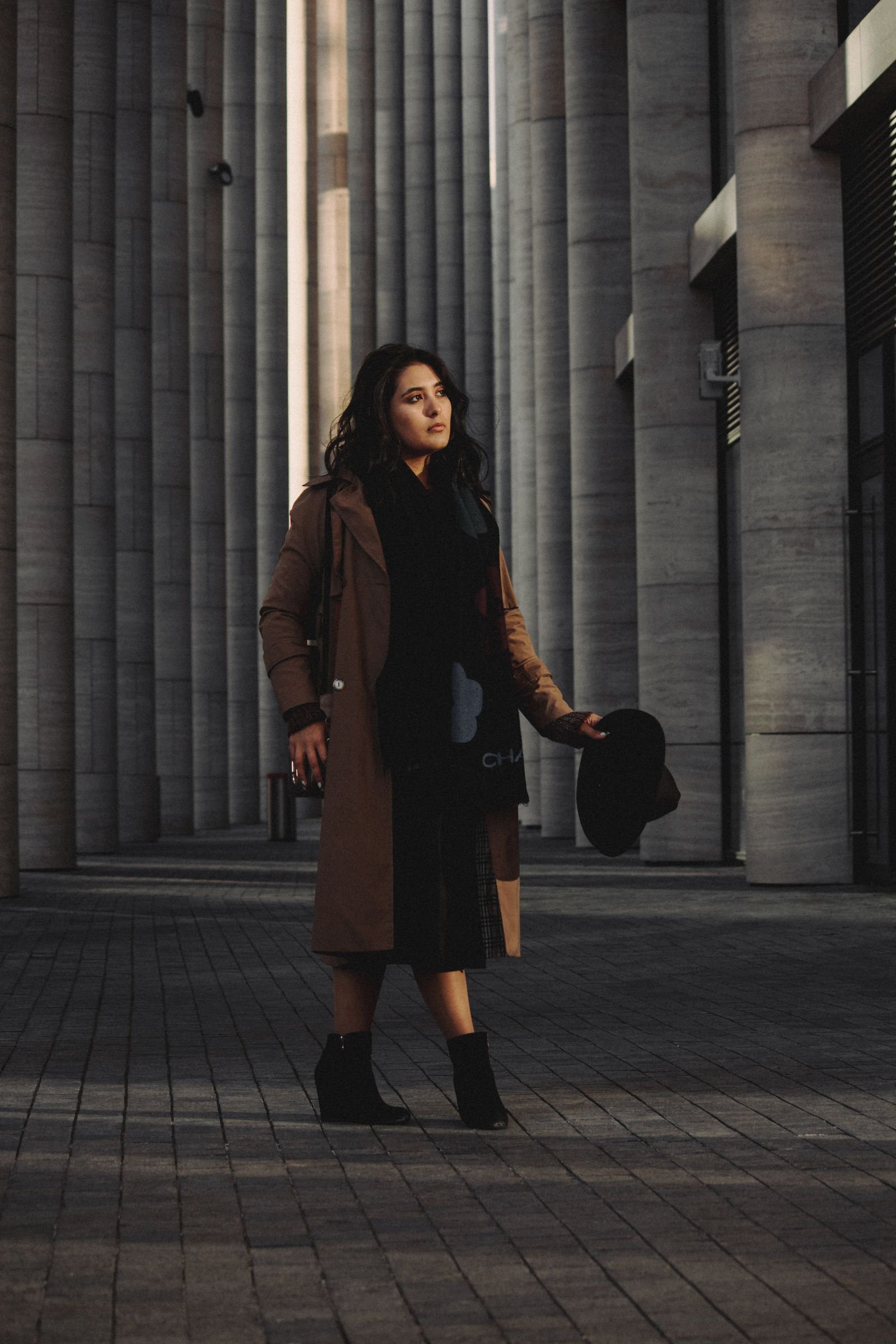
3. Brown Coat + All-Black Underneath
The easiest formula on the list, and the one that looks most expensive: a long brown or chocolate coat over a completely black outfit — black knit, black trousers, black ankle boots. One color underneath means zero decisions and a long unbroken line; the brown coat becomes the entire statement. It also hides a multitude of Monday-morning sins. If you own one good coat and a drawer of black basics, you own this formula.
Skirts and Dresses, Winter-Proofed
4. Grey Coat + Plaid Skirt + the Fleece-Tights Math
Skirts in winter live or die by the tights, so here is the math: ordinary 80-denier tights are fine to about 40°F (4°C). Below that, switch to fleece-lined tights — they look identical to regular opaques and wear like a blanket. Below 20°F (−7°C), fleece tights plus a skirt that reaches the knee or below, with tall boots closing the gap. A plaid or tweed skirt in a wool blend, a white or cream knit, and a grey coat over it all is the full formula: the skirt brings the pattern, everything else stays quiet.

5. The Sweater Dress, Office Cut
A knit dress in a midi length, worn with fleece tights and knee boots, is one garment doing the work of three — which makes it the busiest-morning formula here. The office rules: the knit should be fine enough to look smooth under a coat (save the chunky cable knits for weekends), the neckline modest, and a slim belt or a structured blazer over it turns “cozy” into “considered.” In charcoal, burgundy or forest, it also hides winter’s pallor better than black does.
6. Check Coat Over a Simple Dress
A patterned coat — check, houndstooth, plaid — over a plain dress is the formula for days when you want to look like you tried. The coat carries all the visual interest, so the dress underneath can be the simplest black or navy sheath you own. Proportion rule: the coat must be longer than the dress hem, or at most an inch above it; a dress peeking far below a short coat reads as two outfits arguing. Tall boots close the gap and keep the whole thing weatherproof.

The Layering System (Warmth Without Bulk)
7. The Three Thin Layers Rule
Every formula above runs on the same engine, so here it is plainly: base, middle, shell. Base: a thermal or silk-blend long-sleeve top, worn as underwear, invisible. Middle: your actual outfit — fine knit, blouse, dress. Shell: the coat. Three thin layers trap more warm air than one thick sweater, and each layer stays office-appropriate if the coat comes off. The chunky knit is not banned — it just works better as the middle layer on the coldest days, with the base underneath and nothing bulky over it.
8. The Blazer Under the Coat
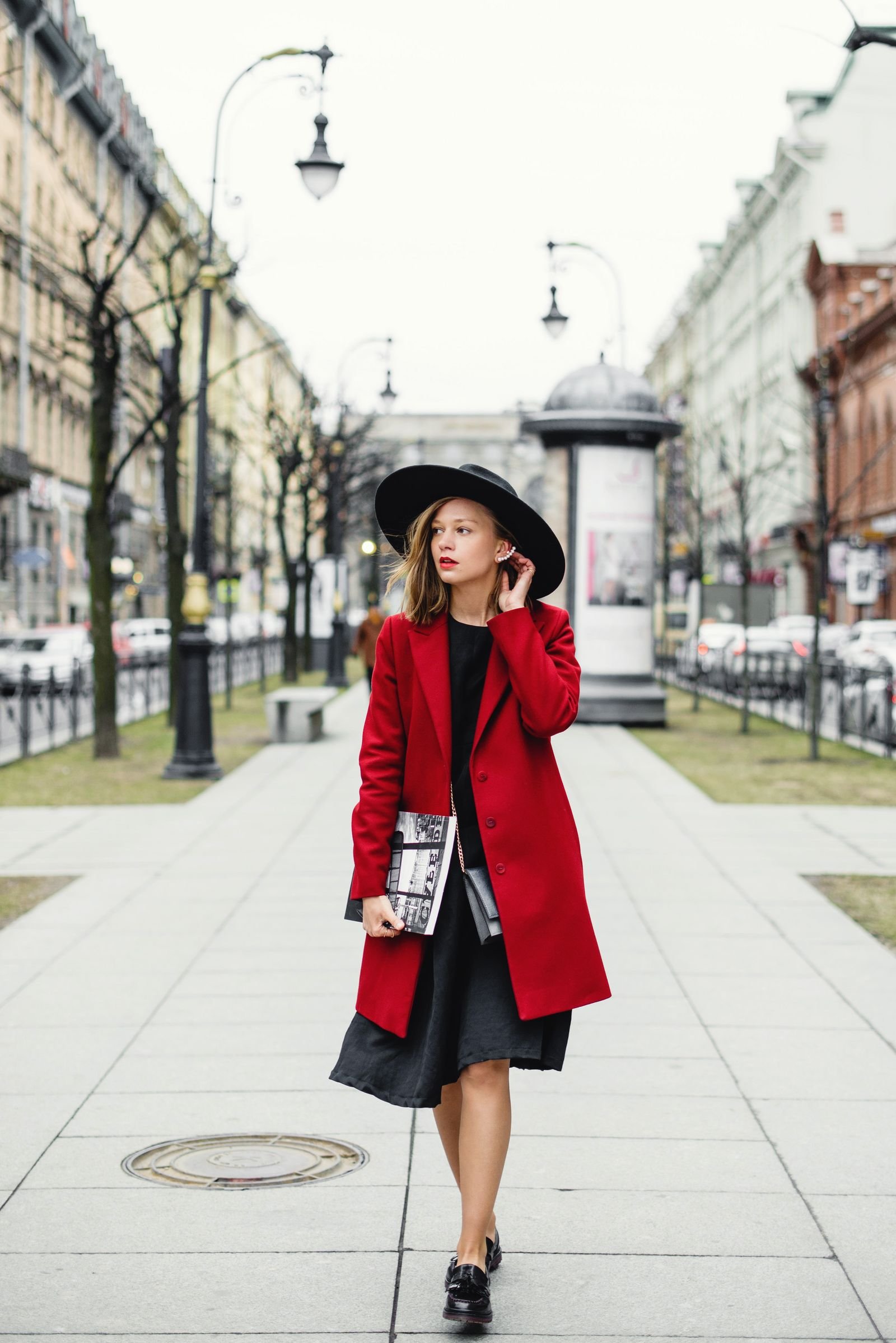
For the days with meetings: a tailored blazer as the middle layer, over a fine knit or a silk-look blouse, under your coat. You arrive, the coat comes off, and the outfit is already at full polish — no midday costume change. The trick is fit: the blazer must be slim enough to sit under the coat without shoulder-bunching, which usually means choosing the blazer a size more fitted than your weekend one. A red or burgundy coat over a grey or navy blazer is the confident version; keep the rest black and simple.
9. Boots and Trousers: the Proportion Rules
Three rules end most winter outfit arguments. Rule one: ankle boots go with cropped or straight trousers that end above the boot shaft — a gap of trouser bunched over the boot is what reads as sloppy. Rule two: wide-leg trousers need a sleeker shoe (a pointed ankle boot or a loafer with a thick sole) and should nearly graze the floor; if they puddle, they read as pajamas. Rule three: knee boots never go under trousers — the shaft fights the fabric all day and shows through every step. Knee boots belong with skirts and dresses, where the boot top disappears under the hem. Match the boot to the formula and winter footwear stops being a daily negotiation.
The Finishing Formulas
10. The Scarf That Works Like Jewelry
In winter, nobody sees your necklace — the scarf is the visible accessory, so choose it like one. One generous scarf in a color that flatters your face (cream, camel, burgundy and soft plaid are the repeat offenders) lifts every coat you own. Wear it looped once, ends even, tucked inside the coat’s neckline for the commute and arranged over it at the desk. A grey coat that looked plain in November becomes a finished outfit with the right scarf — this is the cheapest formula upgrade on the list.
11. The One-Color Column
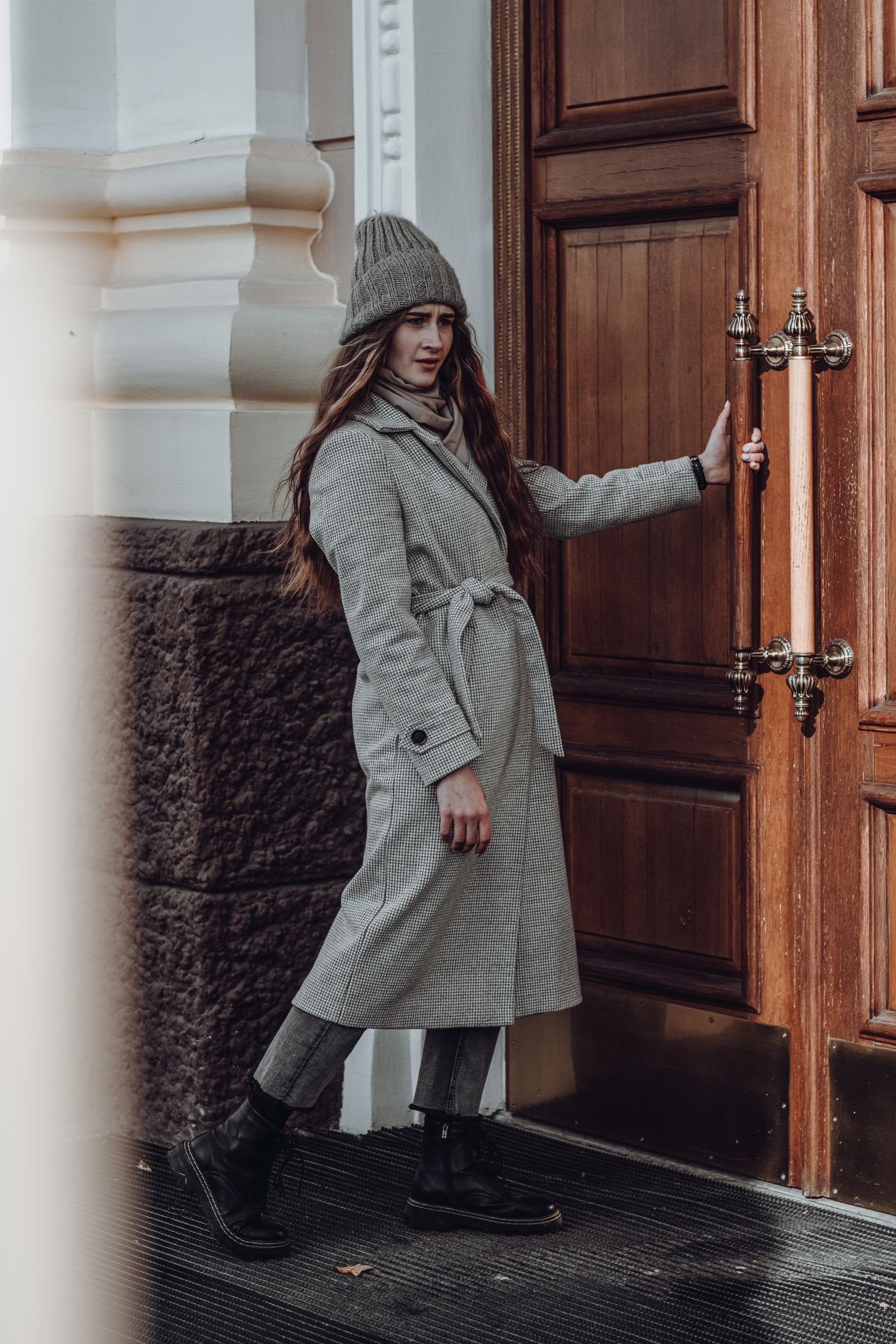
When in doubt, dress in one color head to toe — all black, all navy, all charcoal, all cream — and let the coat be the contrast. A single-color column lengthens, simplifies, and makes every piece you own interchangeable, which is the entire capsule idea wearing a winter coat. Our fall capsule wardrobe readers already have these columns built; winter just adds the thermal base and the coat.
12. The One-Week Rotation
Proof that twelve formulas collapse into five actual mornings. Monday: camel coat formula (1) — the week’s most polished, for the week’s most meeting-heavy day. Tuesday: all-black under brown (3). Wednesday: sweater dress (5) — midweek, minimum effort. Thursday: plaid skirt and grey coat (4). Friday: one-color column with the good scarf (10 + 11), business casual leaning casual. Five outfits, built from one coat rotation and pieces that all mix — and not one morning spent standing in front of the closet negotiating with the weather. That, more than any single outfit, is what a winter capsule is for.
Winter Business Casual Questions
What counts as business casual in winter?
The same pieces as the rest of the year — tailored trousers, skirts and dresses, knits, blazers — made weatherproof with a thermal base layer, fleece-lined tights and a long wool-look coat. If the silhouette stays tailored, the warmth layers underneath are nobody’s business.
How do I stay warm without looking bulky?
Thin layers, not thick ones: a thermal base, a fine knit, and a structured coat trap more heat than a single chunky sweater and keep your shape visible. Belting the coat (formula 2) restores the waist that layers hide.
What shoes work for a winter office commute?
Ankle boots with a low block heel and a grippy sole for most days; keep a pair of office shoes at your desk for icy mornings when you commute in real winter boots. Never stilettos on ice — no outfit survives that photograph.
Can I wear a sweater dress to the office?
Yes, in a fine knit, midi length, with fleece tights and knee boots, sharpened with a belt or blazer (formula 5). Save chunky oversized knits for casual Fridays or weekends.
How many coats do I actually need for a work wardrobe?
Two is the sweet spot: one neutral tailored coat (camel, grey or black) and one with personality (a check, or a color like burgundy or red). Between formulas 1–12, two coats cover every working week of winter.