
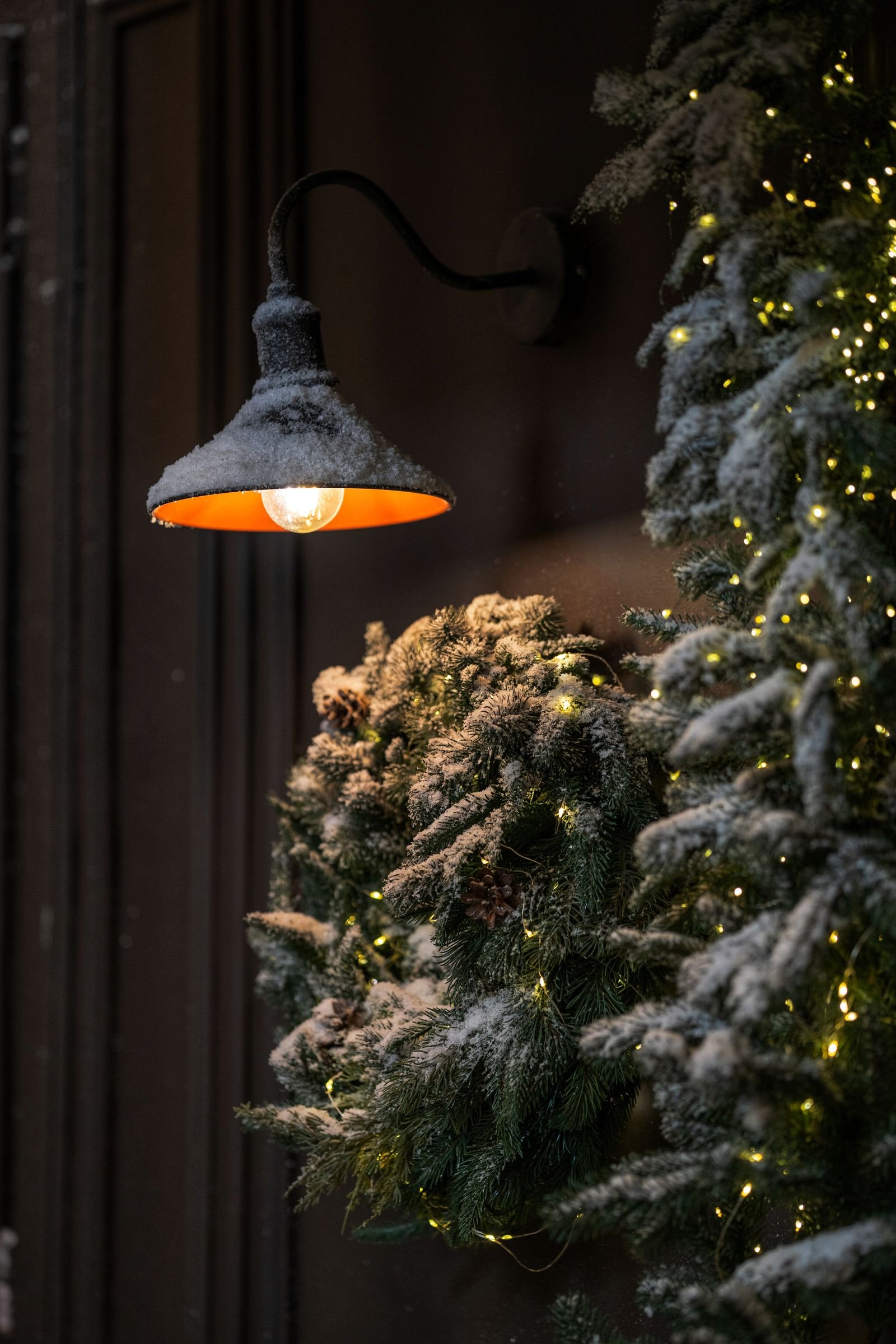
There is a particular kind of bleak that arrives in the first week of January. The tree is at the curb, the lights are back in their bin, and the front door — which looked so good three weeks ago — is suddenly just standing there, bare, for the coldest and darkest stretch of the year. Most of us leave it that way until spring. It does not have to be.
A winter wreath is not a Christmas wreath that overstayed. It is a different animal: all texture and quiet color, built from the things that actually look right in January and February — mixed evergreen, pinecones, white berries, silvery eucalyptus, dried citrus, bare grapevine. No baubles, no glitter, no big red bow announcing a holiday that has already happened. Below are the styles that work, what each one costs, how long each honestly lasts outside, and how to hang the thing without putting a single hole in your door.
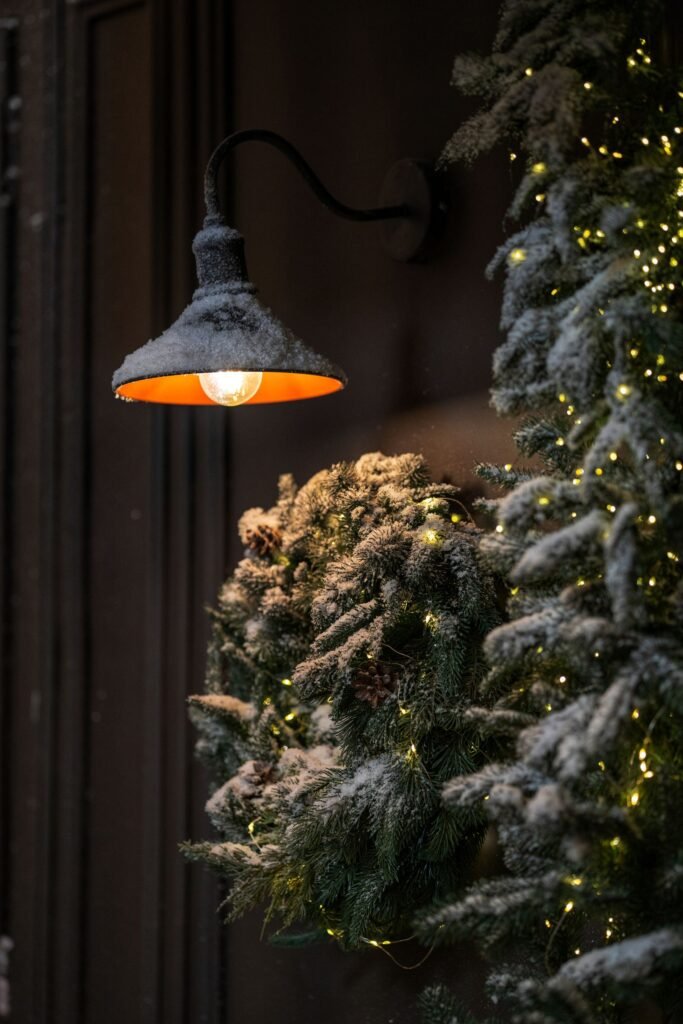
First, What Makes a Wreath “Winter” and Not “Christmas”
The difference is mostly subtraction. Christmas styling adds: shiny ornaments, tinsel, glitter, plaid, and above all that big red bow. Winter styling keeps the bones — greens, cones, wood, berries in muted tones — and stops there. If a wreath would look at home in a snowy woodpile photo, it is winter. If it needs a December soundtrack, it is Christmas.
Already own a Christmas wreath you love? You may not need to buy anything. Strip it down: pull the baubles and the bow, keep the greenery and cones, and tuck in two or three stems of eucalyptus or a few dried orange slices where the ornaments were. Ten minutes later it reads as a completely different, calmer wreath. (If you are shopping for the December version instead, our Christmas wreath ideas cover that season properly — and pack this year’s bow away safely, because our Christmas wreath bow ideas will give it a second life next December.)
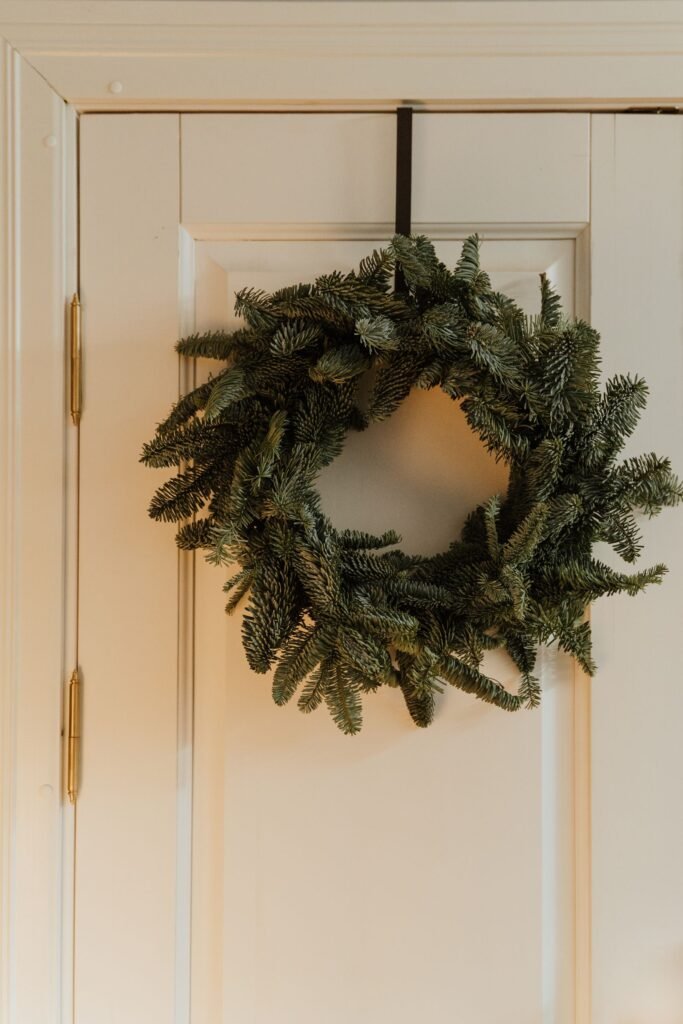
Get the Size Right Before You Fall for a Photo
Wreath listings are photographed on narrow doors, which is how a 20-inch wreath ends up looking lost on a real house. The reliable rule: a wreath should span roughly two-thirds of the door’s width.
- Standard single door (36 inches wide): a 24-inch wreath is the sweet spot; 22 to 26 inches all work.
- Double doors: one wreath per door, 20 to 22 inches each, hung at exactly the same height.
- Tall or oversized doors (40 inches and up, or 8-foot doors): go 28 to 30 inches, or the wreath floats.
- Placement: hang it so the center of the wreath sits about 57 to 60 inches from the ground — eye level — with at least 4 inches of door showing on each side.
One measurement people forget: depth. A full wreath is 4 to 6 inches thick. If you have a storm door, measure the gap between the two doors before you buy — a plump wreath in a 3-inch gap gets crushed flat by February, and crushed is the one look nobody is going for.
1. Mixed Evergreen, Nothing Added
The purest winter wreath is just greens — but three or four kinds, not one. Fir gives the classic shape, cedar drapes, juniper adds blue-green berries and a wilder edge, and a little pine loosens the whole thing up. Nothing shiny, nothing red, and it still stops people on the sidewalk, because the texture does all the work.
Fresh-cut mixed evergreen is the budget champion here: $25 to $45 at a garden center, and outdoors in cold weather it genuinely lasts — four to six weeks looking good, because winter air is a refrigerator. A good faux version runs $40 to $90 and asks nothing of you at all. If you buy one wreath from this whole list, this is the one that goes with every door color ever painted.

2. Pinecone-Forward, the Longest-Lasting of All
A wreath built mostly or entirely of pinecones is the workhorse of winter decorating. Cones do not fade, do not wilt, do not drop needles, and do not care about a freeze-thaw cycle. Wired or glued onto a grapevine or wire base, a cone wreath will come back out of the storage bin looking identical for five winters or more.
Style it two ways: all-natural browns for a woodland door, or with the cone tips lightly flocked — that dusting of white is what takes it from autumn to deep winter. It is also the best DIY on the list. Cones are free if you have a park and a bag (bake them at 200°F for 30 minutes first to evict any residents), a base costs about $6, and a finished wreath comes in under $25 even if you buy the cones in a craft-store bag. Bought ready-made, expect $35 to $70.

3. White Berries and Frosted Greens
If your door is dark — black, navy, deep green — this is the combination that glows against it. Snowberries and white winterberries, frosted or flocked greenery tips, a cone or two for weight. The palette is basically fresh snow and shadow, and it is the furthest thing from Christmas a wreath can be while still using evergreen.
Practical notes: faux white berries hold their color all season and are worth it here, because fresh winterberry stems start dropping berries after three or four weeks of freeze and thaw. Keep the flocking light — a heavy-handed flock job reads as spray paint, and it sheds white dust on the doorstep every time the door slams. Ready-made, these run $40 to $75.

4. Eucalyptus and Magnolia, the Modern Route
The wreath that took over every minimalist doorstep: silvery-green eucalyptus, sometimes with magnolia leaves showing their copper-brown undersides. It is softer and more modern than pine, it suits pale and contemporary doors beautifully, and it sidesteps “holiday” entirely — this one can honestly stay up into early spring.
Choose your material by your porch. Fresh eucalyptus looks best but crisps within two to three weeks outdoors. Dried or preserved eucalyptus lasts two to three months, as long as it hangs under a porch roof — rain is its enemy, and a soaked dried wreath never recovers its shape. Faux is the exposed-door answer, $35 to $80, and the good ones are now hard to tell from dried at arm’s length. Whichever you pick, the loose, slightly asymmetric styling is the point; a too-perfect eucalyptus circle looks like a steering wheel.

5. Dried Citrus and Cinnamon
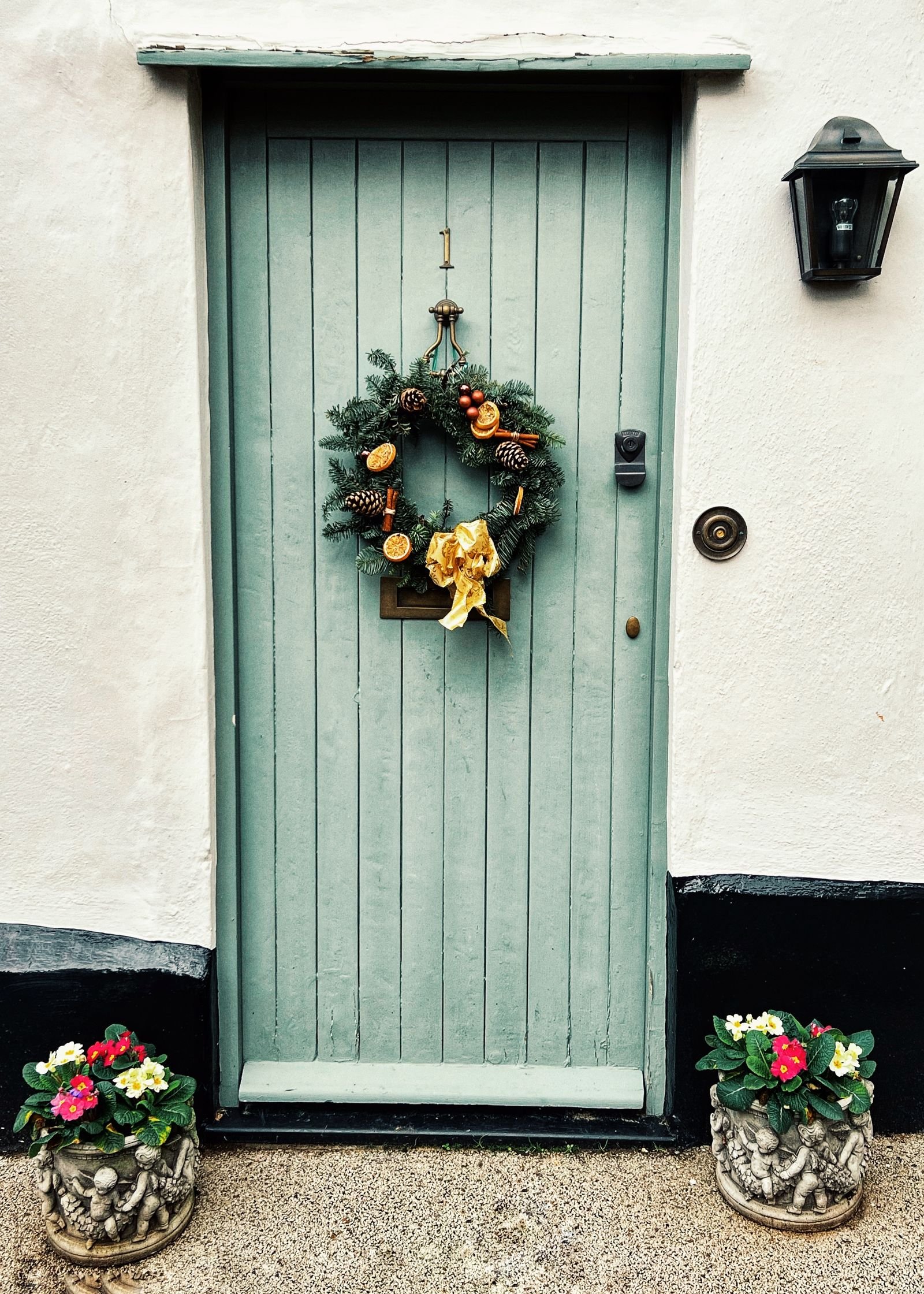
Dried orange slices are how you get color into a January wreath without a drop of Christmas red — they read amber and honey, not holly berry. Wired onto evergreen with a few cinnamon sticks and cones, this is the warmest-looking wreath on the list, and the one guests comment on, because on a cold day the spices genuinely do scent the entry for the first week or two.
Drying the slices yourself is an easy afternoon: slice oranges about a quarter-inch thick, pat them dry, and bake at 200°F for three to four hours, flipping every hour, until they are translucent and leathery. Under a covered porch, a citrus wreath lasts six to eight weeks before the slices darken; on an exposed door, halve that. Buy the wreath ready-made for $30 to $60, or build one for under $20 if the oranges are already in the fruit bowl.
6. Bare Grapevine and Dried Whites
The quietest option: a grapevine base left mostly visible, dressed on one side with dried grasses, cotton bolls, baby’s breath or bleached ferns. It is part wreath, part sculpture, and it suits brick, stone and wood doors that fight with greenery. It is also the cheapest start in decorating — a grapevine base is $6 to $12, and dried stems are a few dollars a bunch.
The honest trade-off is weather. Dried flowers and rain are not friends: this style belongs under a real porch roof, on a door that stays dry. Treated gently and stored flat in a box, the same wreath comes back for several winters, because nothing in it can wilt. Think of it as the wreath for people who found every other wreath on this list slightly too much.

How Long Each Style Actually Lasts Outside
Since “how long will it look good” is the real question, here is the honest rundown for a wreath hung outdoors in winter:
- Fresh mixed evergreen: 4 to 6 weeks in cold weather. Mist it on milder days and it leans toward six; an anti-desiccant spray from the garden center adds a week or two.
- Pinecone: years. Hose the dust off each November and it is new again.
- White berry (faux) / frosted: a full season, easily. Fresh winterberry: 3 to 4 weeks before berries drop.
- Dried or preserved eucalyptus: 2 to 3 months, sheltered. Fresh: 2 to 3 weeks.
- Dried citrus: 6 to 8 weeks covered, about a month exposed.
- Dried flowers and grasses: one full season under a roof; a few storms if not.
- Good faux anything: 3 to 5 seasons before sun fade starts to show.
And the variable that matters more than material: exposure. A wreath under a covered porch lives roughly twice as long as the same wreath on a door that takes wind and rain head-on. If your door is exposed, choose cones, faux greens or berries, and let the dried styles live on a sheltered wall or inside instead.

Hang It Without a Single Hole
Every method below is renter-safe and landlord-approved, and none of them involves a nail through the door:
- Over-the-door hanger ($8 to $15): the classic for a reason. Stick felt pads on the back where it touches the door, or it will quietly wear the paint by March.
- Ribbon over the top: loop a wide ribbon around the wreath, run it over the top of the door, and tack or hook it on the inside face. Nothing shows outside but ribbon, and you set the height exactly.
- Outdoor adhesive hooks: fine for wreaths under about 5 pounds on smooth doors. Apply them on a milder day — the adhesive needs roughly 50°F or warmer to bond properly — and respect the weight rating.
- Magnetic hooks: the strongest option of all, but only on steel doors. One magnet pair holds a heavy fresh wreath without blinking.
- The knocker trick: if your door has a sturdy knocker, a short loop of twine or wire over it hangs a light wreath with zero hardware at all.
With a storm door, hang the wreath on the outside of the storm door itself with an adhesive hook, or choose a slimmer wreath (4 inches thick or less) that fits the gap without being crushed.

The Bottom Line
A winter wreath asks very little: pick the style your porch can support — cones or faux for the exposed doors, dried and delicate for the sheltered ones — size it to two-thirds of the door, and hang it without a fight. Do that in the first week of January and the hardest-looking stretch of winter gets a door that still says somebody home loves it here. And when you are ready to dress the rest of the entry around it — planters, lanterns, the works — our winter front porch decor ideas pick up right where the wreath leaves off.