
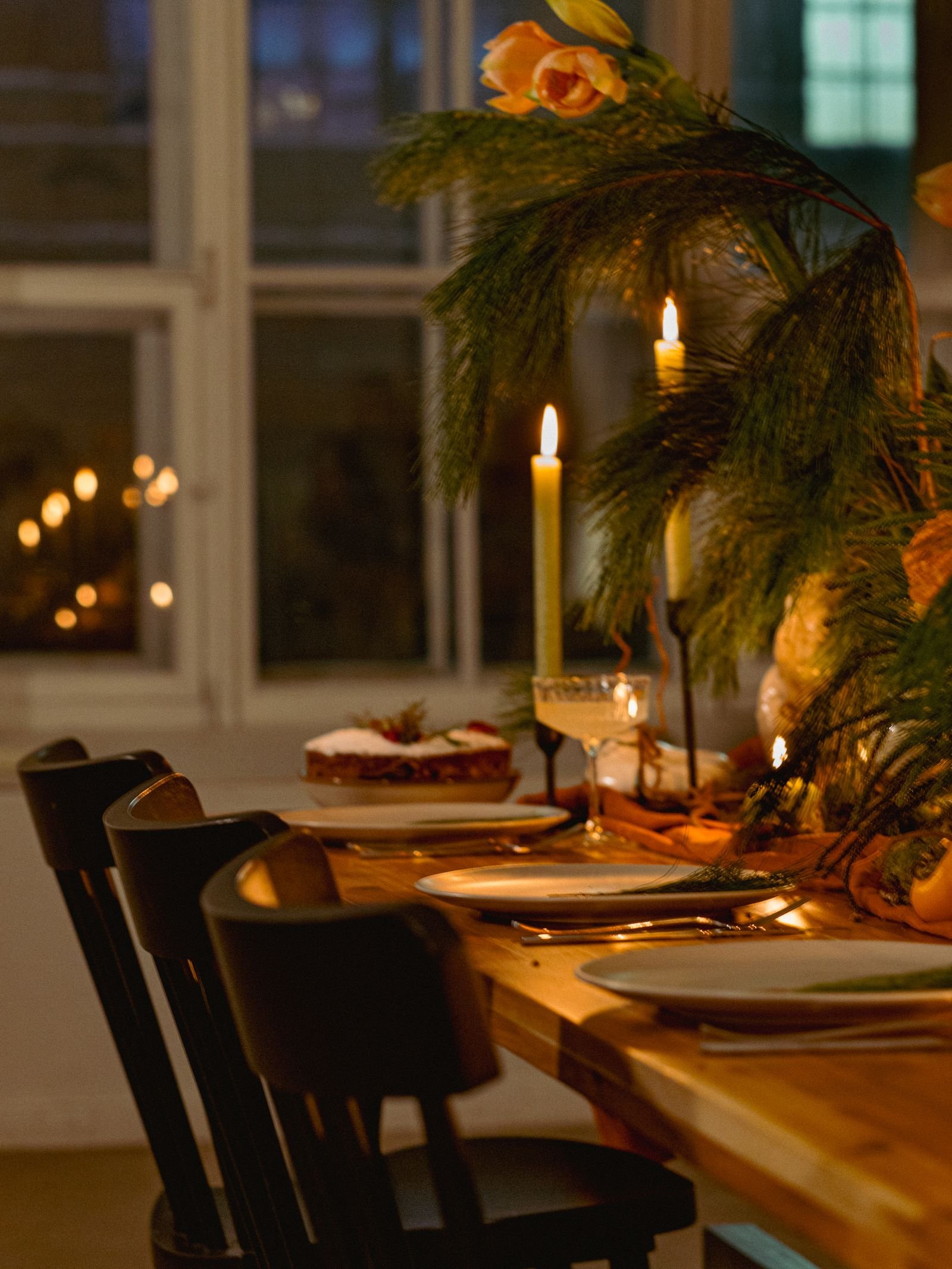
Every year I do the same slightly sad thing on December 27th. I pack the ornaments, haul the tree out, and then I stand looking at a table that has gone completely bare — right at the start of the darkest stretch of the year, when we are actually home the most. For years I left it empty until spring. Then one January I kept the candles out, and honestly, the room changed. Dinner felt like an occasion again, even when dinner was soup.
That is what a winter centerpiece is for. It is not the December table running late. It is a calmer arrangement built for January and February: a dough bowl of pinecones, a cedar runner, candles doing the heavy lifting, paperwhites coming up in a pot. No red, no ornaments, nothing that needs a holiday to explain it. Below are the combinations I rotate through, what they cost, and how long each honestly lasts.
First, What Makes a Centerpiece “Winter” and Not “Christmas”
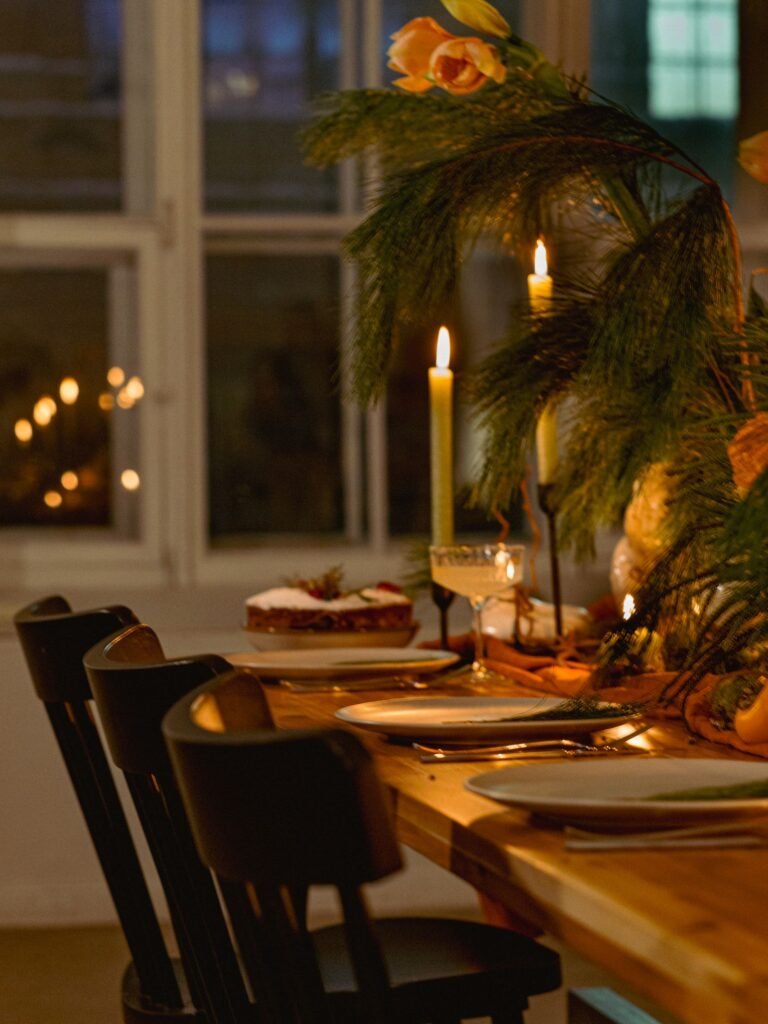
The difference is mostly subtraction, same as everywhere else in the house. Christmas styling adds: shiny baubles, ribbon, glitter, and that unmistakable red-and-green pairing. Winter styling keeps the bones — evergreen, cones, wood, cream and white, warm metal — and stops there. If the arrangement would look right in a photo of a cabin in February, it is winter. If it needs carols, it is December, and December is over.
If you are mid-purge like I was, our winter decor ideas after Christmas walk through the whole house room by room. And if you are reading this in December and want the full festive version instead, our Christmas table decor ideas cover that table properly — save the baubles for then. January’s table is better without them.
One practical thing first: height. Keep the arrangement under about 12 inches tall, or lower and longer, so people can see each other over it — I learned this the year my sister spent a whole dinner leaning around a vase like she was checking traffic. And leave 6 inches of bare table between the centerpiece and each setting, or every serving bowl becomes a negotiation.
1. Candlelight First, Everything Else Second
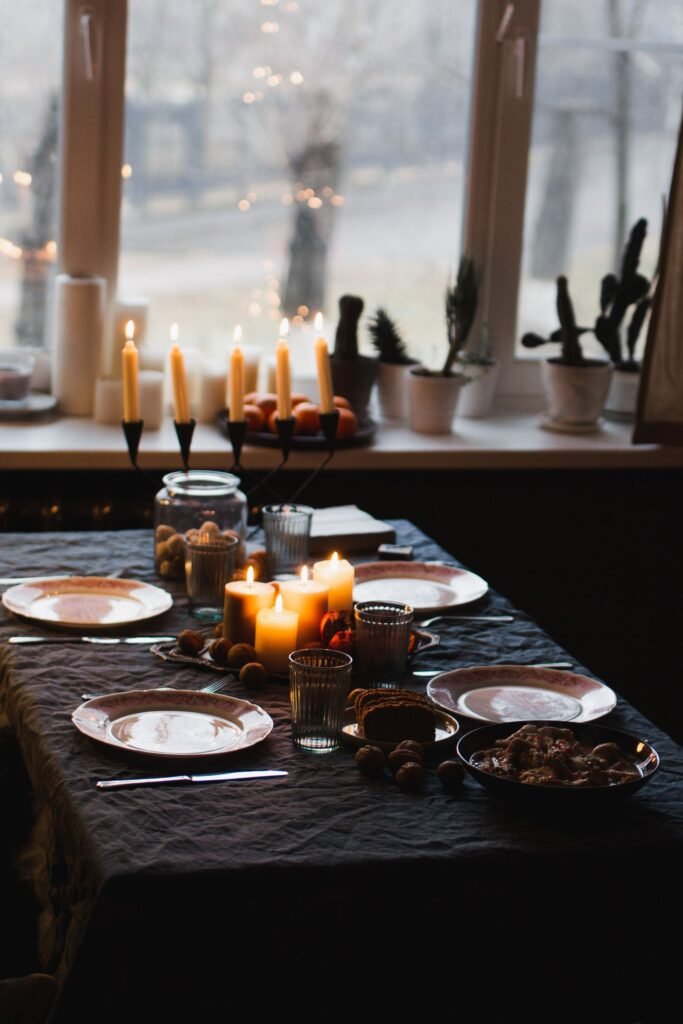
If you take one idea from this list, take this one: in January, the candles are the centerpiece. It gets dark at five. A table lit by three or five real flames looks finished even if the “arrangement” around them is just a linen runner and a bowl of walnuts. I group candles in odd numbers, at mixed heights — tapers, pillars, one low votive — because a row of identical candles reads like a restaurant, and not in a good way.
Brass and aged-metal holders earn their keep here; they throw the warmest reflections and never fight with anything else on the table. Battery candles have genuinely improved, and I use them on weeknights when I know I will forget to blow anything out, but for a slow Sunday dinner I still light the real ones. The smell of a just-snuffed candle is part of winter for me.
Cost is whatever you want: tapers are a few dollars a bag, decent pillars run $5 to $12 each, and holders are a thrift-store sport — I have never paid more than $6 for one. Nothing gives you more atmosphere per dollar.
2. The Cedar and Evergreen Runner
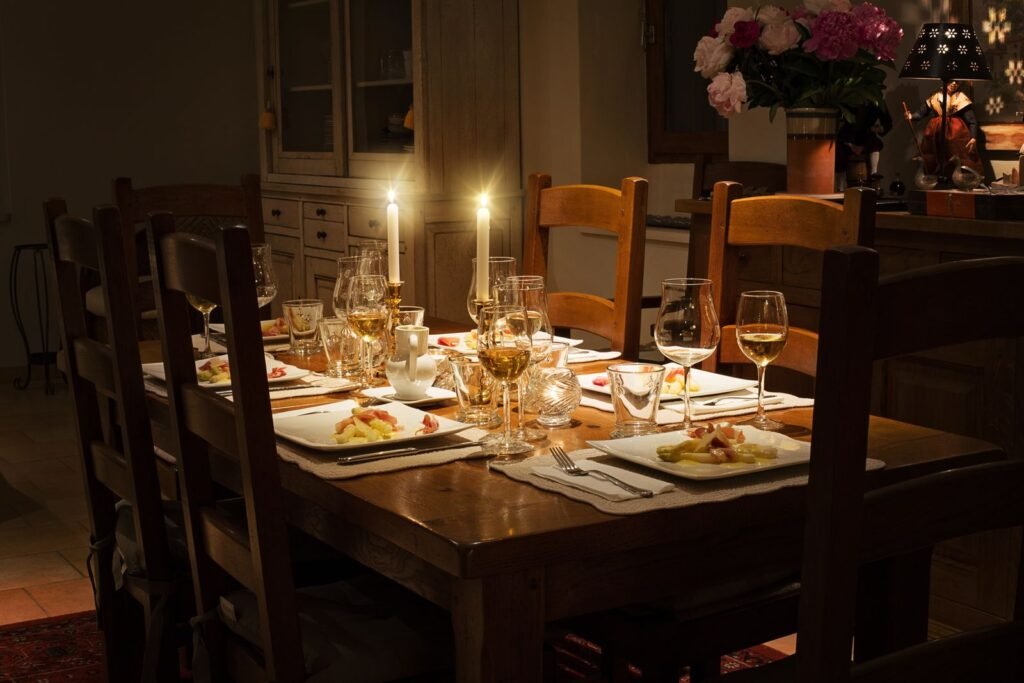
A loose runner of real greenery down the center of the table is the closest thing January has to a tablecloth upgrade. Cedar is my favorite — it drapes instead of standing up stiff, it smells wonderful for the first week, and its feathery texture makes even a plain white plate look deliberate. Tuck in a few pinecones and short candle holders as you lay it, and you are done in ten minutes.
Garden centers sell fresh cedar and fir by the bunch for $8 to $15 in winter, and if you have a tree in the yard, the whole thing is free. Lay it the day you bring it home, mist it every couple of days, and it looks good for two to three weeks indoors — house warmth is harder on it than cold would be. When it crisps, lift it into the compost and lay a fresh one; the second laying takes five minutes.
A good faux garland, $30 to $60, is the honest alternative if your dining room runs hot. Get mixed greens rather than one uniform plastic green, and bend every stem first — that minute of messing it up is the difference between “garland” and “garden.”
3. Frosted Pinecones, Piled Generously
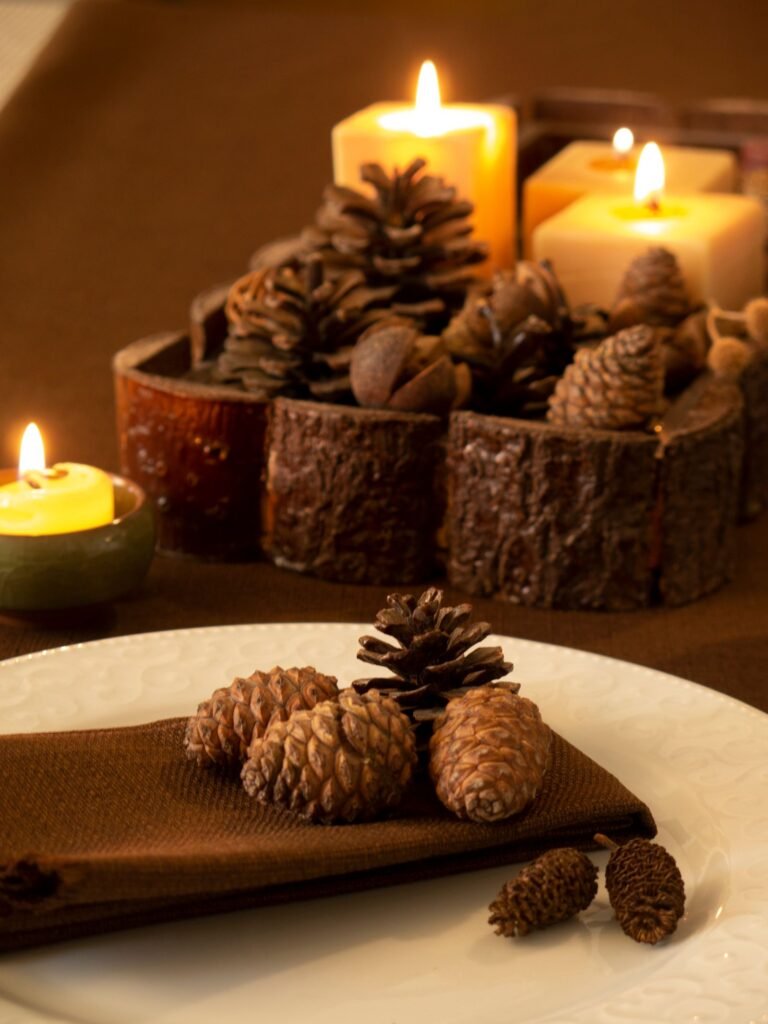
Pinecones are the workhorse of the winter table, the same way they are on the door. They do not wilt, fade, or drop anything, and a pile of them in a low bowl or scattered along a runner looks good from the week after Christmas straight through to March. My rule is generosity: three cones in a bowl looks like you ran out. Fifteen looks like a decision.
For the frosted look, buy them ready-frosted ($10 to $18 a bag), or brush the cone tips with white craft paint and a nearly dry brush — ten minutes, very forgiving, and the imperfect ones look most like snow anyway. If you gather your own, bake them at 200°F for 30 minutes first to evict any residents, and let them cool before painting.
My favorite cheap trick is scent: a drop of cinnamon or cedar oil on a few cones and the table smells faintly like a winter walk. Go easy — a drop or two total, unless you want dinner to feel like a candle shop.
4. The Dough Bowl, Filled and Left Alone
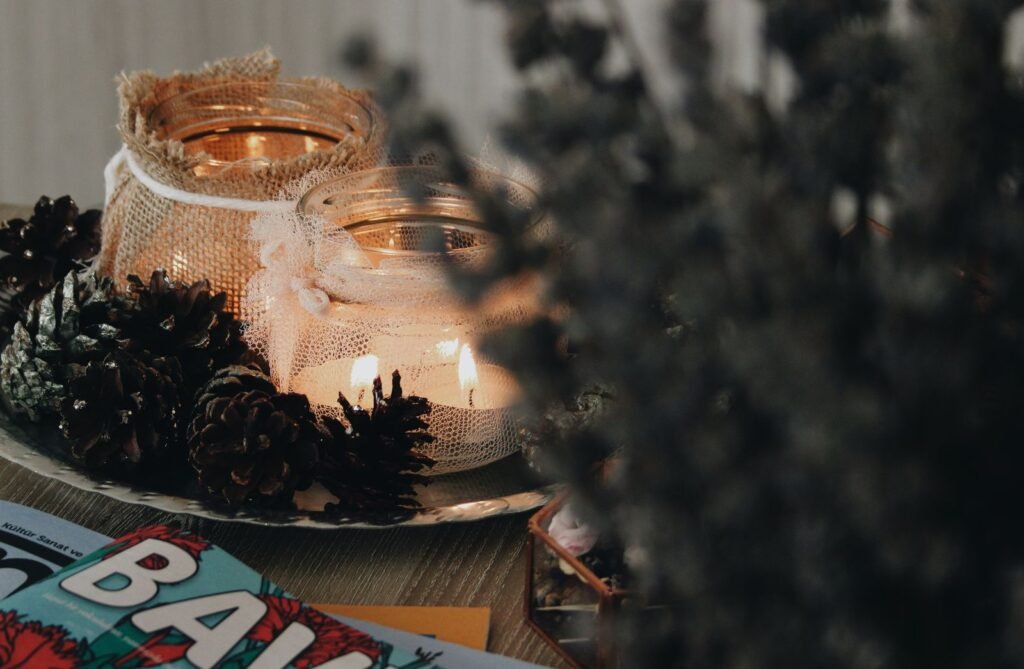
If you own a long wooden dough bowl, January is its season. Filled with pinecones, a few white berries, a short string of wooden beads and a pillar candle settled in the middle (in a glass holder, please — wood and open flame need a chaperone), it becomes the kind of centerpiece you set down once and simply live with. Mine stays on the table for weeks. I clear around it, eat around it, and only move it for the big Sunday clean.
No dough bowl? A long wooden tray or shallow ironstone bowl does the same job. The formula matters more than the vessel: something long and low, something natural piled in, one source of glow. Dough bowls run $25 to $60 new and far less at flea markets; the fill is mostly free if you gather cones, and faux white berry stems are $4 to $8 each.
This is also the most forgiving arrangement for real life. Nothing in it can spill, wilt, or be ruined by a serving dish landing on it — more than I can say for any winter floral arrangement I have owned.
5. Paperwhites and Winter Bulbs, the Living Centerpiece
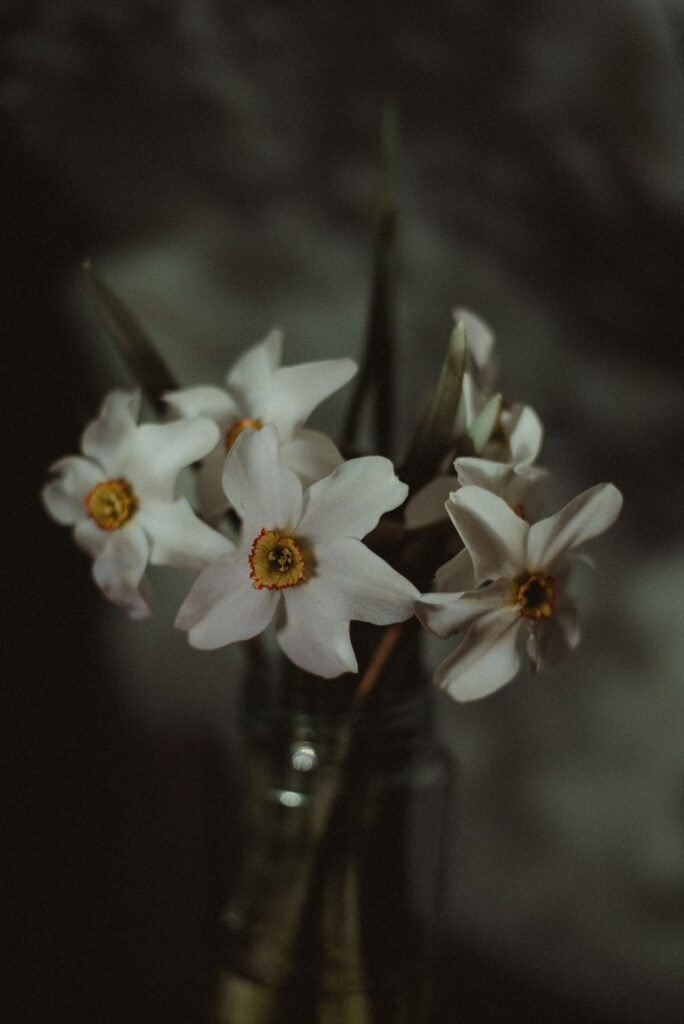
Sometime in mid-January, when the greenery is on its second batch and I am quietly tired of brown and green, paperwhites save the table. Set the bulbs in a low bowl of pebbles, add water to just below the bulb, and in four to six weeks you have tall, white, sweet-smelling flowers rising out of winter like they did not get the memo. Amaryllis does the same job with more drama — one bulb, one pot, one enormous bloom.
Start a pot in early January and it carries the table through the worst weeks. Bulbs run $8 to $15 a bag, and the pebbles-and-water method means no soil on the table, ever. Two honest warnings: paperwhites grow tall and flop, so tie them loosely to a thin twig in the pot, and their scent is strong — glorious to most of us, too much for a few guests.
The same instinct works at the window beside the table — our winter window decor ideas cover bulbs, candles and greenery for the glass itself, and a dressed window makes any centerpiece look twice as good after dark.
6. White Berries, Cream and Brass — the Quiet Palette
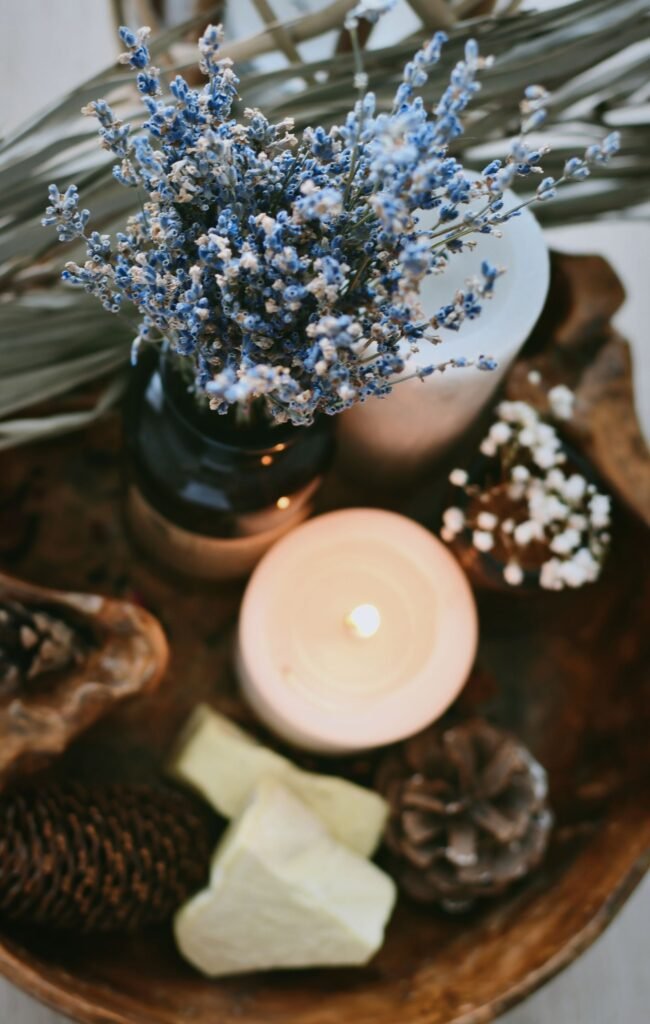
When I want the table to feel calm rather than rustic, this is the combination: faux snowberries or white winterberries, cream linen, and brass. The palette is basically fresh snow and candlelight, and it suits a darker dining room especially well — the whites seem to gather what light there is.
Keep the brass warm and a little aged rather than bright and polished; shiny new brass tips the whole thing toward formal, and formal is not the mood of a Tuesday in February. Fresh-cut winterberry starts dropping after three or four weeks indoors — another point for good faux stems, which come out of the box next January looking exactly the same.
And because table and mantel are usually in sight of each other, I use the same palette for both. Our winter mantel decor ideas use the same cream, brass and greenery, so the room feels like one decision instead of two arguments.
7. Layered Linens and the Fully Dressed Table
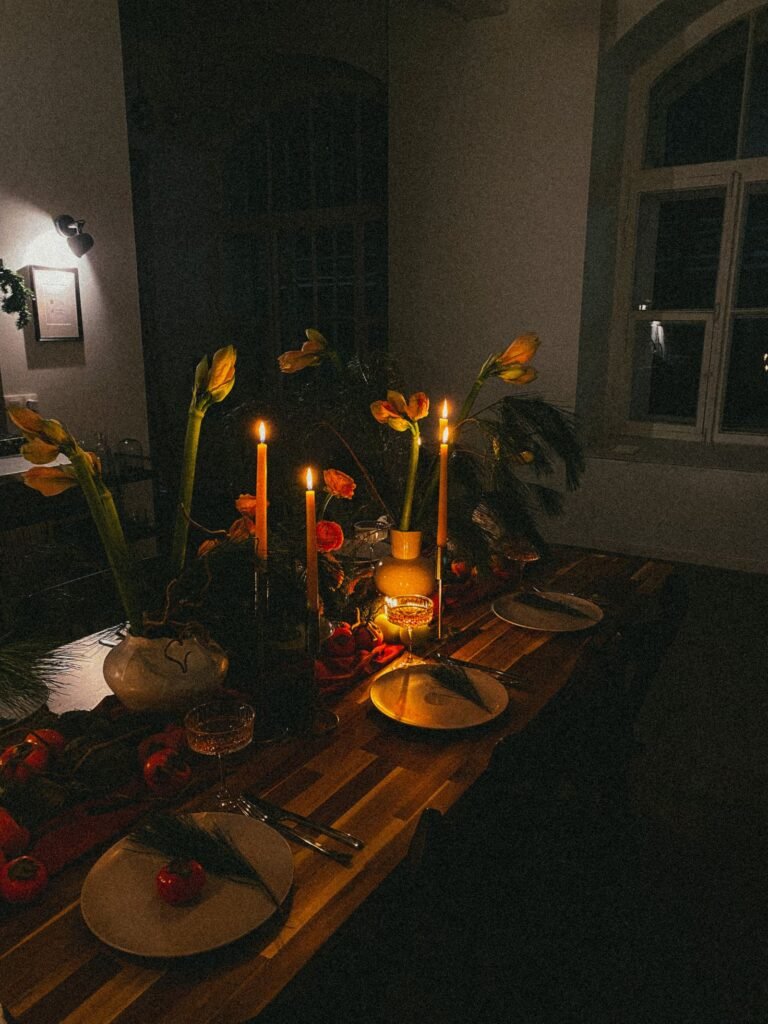
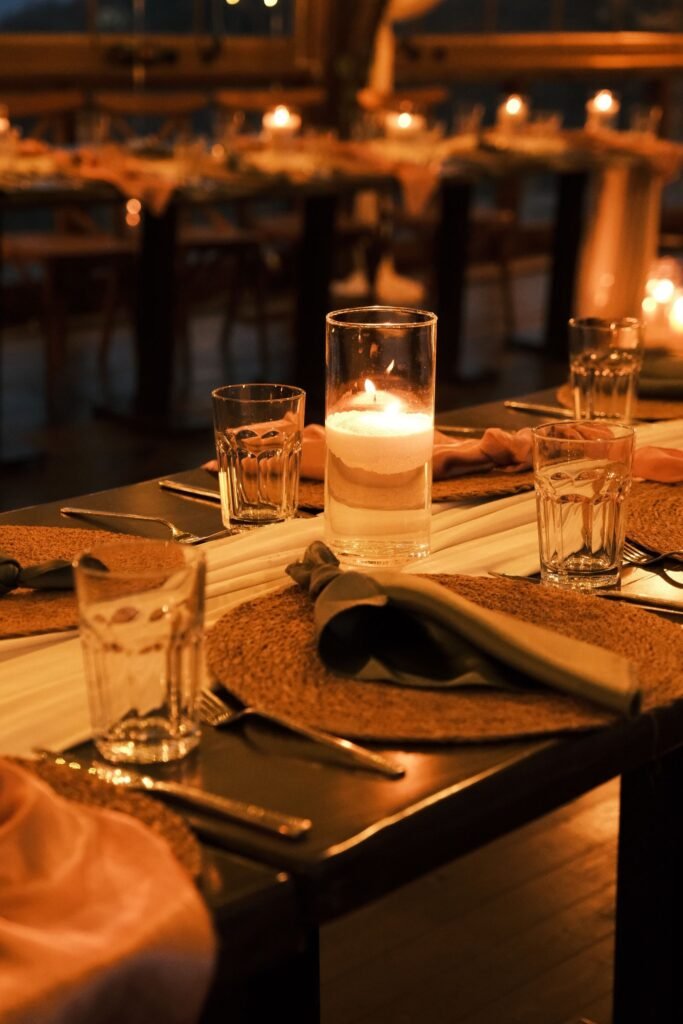
Here is the unglamorous truth I resisted for years: most “centerpieces” fail because the table under them is bare. A runner, textured placemats — woven seagrass, quilted cotton, anything with a visible weave — and cloth napkins do more than any single decorative object. Layers make the table read as dressed rather than decorated, and dressed tables make ordinary weeknight food feel considered.
My winter stack is simple: a natural linen runner, woven round placemats, cream stoneware, and napkins in deep forest green or warm oatmeal, folded plainly. The centerpiece then only has to be modest — a hurricane candle and a small bowl of cones — because the table itself is doing the work. Everything is washable and already in most cupboards, so this idea costs nothing unless your napkin drawer needs help ($12 to $20 for six good cotton ones).
8. The Tall Hurricane, for the Table That Needs Height
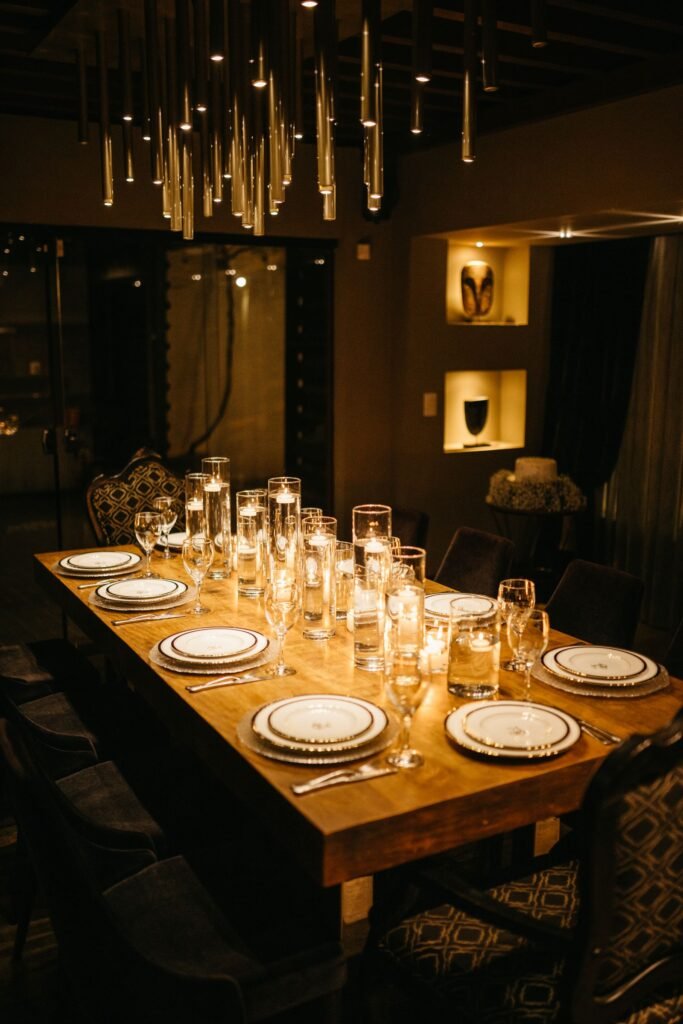
Some dining rooms — high ceilings, a long table — swallow low arrangements whole. For those, one tall hurricane (or a pair) with a fat pillar inside is the answer. The glass protects the flame from every draft in an old house and magnifies the glow, so one candle lights like three.
Keep everything around it low — cones, berries, a flat garland — so sightlines survive. Hurricanes run $15 to $40, and seeded or slightly smoked glass hides soot and drips far better than crystal-clear glass. This is the arrangement I use when people are coming and I want the table to look like I tried harder than I did.
How Long Each Style Actually Lasts on the Table
Since “how long will it look good” is the real question, here is the honest rundown:
- Candles and holders: indefinitely. Replace tapers as they burn down; pillars last weeks of dinners.
- Fresh cedar or evergreen runner: 2 to 3 weeks indoors with misting. Half that if the table sits over a heating vent — ask me how I know.
- Pinecones, natural or frosted: the whole season and beyond. Dust them and they are next year’s too.
- Dough bowl arrangement: weeks untouched; refresh the candle and shake out the dust monthly.
- Paperwhites: 4 to 6 weeks to bloom, then 2 to 3 weeks in flower. Amaryllis blooms last 3 to 4 weeks.
- Fresh white winterberry: 3 to 4 weeks before berries drop. Faux: seasons.
- Good faux garland or berries: 3 to 5 seasons before they start to look tired.
The variable that matters most indoors is heat. Every arrangement here lives roughly twice as long away from radiators and vents — worth remembering before you blame the greenery.
The Bottom Line
A winter table asks very little: decide that candlelight is the main event, lay down something green or woody, add one natural pile — cones, berries, bulbs — and dress the table itself with layers you already own. Do it in the first week of January and the darkest stretch of the year gets dinners that feel warm and deliberate instead of bare and leftover. The table was never the problem. It was just waiting for somebody to set it again.