
Every January I have the same small argument with my front windows. In December they were dressed — garland, lights, the works — and they looked like the warmest part of the house. Then the decorations come down, and suddenly each window is just a cold sheet of glass with a draft sneaking around the edges, making the whole room feel five degrees meaner than it is. Last winter I stopped treating that as normal. I dressed the windows for winter itself — not for a holiday — and it changed the rooms more than any throw pillow ever has.
That is what these winter window decor ideas are about. Warmth first: the layers and fixes that stop a window from stealing heat. Then the pretty part — greenery, candlelight, frosted glass, a sill that looks loved. Nothing here is Christmas. No ornaments, no Santa, nothing you have to apologize for in February.
Start With Warmth: A Cold Window Is a Decorating Problem
Before you hang a single thing, hold your palm an inch from your biggest window on a cold evening. If you can feel the chill rolling off it, that window is the coldest surface in the room, and no amount of styling will make the space feel cozy while it behaves like an open refrigerator door. Single-pane glass can sit 20 to 30 degrees colder than the room air, and that cold air slides down the pane and pools at the floor — which is why your ankles are cold even when the thermostat swears it is 70.
The good news: almost every fix is also the decor. Heavy curtains are insulation you can see. Work through the warmth layers first, and the styling after them sits on a window already doing its job.
Hang the Rod High and Wide (It Matters More Than the Curtain)
The cheapest transformation in this article costs nothing if you already own a drill. Most rods are mounted right at the top corners of the frame, which means open curtains cover a third of the glass — and closed ones leak cold air around every edge.
Move the rod up and out instead: 4 to 6 inches above the frame, and 8 to 12 inches beyond it on each side. Now the open curtains stack against the wall, not the glass, so you keep all your daylight. Closed, they overlap the wall on every side, trapping a layer of still air between fabric and glass — and still air is the whole secret of insulation. Choose curtains long enough to just kiss the floor or sill; a panel that stops two inches short leaves a chimney gap where the cold pours out.
Lined Velvet Curtains: The Hardest-Working Layer
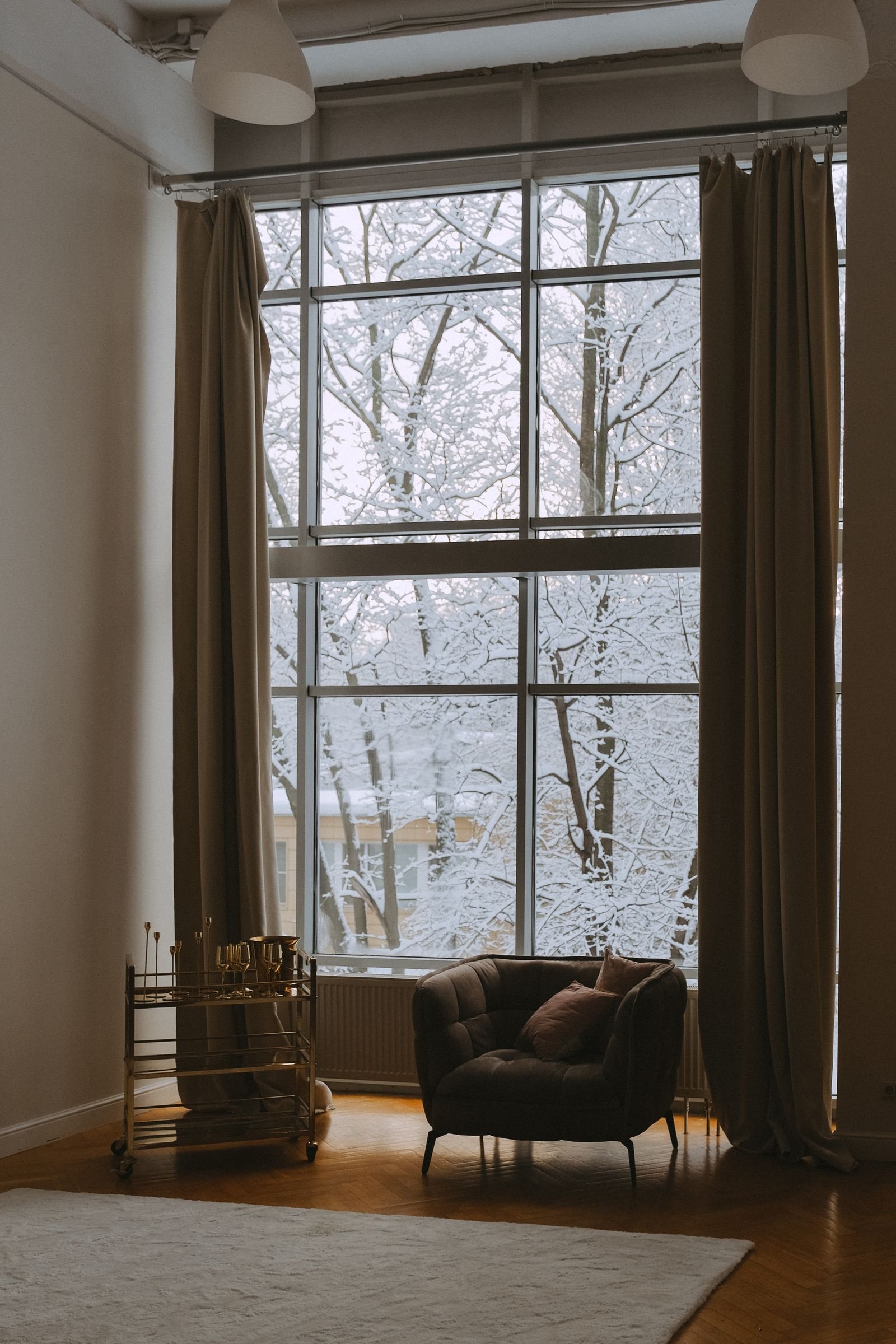
If you buy one thing from this list, make it a pair of lined, heavyweight curtains — and velvet is the winter champion. The dense pile traps air in the fabric itself, the lining adds a second barrier, and the weight makes the panels hang in those deep, quiet folds that read as warmth before you even touch them. My living room pair went up on a bitter Tuesday, and by dinner the seat by the window — the one nobody picked all winter — was suddenly the good seat.
Color guidance, from having stared at too many swatches: forest green and deep burgundy are the heritage winter choices, and both glow against candlelight. Cream and warm taupe work if your room is small or north-facing. Whatever you choose, get the thermal or blackout lining — the lining is the insulation, the velvet is just the handsome face on it. Decent lined velvet panels run $35 to $80 a pair on sale, and they will outlast a decade of winters.

Layer Sheers Underneath, So Daytime Still Works
Heavy curtains have one flaw: closed, they darken the room, and winter days are short enough already. The fix is the old European layer — a sheer panel on a second, inner rod that stays across the glass all day. The sheer softens the grey daylight into something kind, gives you privacy, and adds a third pocket of still air. At dusk, you draw the velvet over the top and the window is fully dressed for the night.
Linen-look sheers have more body than the slippery polyester kind and hang straighter; expect $12 to $25 a pair. If you only have one rod, hang the sheer on a slim tension rod inside the frame — four minutes, no holes.
Cellular Shades and Café Curtains for Awkward Windows
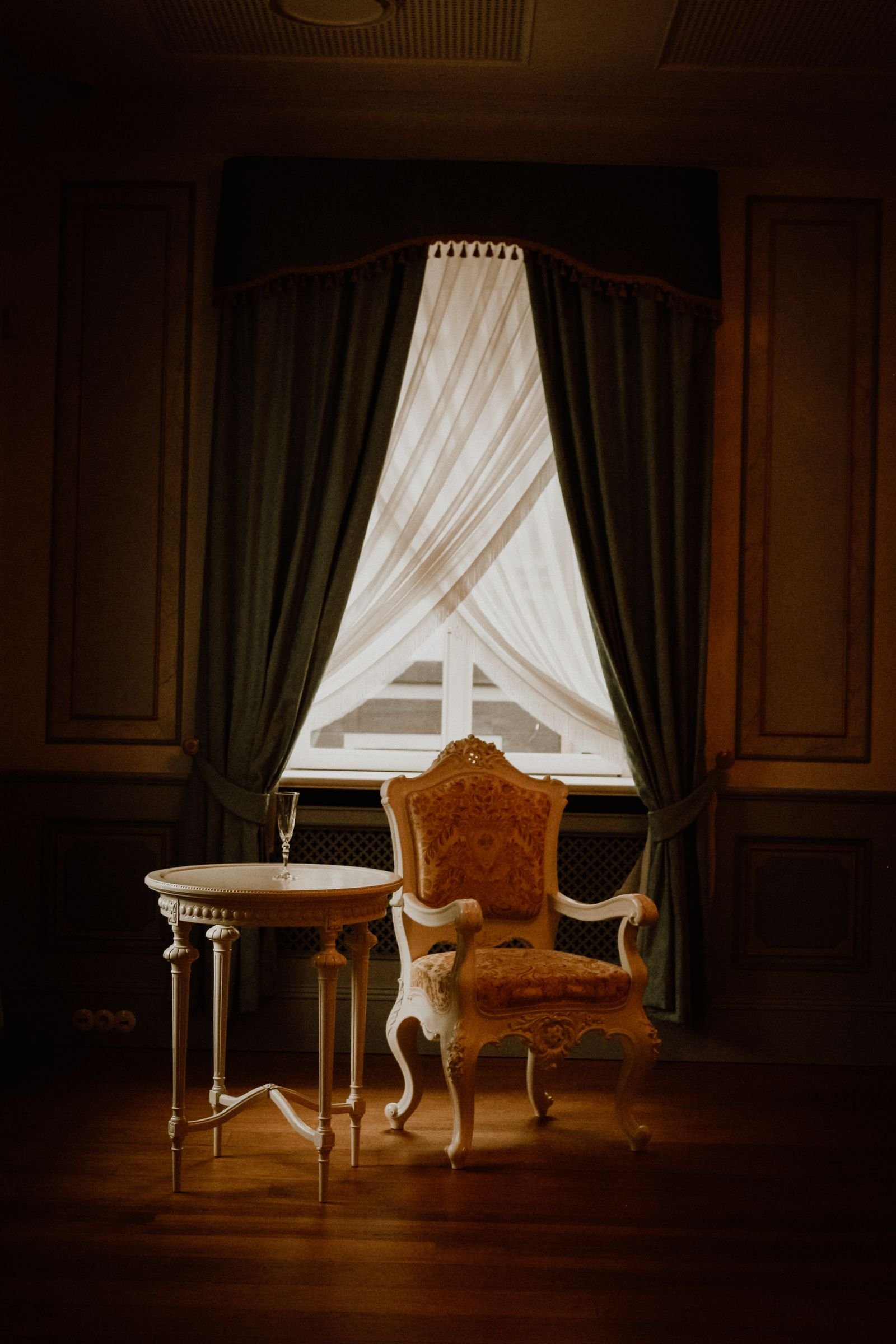
Not every window wants full-length curtains. Bathrooms, kitchens, anything above a radiator — these are where cellular (honeycomb) shades earn their keep. The little hexagonal pockets trap air right against the glass, they disappear almost completely when raised, and a top-down/bottom-up pair covers the lower half for privacy while the top pours in light. They are the least romantic item in this article and possibly the most effective.
For kitchen windows, I will always argue for the café curtain — a half panel on a rod across the middle of the window. It covers the view of the neighbor’s fence, leaves the top open for light, and in a lace or linen version it is pure cottage warmth. It is also the easiest sewing project on earth, or about $15 bought.
Seal the Drafts Before You Style Anything
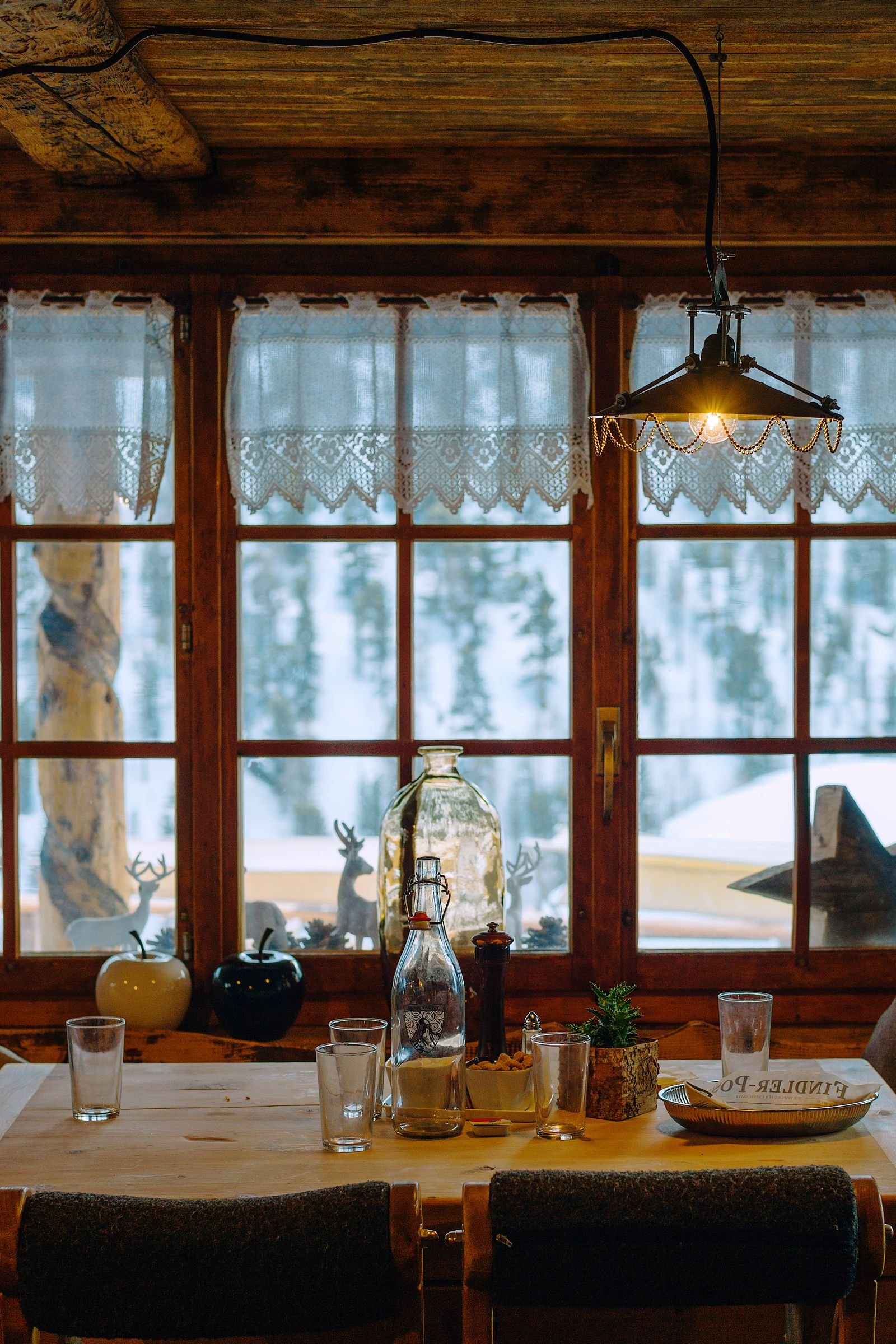
Decorating a drafty window is like arranging flowers in a leaking vase. Run these checks first — most take minutes:
- The candle test: on a windy day, move a lit candle slowly around the frame. Where the flame flickers hard, air is moving.
- Rope caulk ($4 a roll): press this soft putty rope into the gaps around old sashes. It seals all winter and peels off clean in spring — the renter’s best friend.
- V-strip and foam tape: for the meeting rail where the two sashes overlap, usually the worst offender in older double-hung windows.
- A draft snake for the sill: a fabric tube along the bottom sash. Make it pretty — plaid wool, a bit of velvet to match the curtains — and it stops being a fix and starts being part of the look.
- Shrink-film kits ($10–$15 a window): unfashionable, nearly invisible once the hairdryer tightens them, and genuinely effective on the worst single-pane windows. I resisted them for years on looks alone; on a back bedroom window, nobody sees it and everybody sleeps warmer.
Do this round in November if you can, but honestly, a Saturday in January works too. The house will tell you it worked the same evening.
Frosted and Privacy Film: The Look Winter Gives You for Free
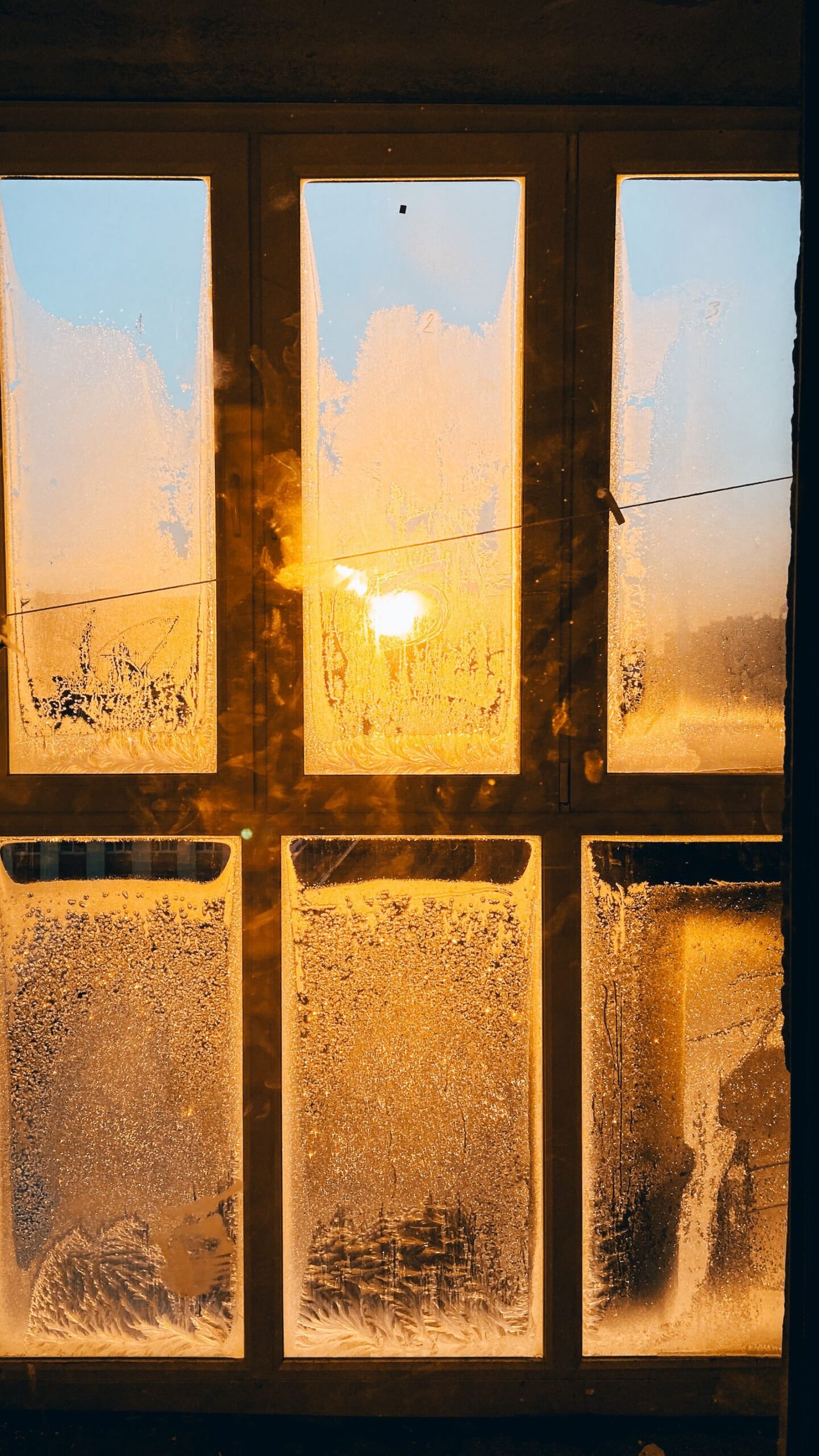
Here is a decorating idea borrowed from the weather itself. On the coldest mornings my grandmother’s windows would bloom with frost ferns — the whole pane patterned, the light coming through soft and gold. Frosted window film gives you that effect on purpose, all season: a static-cling or adhesive film, plain or patterned, that turns clear glass into soft, glowing, private glass for about $10 to $20 a roll.
Use it where you want light without the view — a bathroom window, a street-facing pane, the lower half of a bedroom window under your sheers. A simple frost reads modern, a subtle fern or linen texture reads winter-cottage, and anything with snowflakes printed on it reads December, so skip those. Static-cling versions peel off in spring with no residue — the lowest-commitment idea in the whole article. On a sunny morning, a frosted pane genuinely glows.
Evergreen Garland and Fairy Lights (the Non-Christmas Way)
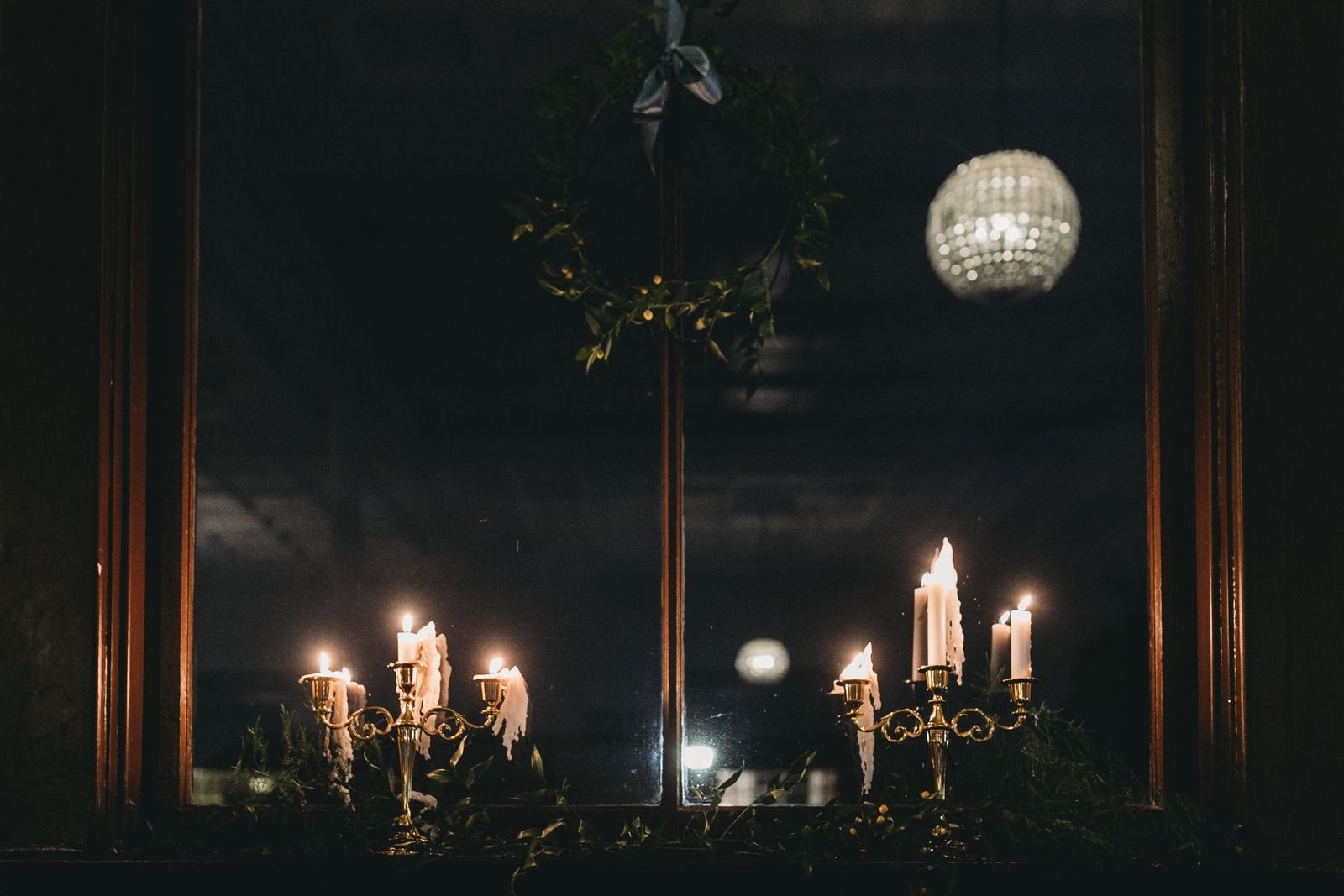
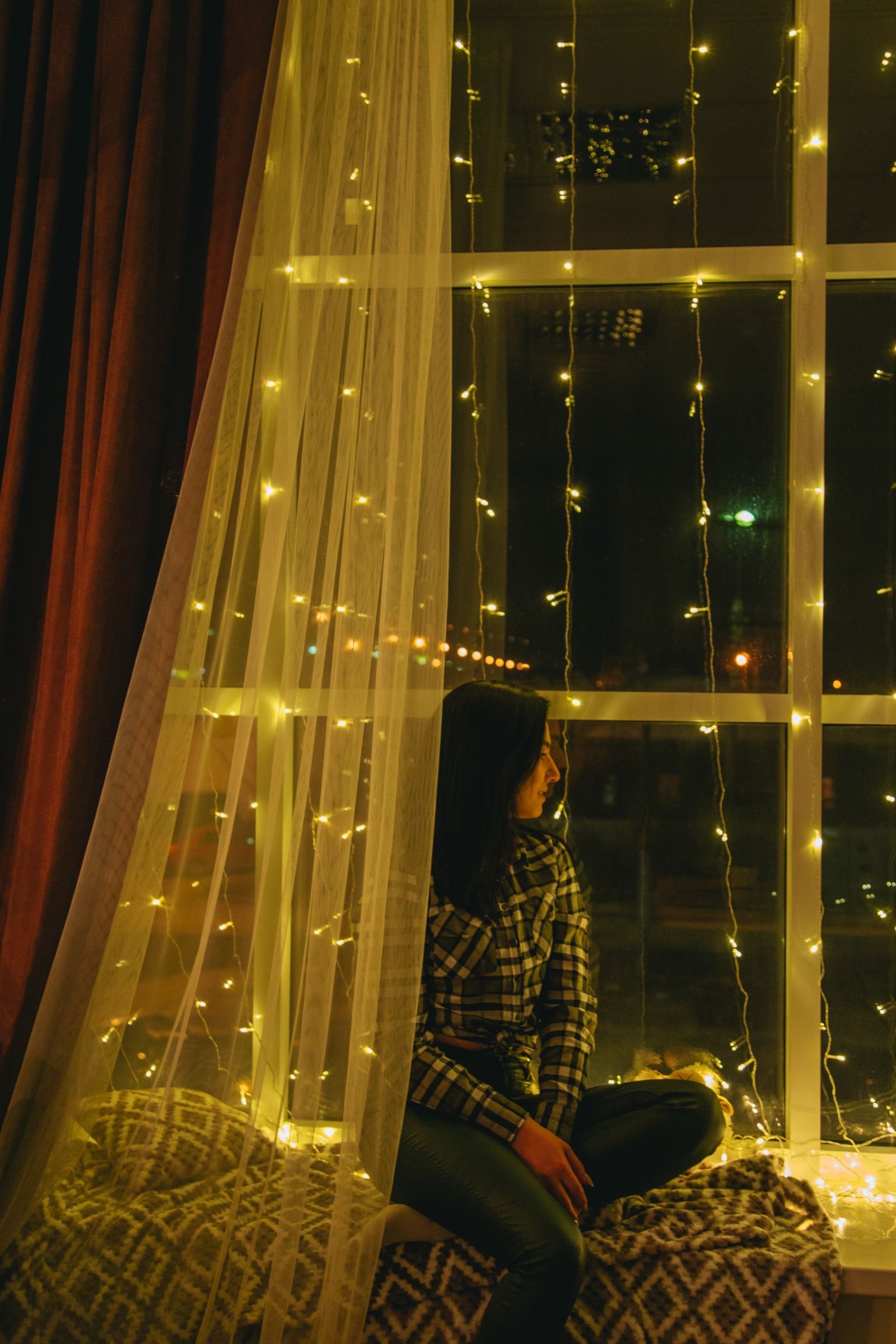
Now the part that makes people slow down when they walk past your house at night. A simple evergreen garland — plain mixed greens, cedar and fir, nothing wired to it — swagged across the top inside of the window or laid along the sill, with a strand of warm-white fairy lights woven loosely through it. That is the whole recipe, and the restraint is exactly why it works in January: it reads as winter greenery and candlelight’s cousin, not as a holiday display that forgot to leave.
Two rules keep it on the right side of the line. First, warm white lights only, the 2700K candlelight color — never multicolor, never icy blue-white, which looks like a storefront. Second, nothing hangs from the garland: no baubles, no bows, no bells. If you want one accent, tuck in pinecones, which are just winter, full stop. Battery fairy lights with a timer (about $10) switch themselves on at dusk, which is when a dressed window earns its keep. Dressing the door to match? Our winter wreath ideas use the same greens-and-cones language.
Windowsill Vignettes: Candles, Greenery, and Things You Already Own
The sill is the smallest stage in the house and the easiest to get right. My formula, after a lot of fiddling: something tall, something glowing, something green. A pair of candlesticks or a small lantern for the tall, a cluster of candles — real in sturdy holders, or good flameless ones if you have cats, curtains, or a healthy respect for both — and one green thing: a small potted ivy, a jam jar of cedar clippings, a bowl of pinecones with a few sprigs tucked in.
Group in threes, keep it off-center, and leave some empty sill — a crowded sill reads as storage, a composed one reads as decor. Brass and dark wood holders suit the winter palette best, and candlelight against glass doubles itself in the reflection, so three candles look like six. The same candles-and-greenery thinking, scaled up, is what our winter table centerpiece ideas do for the dining table — pull the two together and a room feels planned, not decorated in patches.
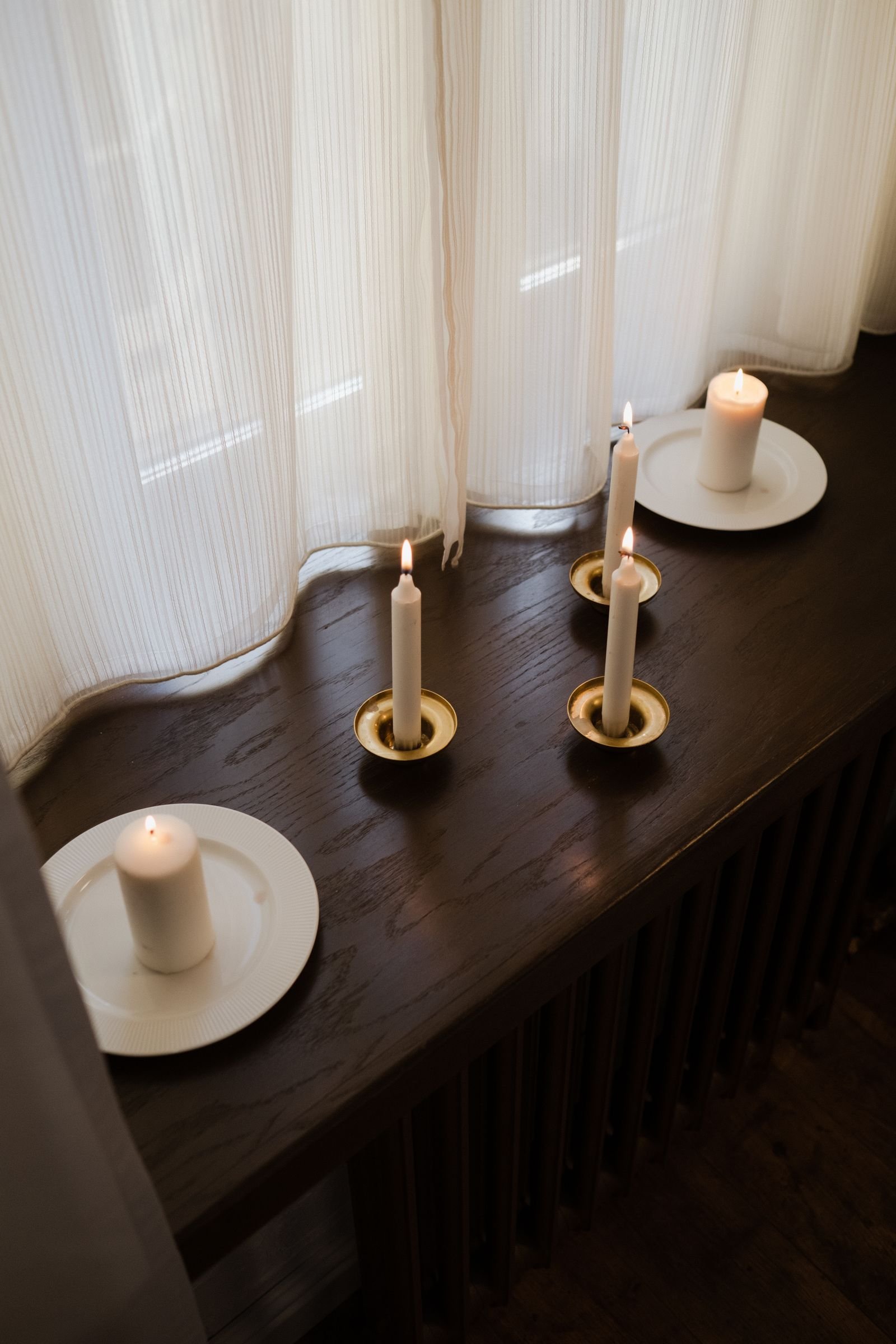
The sill vignette is the one part of this I redo constantly, because it costs nothing: pinecones from the yard in a chipped bowl I love, candlesticks borrowed from the dining room, clippings from the garland. When the light outside is doing its grey worst at 4 p.m., that little arrangement does more for the room than the heating does.
Winter Window Boxes: The View From the Street
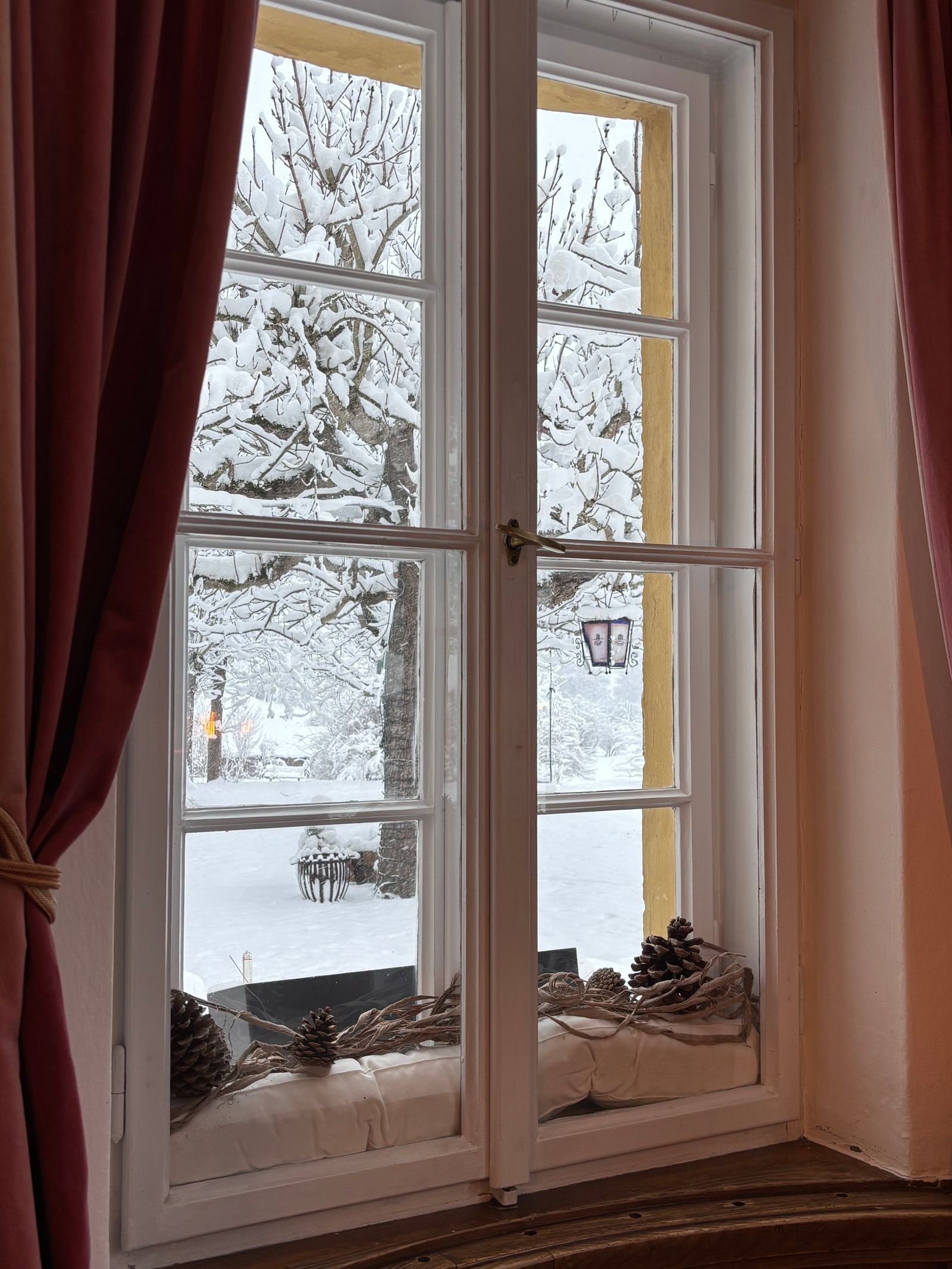
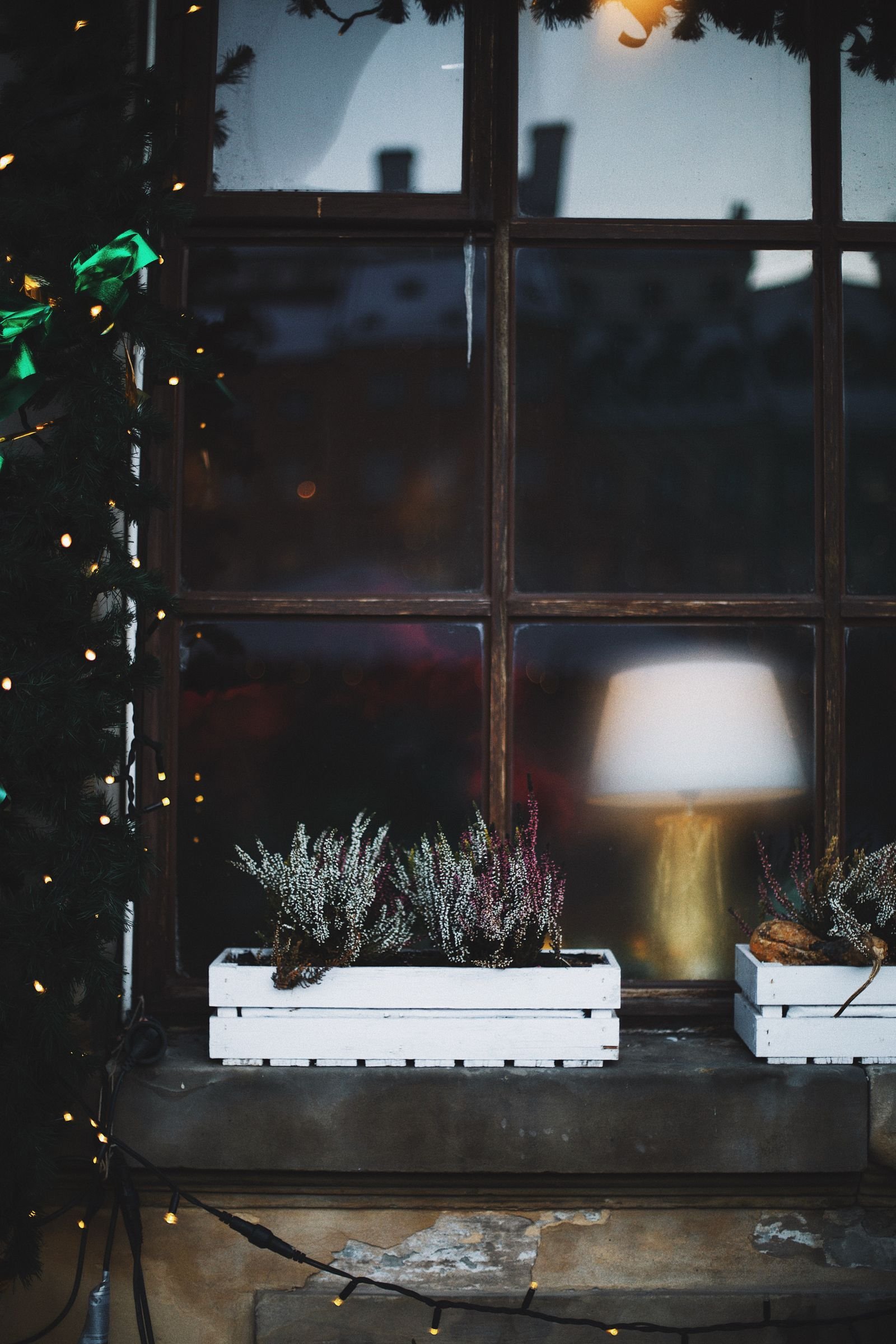
Everything so far faces inward. The window box faces the street, and in winter it is the difference between a house that looks asleep until April and one that looks kept. Summer’s geraniums are long gone, but a winter box is honestly easier: it is architecture, not gardening.
Build it in layers. A backbone of small evergreens or upright conifer clippings pushed into the soil or foam; trailing ivy or cedar to spill over the edge; then the winter texture — dogwood stems for height, pinecones wired in clusters, white heather where your climate allows, and birch logs along the front for that pale Scandinavian line. Cold weather preserves cut greens for six weeks or more, and snow landing on the box is not a problem — it is the best decoration it will ever get, free of charge.
If your boxes come down in winter, the same arrangement works in a heavy planter set under the window instead. And the box is at its best as part of a whole entry: pair it with the planters and lanterns in our winter front porch decor ideas and the front of the house holds together from the sidewalk to the door.
The Bottom Line
A winter window is doing two jobs whether you dress it or not — keeping your warmth in or letting it quietly out, and being either the coziest sight in the room or the coldest. The order of operations is the whole trick: seal the drafts, hang the rod high and wide, layer lined curtains over sheers, and only then bring in the garland, the candles, the frost and the greens. Do it once, in whatever order your budget allows, and the windows stop being the problem part of winter and start being the best seats in the house. Resetting the whole house after the holidays, not just the windows? Our guide to winter decor ideas after Christmas picks up right where this one leaves off.