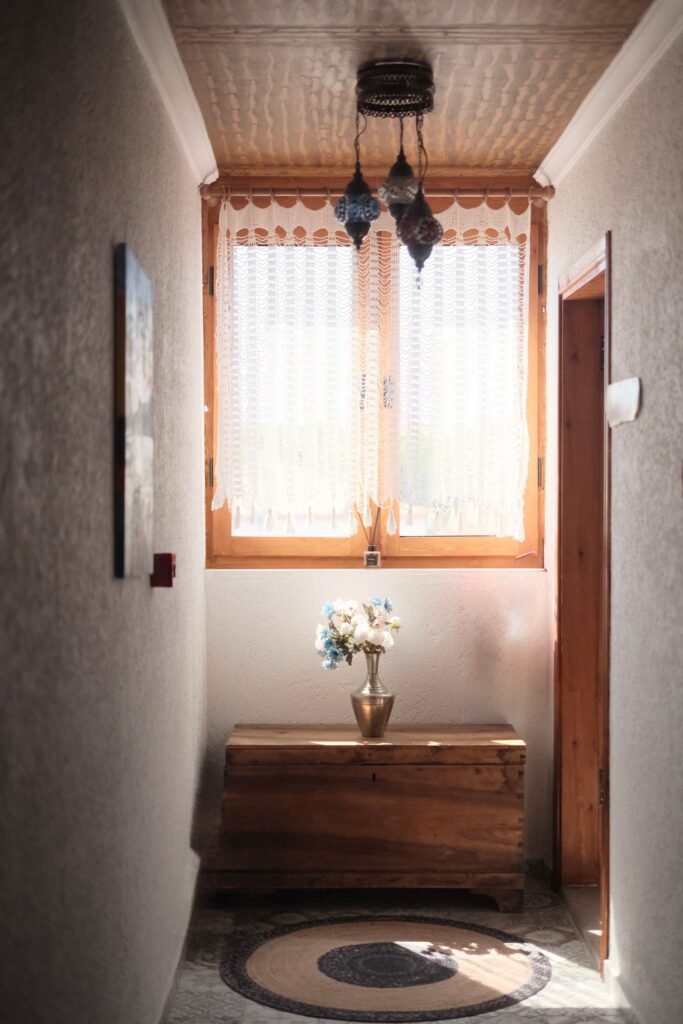
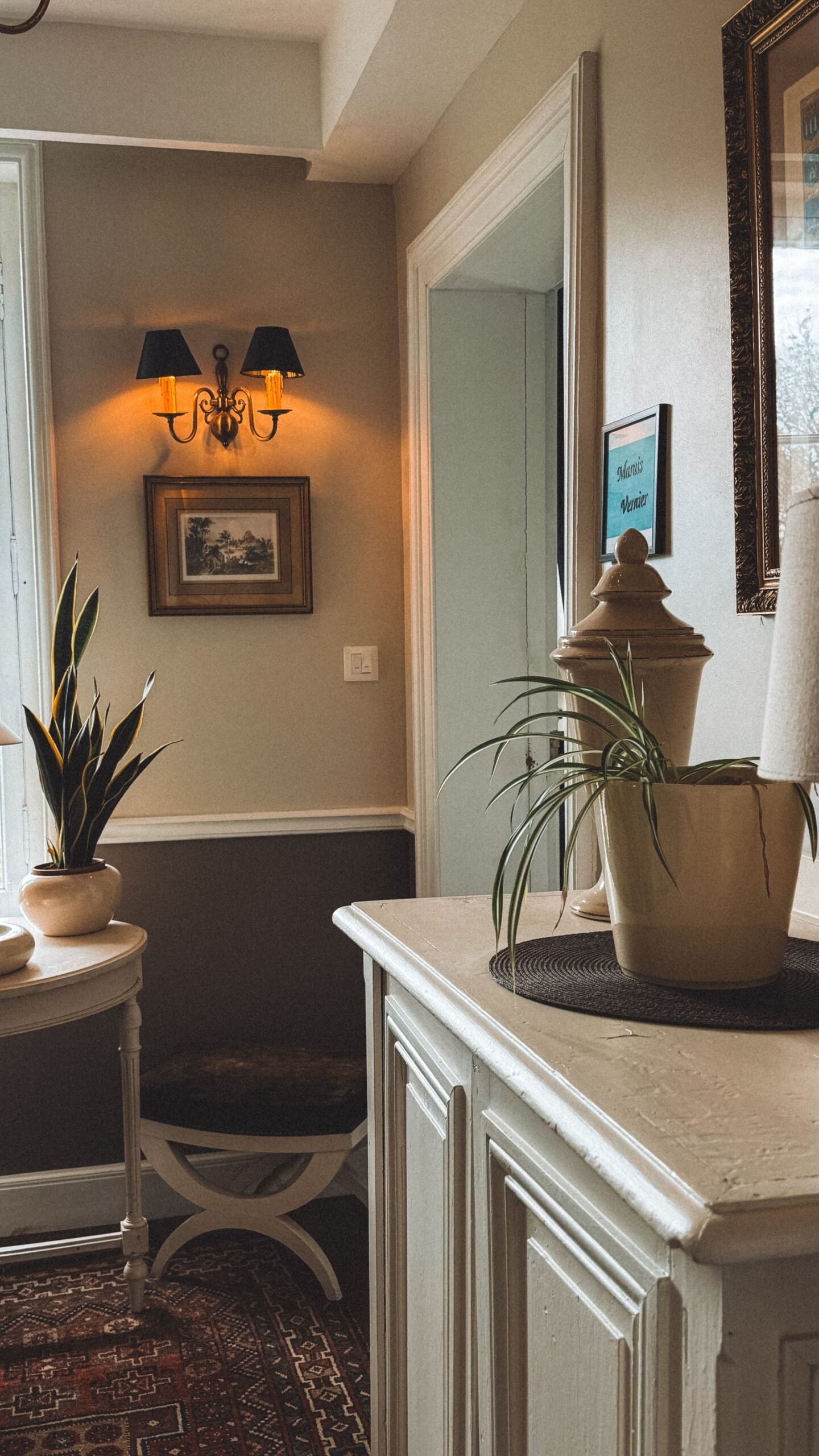
My last apartment had a front door that opened straight into the living room. No hall, no foyer, not even a polite little square of tile to stand on — just door, then sofa. For the first month, everything I carried in with me landed wherever gravity suggested: keys on the arm of the couch, mail on the kitchen counter, my bag in a heap that migrated around the room like weather. It felt less like coming home and more like docking.
Here is what I eventually figured out: an entryway is not a room. It is a routine. Mark out a small patch of floor, give yourself one surface, one seat and one mirror — all without drilling a single hole — and you have an entryway, whether your floor plan agrees or not. Everything below is renter friendly in the strict sense: no screws, no anchors, nothing that needs filler on moving-out day. Your deposit stays where it belongs, with you.
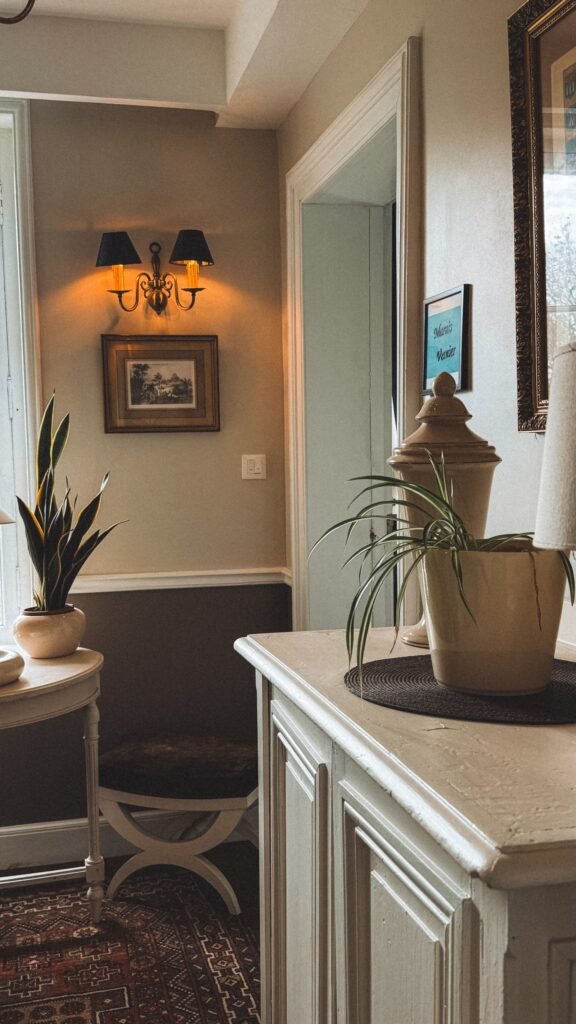
First, Decide Where Your Entryway Lives
Before you buy a thing, stand at your front door with your arms full — bag, keys, coffee, the works — and notice where you naturally turn. That wall, that corner, that awkward three feet between the door and the bookshelf: that is your entryway. It does not need walls of its own. It needs a boundary your brain can see, and the ideas below are mostly ways of drawing that boundary without touching a drill.
A few honest measurements before you start. Keep at least 30 inches of clear walkway so the door swing and the path past it stay easy. Most “no entryway” zones are about 4 to 6 feet wide and 3 to 4 feet deep, and that is genuinely enough. If your rental does have a small real entry and your problem is more the sheer volume of coats and shoes, our small entryway ideas for coats and shoes go deep on that side of things — this article is about inventing the space itself when the architect forgot to.
1. Let a Rug Draw the Room
The single hardest-working renter friendly entryway idea on this list costs about thirty dollars and installs in ninety seconds: a rug. A rug is a room drawn in wool and cotton. The moment I laid a runner down inside my door, my brain started treating that patch as a place — shoes stopped at its edge, bags landed on it instead of the sofa, and guests instinctively paused there instead of wandering in with wet boots.
Size it generously for the zone you picked: a 2-by-6 or 2-by-8 runner for a wall-side entry, a 3-by-5 for a corner, or a round rug if your door opens into open plan and a rectangle would fight the furniture. Choose low pile or flatweave — a plush rug under a swinging door is a daily wrestling match — and always put a non-slip rug pad under it. The pad is not optional garnish; it is what keeps the whole “room” from skating across the floor, and it protects the boards underneath, which your landlord will appreciate. Dark, patterned and forgiving beats pale and pristine every time. This rug will meet every muddy paw and rainy commute your life produces.
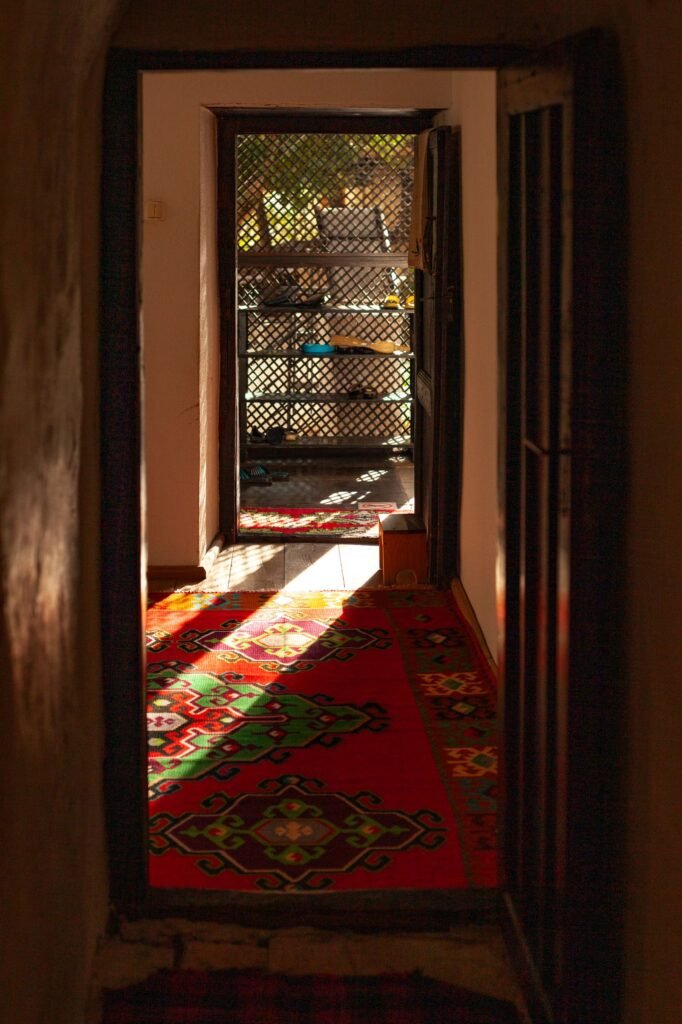
2. A Slim Bench Is the Anchor
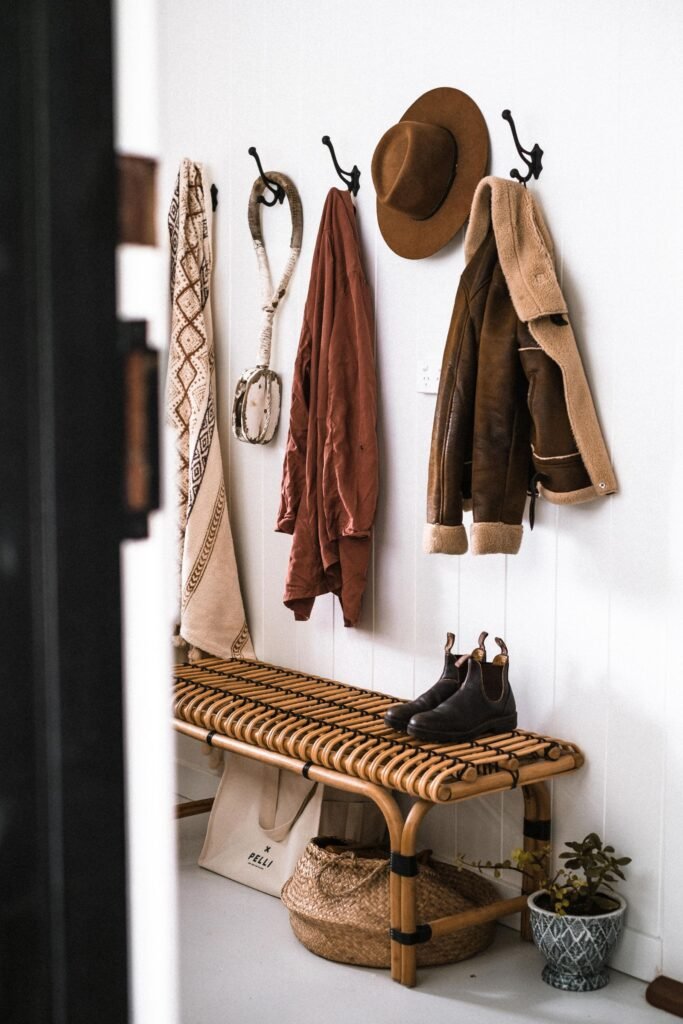
If the rug draws the room, a bench furnishes it. A bench gives you somewhere to sit while you wrestle boots, a surface that catches bags at exactly the height your hands want to drop them, and a strong horizontal line that tells the eye “entryway” louder than anything else you can buy.
Go narrow: 12 to 14 inches deep is plenty, and 36 to 48 inches long fits most door walls. Rattan, warm wood and woven styles earn their keep here because they look like furniture, not equipment — this thing is living in your living room, after all. A cushion or a folded throw on top softens it and quietly signals “sit here” instead of “pile here,” though I will be honest, mine does both jobs most days. Secondhand benches are everywhere and usually sturdier than the flat-pack ones; mine was a $40 marketplace find. And put felt pads under every leg — floors are half your deposit.
3. Lean the Mirror — Never Mind the Screws
Every entryway needs a mirror: for the last-second hair check, yes, but mostly because a mirror bounces light into the darkest corner of most rentals and makes an invented entry feel twice its size. The renter’s move is to lean it, not hang it. A tall mirror, 48 inches or more, simply leans against the wall above your bench or console, resting on the furniture or the floor, and gravity does the rest.
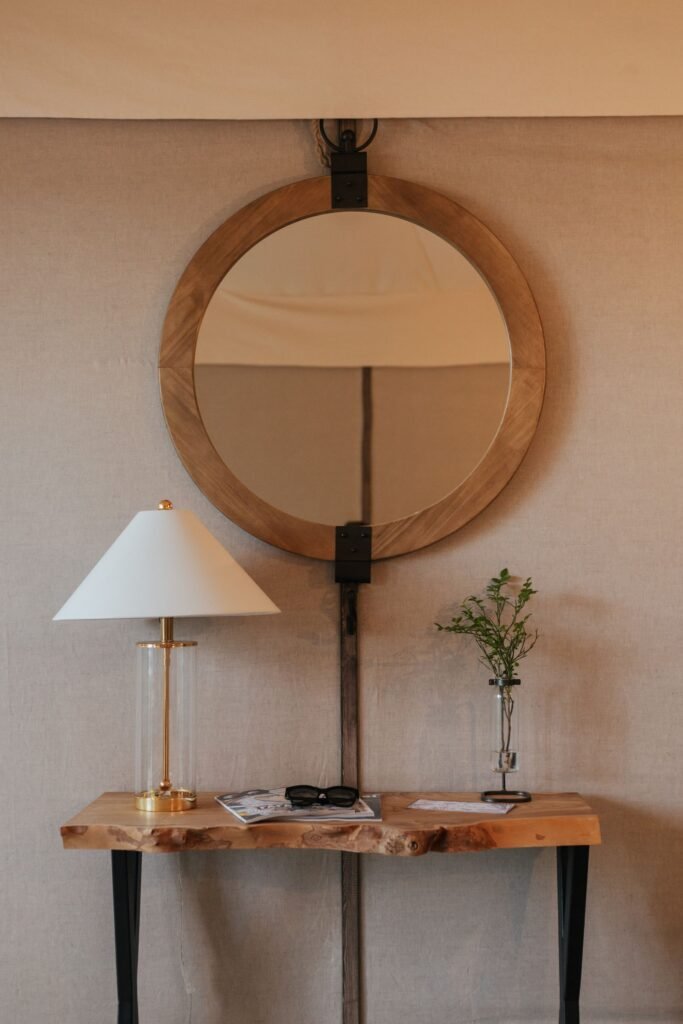
Two safety notes I learned to respect. First, felt or rubber pads where the frame touches the wall stop the little scuffs that show up at inspection. Second, if you have kids, big dogs, or earthquake country anywhere in your life, add a removable adhesive strip or two at the top corners as a seatbelt — the mirror still leans, it just cannot wander. Lighter mirrors, under about 10 pounds, can go up on large removable picture strips instead, which is how the round mirror over my console hangs. Just follow the weight rating like it is law, because it is. A leaning mirror also moves with you in thirty seconds when you rearrange — and if you rent, you always eventually rearrange.
4. A Narrow Console Earns Its Floor Space
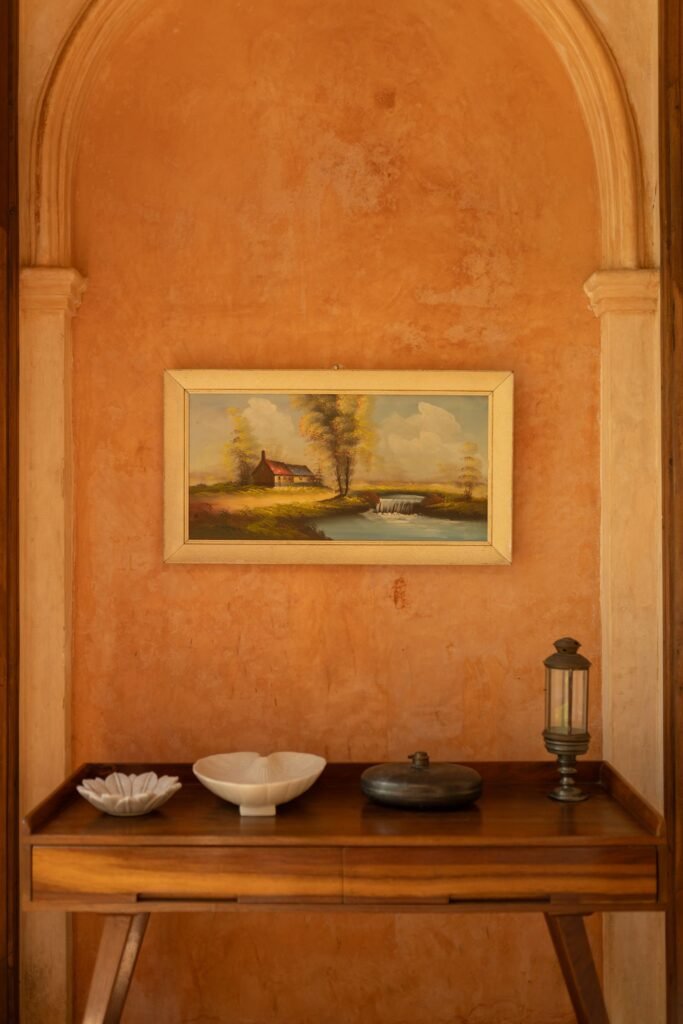
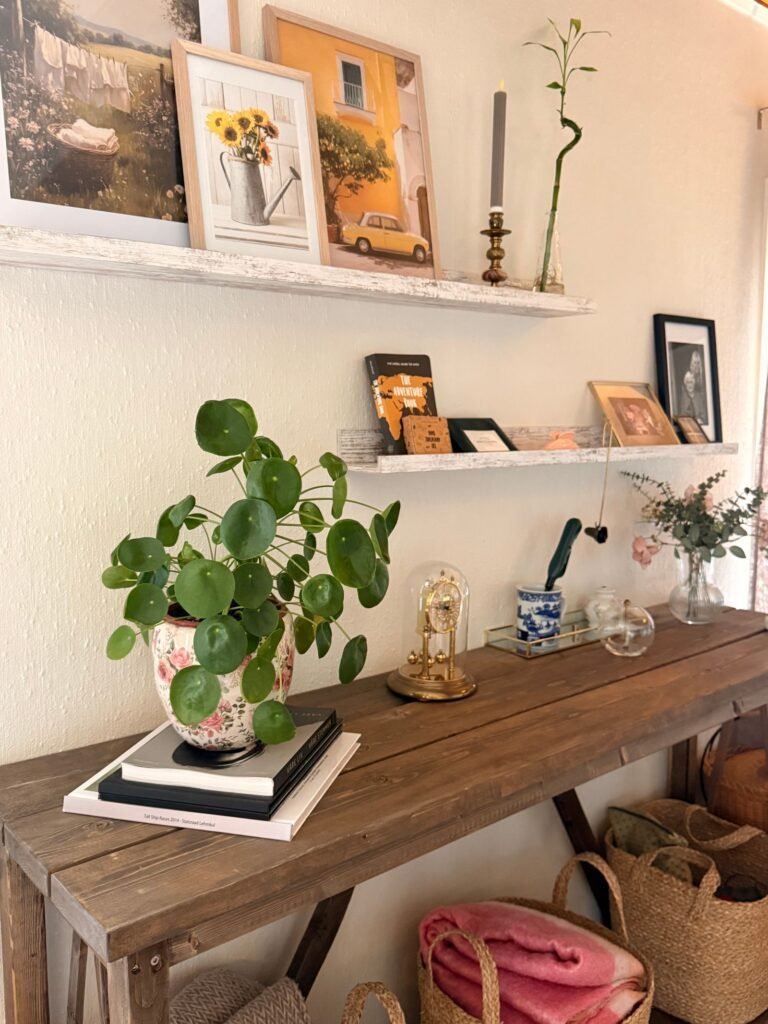
No room for a bench, or already have seating nearby? A narrow console table is the other great anchor, and in some ways the more useful one. Look for 10 to 12 inches deep — standard consoles run deeper and will eat your walkway — and about waist height, so bags and parcels land on it naturally. Open-leg styles feel lighter in a small zone and leave room underneath for baskets, which matters in a minute.
Style it in three heights and it will look intentional instead of like a shelf that happened: something tall (the mirror behind it, or a lamp), something mid-height (a plant, a stack of two books), and something low and useful (the tray that runs your drop zone, below). Warm wood does a lot of quiet work here too. Against the plain white walls most of us renters are handed, one honey-toned piece of furniture makes the whole invented entry feel chosen rather than improvised.
5. Build the Drop Zone on the Surface, Not the Wall
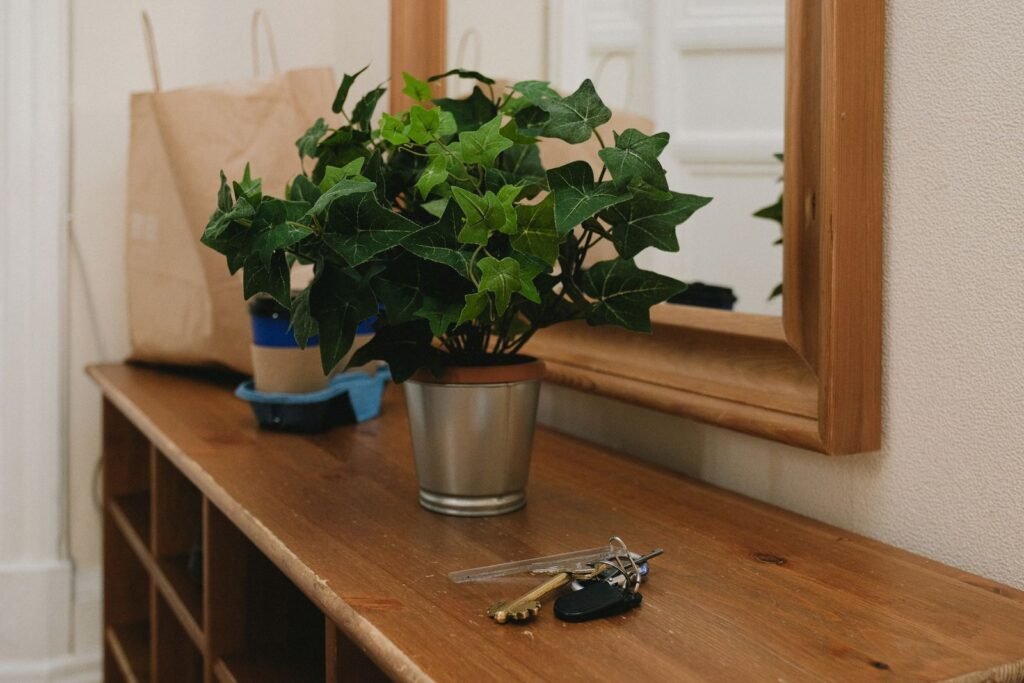
Here is the part that actually fixes your mornings. An entryway earns its name the day your keys land in the same place every single time. That does not need a wall organizer or a single hook — it needs one tray, one bowl, or one shallow basket living on your bench or console, positioned where your hand naturally falls as you come through the door.
Mine is a battered wooden tray that holds keys, sunglasses and whatever is leaving with me tomorrow — if something has to go out the door, it sleeps in the tray, and I have stopped doing the pocket-patting dance entirely. Add a small second container for mail if paper piles up in your house, and one rule that keeps it all working: the tray gets emptied of everything that does not belong, once a week, no exceptions. A drop zone is a habit wearing a tray as a hat. Keep the surface at least half clear, too — the moment the console becomes general storage, the entryway dissolves back into “that pile by the door,” and you will feel the difference within a week.
6. Hooks That Come Off Clean
Sometimes you do need something off the floor and onto the wall — a tote, a hat, tomorrow’s jacket. This is where removable adhesive hooks earn their rent, with honest limits. The good large strips hold 3 to 5 pounds each on smooth painted walls: fine for a tote bag, a cap, a lightweight jacket, not fine for a winter coat stuffed with pocket change. Apply them to clean, dry paint, wait the full hour the packet asks for (I know, I know), and they peel off with that satisfying stretch-and-release when you move.
Two cautions from experience. Adhesive and fresh paint do not mix — if your walls were painted in the last month, wait. And on delicate or papery old paint, test one hook somewhere invisible first. If your walls simply cannot be trusted, skip the wall entirely and use a freestanding coat stand or hall tree in the corner; it holds more than any hook and moves out in one trip. And yes, an over-the-door hook rack works too — our over-the-door storage ideas cover that properly — but treat it as a supporting player here, not the whole plan.
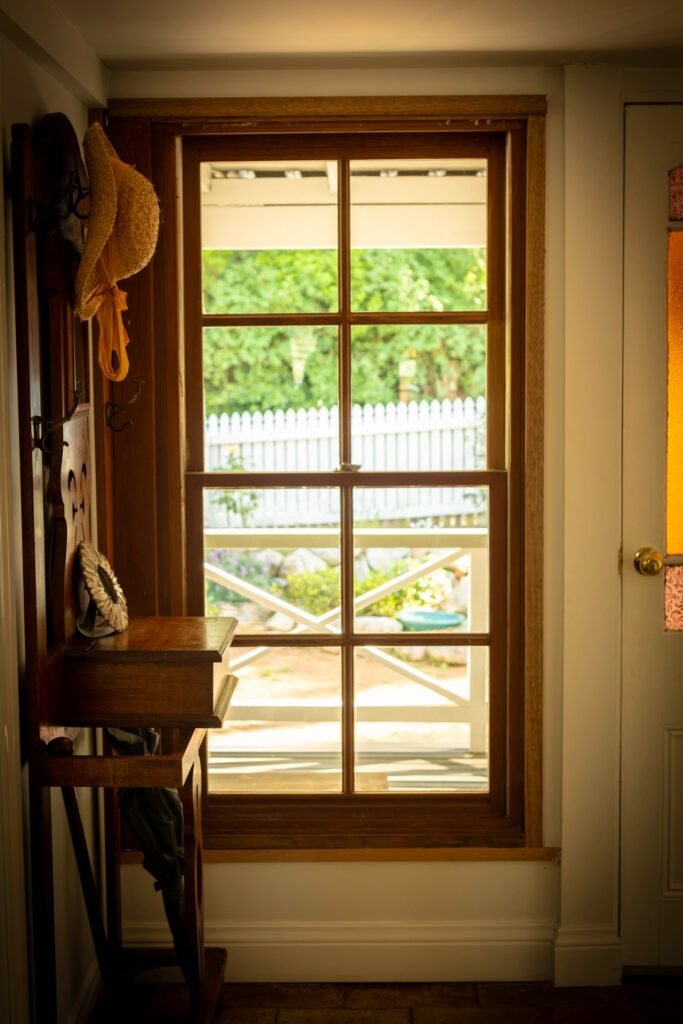
7. Baskets Are the Cabinets You Never Have to Build
Renters cannot add built-ins, so we add baskets, which are better looking anyway. The system that works is one basket per job, sized to its spot: a wide woven basket under the bench for everyday clutter you want invisible, a taller one beside the console for umbrellas and the yoga mat, a small lidded one on the console itself for the chargers-and-lip-balm category of life. Woven texture is doing double duty — it hides chaos and it warms up a plain rental wall better than almost anything.
Line them up under furniture rather than scattering them, and the zone reads as one composed piece instead of a basket collection that got out of hand. Corners especially love this treatment — a single tall basket turns the dead corner by the door into storage with a job, and our corner storage ideas have more ways to put corners to work. One warning from a woman who owns too many: measure the under-bench and under-console height before you buy, because a basket that is half an inch too tall will annoy you every day you live there.
8. Light It Like a Room, Not a Hallway
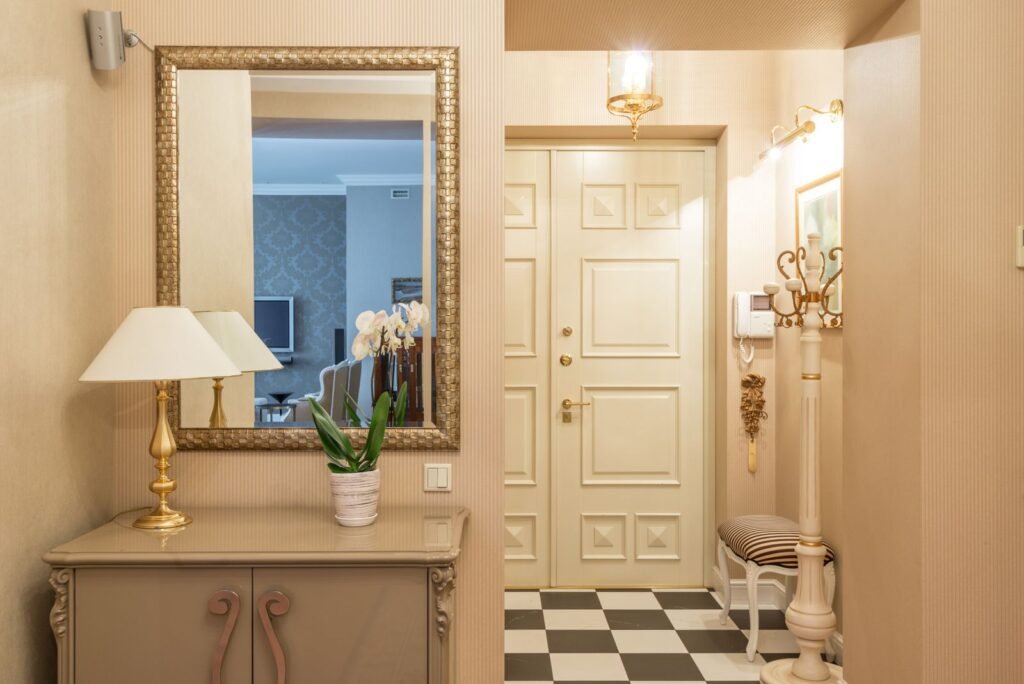
The finishing move, and the one people skip: give your invented entryway its own light. Overhead rental lighting is usually a single ceiling bulb doing its cold, flat best, and it makes any corner look like a corridor. A small lamp on the console — warm bulb, 2700K if the box gives you the choice — tells your brain this is a place, the same way a lit lamp turns a chair into a reading nook.
No spare outlet? This is the one spot where battery and rechargeable lamps genuinely shine: a small rechargeable table lamp or a motion-sensor puck light inside the door gives you that pool of warm light with zero wiring and zero landlord involvement. I put a little lamp on a timer in winter, and coming home to a lit entryway instead of a dark room with a door in it is a disproportionately large joy for about twenty dollars. It is also the thing guests compliment. Nobody has ever once complimented my rug pad.
Put It Together in One Afternoon
In order, the way I would do it again: rug and pad down first, because everything else measures itself against it. Bench or console against the wall, felt pads under every leg. Mirror leaned, pads on, adhesive seatbelt if your household is lively. Tray placed where your hand falls. One basket per job, tucked under or beside. Lamp last, switched on, stepped back and admired from the doorway with your coat still on.
Budget-wise, the whole zone can land anywhere from about $75 secondhand-and-patient to $300 all-new, and every single piece moves with you to the next place, which is more than any built-in can say. If the no-drill philosophy is working for you here, it works in the rest of the rental too — our renter-friendly kitchen storage ideas apply the same thinking to the room that needs it most. Your home did not come with an entryway. Fine. Build one out of a rug, a bench and a tray, and let the floor plan catch up.